Politics
Iranian Defense Minister Killed and Khamenei's Headquarters Bombed in Widespread Attack
On the first day of the war, sources confirmed the killing of the Iranian Defense Minister and the commander of the Revolutionary Guard, the targeting of Khamenei’s headquarters and the presidency, and the death of 51 female students in a bombing in southern Iran.

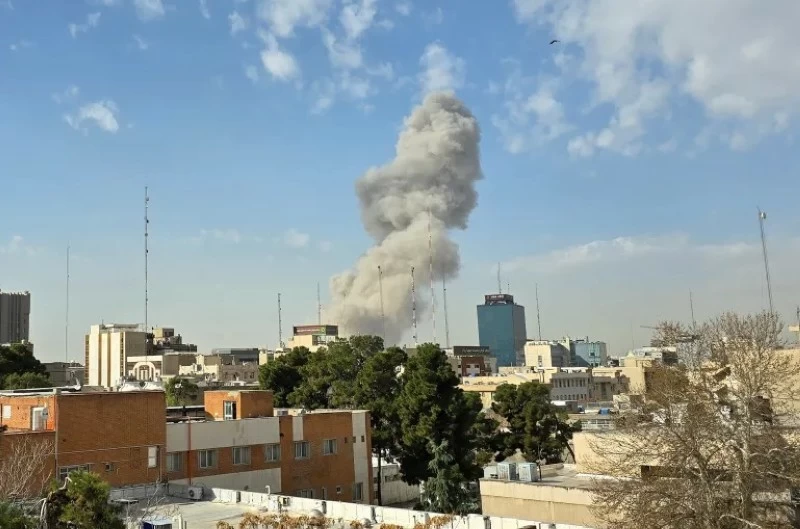
In a dramatic development that represents a major turning point in the Middle East conflict, and in the first hours of the outbreak of direct military confrontation, Western sources revealed today (Saturday) that Tehran was subjected to painful blows that resulted in the killing of the Iranian Minister of Defense and the commander of the ground forces in the Revolutionary Guard, coinciding with a bombing that targeted the government’s key institutions in the capital.
Reuters, citing three informed sources, confirmed the deaths of Iranian Defense Minister Brigadier General Aziz Nasirzadeh and Revolutionary Guard Ground Forces Commander Brigadier General Mohammad Pakpour in a series of coordinated attacks described as the deadliest of their kind. In another tragic development, Iranian state media reported that a school in the city of Minab, in Hormozgan province in southern Iran, was bombed, killing 51 female students, a preliminary toll that shocked the local community.
Regarding attacks targeting symbols of power, the Iranian news agency Tasnim reported that seven missiles penetrated security fortifications in Tehran, directly targeting the presidential palace complex where Iranian President Masoud Pezeshkian resides, as well as the office complex of Supreme Leader Ali Khamenei. Official authorities have not yet disclosed the extent of casualties or material damage within these key government buildings, but the missiles' ability to reach such sensitive locations suggests a significant intelligence and military breach.
Significance of timing and objectives
This surprise attack comes amid an unprecedented regional escalation, as tensions between Tehran on one side, and the United States and Israel on the other, have been rising rapidly in recent months. Observers note that targeting the defense minister and Revolutionary Guard commanders in the early hours of the war reflects a "decapitation" strategy aimed at crippling the command and control capabilities of the Iranian armed forces and creating chaos within the military hierarchy.
Potential regional and international repercussions
This event is expected to cast a dark shadow over the region's geopolitical landscape. Targeting the Supreme Leader's headquarters crosses all traditional red lines in the rules of engagement, opening the door to a range of possible Iranian responses. Strategic analysts believe the region may be entering a period of instability that could impact maritime security in the Strait of Hormuz and global energy markets, given Iran's strategic location and its significant role in the oil equation.
The heavy civilian casualties in southern Iran, represented by the killing of the students, could lead to a wave of international condemnations and further complicate the humanitarian situation, placing the international community before urgent responsibilities to contain the situation before it slides into a full-blown regional war whose consequences are difficult to predict.




Politics
Qatar summons Iranian ambassador, Kuwait confronts march: details of the escalation
Qatar's Foreign Ministry summoned Iranian Ambassador Ali Salehabadi to protest the targeting of its territory, while Kuwait confronted a march. Details of the strongly worded statement and the repercussions of the event.
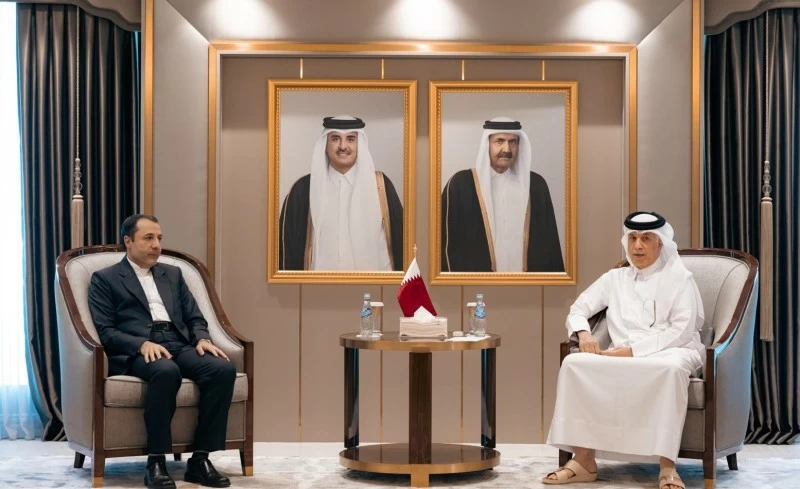
In a significant development in the Gulf region, the Qatari Ministry of Foreign Affairs summoned the Iranian ambassador to Doha, Ali Saleh Abadi, on Saturday and handed him a strongly worded official protest note. This diplomatic move comes in the wake of recent Iranian missile and drone attacks, which coincided with Kuwait's announcement that it had intercepted a drone that violated its airspace, indicating escalating security tensions in the region.
Details of the Qatari protest and the official position
In its official statement, the Qatari Ministry of Foreign Affairs expressed its deep displeasure and categorical rejection of the targeting of its territory, describing this act as a blatant violation of its national sovereignty and a direct threat to its national security, as well as a flagrant breach of international law and the United Nations Charter, which stipulates respect for the sovereignty of states and non-interference in their internal affairs or endangering their safety.
During the meeting, Qatari Minister of State for Foreign Affairs, Mohammed bin Abdulaziz bin Saleh Al-Khulaifi, emphasized to Iranian Ambassador Ali Saleh Abadi that the repeated targeting of Qatari territory constitutes a reckless and irresponsible act. Al-Khulaifi explained that such practices are completely incompatible with the principles of good neighborliness that Doha has always sought to uphold, warning that the continuation of such actions will inevitably lead to serious repercussions that will negatively impact the future of bilateral relations between the two countries.
Kuwait confronts the Gulf security concern
In parallel with Qatar's stance, Kuwait's role in protecting Gulf airspace was prominent, as Kuwaiti air defenses successfully intercepted a drone, a move that underscores the security readiness of the Gulf Cooperation Council (GCC) states in confronting aerial threats. This incident reflects the close security ties among the Gulf states, where the security of any member state is viewed as an integral part of the security of the Gulf system as a whole.
Regional context and the importance of stability
These developments come at a time of intense political and diplomatic activity in the region aimed at de-escalation and stability. The Gulf region holds paramount strategic importance internationally, not only as a major global energy hub but also due to its vital geographic location in international trade. Therefore, any security threat to the Gulf states resonates widely and attracts the attention of the international community, which closely monitors the stability of this crucial region.
Qatari diplomacy and the future of relations
Qatari diplomacy has long been known for its tireless efforts to bridge divides and support regional stability. The Qatari statement implicitly indicated that Doha has worked diligently to foster dialogue, but the recent attacks pose significant challenges to these efforts. The summoning of the Iranian ambassador is interpreted as a firm message that Doha, despite its diplomatic openness, draws clear red lines when it comes to any infringement upon its sovereignty or the security of its citizens and residents.
Politics
Emergency European meeting and Security Council discuss Iranian escalation
Kaya Kallas announces an emergency meeting of EU foreign ministers to discuss Iranian escalation and mutual strikes, coinciding with Security Council discussions to contain the threat of war.
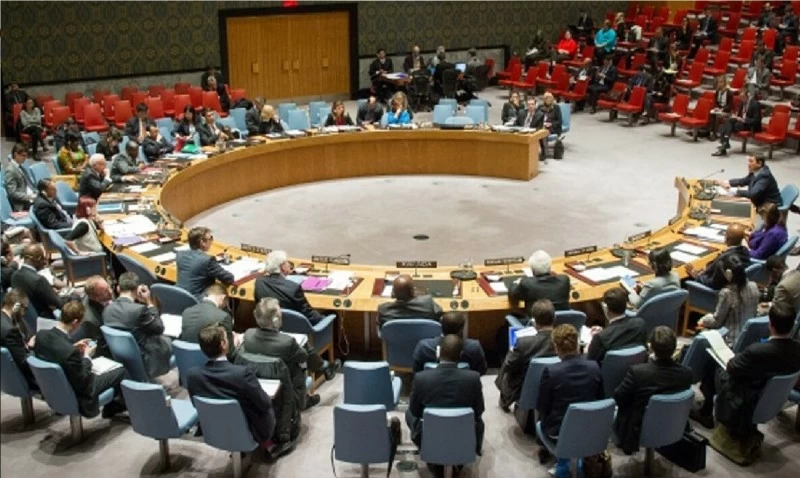
The EU's foreign policy chief, Kaja Kallas, announced that the bloc's foreign ministers will hold an emergency meeting today (Sunday) to discuss the rapidly evolving situation related to the Iranian issue, following a series of recent US-Israeli strikes and Iranian retaliatory attacks in the region.
“The indiscriminate attacks launched by the Iranian regime against its neighbors pose a real risk of dragging the entire region into a wider and disastrous war,” Callas wrote on her official X platform account, explaining that the ministers would meet via video conference to ensure rapid coordination and keep pace with the rapidly evolving events on the ground.
The European official indicated that it is extremely important that the scope of the war does not expand further, while stressing the need for the Iranian regime to make decisive decisions to de-escalate rather than escalate.
International moves and fears of sliding into the abyss
In a related context, European Council President Antonio Costa described the exchange of strikes as a "serious escalation" in the military situation in the Middle East, expressing his deep concern about the deteriorating security situation.
These European diplomatic moves coincide with the start of the UN Security Council's discussions on the developments in the war, as the international community strives to contain the situation before it reaches a point of no return. This intensified diplomatic activity is a direct response to global fears that the conflict could escalate from limited skirmishes or proxy wars into a direct and full-scale military confrontation between major regional and international powers.
Background of the conflict and its regional repercussions
These meetings are of exceptional importance given the complex historical and geopolitical context of the Middle East. The current escalation not only threatens regional security but also casts a shadow over international peace and security. European countries, in particular, fear the direct repercussions of any large-scale war, which could include new waves of refugees, a threat to global energy security, and disruption to supply chains passing through the region's vital straits.
Observers believe that the emergency European meeting and the Security Council session aim to unify international positions to pressure all parties to exercise restraint. The major powers recognize that the continued exchange of missile strikes and airstrikes could lead to catastrophic miscalculations, making preventive diplomacy at this stage an urgent necessity, not merely a political option, especially given the fragile situation in neighboring countries that could be directly affected by any large-scale armed conflict.
Politics
Trump announces Khamenei's death via Truth Social despite Iranian denials
Donald Trump announced the death of Iranian Supreme Leader Ali Khamenei via the Truth Social platform, confirming cooperation between US and Israeli intelligence, amid official denials from Tehran and regional tension.
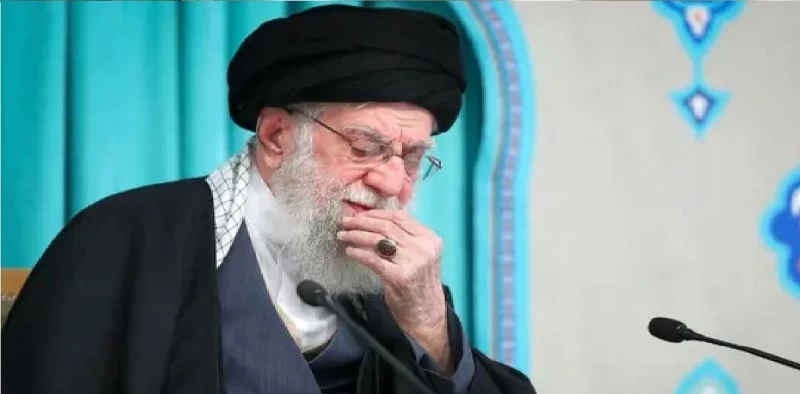
In a surprising development that shook the international political scene, US President Donald Trump announced today (Saturday) the assassination of Iranian Supreme Leader Ali Khamenei in a controversial post on his social media platform, Truth Social. This announcement comes amidst a great deal of conflicting information, with official authorities in Tehran quickly denying the report outright and affirming that the Supreme Leader continues to carry out his duties.
Details of Trump's announcement and the accusations made
The US president did not merely announce the news; he launched a scathing attack on Khamenei, describing him as "one of the most evil people in history." Trump wrote in his post: "Khamenei is dead... This is not only justice for the Iranian people, but for all Americans, and those people from many countries around the world, who have been killed or maimed by Khamenei and his gang of bloodthirsty thugs." Trump emphasized the precision of the intelligence operation, explaining that the Iranian leader "was not able to evade our intelligence and highly sophisticated tracking systems," and confirming close coordination with Israel in this regard. He added that "there was nothing he or the other leaders killed with him could do.".
Context of the US-Iran conflict
To understand the implications of this announcement, one must consider the long history of hostility between Washington and Tehran, spanning more than four decades since the 1979 Islamic Revolution. The previous Trump administration witnessed an unprecedented escalation known as the "maximum pressure" policy, which included withdrawing from the nuclear agreement and reimposing crippling economic sanctions. The world is also reminded of the 2020 assassination of Quds Force commander Qassem Soleimani in Baghdad, ordered directly by Trump, which places this current announcement, despite Iranian denials, within the context of the ongoing confrontation between the two sides.
The importance of the mentor's role and the impact of absence
Ali Khamenei, who assumed office in 1989 following Khomeini's death, occupies the apex of Iran's political and religious hierarchy. As the "Supreme Leader," he wields absolute power in the country, including control over the Revolutionary Guard, foreign policy, the media, and the judiciary. Therefore, any discussion of his absence raises existential questions about the future of the Iranian regime. A vacancy in this position could trigger a power struggle within the corridors of power in Tehran, particularly between the religious establishment and the Revolutionary Guard, over the identity of the potential successor—a possibility Trump alluded to when he described the event as "the only great opportunity for the Iranian people to take back their country.".
Israel's role and the regional dimension
Trump’s reference to “working closely with Israel” highlights the covert war raging in the Middle East. Tehran has long accused Tel Aviv of carrying out sabotage operations and assassinations of nuclear scientists and military leaders inside Iranian territory. If these reports are confirmed, it would represent a geopolitical earthquake that could redraw alliances in the region and directly impact the influence of pro-Iranian factions in Lebanon, Syria, Iraq, and Yemen.
-

 Local News 3 days ago
Saudi Arabia approves regulations for the continued presence of Gulf vehicles: duration and penalties
-
Local News 6 days ago
The Ministry of Interior begins procedures for a royal pardon for common law prisoners
-
Local news one week ago
19 requirements to reduce dust from projects in Riyadh and fines for violators
-
Politics, one week ago
Trump plans to create a $2 billion alternative to the World Health Organization
-
Culture and Art, 1 week ago
Amr Diab appears with his four sons and a highly anticipated concert in Türkiye
-
 Local news one week ago
Three billion riyals deposited as Ramadan aid for social security beneficiaries
-
Local news 12 hours ago
Jeddah Airport alerts for travelers due to airspace closure and flight disruptions
-
Local News 5 days ago
The deadline for property registration in Hail and Riyadh is Thursday