Politics
Iran forms a temporary leadership council after the assassination of Ali Khamenei
Iran announces the formation of a temporary leadership council comprising the president and the head of the judiciary following the assassination of Supreme Leader Ali Khamenei in US-Israeli airstrikes, amid a declaration of national mourning and regional tension.

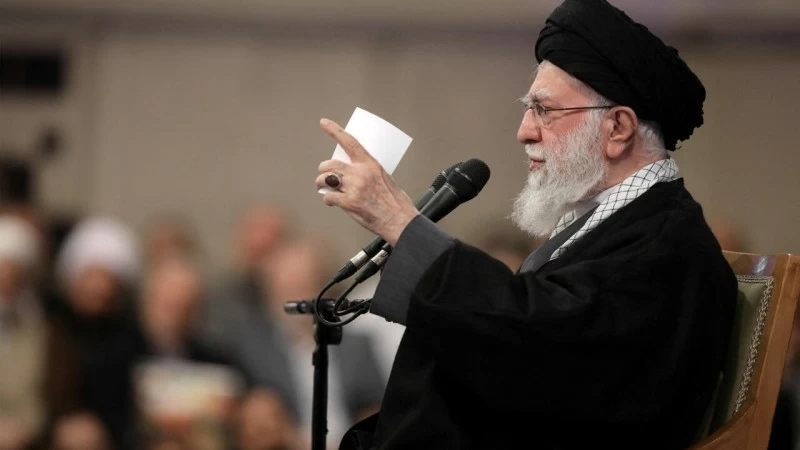
In a dramatic development that represents a historic turning point in the Middle East, the official Iranian news agency IRNA announced news that shook international political circles, confirming the temporary transfer of power in the Islamic Republic to a three-member leadership council, following the official announcement of the assassination of the country’s Supreme Leader, Ali Khamenei, in joint airstrikes carried out by US and Israeli forces.
Details of the new Transitional Council
According to the official statement, and based on the constitutional arrangements in place in Tehran, the interim leadership council consists of three key figures representing the pillars of the regime:
- Masoud Pezeshkian: The President of the Republic, who represents the executive authority.
- Gholam Hossein Mohseni Ejei: Head of the judiciary, who represents the hardline judicial wing.
- One of the jurists of the Guardian Council: to be chosen to complete the legal and legitimate quorum of the council.
This step comes to fill the sudden leadership vacuum and ensure the continued functioning of state institutions during the critical transitional phase the country is going through.
Constitutional context and mechanism for transfer of power
These procedures are based on Article 111 of the Iranian Constitution, which explicitly states that in the event of the Supreme Leader's death, removal, or resignation, the Assembly of Experts, composed of the President, the Head of the Judiciary, and one of the Guardian Council's jurists, assumes the leadership temporarily. This article also mandates that the Assembly of Experts convene immediately to begin intensive consultations to appoint the new Supreme Leader as quickly as possible—a process that could witness significant political wrangling between conservative and reformist factions within the regime.
Declaration of mourning and the repercussions of the national shock
In the first official response reflecting the magnitude of the political earthquake, the Iranian government declared a 40-day period of national mourning, a tradition deeply symbolic in Shia Islam. A full week of public holiday was also declared, with markets, educational institutions, and government offices closed, amidst an atmosphere of heightened anticipation and caution on the Iranian street.
Geopolitical dimensions and regional risks
This event comes at a highly sensitive time, as the region witnesses an unprecedented escalation. The position of Supreme Leader in Iran carries broad powers, including command of the armed forces, control of the Revolutionary Guard, and the formulation of foreign and nuclear policies. Therefore, Khamenei's removal from the scene in such a violent manner opens the door to multiple scenarios, ranging from direct military escalation in response to the assassination, to the region entering a period of strategic uncertainty and a realignment of alliances.
The international community, especially Western capitals and neighboring countries, is watching the next steps of the interim leadership council and how Tehran manages this thorny issue, amid fears that things could slide into an open confrontation that could change the map of the Middle East for decades to come.




Politics
Egypt reveals alternatives to Israeli gas after supplies halt
The Egyptian Ministry of Petroleum announces an emergency plan to secure alternatives after the cessation of Israeli gas supplies. Learn about the repercussions of the military escalation and its impact on energy supplies both locally and globally.
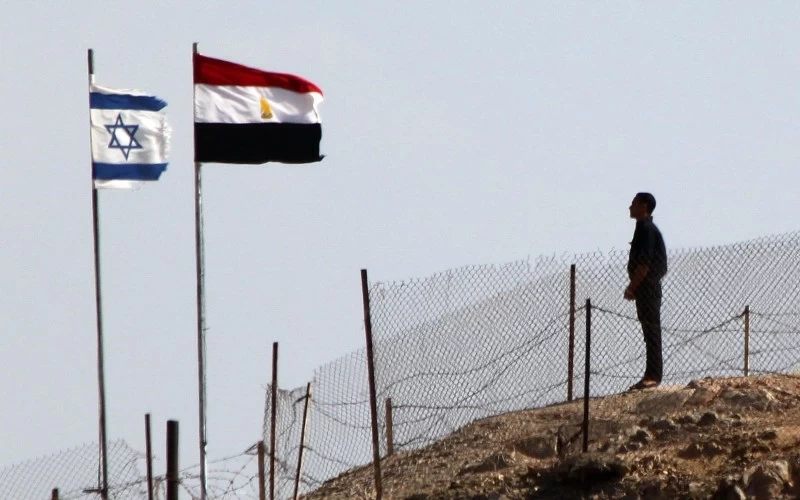
The Egyptian Ministry of Petroleum and Mineral Resources issued an official statement in response to the rapidly evolving situation in the region, which led to Israel's announcement of a suspension of natural gas supplies to Egypt. This halt, estimated at approximately 1.1 billion cubic feet per day from the Tamar and Leviathan fields in the Eastern Mediterranean, is based on the activation of the "force majeure" clause in the signed agreements, as a precautionary measure following the recent military escalation and exchange of strikes between the United States and Israel on one side, and Iran on the other.
Egypt's action plan and diversification of sources
The Ministry affirmed in its statement that it is closely monitoring all geopolitical developments and their direct impact on energy supplies in the region. In a message of reassurance to the public, the Egyptian government explained that it has a strategic plan to address such emergencies, based on diversifying energy sources and avoiding reliance on a single energy supplier. The Ministry indicated the readiness of alternative capacities, including utilizing the strategic reserve of fuel oil to operate power plants and increasing reliance on domestic production to compensate for temporary losses in the national gas grid.
Regional context and the importance of East Mediterranean gas
To understand the implications of this event, it is necessary to consider the broader context of energy relations in the region. Egypt and Israel have significant gas agreements primarily aimed at liquefying Israeli gas at Egyptian liquefaction plants (Idku and Damietta) for re-export to Europe, as well as helping to bridge a portion of Egypt's peak domestic consumption gap. These supplies are part of Egypt's ambition to become a regional energy hub, an ambition bolstered by the establishment of the East Mediterranean Gas Forum, headquartered in Cairo.
Economic and geopolitical repercussions
The supply disruptions have repercussions that extend beyond local borders. Domestically, the government is prioritizing securing the needs of power plants and factories to avoid any significant outages. Regionally and internationally, these disruptions cast a shadow over European energy security, especially with the approach of winter and the continent's reliance on liquefied natural gas (LNG) from Egypt as an alternative to Russian gas. Analysts emphasize that continued military tensions between Israel and Iran could lead to fluctuations in global energy prices, posing new challenges to emerging economies in the region.
The ministry concluded by emphasizing that the crisis management is being carried out in full coordination between all state agencies to ensure the continued flow of services to citizens and to maintain the stability of the local market despite the current regional challenges.
Politics
Iranian TV announces the death of Ali Khamenei: Details and repercussions of the event
Breaking: Iranian state television announces the death of Supreme Leader Ali Khamenei following US and Israeli airstrikes. A look at his life and the impact of his absence on the future of Iran and the Middle East.
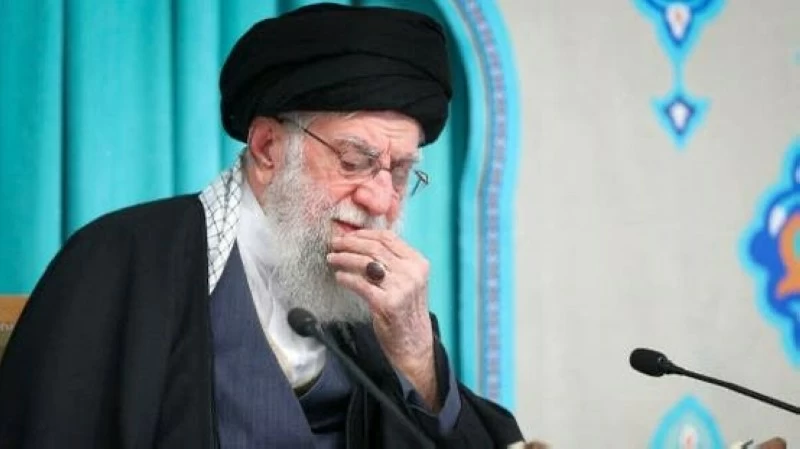
Iranian state television officially announced the death of Supreme Leader Ayatollah Ali Khamenei following a series of intense airstrikes launched by Washington and Tel Aviv on Tehran on Saturday. This announcement constitutes a political earthquake in the Middle East, as Khamenei's death marks the end of a long and complex chapter in the history of modern Iran and the entire region.
The end of an era that lasted for three decades
With the death of Ali Khamenei, the Islamic Republic has lost the man who held absolute power for over 35 years. Khamenei was not merely a political leader; he was the Supreme Leader and the ultimate authority on all state affairs, from foreign policy and the nuclear program to military strategies and the direction of the Revolutionary Guard. He personally shaped a foreign policy based on the principle of "exporting the revolution" and expanding regional influence through a network of alliances and militias in Iraq, Syria, Lebanon, and Yemen.
From a scene to the top of the political pyramid
Ali Hosseini Khamenei was born on April 19, 1939, in the city of Mashhad in northeastern Iran. He grew up in a conservative religious environment; his father was a well-known cleric in the seminary. He received his religious education in his hometown before moving to the holy city of Qom to pursue advanced studies under leading religious authorities, including Ruhollah Khomeini. He became involved early in the revolutionary movement against the Shah's regime and was arrested and exiled several times before assuming high-ranking leadership positions after the victory of the revolution in 1979, culminating in his presidency in 1981, and then his selection as Supreme Leader in 1989, succeeding Khomeini.
The repercussions of the power vacuum and the challenges of succession
This event presents the Iranian regime with an existential test: filling the enormous leadership vacuum. According to the Iranian constitution, the Assembly of Experts is tasked with selecting the new Supreme Leader, a process that could witness fierce competition between conservative and reformist factions, as well as between power centers within the Revolutionary Guard and the religious establishment. This development comes at a highly sensitive time, as the region grapples with unprecedented tensions, making Khamenei's absence directly impactful on the future of international agreements, energy security, and the balance of power in the Middle East.
regional and international landscape
Khamenei has long been a thorn in the side of Western policies in the region, adopting a hardline approach toward the United States and Israel. His departure is expected to reshape alliances, as world capitals, from Washington to Moscow and Beijing, await the identity of the new leadership and the course Tehran will take in the coming period, whether toward escalation or de-escalation.
Politics
Bahrain repels Iranian attack, shooting down 45 missiles and 9 drones
The Bahrain Defense Force announces the successful interception of 45 missiles and 9 Iranian drones. Learn about the details of the attack, the field security measures, and the General Command's warnings to citizens.

The General Command of the Bahrain Defence Force announced in an urgent official statement the successful interception by its advanced defense systems of a series of Iranian attacks targeting the Kingdom's airspace. The Command revealed that air defense units detected, destroyed, and shot down 45 missiles, in addition to nine explosive-laden drones, some of which were identified as Iranian-made Shahed-136 models, before they reached their targets.
Field readiness and site security
In detailing the defensive operation, the General Command explained that specialized field teams immediately began securing the sites where debris fell as a result of the aerial interception. These teams are operating according to well-defined emergency plans to ensure the safety of all citizens and residents and to confirm that the areas are clear of any hazardous materials or explosive remnants. The Command emphasized that the vigilance and readiness of the Bahrain Defense Force personnel were the decisive factors in repelling this aggression, which aimed to destabilize the security and stability of the Kingdom of Bahrain, stressing that the armed forces will remain the nation's impregnable shield.
The context of regional tensions and the importance of air defense
This event comes at a time of escalating security challenges in the region, highlighting the strategic importance of the advanced air defense systems possessed by the Gulf Cooperation Council (GCC) states. The Shahed 136 drones mentioned in the statement are kamikaze-type weapons designed to precisely strike ground targets, making Bahrain's success in intercepting this number a testament to the effectiveness of its radar and interception systems and the readiness of its military personnel to counter unconventional threats.
Urgent instructions for citizens and residents
In its commitment to public safety, the General Command urged everyone to exercise extreme caution during these critical times. It explicitly called upon citizens and residents to remain indoors and only leave for essential purposes, in order to facilitate the movement of security and emergency teams and to protect lives from any shrapnel that may result from responding to aerial threats.
Combating rumors and gathering information
The Bahraini authorities also emphasized an aspect no less important than the military confrontation: the information war. The General Command called for refraining from circulating rumors or inaccurate news that could incite panic and serve the objectives of hostile entities. It stressed the importance of obtaining information exclusively from official sources and accredited national channels, and of staying away from attack sites or gatherings around them, to ensure the smooth and efficient conduct of security operations.
-

 Local News 3 days ago
Saudi Arabia approves regulations for the continued presence of Gulf vehicles: duration and penalties
-
Local News 6 days ago
The Ministry of Interior begins procedures for a royal pardon for common law prisoners
-
Local news one week ago
19 requirements to reduce dust from projects in Riyadh and fines for violators
-
Politics, one week ago
Trump plans to create a $2 billion alternative to the World Health Organization
-
Local news 18 hours ago
Jeddah Airport alerts for travelers due to airspace closure and flight disruptions
-
Culture and Art, 1 week ago
Amr Diab appears with his four sons and a highly anticipated concert in Türkiye
-
 Local news one week ago
Three billion riyals deposited as Ramadan aid for social security beneficiaries
-
Local News 5 days ago
The deadline for property registration in Hail and Riyadh is Thursday