Politics
Ibrahim Al-Faqih: I was born on the day of "Sayl Thuluthan" (a flood of Tuesdays)... and I broke my fast before sunset
I'm working on an encyclopedia of companions on the journey, compiling their names. I was amazed to see men baking food in ovens. (Al-Ittihad players Abdulmajid)

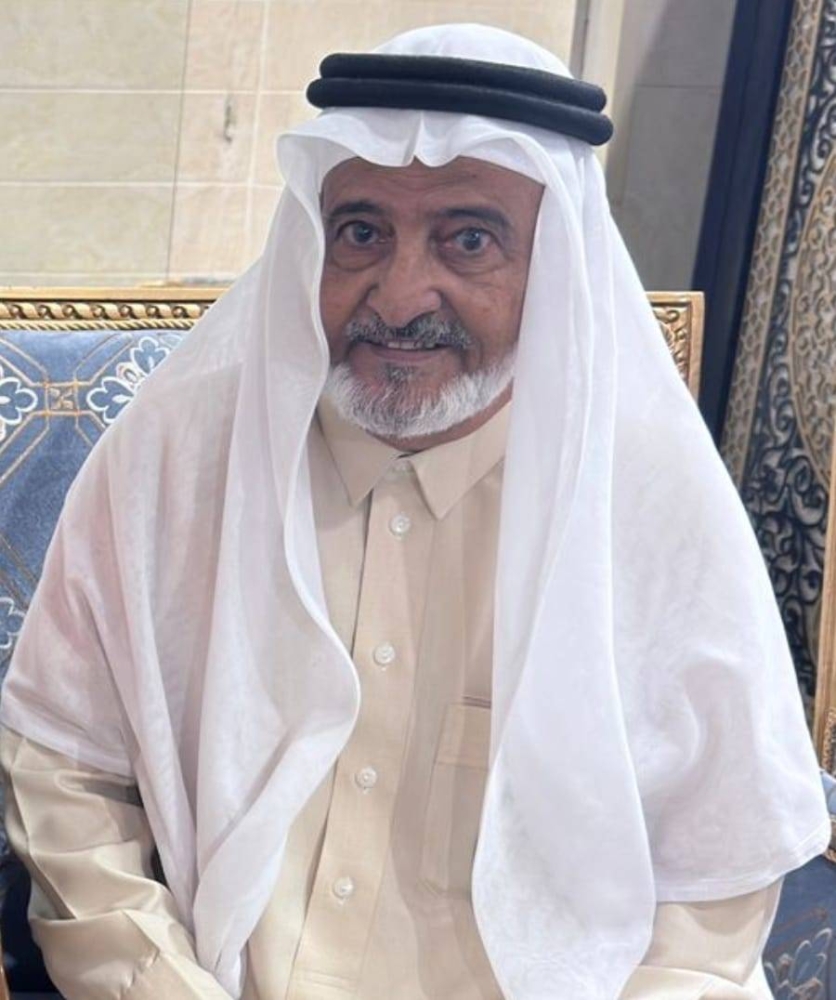
I am working on an encyclopedia of companions on the journey and compiling their names
I was surprised
And I see men baking food in ovens
Al-Ittihad players Abdulmajid, Ghazi Kayyal, and Madani Rahimi... my teammates
The educator Ibrahim Ali Al-Faqih was distinguished by his generosity and sincere loyalty. Successive generations still acknowledge his contributions, emulate his life, and recall his career as Director of Education in Al-Qunfudhah Governorate, as well as his roles as supervisor, teacher, and scholarship recipient. His efforts did not stop at 35 years of government work; he continues to be active in social and cultural activities. Here is the text of our conversation with him:
• When was the hour of his arrival into the world?
•• I was born in the year 1367 AH, and birth dates were dated according to specific names and events such as wars, floods, rains and storms, and my birth coincided with the “Thuluthan flood”, and I was born in the town of Al-Habil in Al-Qunfudhah Governorate.
Which season were you born in?
•• She was born in the spring season.
• What does belonging to Al Qunfudhah Governorate mean?
•• A source of pride and honor, how could it not be, as it is the birthplace and the memories of youth, childhood, and playing with peers.
• Did you grow up in a rural environment? What events, situations, and people awakened your early consciousness?
•• I grew up in a village and agricultural environment, as my father - may God have mercy on him - was a landowner. He used to assign me grazing and working with farmers, so that I would deliver water and food to the farmers. I continued with those tasks until after the primary stage, and after that I moved to the city of Al-Qunfudhah to study the intermediate stage.
Headache and thirst • How was your first day of fasting?
•• We grew up in a very difficult environment, and the heat was very high. I was responsible for my father’s work, which extended from dawn until evening, starting with taking the sheep to graze, passing through going to school, and ending with returning to the pasture at sunset. Therefore, I did not fast early in elementary school, but rather I started fasting in middle school when I had time to study middle school in Al-Qunfudhah.
• What is your mother's and father's stance on your early fasting? And did they, or either of them, give you permission to break the fast due to exhaustion?
•• My first attempt was when I was in the fifth grade of elementary school. I fasted until half an hour before sunset, but I could not resist the headache and the intense thirst. However, I became regular in fasting when I was in the first grade of middle school. My parents encouraged me to fast, but they felt sorry for us because of the difficult weather and the many tasks we were assigned.
What did the family eat for suhoor at that time?
People were keen to have sheep and milking cows in order to provide them with “Eidam” (a type of stew). During Ramadan, there was no large spread, but rather very brief meals consisting of sourdough bread with yogurt, to which some crumbled dough was added, and fenugreek with oil was added in the middle. Some of the wealthy would add some wild ghee.
What household chores were you assigned?
•• Grazing begins after the Fajr prayer, and I stop to go to school. Then I return to grazing from after the Asr prayer until just before the Maghrib prayer.
Encyclopedia of Companions on the Path • What difference or advantage did you feel you had over your peers?
•• I was fortunate that all my peers joined the primary institute and I joined the intermediate stage, and I was among the first students to study for that stage and obtain it, and from there I completed secondary school in Jeddah due to the lack of a secondary school in Al-Qunfudhah at that time.
• Who do you remember from your childhood friends?
I remember them and I am currently working on an encyclopedia of companions on the journey by listing all the names at all stages and creating a biography for them, and this will be published in a book soon, God willing.
Why do we feel nostalgia for our early days in life?
•• There is no doubt that past memories are happy for everyone as they remind them of their childhood haunts and past friends.
• Where did you feel the sense of separation from the village and the change in your lifestyle?
I felt a sense of separation from the village after graduating from elementary school, and I moved to the city of Al-Qunfudhah, which was present for us. It was the first moment in my life when I saw the daily market and a group of shops. It was also a moment of wonder when I saw men baking food in ovens. I also became acquainted with many meals that I was not familiar with in the village, especially during the month of Ramadan, including soup, samosas, beans, fried foods, and pastries that Al-Qunfudhah was famous for. Likewise, when I moved to Jeddah, things changed, and also to Riyadh, as my life witnessed several moves, and I benefited from all those long journeys.
My pre-dawn meal is "Thrif"
• When did your relationship with education begin?
•• My relationship with education began in 1373 AH, and I was fortunate to be among the first students in the formal education system that the Ministry of Education began to establish. I studied primary school in my village of Al-Habil, intermediate school in Al-Qunfudhah, and secondary school in Jeddah at Al-Shati Secondary School. I then moved to Riyadh University and joined the College of Arts, Department of Geography. Then I had the opportunity to travel to the United States of America and obtained a master’s degree in educational administration.
• What are the memorable moments from that period?
•• There are so many memorable situations that it is difficult to count them all, as each stage of education has its own beautiful situations and memories.
What is your Ramadan schedule from dawn until suhoor?
•• I read what I can of the Qur’an after the Fajr prayer, then I go back to sleep until before the Dhuhr prayer, then I go to the mosque and pray and wait for an hour to read what I can of the Qur’an, then I go back home and watch some programs until the Asr prayer, then I go back to the mosque before the Asr call to prayer and complete my reading of the Qur’an and go back home, and after Maghrib I watch some televised programs until before the Isha prayer, and when I finish the Taraweeh prayer I meet some friends and colleagues.
• Which dishes, meals, or foods do you make sure are on your Ramadan table, especially local ones?
•• The most important dishes for me in Ramadan are soup and samosas for Iftar, as well as vegetables. For Suhoor, I prefer “Thareef,” which I have been accustomed to since childhood, as well as “Kabsa.” Thareef is made of discs of millet or corn that are crumbled with milk, heated, and then a little sugar and a little ghee are added to it. I still maintain this meal to this day.
Do you follow radio or television programs? If so, what are they?
•• I have been a listener of Saudi radio for a very long time, especially during Ramadan. There were several distinctive programs at that time, including “Guest of the Night,” which was presented by the creative broadcaster Dr. Badr Karim, may God have mercy on him. There were also television programs, including the program of Sheikh Ali Al-Tantawi, which is one of the programs I love most.
Why do we have fewer friends as we get older?
•• That is normal. In youth, a person is very active and moves around and has many friends and companions, but life separates people and only a few remain. Therefore, you find some people who are hurt and regretful because of the separation, but they were not prepared for this and know that the reason is the interest of work, and this is normal. And the few who remain are the ones we call friends.
These are my colleagues. Do you have any sporting interests? And what is your favorite team?
•• As for sports inclinations, unfortunately I did not participate in many sports activities in elementary school, and I was not given the opportunity at all stages, but I used to follow and encourage. In high school, I used to follow the matches that were held at Al-Sabban Stadium in Jeddah, and I had colleagues who were players of Al-Ittihad Club, including Abdulmajid Kayyal, Ghazi Kayyal, who was a referee, and Dr. Madani Rahimi. These were my colleagues in high school, and they used to invite me to attend the matches and victory celebrations that were held at the headquarters of Al-Ittihad Club in Al-Baghdadiyah, and since that time I became attached to supporting Al-Ittihad Club, the Dean.
Which poem do you think is worth its weight in gold?
•• The truth is, I love to listen to poets and read many of them, especially those we read during our studies, such as Al-Mutanabbi and Abu Al-Ala Al-Ma’arri, as well as modern poets. But I really don’t remember that there is a particular poem that is the most beautiful poem for me, because beauty is renewed with regard to poetry and meanings.
• What time or era would you like to have lived in?
•• I thank God Almighty that I have enjoyed my life over the past years, and I ask God Almighty to make me one of those whose life is long and whose deeds are good. I was fortunate to have different travels in which I enjoyed them and got to know friends and men from my village, or the people of Al-Qunfudhah, or Jeddah, or Riyadh, or my colleagues whom I got to know in the field of work. All stages of my life are important to me and dear, and we ask God to make our end good in all matters.
Related News




Politics
Assassination of Iran's new Defense Minister Majid Ibn Reza in Tehran
Details of the assassination of Iran’s new Defense Minister Majid Ibn Reza in an Israeli airstrike in Tehran, 48 hours after his appointment as successor to Aziz Nasirzadeh, and the escalation of tension in the region.

In a rapidly escalating security and military development reflecting the peak of tensions in the region, informed Iranian sources reported today (Tuesday) the death of Iran's newly appointed Defense Minister, Majid Ibn al-Reza , less than 48 hours after his appointment to this sensitive post. This incident follows the death of his predecessor, Aziz Nasirzadeh, who was also killed in Israeli airstrikes targeting the capital, Tehran, a few days ago, according to media outlets close to the Iranian Revolutionary Guard.
Details of the operation and the Israeli targeting
The Israeli military, in an official statement, claimed responsibility for the operation, confirming that it targeted a senior Iranian commander in Tehran as part of a series of intensive and precise airstrikes. Military spokesman Efi Defrin explained that Israeli forces focused their strikes on the most heavily fortified areas of the Iranian capital, indicating that the operation targeted "the highest echelons" of the Iranian defense establishment.
The Israeli army reiterated its full readiness to continue carrying out qualitative operations against Iranian targets for the coming weeks, stressing that the recent strikes sent strong and direct messages to the Iranian regime regarding Israel’s ability to reach strategic targets deep inside Iranian territory.
Unprecedented security breach
The assassination of two defense ministers within a few days, and in the heart of Tehran, represents a dangerous indication of the extent of the security and intelligence breaches plaguing the Iranian military establishment. Observers believe that reaching figures of such high rank, and within heavily fortified security zones, signifies that the conflict has shifted from a phase of proxy wars and border skirmishes to one of direct confrontation targeting the very core of the military regime.
Regional context and repercussions of the event
These developments come at a time of unprecedented tension in the Middle East, with growing international fears of a slide into a full-blown regional war. Targeting defense ministers is not merely a tactical military operation; it represents a shift in the rules of engagement that have been in place for years. This escalation presents the region with a range of possible scenarios, as Tehran is expected to seek a face-saving response that restores the balance of deterrence severely damaged by these successive strikes.
The future of the conflict and its impact on stability
Strategically, this event raises serious questions about the future of Iran's leadership structure and its ability to protect its senior officials. Furthermore, the Israeli military's continued threats of operations lasting for weeks suggest that the region is heading toward a prolonged period of instability, which could directly impact global energy markets and shipping lanes, necessitating urgent international diplomatic action to contain the situation before it is too late.
Politics
Israeli ground invasion of southern Lebanon and assassination of Hezbollah leaders
Dangerous developments in Lebanon: Israeli forces begin a ground invasion of the south, and violent raids on the southern suburbs of Beirut target Hezbollah leaders amid fears of an all-out war.

In a significant military development that threatens to widen the scope of the conflict in the Middle East, Israeli radio officially announced that Israeli ground forces had begun entering southern Lebanon, coinciding with an unprecedented intensification of airstrikes. This ground operation comes amid escalating tensions between Iran and its allies on one side, and Israel and the United States on the other, placing the entire region on the brink of disaster.
Precise airstrikes and assassinations of leaders in the suburbs
In parallel with the ground offensive, Israeli warplanes launched a concentrated airstrike today (Tuesday) targeting a meeting of senior Hezbollah commanders in Beirut's southern suburbs. Field reports indicate that the strike killed those present, in a blow aimed at crippling the party's leadership capabilities and sowing discord within its ranks amidst escalating fighting.
Hell reaches the southern villages
For the second day in a row, the bombardment of villages and towns in southern Lebanon continued unabated. As part of the escalation that began Sunday night/Monday morning, a fierce wave of airstrikes and artillery shelling targeted several populated towns. According to field reports, the attacks were particularly intense on the Ain al-Samahiyeh area, located between the towns of Zawtar and Nabatieh al-Fawqa, while other missiles struck the town of Siddiqin, causing widespread damage to infrastructure and property.
The context of the conflict and its regional dimensions
This ground invasion cannot be separated from the broader context of the ongoing war, as the fierce Israeli response followed Hezbollah's launch of a barrage of drones and missiles targeting the heart of northern Israel. This tit-for-tat escalation reflects a shift in the rules of engagement, moving the confrontation from cross-border shelling to ground operations and targeted assassinations deep inside Lebanon.
International repercussions and concerns
This ground incursion has sparked widespread international and regional concern that the situation could escalate into a full-blown war, potentially extending beyond Lebanon and Israel. Recent history in this region, particularly the 2006 war, demonstrates that ground operations often complicate the military and political landscape, increasing human and material losses, thus necessitating urgent diplomatic intervention to contain the crisis before it's too late.
Politics
Greece sends military reinforcements to Cyprus after Iranian drone attack
Greece deploys the Kimon frigate and F-16 fighter jets to Cyprus in response to an Iranian drone attack on the British base at Akrotiri. Details of the military escalation in the Eastern Mediterranean.

In a significant development indicating escalating tensions in the Eastern Mediterranean, the Greek Ministry of Defense announced an immediate military deployment, including a naval and air strike force, to the Republic of Cyprus. This decisive action comes in response to an aerial attack carried out by a drone, reportedly of Iranian manufacture, targeting the Royal Air Force base at Akrotiri on the island last night.
In detailing the military deployment, Greek Defense Minister Nikos Dendias affirmed that Athens would not stand idly by in the face of threats to regional security, announcing the dispatch of two advanced warships, spearheaded by the French-built Belharra-class frigate "Kimon." This frigate is distinguished by its advanced technological equipment and modern radar and defense systems designed to counter aerial threats, including anti-drone systems. In parallel with the naval support, orders were issued for four F-16 fighter jets to deploy and reinforce the air defense umbrella of the Republic of Cyprus against any unwarranted violations or external threats.
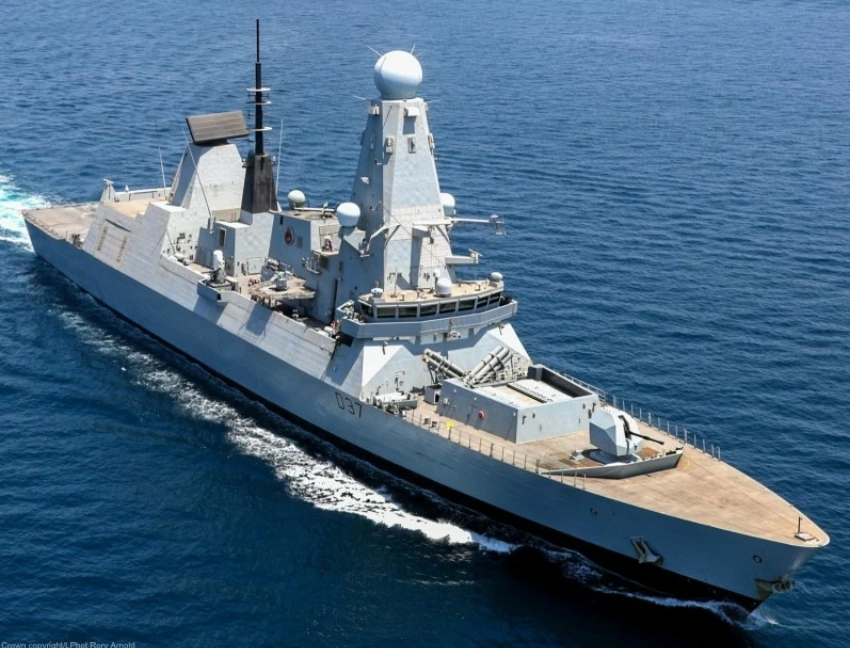
Minister Dendias described this rapid deployment as "an expression of full and absolute solidarity" with Nicosia, stressing in his statements that the attack not only targeted the British base, but also represented "a dangerous escalation" that threatens the security and stability of the entire island and the vital Eastern Mediterranean region.
The strategic importance of the Akrotiri base
To understand the dimensions of this event, it is worth noting that the Akrotiri base is not just an ordinary military facility; it is one of two sovereign British bases in Cyprus (along with Dhekelia) that the United Kingdom retained under the 1960 Treaty of Independence. This base plays a pivotal role as a logistical and operational hub for Western forces in the Middle East, making its targeting by a drone a political and military message that transcends the geographical boundaries of the island, reaching Western influence in the region.
Repercussions of the escalation in the Eastern Mediterranean
This Greek move carries profound geopolitical implications, reaffirming the unspoken doctrine of joint defense between Greece and Cyprus. Amid the turmoil in the Middle East, Cyprus is seen as a forward bulwark for the European Union. Observers believe that the deployment of the Belkara-class frigates, among the most modern vessels in the Greek arsenal, sends a strong deterrent message to any regional actors attempting to exploit the security vacuum or test the patience of European alliances. This escalation could impose new rules of engagement in the region, necessitating increased international attention to ensure that the situation does not spiral into wider confrontations.
-

 Local News 3 days ago
Jeddah Airport alerts for travelers due to airspace closure and flight disruptions
-
Local News 5 days ago
Saudi Arabia approves regulations for the continued presence of Gulf vehicles: duration and penalties
-
Local news one week ago
The Ministry of Interior begins procedures for a royal pardon for common law prisoners
-
Local news one week ago
The deadline for property registration in Hail and Riyadh is Thursday
-
Sports one week ago
Tickets for the Al-Ahli vs. Al-Hilal King's Cup match postponed: New date
-
Local news one week ago
Under the patronage of the Minister of Information, an agreement was signed between the Ministry of Information and Waves Marketing Company
-
Local news one week ago
Saleh Al-Maghamsi appointed Imam of the Prophet's Mosque: Details of the Royal Decree
-
Culture and Art 6 days ago
The Devil's Prisons series was halted: The full story of "The Emperor's" being moved to YouTube