Politics
Hussam bin Saud: Diversifying products enhances Al-Baha's tourism standing
The Governor of Al-Baha Region, Prince Dr. Hussam bin Saud bin Abdulaziz, stressed the importance of diversifying tourism products and promoting sustainability

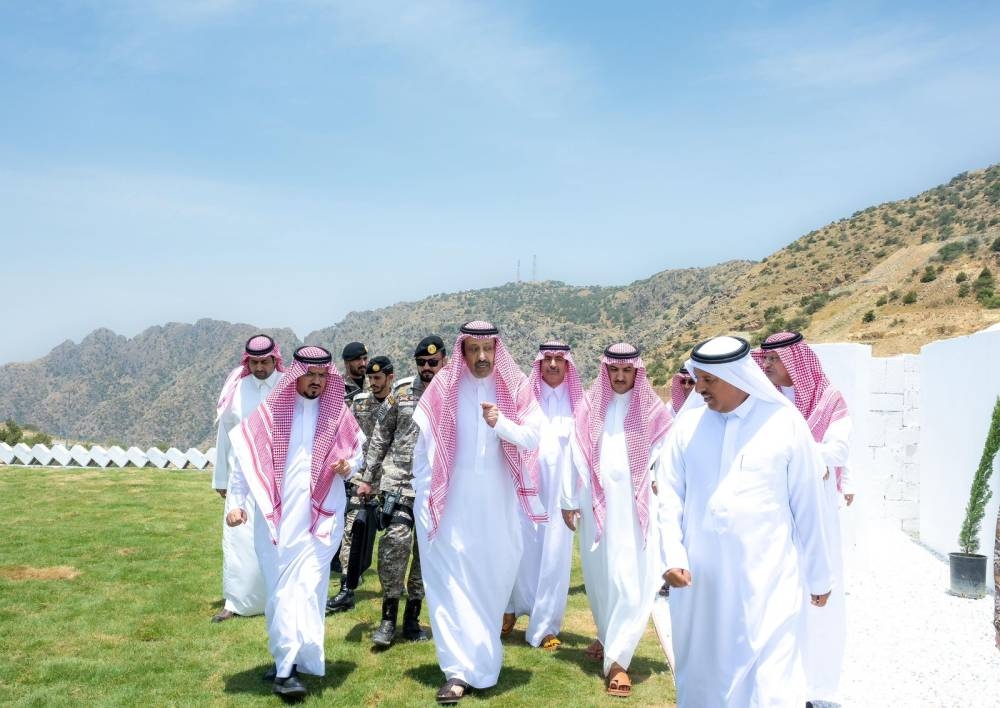
Prince Dr. Hussam bin Saud bin Abdulaziz, Governor of Al-Baha Region, stressed the importance of diversifying tourism products, promoting environmental sustainability, and achieving visitor satisfaction, which enhances Al-Baha’s position as a distinguished summer destination at the level of the Kingdom.
During his visit today to a number of forests and parks, and his follow-up on the ongoing preparations for the Al-Baha summer season, and his assessment of the readiness of the sites and services provided to visitors, Prince Hussam stressed to the relevant authorities the importance of continuing to work on developing the sites, modernizing the infrastructure, improving the quality of services, and providing means of comfort and luxury for visitors, in order to contribute to enhancing the overall tourism experience.
The Governor of Al-Baha Region expressed his admiration for the development he witnessed in the level of tourism services, including the "Capsule and Dome Lodge" experience located overlooking Raghadan Forest. He listened to an explanation from the Secretary of Al-Baha Region, Dr. Ali bin Mohammed Al-Sawat, about the details of a number of unique tourism experiences, which are considered one of the modern initiatives in the tourism accommodation sector in the region. Al-Sawat explained that the experience aims to provide innovative accommodation options at reasonable prices, in line with contemporary tourism trends, and to meet the aspirations of multiple categories of visitors, especially young people and families looking for new and distinctive experiences.
The field tour of the Prince of Al-Baha region comes within the framework of his constant keenness to support tourism development efforts in the region, enable quality initiatives, and encourage the private sector to actively contribute to enriching the experience of local and international tourists in the Al-Baha region.
Related News




Politics
Iran: Formation of a temporary leadership council and the start of the transitional phase
Ali Larijani announces the start of the transitional phase in Iran and the formation of a temporary leadership council comprising the president, the head of the judiciary, and a jurist, to manage the country until a successor to Supreme Leader Ali Khamenei is elected.
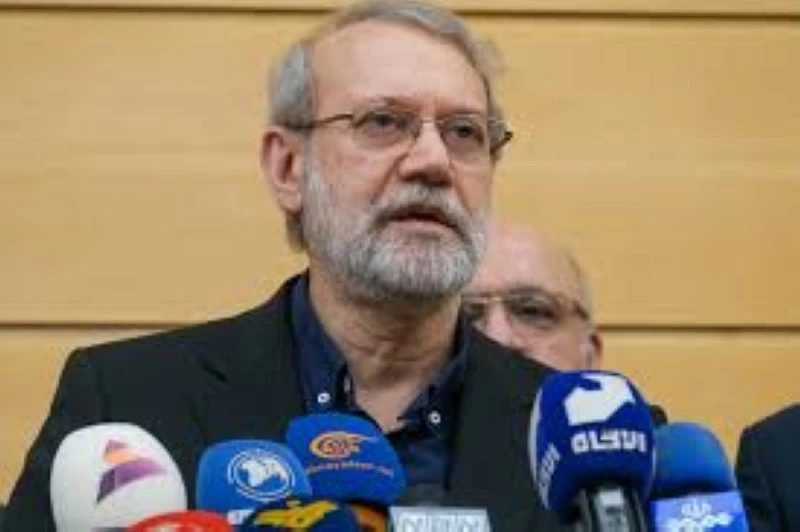
The Secretary of Iran's Supreme National Security Council, Ali Larijani, officially announced the start of the transitional phase in the country, confirming that a temporary leadership council would be established very soon to manage state affairs. This pivotal announcement, according to a breaking news report on Iranian state television, marked the beginning of the transitional phase on Sunday, following the announcement of the death of Supreme Leader Ali Khamenei.
Details of the interim leadership council
In detailing the constitutional procedures to be followed, Larijani explained that a "temporary leadership council will be formed soon," referring to the structure of this council as stipulated by the Iranian constitution for emergency situations. This council will assume full responsibility, comprising the president, the head of the judiciary, and a member of the Guardian Council, to ensure the continued functioning of sovereign state institutions until the election of a new leader.
Constitutional context and succession mechanism
This move comes in implementation of Article 111 of the Iranian Constitution, which regulates the transfer of power in the event of the Supreme Leader's death, removal, or incapacitation. Larijani confirmed that the interim leadership council "will assume the duties of the Supreme Leader until a successor to the late Ali Khamenei is elected," emphasizing the speed of the process by saying, "This council will be formed as soon as possible, and we have been working on its formation since today.".
It is worth noting that the Assembly of Experts, composed of 88 elected jurists, will hold emergency and intensive sessions to discuss the selection of the third Supreme Leader of the Islamic Republic, in a process that may take days or weeks, making the role of the interim leadership council vital in maintaining stability during this critical period.
The importance of the event and its regional impact
This event represents a historic turning point in the trajectory of the Iranian political system, given the broad powers vested in the position of the Supreme Leader, which include command of the armed forces, control of the Revolutionary Guard, and the formulation of the country's foreign and strategic policies. The world, as well as regional and international powers, are watching Tehran closely to observe the transfer of power and the smooth functioning of the political process, due to its direct implications for the region's volatile issues, the nuclear agreement, and the geopolitical balance in the Middle East.
In concluding his remarks, which aimed to reassure the Iranian public and send messages of strength abroad, Larijani said: "We stand united against our enemies," referring to internal unity in the face of potential challenges during this critical phase of contemporary Iranian history.
Politics
Saudi Arabia condemns the Iranian attack on Oman and declares its full solidarity
The Kingdom strongly condemns the Iranian attack on the Sultanate of Oman, and affirms its readiness to put all its capabilities at the disposal of Muscat, warning of the consequences of Tehran’s continued undermining of the security and stability of the region.

The Kingdom of Saudi Arabia expressed its strong condemnation and denunciation of the brutal Iranian attack targeting the sisterly Sultanate of Oman, describing it as a blatant violation of the sovereignty of a neighboring state and a founding member of the Gulf Cooperation Council. This firm stance affirms Riyadh's categorical rejection of any infringement upon the security and stability of the Sultanate, emphasizing that this escalation constitutes a serious breach of international norms and conventions that stipulate respect for the sovereignty of states and good neighborliness.
Unlimited Saudi solidarity with Muscat
In an official statement reflecting the depth of fraternal relations and shared destiny, the Kingdom affirmed its commitment to providing all its resources and capabilities to support the Sultanate of Oman in all measures it takes to protect its territory and citizens. Riyadh clarified that Oman's security is an integral part of the Kingdom's security, and that any threat to Muscat is considered a direct threat to Riyadh, thus necessitating a unified Gulf and Arab stance against these transgressions.
Dimensions of the escalation and its impact on the stability of the region
The Kingdom of Saudi Arabia warned of the grave consequences of the Iranian regime's continued hostile policies and violations of state sovereignty, noting that such actions undermine de-escalation efforts and threaten regional and international peace and security. This warning stems from the Kingdom's unwavering commitment to sparing the region the ravages of conflict. However, the escalating aggression necessitates a firm and decisive response to deter any attempts to destabilize the vital Arabian Gulf region, which is crucial to the entire world.
A call for the international community to assume its responsibilities
In closing, the Kingdom called upon the international community and the Security Council to take serious stances and decisive measures against Iran's repeated violations. It stressed that international silence regarding these attacks encourages further chaos, emphasizing the need to activate international mechanisms to hold accountable those who disregard international law, in order to ensure the stability of energy supplies and protect international waterways and navigation, which could be affected by this dangerous escalation.
Politics
Khamenei's assassination and the Gulf escalation: details of the attacks and the targeting of an oil tanker
Comprehensive coverage of the military escalation in the Gulf following the killing of Ali Khamenei. Missile attacks on Gulf states and the targeting of an oil tanker in Oman raise global fears of a full-blown war.
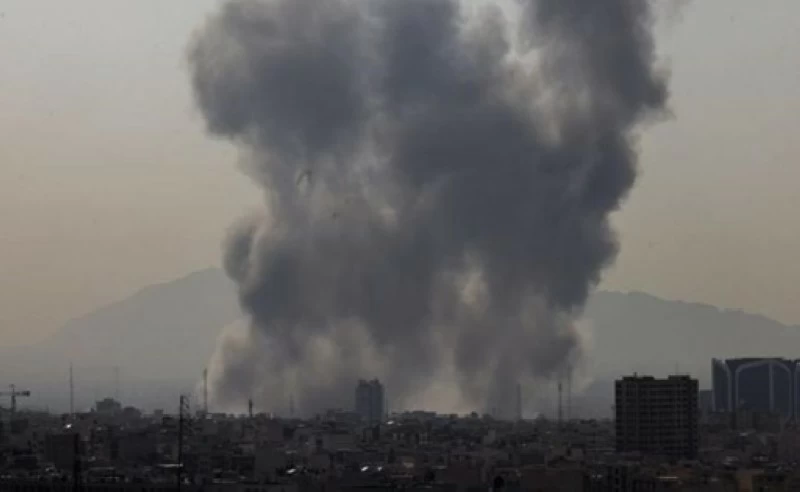
The Middle East and the Arabian Gulf region are witnessing a historic transformation and an unprecedented, dangerous turning point, as the pace of military escalation accelerates dramatically following the announcement of targeted airstrikes that killed Iranian Supreme Leader Ali Khamenei, along with a number of senior military commanders in Tehran. This momentous event has placed the entire region on the brink of a conflagration, with international observers describing it as the most dangerous development in the history of modern regional conflict.
A wave of widespread retaliatory attacks
In an immediate and direct response, the Gulf Cooperation Council (GCC) countries today witnessed a fierce wave of Iranian retaliatory attacks. Swarms of drones and ballistic missiles targeted the infrastructure and airspace of the United Arab Emirates, Qatar, Bahrain, Oman, and Kuwait. Despite the intensity of the attacks, the advanced air defense systems of the Gulf states successfully intercepted the vast majority of these threats. However, the explosions and air raid sirens triggered widespread panic and disruption to civil aviation, and cast a dark shadow over financial markets, which experienced sharp fluctuations.
Targeting shipping lanes in Oman
In a significant development that threatens global energy security, an oil tanker was directly attacked off the coast of Oman, specifically five miles north of the strategic port of Khasab. The attack resulted in injuries to four people, necessitating the immediate evacuation of the entire crew. The Omani News Agency confirmed the injuries, further escalating the risks posed by the Strait of Hormuz.
Strategic context and international importance
This escalation cannot be understood in isolation from the geopolitical importance of the Gulf region, a vital artery for the global economy. The Strait of Hormuz, located near the site of the tanker attack off Khasab, sees approximately 20% of the world's oil supply pass through it daily. Targeting oil tankers evokes memories of the "Tanker War" of the 1980s, but today it occurs against a backdrop of more sophisticated and precise missile arsenals, placing a heavy responsibility on the international community to ensure freedom of navigation.
Expected repercussions
Strategic analysts believe that the assassination of a figure as significant as Ali Khamenei represents a breach of traditional rules of engagement, potentially pushing the region toward a protracted, open-ended conflict. The repercussions will not be limited to the military sphere; they will extend to a dramatic surge in oil prices and maritime insurance costs, as well as a reshaping of regional security alliances to address the potential leadership vacuum in Tehran and anticipated retaliatory actions.
-

 Local News 3 days ago
Saudi Arabia approves regulations for the continued presence of Gulf vehicles: duration and penalties
-
Local News 6 days ago
The Ministry of Interior begins procedures for a royal pardon for common law prisoners
-
Local news one week ago
19 requirements to reduce dust from projects in Riyadh and fines for violators
-
Local news one day ago
Jeddah Airport alerts for travelers due to airspace closure and flight disruptions
-
Politics, one week ago
Trump plans to create a $2 billion alternative to the World Health Organization
-
 Local news one week ago
Three billion riyals deposited as Ramadan aid for social security beneficiaries
-
Culture and Art, 1 week ago
Amr Diab appears with his four sons and a highly anticipated concert in Türkiye
-
Local News 5 days ago
The deadline for property registration in Hail and Riyadh is Thursday