Politics
Hamas demands Israeli withdrawal; Trump says negotiations are crucial
A real opportunity for peace in Gaza is on the horizon with crucial negotiations between Israel and Hamas, and Trump affirms America's commitment to ending the conflict.

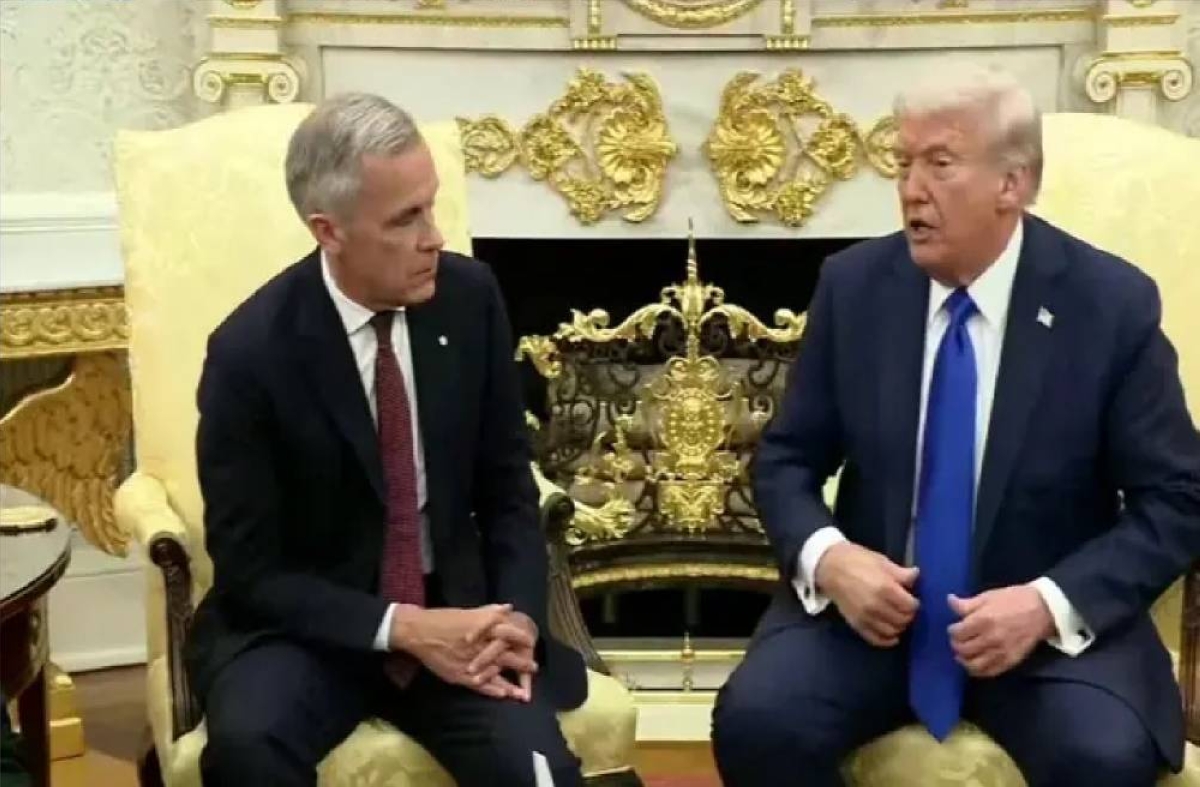
Negotiations between Israel and Hamas: A real opportunity for peace in Gaza
US President Donald Trump asserted on Tuesday that negotiations between Israel and Hamas are at a critical juncture, indicating a "real opportunity" for a peace agreement in Gaza. This statement came during his meeting with Canadian Prime Minister Mark Carney at the White House, where Trump explained that peace in the Middle East is possible.
American commitment to ending the conflict
Trump noted the participation of American negotiators in these indirect talks, emphasizing the United States' commitment to ending the conflict and restoring a peace-based foreign policy. US envoy Steve Wittkopf and the president's son-in-law, Jared Kushner, joined these efforts, while the Egyptian foreign minister confirmed that the American delegation would join tomorrow.
For his part, US Secretary of State Marco Rubio stated that the United States, under Trump's leadership, is spearheading efforts to secure the release of all hostages and end Hamas's rule in Gaza. Rubio explained that the goal is to achieve a lasting peace that guarantees Israel's security and the region's prosperity for generations to come, considering this vision to be the core of Trump's plan.
Indirect talks and positive progress
Indirect talks between Hamas and Israel continued for a second day in Sharm el-Sheikh, Egypt, amid a positive atmosphere. US media outlets reported intensive efforts to reach a final agreement by the end of the week. According to Hamas leadership sources, the second day of negotiations concluded with a focus on withdrawal maps and a timetable for the release of Israeli prisoners.
Hamas demands
Sources indicated that Hamas demanded that the release of Israeli prisoners be linked to the completion of Israel's withdrawal from the occupied territories. The movement also stressed the necessity of releasing the last prisoner concurrently with Israel's full withdrawal from the agreed-upon areas.
Regional and international context
These developments come amid widespread international interest in achieving stability and peace in the Middle East. In this context, Saudi Arabia plays a pivotal diplomatic role by supporting initiatives aimed at strengthening regional security and stability. This role reflects the strategic balance the Kingdom seeks to achieve in its foreign policy.
In light of this relatively optimistic atmosphere, the question remains as to the extent to which the parties involved can overcome the historical and political obstacles to achieve a lasting and sustainable peace in the region.




Politics
Türkiye intercepts Iranian missile, averting a Mediterranean disaster
A dangerous escalation in the Eastern Mediterranean: Turkish defenses intercept an Iranian missile. Details of the incident, the role of the Kürecik base, and the risks of drawing NATO into the regional conflict.

In a significant development that threatens to widen the scope of the conflict in the Middle East, the Turkish Ministry of Defense announced on Wednesday that NATO air defense systems successfully intercepted and destroyed a ballistic missile launched from Iranian territory. The missile was heading towards Turkish airspace via the eastern Mediterranean Sea, an incident that has heightened tensions across the entire region.
Details of the objection and exchanged messages
The ministry confirmed in its statement that Ankara is maintaining close coordination with NATO leadership and Western allies, calling on all regional parties to exercise restraint and avoid steps that could lead to a military escalation. This incident comes at a time when Tehran has intensified its missile and drone attacks against Israeli targets and US bases in Iraq, Jordan, and the Gulf states since the war began on Saturday morning. However, the proximity of the threat to Turkish airspace represents a dangerous strategic turning point.
The strategic importance of the Incirlik and Kurecik bases
To understand the dimensions of this event, one must look at the military map within Turkey. The country hosts vital NATO sites, most notably Incirlik Air Base near Adana, which US forces have used for decades as a forward logistical and operational hub. But the most sensitive point for Iran is the Kürecik Air Base in Malatya (central Turkey).
The Kürecik airbase houses an advanced AN/TPY-2 radar, a key component of NATO's missile defense system. This radar is capable of detecting Iranian ballistic missiles the moment they are launched and directing air defenses to intercept them. Tehran has long considered this radar a direct threat to its national security, and despite Ankara's repeated assurances that the radar's data is not shared directly with Israel, its presence remains a thorn in the side of Iranian military strategy.
Article 5 and the risks of confrontation with NATO
Military experts and geopolitical analysts believe that any direct Iranian targeting of Turkish territory would not be a mere border skirmish, but rather a "high-cost strategic gamble." Turkey is an active member of NATO, and any attack on it could trigger Article 5 of the alliance's charter, which stipulates that an attack on one member is an attack on all. This scenario could draw major powers into a direct confrontation, something Tehran is trying to avoid despite its escalating rhetoric.
Home Front: Denial of rumors and arrests
Domestically, Turkey is experiencing a state of heightened security and media alert. Ankara has categorically denied rumors of attacks on US military bases within its territory, asserting that no foreign-owned bases exist on its sovereign soil and that the country has not been subjected to any direct attack.
In a related development, the arrest by Turkish authorities of three journalists on charges of "endangering national security" after they filmed near Incirlik Air Base reflects the sensitivity of the situation. Ankara is attempting to walk a tightrope; it seeks to maintain its NATO commitments without being drawn into open conflict with its eastern neighbor, Iran, at a time when tensions are running high in the Eastern Mediterranean.
Politics
The Israeli army bombed 250 Hezbollah targets, escalating tensions in Beirut
Follow the latest developments in the war in Lebanon: The Israeli army announces the bombing of 250 Hezbollah targets, raids on the southern suburbs of Beirut and Hazmieh, and attempts at a ground incursion southward amid warnings of evacuation.
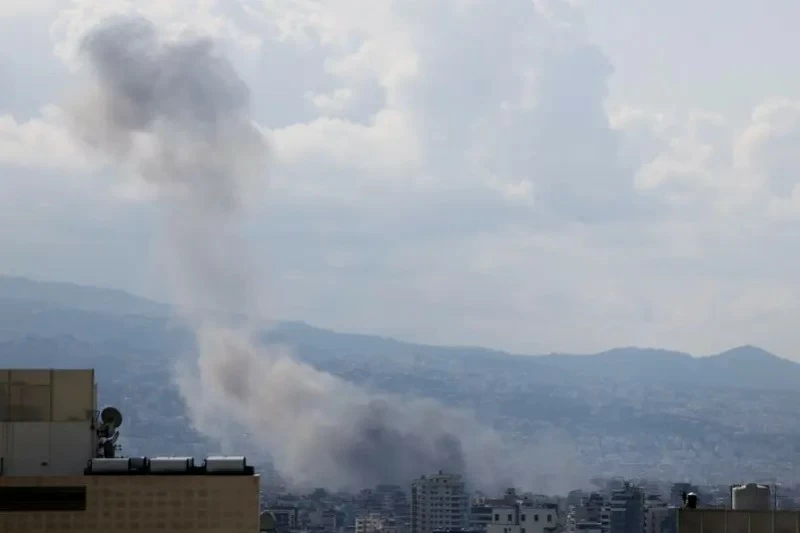
In a significant development on the ground indicating an escalation of confrontations on the northern front, the Israeli army announced on Wednesday that it had carried out a wide-ranging series of air and ground attacks targeting 250 Hezbollah positions in Lebanon over the past 24 hours. This announcement comes amidst assurances from the Israeli army spokesperson that Tel Aviv remains committed to its strategic objective of disarming Hezbollah and stripping it of its military capabilities, reflecting Israel's determination to alter the security situation in the border region.
Intensive raids on the southern suburbs and expansion of the target bank
The southern suburbs of Beirut, a Hezbollah stronghold, were subjected to a series of intense airstrikes this morning targeting the neighborhoods of Haret Hreik, Hadath, and Laylaki. These strikes followed five urgent warnings issued by the Israeli army to residents, ordering them to evacuate specific buildings, which it claimed housed Hezbollah facilities and infrastructure. According to the National News Agency, at least four airstrikes were recorded, exacerbating the destruction in the area, most of whose residents have been displaced since the latest escalation began on Monday.
In a dangerous precedent indicating an expansion of the targeting to include areas previously considered relatively safe, an Israeli airstrike targeted a hotel in the Hazmieh area east of Beirut early this morning. This attack, the first of its kind in this area, raises fears of the country sliding into a full-blown confrontation that spares no geographical region, especially since Hazmieh had remained untouched by bombing throughout previous periods of conflict.
Ground movements and clashes in the south
On the ground, eyewitnesses reported observing movements of Israeli ground forces. A force supported by five military vehicles, a bulldozer, and two civilian vehicles advanced from the direction of Bastra towards the outskirts of Kfarshouba in the Raba' al-Tibn area. This limited incursion coincided with airstrikes targeting the towns of Qusayr, Wadi al-Balat, and Beit Leef in southern Lebanon, reflecting a two-pronged Israeli strategy relying on intensive aerial bombardment and ground pressure.
General context and historical background of the conflict
These developments come in the context of the ongoing confrontation that began on October 8, 2023, when Hezbollah opened a front in support of the Gaza Strip. However, the pace of events has accelerated dramatically in recent days, exceeding the traditional rules of engagement that have governed the conflict since the July 2006 war and the adoption of UN Resolution 1701. The region is experiencing a state of cautious anticipation, as each side seeks to impose new deterrent equations through force.
Humanitarian and political repercussions
On the humanitarian front, the Lebanese Ministry of Health announced that 11 people were killed in overnight airstrikes targeting southern Lebanon and the Bekaa Valley, exacerbating the humanitarian crisis as waves of displacement continue from the targeted areas. Analysts indicate that targeting new areas like Hazmieh could further complicate the internal Lebanese situation and increase international pressure for a ceasefire, amid regional and international fears that the situation could spiral out of control and escalate into a wider regional war.
Politics
Lebanon is moving towards extending the term of its parliament by two years due to the war
Reports indicate a political consensus in Lebanon to extend the term of the House of Representatives for two years due to the security situation and the ongoing Israeli war, amidst escalating field operations and psychological warfare.
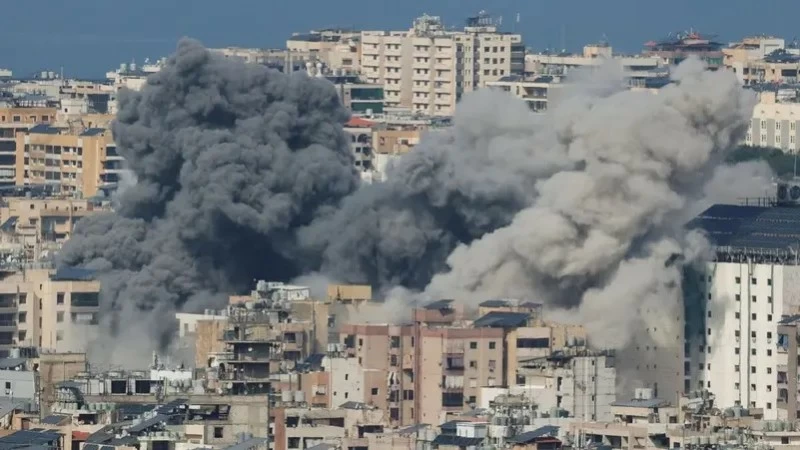
Given the dire security situation in Lebanon, and with the ongoing Israeli aggression and the expansion of airstrikes and drone attacks, extending the term of the current parliament has become the most likely and realistic scenario. Political sources indicate that a number of MPs began last night drafting an expedited bill to extend the current parliament's term for an additional two years, in order to avoid a legislative vacuum given the impossibility of holding elections.
This proposal is expected to be included on the agenda of a legislative session that Speaker of Parliament Nabih Berri intends to convene no later than the end of this week or the beginning of next week. Information in this context indicates that Speaker Berri, who had been adamant about adhering to constitutional deadlines, received information suggesting the difficulty of holding the elections. Prime Minister Nawaf Salam, in agreement with President Joseph Aoun, informed him that the current field and logistical conditions render holding the elections impossible, prompting most parliamentary blocs to express their initial agreement to the extension option as an inevitable necessity.
Unprecedented escalation on the ground and psychological warfare
On the ground, the Israeli war on Lebanon entered its third consecutive day with even greater intensity. Operations were no longer limited to airstrikes and assassinations; the Israeli side introduced a new element to its psychological warfare: "false calls." Telecommunications networks recorded more than 800 suspicious calls within a few hours, targeting citizens in various Lebanese regions, including a building housing MP Imad Hout, the Palace of Justice in Baabda, and even customs and security personnel at the Masnaa border crossing, urging them to evacuate immediately. This created a state of panic and fear among civilians.
In the context of direct targeting, airstrikes hit a residential area in Aramoun, east of Beirut, targeting a member of the Islamic Group. This coincided with a mysterious assassination at the Comfort Hotel in the Hazmieh-Baabda area, where the identity of the targeted individual remains unknown. The Israeli Air Force also intensified its airstrikes to an unprecedented degree across the entire area south of the Litani River, transforming it into a military operations zone. This led to a large-scale displacement of residents from border towns towards safer areas in the north.
Historical background and constitutional reality
This situation is reminiscent of past scenarios in Lebanon, where Parliament resorted to extending its own term on several occasions (most notably between 2013 and 2017) under the pretext of compelling security circumstances. Legislators base this approach on the principle of "force majeure," which they argue prevents the proper practice of democracy, especially given the presence of hundreds of thousands of displaced people who have fled their villages. This, they contend, renders the electoral process illegitimate and unconstitutional if it is held without the participation of large areas of the South and the Bekaa Valley.
In a significant development reflecting the sensitivity of the current situation, the Lebanese army has carried out tactical redeployments, withdrawing from some advanced border positions to its main rear bases. This measure comes in compliance with the political leadership's decision to avoid engaging in a direct and unequal confrontation, and amid intelligence reports of Israeli intentions to conduct limited ground incursions, following warnings issued to more than 120 southern towns. This places the country at a dangerous political and military crossroads that could alter the face of the region.
-

 Local News 6 days ago
Saudi Arabia approves regulations for the continued presence of Gulf vehicles: duration and penalties
-
Local news one week ago
The Ministry of Interior begins procedures for a royal pardon for common law prisoners
-
Local news one week ago
The deadline for property registration in Hail and Riyadh is Thursday
-
Culture and Art 7 days ago
The Devil's Prisons series was halted: The full story of "The Emperor's" being moved to YouTube
-
Local news one week ago
Under the patronage of the Minister of Information, an agreement was signed between the Ministry of Information and Waves Marketing Company
-
Local News 6 days ago
Saudi Energy: A new identity for electricity that aligns with Vision 2030
-
Local News 6 days ago
The Food and Drug Administration is recalling Bebelac and Aptamil milk due to potential contamination
-
Local news one week ago
Registration is now open for domestic pilgrims for the 1447 AH season: Dates and conditions via Nusuk