Politics
European concerns about a repeat of the Trump-Zelensky crisis of February
The world is watching closely as Trump and Zelensky meet in Washington amid European concerns about a repeat of a new political crisis that threatens international stability.

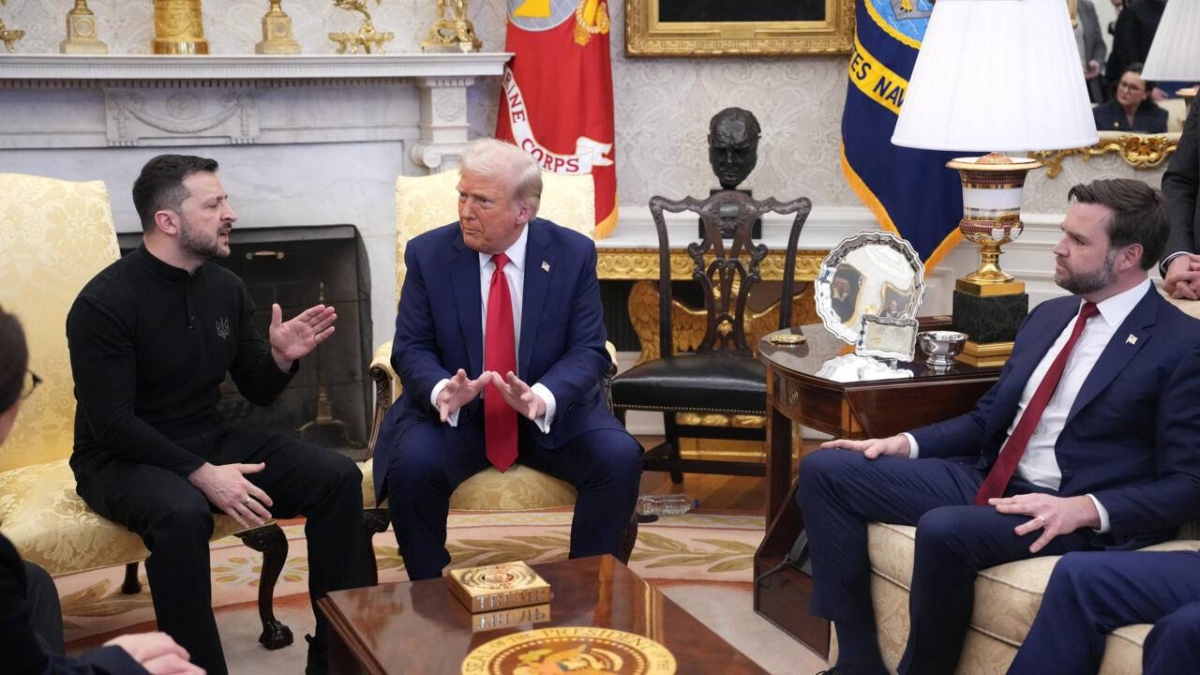
International anticipation surrounds the Trump-Zelensky meeting amid European concerns
All eyes are on Washington, D.C., where U.S. President Donald Trump will meet with his Ukrainian counterpart Volodymyr Zelensky tomorrow (Monday), in a meeting of great importance to the international political community, particularly in Europe. This meeting comes amid escalating political tensions and concerns that Zelensky will not receive the same treatment as Russian President Vladimir Putin.
European diplomatic moves
According to Politico, the Europeans are seeking to ensure their active participation in future talks between the United States, Ukraine, and Russia. Diplomats have indicated that the Europeans are working to send Finnish President Alexander Stubb, who enjoys a good relationship with Trump, to accompany Zelensky during his visit. The aim of this move is to ease tensions and avoid any sharp disagreements that might arise during the meeting.
The potential tripartite meeting
Trump announced his intention to hold a trilateral meeting with the Russian and Ukrainian presidents, but the main obstacle lies in Putin's stance, as he has so far refused to meet with Zelensky and has shown no sign of changing his position. This stance reflects the complexity of Russian-Ukrainian relations and increases the challenges to achieving tangible diplomatic progress.
European concerns
Europeans view tomorrow's meeting between Trump and Zelensky as a pivotal test for international relations, fearing that Trump might yield to Putin's demands regarding the transfer of Ukrainian territory still partially controlled by Moscow. Kyiv's allies also fear a repeat of the previous Trump-Zelensky meeting, which strained relations for several months.
Prospects for international presence
Informed sources did not rule out the possibility of NATO Secretary General Mark Rutte attending the Washington meeting, given his close relationship with the US President, which could add an extra dimension to the anticipated meeting and enhance the chances of NATO being involved in future talks.
European and international reactions
For her part, former NATO official Camille Grand expressed European concern following the recent Alaska summit, where Trump appeared to be persuaded by many of Putin's arguments. While the meeting wasn't a "complete disaster," it left Europeans on edge.
Meanwhile, French President Emmanuel Macron and British Prime Minister Keir Starmer are preparing to lead a conference call for the Coalition of the Willing, a group of countries that have expressed their willingness to provide additional troops and support to Ukraine when the war ends.
In conclusion:
The upcoming meeting between Trump and Zelensky remains a focus of significant global attention due to its potential impact on the course of international relations and the future of the Ukrainian-Russian crisis. While European countries are striving to secure an active role in these sensitive talks, the question remains whether global diplomacy can overcome current obstacles and achieve tangible progress toward regional and international stability and peace.




Politics
Exchanges of fire between Israel and Iran and escalation in Lebanon
Continuing the military escalation: Israel bombs Tehran and declares air superiority, and projectiles from Lebanon strike the north, amid global economic concerns following the killing of Khamenei.

In a dramatic turn of events in the Middle East, the Israeli army announced today (Monday) that sirens had been activated in several large areas of northern Israel, following the detection of rocket fire from Lebanese territory, indicating that the northern front is ablaze amid major regional tensions.
This escalation on the ground comes as Israel launched a new and extensive wave of direct airstrikes on the Iranian capital, Tehran. Iran responded by launching further missile barrages, in a scene reflecting the peak of military tension, especially as these events come just one day after the announcement of the death of Iranian Supreme Leader Ayatollah Ali Khamenei, an event that marked a pivotal turning point in the conflict.
Details of the attacks and air control
In detailing the military operations, the Israeli army noted that its air force had achieved complete air superiority over Tehran. Reports indicated that the wave of attacks targeting various parts of the Iranian capital focused precisely on strategic locations, including intelligence centers, security headquarters, and military command and control centers, in an attempt to cripple the enemy's ability to manage the battle.
Regional context and the shift in rules of engagement
This escalation represents a clear departure from the traditional rules of engagement that have governed the conflict between the two sides for many years, rules that have often relied on "shadow warfare" or proxy confrontations in the region. The shift to direct confrontation and the bombing of capital cities presents the region with open and complex scenarios, as targeting command centers in Tehran and assassinating a figure of the Supreme Leader's stature constitutes a radical shift in the balance of power and deterrence in the Middle East.
Global economic repercussions and fears of the unknown
The effects of this fierce military confrontation, which included US and Israeli attacks and the subsequent Iranian response, were not limited to the security sphere alone, but also caused a powerful shock across vital global economic sectors. Shipping and air travel were significantly affected, and global oil markets were disrupted amid fears of supply shortages.
International warnings continue to mount regarding a sharp rise in energy costs, which could further burden a global economy already struggling with inflation. There are also serious concerns about potential disruptions to business activity in the Arabian Gulf region, home to vital waterways that serve as the lifeblood of global energy trade, as well as a global trading hub connecting East and West.
Politics
The assassination of Ali Khamenei: The repercussions of the Supreme Leader's death and the future of regional conflict
A comprehensive analysis of the repercussions of the news of the assassination of Iranian Supreme Leader Ali Khamenei. Is the region heading towards a full-scale military escalation or a radical shift in Tehran's policies and the future of the resistance axis?
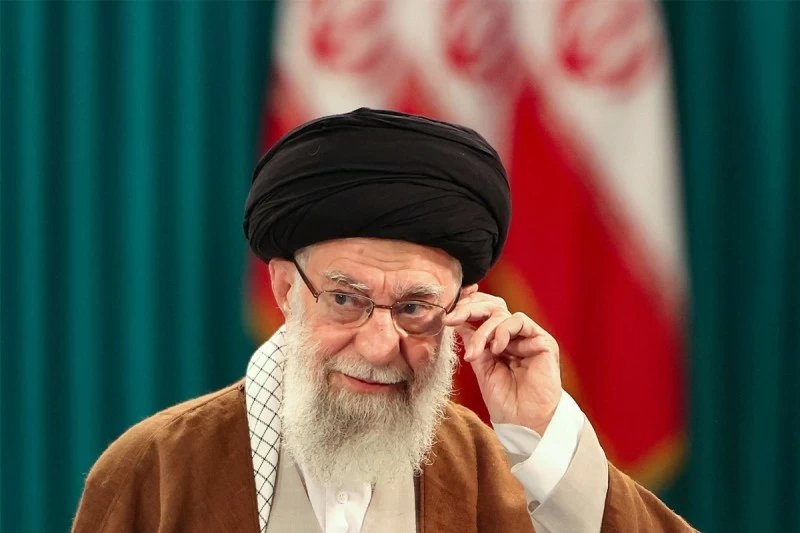
In a dramatic development that represents a geopolitical earthquake in the Middle East, the news circulating about the assassination of Iran's Supreme Leader, Ali Khamenei, in a joint US-Israeli airstrike has plunged the entire region into turmoil. This event is not merely the loss of a political figure, but rather the dismantling of the very top of the Islamic Republic's power structure, opening the door to unforeseen scenarios that could redraw the maps of influence and conflict.
The end of the era of the strongest man
With the passing of Ali Khamenei, Iran loses the man who held the reins of absolute power for more than three decades. Khamenei assumed the position of Supreme Leader in 1989, succeeding the founder of the Islamic Republic, Ruhollah Khomeini, during a critical transitional period following the Iran-Iraq War. Throughout his years in power, he consolidated his authority through complete control over the levers of the state, from the military establishment, represented by the Revolutionary Guard, to the judiciary and the media, becoming the ultimate authority, surpassing the presidency, the government, and parliament.
The nature of power and constitutional vacuum
The gravity of this event lies in the nature of the "Supreme Leader" position in the Iranian constitution, which grants the Supreme Leader broad religious and political powers. His sudden absence through foreign military action presents the Assembly of Experts with a historic and difficult test in choosing his successor, amidst speculation of internal power struggles between hardline conservatives and other factions, as well as the pivotal role the Revolutionary Guard will play in the transition process to ensure the regime's continuity.
Regional conflict scenarios
Regionally, Khamenei's assassination raises existential questions about the future of the "axis of resistance" he has nurtured for years. From Lebanon to Yemen, and from Syria to Iraq, militias and armed factions are ideologically and logistically linked to the Supreme Leader. Will his absence lead to the disintegration of this axis and a decline in Iranian influence? Or will the retaliatory response be violent and widespread, dragging the region into an all-out war?
The next phase will not be merely a change of names, but may witness a redefinition of Tehran’s military and political doctrine. This event will either pave the way for a major negotiating table that ends decades of hostility, or it will be the spark that ignites the powder keg in the entire Middle East.
Politics
The Arab League strongly condemns Iranian attacks on Arab countries
The Arab League issued a strongly worded statement condemning the Iranian attacks, stressing that the security of Arab states is indivisible, and warning of dangers that threaten the stability of the region.

The General Secretariat of the League of Arab States expressed its categorical condemnation and strong denunciation of the repeated targeting of the sovereignty and territorial integrity of Arab states, which was recently manifested in the Iranian attacks that constitute a flagrant violation of international laws and conventions, and a clear transgression of the principles of good neighborliness that should govern relations between the countries of the region.
In an official statement, the member states of the Arab League affirmed that these hostile practices pose grave risks, not only threatening the security of the targeted state but also extending their negative repercussions to threaten Arab national security and the stability of the entire Middle East region. The statement emphasized that remaining silent about such transgressions could encourage further tension and escalation at a time when the region desperately needs de-escalation and constructive cooperation, not conflict.
In a related context, the Arab League reaffirmed its firm strategic principle that "the security of Arab states is indivisible," noting that any infringement upon the sovereignty of any Arab state is considered a direct attack on the Arab system as a whole. The League declared its categorical and absolute rejection of any justifications or pretexts that Tehran might offer to legitimize these attacks, asserting that respect for national sovereignty and non-interference in internal affairs are the cornerstones of sound international relations.
These alarming developments come amidst highly complex regional and international circumstances, with the region grappling with multiple crises that demand concerted diplomatic efforts. Observers and political analysts believe that Iran's continued interference in Arab affairs, whether through direct military action or other means, undermines the prospects for lasting peace and threatens global trade routes and vital energy supplies, thus necessitating a firm and unified international stance.
It is worth noting that the concept of Arab national security is based on a unified strategic vision that rejects foreign interference and considers the stability of Arab states a fundamental pillar of international peace and security. The geostrategic location of Arab states, with their vital waterways and natural resources, makes any military tension within them a source of global concern that transcends regional boundaries. Therefore, the current Arab condemnation is not merely a fleeting political stance, but rather a warning to the international community about the necessity of confronting policies aimed at destabilizing and forcibly altering the balance of power in the region.
The university concluded its statement by calling on the international community and the United Nations Security Council to assume their legal and moral responsibilities in maintaining international peace and security, and to exert effective pressure to stop these violations that hinder development and prosperity efforts in the Arab world, stressing the legitimate right of Arab states to defend their territories and peoples by all means guaranteed by international law.
-

 Local News 4 days ago
Saudi Arabia approves regulations for the continued presence of Gulf vehicles: duration and penalties
-
Local News 7 days ago
The Ministry of Interior begins procedures for a royal pardon for common law prisoners
-
Local news two days ago
Jeddah Airport alerts for travelers due to airspace closure and flight disruptions
-
Politics, one week ago
Trump plans to create a $2 billion alternative to the World Health Organization
-
Local News 6 days ago
The deadline for property registration in Hail and Riyadh is Thursday
-
Sports one week ago
Tickets for the Al-Ahli vs. Al-Hilal King's Cup match postponed: New date
-
Local News 6 days ago
Under the patronage of the Minister of Information, an agreement was signed between the Ministry of Information and Waves Marketing Company
-
Culture and Art 4 days ago
The Devil's Prisons series was halted: The full story of "The Emperor's" being moved to YouTube