Politics
Senate elections in Egypt: 528 candidates are competing
Egypt's National Elections Authority announced the final list of candidates for the Senate elections, which included the names of

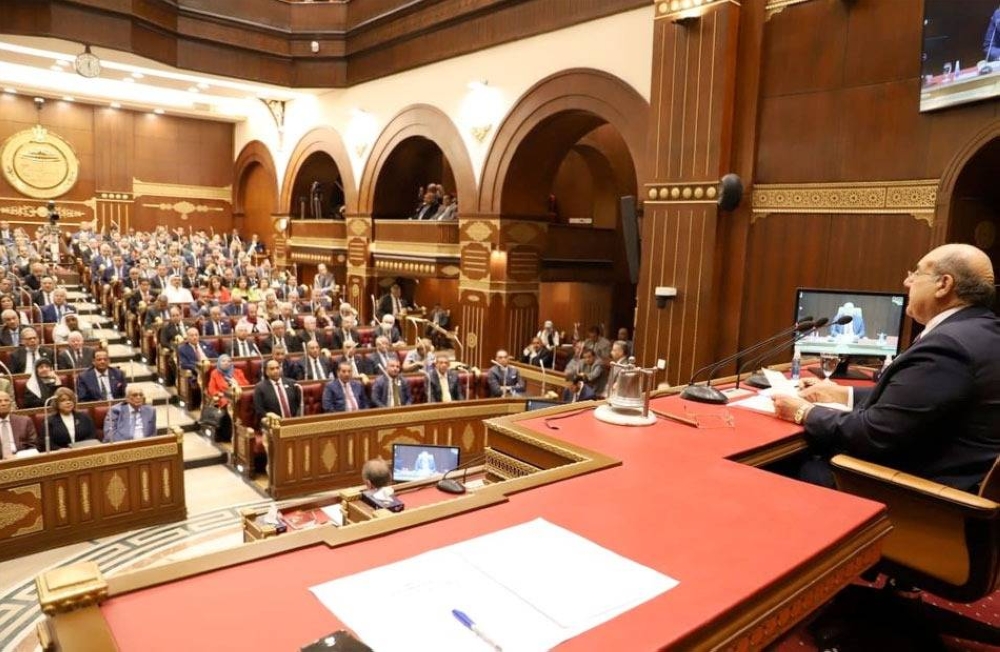
Egyptian elections: Final list of Senate candidates announced
Egypt's National Elections Authority announced the final list of candidates for the Senate elections, comprising 428 candidates running as individuals, out of 469 who submitted their nomination papers. This announcement came after the conclusion of the appeals process and the disqualification of 41 candidates against whom court rulings had been issued.
Details of electoral lists and appeals
The final list also included the names of 100 candidates running on party lists, with an equal number on reserve lists. The National Elections Authority received all court rulings issued in the candidates' electoral appeals and approved them by adding the accepted names and removing those excluded by court order. This is in accordance with Article 210 of the Egyptian Constitution, which grants the Supreme Administrative Court jurisdiction to adjudicate appeals against the Authority's decisions related to referendums, presidential and parliamentary elections, and their results.
Election campaign begins
Concurrently with the announcement of the final list, the election campaign period for candidates began and continues until noon on the day before the scheduled election date. Every candidate for the Senate, whether running individually or on a party list, has the right to prepare and conduct an election campaign to address voters and persuade them of their platform.
Campaigning methods include publishing and distributing election materials and placing posters and banners, in accordance with the conditions and duration specified by the competent administrative authority. The use of audio-visual, print, and electronic media, as well as other legally permissible activities, is also allowed.
Candidates' adherence to the governing laws
The National Elections Authority has instructed candidates to adhere to the provisions of the Constitution, the law, and its own decisions, including the prohibition against violating citizens' privacy during campaign activities. This directive aims to ensure a fair and transparent electoral process that reflects the aspirations of the Egyptian people for parliamentary representation that truly expresses their will.
Political and historical context
These elections are part of ongoing efforts to strengthen democracy in Egypt following a series of political challenges the country has faced over the past decade. The Senate is seen as an advisory body intended to provide counsel and legislative support to the Egyptian House of Representatives.
Against this complex political backdrop, the current elections stand out as an opportunity to renew trust between the people and the government and to promote effective political participation that reflects the cultural and social diversity of Egyptian society.
Different viewpoints on the electoral process
Supporters:
Supporters view these elections as a positive step towards strengthening political stability and economic development in Egypt. They believe that a strong Senate can contribute to improving the quality of legislation and providing strategic insights that support the path of reform and sustainable development.
Opponents:
On the other hand, some critics and opponents question the effectiveness of the new council and its true role in influencing government policies. They demand greater guarantees for the transparency and integrity of the electoral process and for broader participation from across the diverse political spectrum within Egyptian society.
Summary
Note: The text has been revised to reflect events up to October 2023.




Politics
Saudi-French talks in Davos to enhance regional security and stability
On the sidelines of the Davos Forum 2026, Saudi Foreign Minister Prince Faisal bin Farhan discussed with his French counterpart Jean-Noël Barrot the latest regional developments and joint efforts to achieve security.
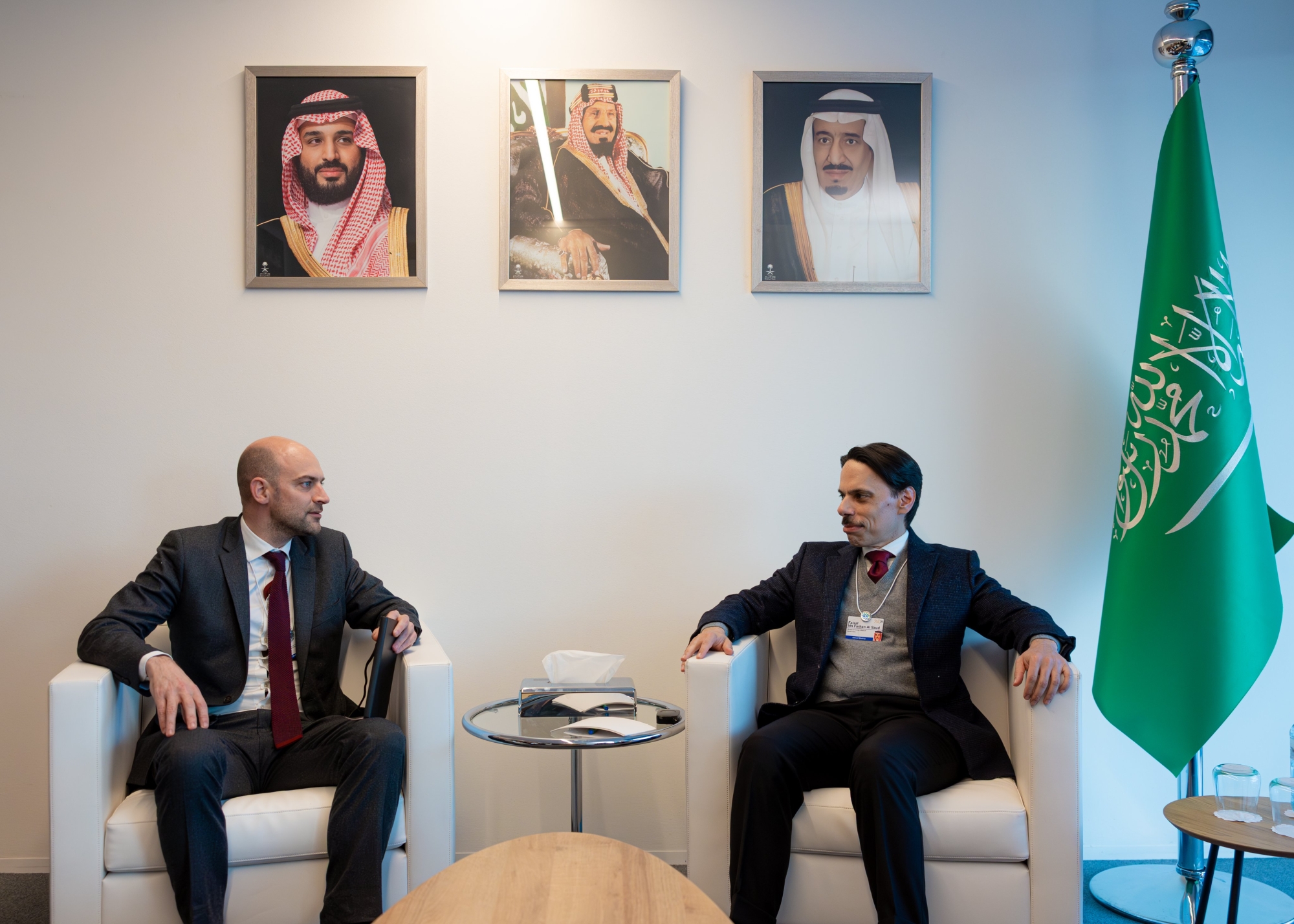
In a move reflecting the depth of strategic relations between Riyadh and Paris, Saudi Foreign Minister Prince Faisal bin Farhan met today (Wednesday) with French Minister for Europe and Foreign Affairs Jean-Noël Barrot. This important diplomatic meeting took place on the sidelines of the 2026 World Economic Forum Annual Meeting in Davos, Switzerland, a leading global platform for decision-makers and policymakers.
The meeting focused primarily on reviewing the latest developments in the complex regional situation and exploring ways to strengthen joint efforts aimed at establishing security and stability in the Middle East. This coordination comes at a critical time, as the region faces increasing challenges that require concerted international efforts to find sustainable diplomatic solutions.
Historical background and context of the meeting
Saudi-French relations are based on a long history of close cooperation across various fields, including politics, economics, defense, and culture. France is considered a strategic partner of the Kingdom of Saudi Arabia, with the two countries sharing similar views on many regional and international issues. The Davos Economic Forum provides an ideal environment for such bilateral meetings, offering officials an opportunity to exchange perspectives outside the constraints of complex formal protocols, thus accelerating joint coordination to address pressing global challenges.
The importance and impact of the talks
These talks are of particular importance given the pivotal roles of both countries. The Kingdom, with its political and economic weight in the Arab and Islamic worlds, is leading significant diplomatic efforts to de-escalate conflicts in the region, while France, as a permanent member of the UN Security Council and a major European power, plays an active role in international politics. Coordination between Riyadh and Paris can greatly contribute to forging unified international positions on issues such as maritime security, counterterrorism, and supporting political solutions to regional crises.
This cooperation is expected to have a positive impact on regional stability and enhance the international community's ability to address security and economic challenges. The meeting also underscores the continuation of the strategic dialogue between the two countries, which aims to achieve shared interests and support global peace.
The meeting was attended on the Saudi side by the Ambassador of the Custodian of the Two Holy Mosques to the Swiss Confederation and the Principality of Liechtenstein, Mr. Abdulrahman Al-Dawood, and the Advisor to the Minister of Foreign Affairs, Mr. Mohammed Al-Yahya, which highlights the importance that the Kingdom attaches to this high-level bilateral dialogue.
Politics
Saudi Arabia and seven other countries join the Peace Council to end the conflict in Gaza
Eight major regional countries, including Saudi Arabia, Egypt and Turkey, welcome a US invitation to join the Peace Council with the aim of achieving a permanent ceasefire and the reconstruction of Gaza.

In a significant diplomatic move, the foreign ministers of eight influential regional states—the Kingdom of Saudi Arabia, the Republic of Turkey, the Arab Republic of Egypt, the Hashemite Kingdom of Jordan, the Republic of Indonesia, the Islamic Republic of Pakistan, the State of Qatar, and the United Arab Emirates—welcomed the invitation extended by US President Donald Trump to join the “Peace Council.” These countries announced their joint decision to formally join, and each will begin completing its legal and constitutional procedures to sign the accession documents, thus joining Egypt, Pakistan, and the UAE, which had already announced their acceptance.
Historical background and diplomatic context
This initiative comes in the context of decades of the Israeli-Palestinian conflict, which has witnessed numerous rounds of negotiations and international mediation efforts that have failed to achieve a lasting solution. The United States has long played the role of the primary mediator in many previous peace attempts. The formation of a council comprising major regional and Islamic powers such as Saudi Arabia, Egypt, Turkey, Pakistan, and Indonesia represents a significant shift in approach, aiming to build unified international and regional momentum to support the peace process, thus lending any future agreement greater political weight and broader guarantees.
The importance of the alliance and its expected impact
The significance of this alliance lies in the political, economic, and religious weight of the participating states. The presence of pivotal Arab countries such as Saudi Arabia, Egypt, the UAE, Jordan, and Qatar, alongside major non-Arab Islamic powers like Turkey, Pakistan, and Indonesia, sends a powerful message about the broad consensus on the need for a just end to the conflict. This council is expected to contribute to mobilizing the necessary resources to support the reconstruction of Gaza, provide political support for consolidating the ceasefire, and exert concerted diplomatic pressure on the parties involved to commit to a peaceful solution.
Council objectives and commitment to international resolutions
The ministers reaffirmed their countries’ full support for the peace efforts led by President Trump, emphasizing their commitment to supporting the mission of the Peace Council as a transitional body. The Council’s mandate is based on the comprehensive plan to end the conflict in Gaza, as adopted by UN Security Council Resolution 2803. Its main objectives include establishing a permanent ceasefire, overseeing the reconstruction of Gaza’s devastated infrastructure, and, most importantly, advancing a just and lasting peace that fulfills the Palestinian people’s right to self-determination and the establishment of their independent state in accordance with international law and relevant UN resolutions, thereby ensuring security and stability for all peoples and states in the region.
Politics
The death of Rifaat al-Assad: The end of the 'Butcher of Hama' and his bloody career
Rifaat al-Assad, Bashar al-Assad's uncle, has died at the age of 88. He was known as the "Butcher of Hama" for his role in the 1982 massacre. Learn about his bloody history, his legal troubles, and his fate after the fall of the regime.

Rifaat al-Assad, the uncle of former Syrian President Bashar al-Assad and one of the most prominent and ruthless figures in the decades-long Assad family rule, has died at the age of 88. His death comes shortly after the fall of his nephew's regime in December 2014, bringing to a close the life of a controversial figure whose name is linked to one of the bloodiest chapters in modern Syrian history.
Historical context: The Hama massacre
The name Rifaat al-Assad cannot be mentioned without recalling the events of the 1982 Hama massacre . At the time, Rifaat commanded the Defense Brigades, a semi-autonomous and well-equipped military force whose primary mission was to protect the regime of his brother, Hafez al-Assad. When an armed uprising led by the Muslim Brotherhood erupted in the city of Hama, the Defense Brigades were tasked with suppressing it. The result was a brutal military campaign that lasted for weeks, during which the city was indiscriminately bombarded and its old quarters destroyed, resulting in the deaths of between 10,000 and 40,000 civilians, according to various estimates. This massacre cemented the title "Butcher of Hama," which haunted Rifaat al-Assad until his death.
A power struggle and a long exile
Rifaat's career was not limited to military repression; it was also marked by political ambition. In 1984, after his brother Hafez al-Assad suffered a heart attack, Rifaat attempted a coup to seize power, deploying his forces in the streets of Damascus. However, the attempt failed after their mother intervened, and he was exiled from Syria and nominally appointed vice president, beginning a long period of exile in Europe, moving between France and Spain. During his exile, he amassed a considerable fortune, which raised suspicions that it had been plundered from the Syrian treasury.
Significance and impact: legal proceedings and a symbolic end
Internationally, Rifaat al-Assad faced legal proceedings in several European countries. In France, he was convicted of money laundering and embezzling Syrian public funds, receiving a prison sentence and the confiscation of his luxury real estate holdings. Swiss authorities also opened an investigation against him for alleged war crimes related to his role in the Hama massacre. These prosecutions represented a significant symbol in the effort to achieve justice for the victims and hold those responsible for major crimes accountable.
Rifaat al-Assad unexpectedly returned to Syria in 2021, fleeing a prison sentence in France. His stay was short-lived, however. With the collapse of the Assad regime in December 2024, he left the country again, reportedly traveling to the United Arab Emirates via Lebanon. His death today, while still at large, marks the biological end of a symbol of repression, but it also leaves a bitter taste in the mouths of thousands of Syrians who had hoped to see him face justice in a Syrian court for the crimes he is accused of.
-

 Reports 6 days ago
Achievements of Saudi government sectors in 2025
-
Local news two weeks ago
FDA warns of contaminated Nestle infant formula | Recall details
-
Technology 4 weeks ago
US ban on drones: reasons and consequences
-
Technology 4 weeks ago
SRMG and Snapchat partnership: The future of digital media in the Middle East
-
Sports 4 weeks ago
Salah leads Egypt to a thrilling comeback against Zimbabwe in the Africa Cup of Nations
-
Technology 4 weeks ago
Saudi Arabia's Ministry of Islamic Affairs is employing artificial intelligence in public speaking
-
Sports 4 weeks ago
Napoli win the Italian Super Cup in Riyadh for the third time (2025)
-
Sports 4 weeks ago
Alexander Isak's injury: A major blow to Newcastle United's ambitions