Politics
Egypt reassures Sudanese: No forced return, and residency facilities will be provided
President Sisi assured Sudanese Prime Minister Kamel Idris that there is no intention to forcibly deport Sudanese people from Egypt, with pledges to resolve residency problems and legalize their status.

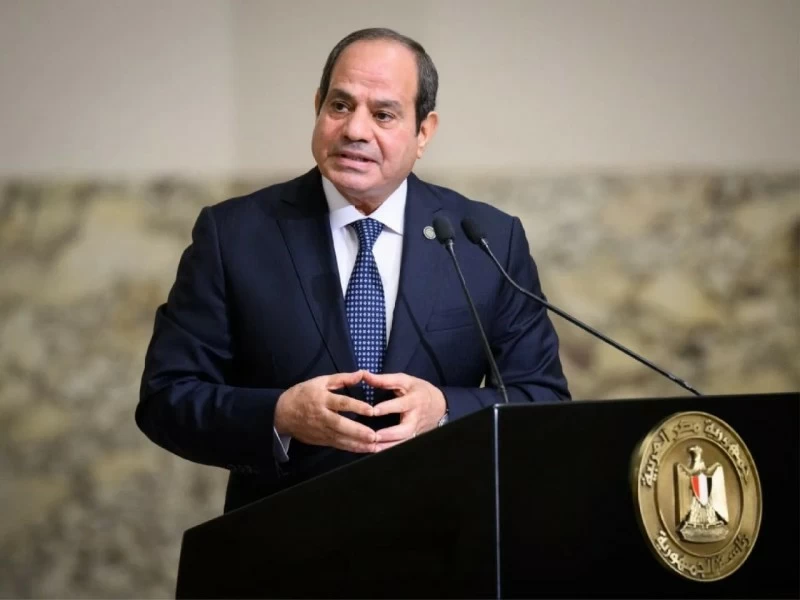
In important statements following his return from an official visit to Cairo, Sudanese Prime Minister Dr. Kamil Idris confirmed that Egyptian President Abdel Fattah al-Sisi had informed him categorically and decisively that the Egyptian state has no intention of imposing a forced return on Sudanese citizens residing in Egyptian territory, thus dispelling the fears that had recently prevailed among the community.
At a press conference held immediately upon his arrival in Khartoum, Idris conveyed messages of reassurance from the Egyptian leadership: “I conveyed President Sisi’s explicit confirmation that Egypt will not impose any coercive measures for the return of Sudanese to their country, and that the current organizational arrangements are related to the sovereign requirements of Egyptian national security, and have no connection to targeting or restricting the brotherly Sudanese community.”.
The depth of historical relations and shared destiny
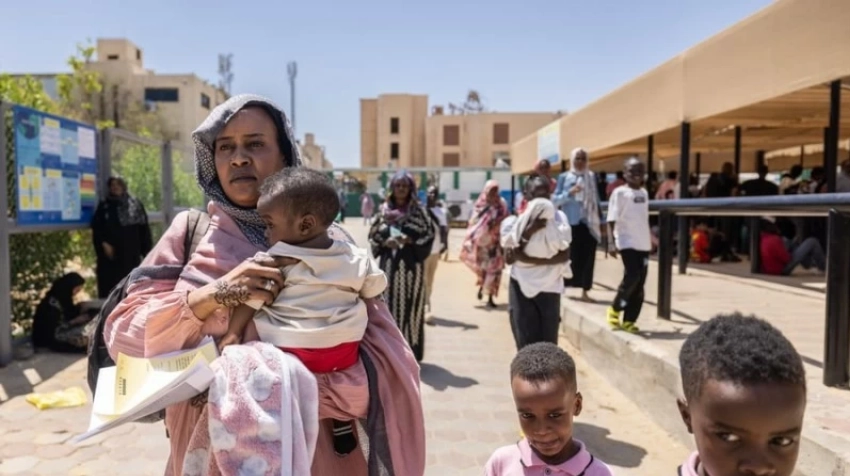
These statements come at a time of high-level coordination between Egypt and Sudan, with Cairo considered Khartoum's strategic extension, and vice versa. These assurances are based on a long history of enduring ties between the peoples of the Nile Valley, where Egypt has always been a safe haven for its Sudanese brothers during various political and humanitarian crises. This step underscores the Egyptian leadership's commitment to preserving the deep social and cultural bonds that unite the two peoples, bonds that transcend traditional political frameworks and embrace the concepts of brotherhood and shared destiny.
Dimensions of national security and legal regulation
In explaining the recent measures, observers noted that countries typically resort to updating resident data and tightening border controls as part of exercising their sovereignty and protecting their national security, especially given the surrounding regional tensions. The Prime Minister clarified that President El-Sisi emphasized that these measures are purely regulatory, aimed at accurately counting residents and regularizing their status to ensure better service delivery. They are not intended to expel or deport Sudanese citizens, reflecting Egypt's understanding of the exceptional circumstances Sudan is facing.
Pledges to resolve outstanding issues
The Prime Minister concluded his remarks by clarifying that President El-Sisi pledged to resolve all the issues facing Sudanese nationals in Egypt, noting presidential directives to the relevant authorities to remove obstacles related to residency and official transactions. This pledge represents a significant breakthrough for many Sudanese families who had been awaiting clarity regarding their future residency status, thus enhancing the psychological and social stability of the large Sudanese community residing in various Egyptian governorates.




Politics
Israel claims to have killed 6 Iranian commanders, Tehran denies it: The full story
The Israeli military announced the killing of six Iranian officials, including the defense minister and Ali Shamkhani, in airstrikes. Tehran denied the claims and confirmed the safety of its leaders. Here are the details.
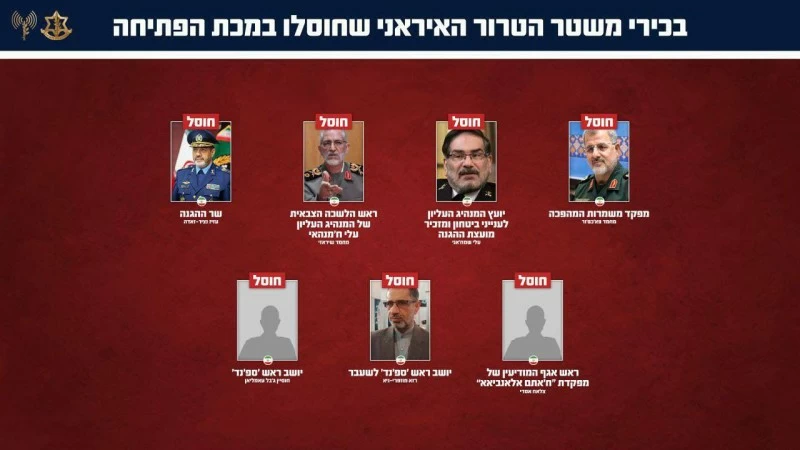
In a remarkable development in the Middle East, the Israeli army published a list containing the names of six senior Iranian officials, claiming they were killed in a series of airstrikes targeting strategic sites inside Iran on Saturday. Tehran quickly denied the claim outright, describing it as psychological warfare.
List of targeted names and their sensitive positions
According to a statement issued by the Israeli army, the alleged military operations resulted in the elimination of key figures in the Iranian military and political establishment. The list included Iranian Defense Minister Aziz Nasirzadeh , Secretary of the Supreme National Defense Council and senior advisor Ali Shamkhani , and the commander of the Islamic Revolutionary Guard Corps' Ground Forces, Mohammad Pakpour . It also included intelligence official Saleh Asadi , defense researchers Hossein Jabal Amelian and Reza Mozaffari Nia , and veteran defense liaison Mohammad Shirazi .
The connotations of names and their strategic impact
These names hold paramount importance in the Iranian power structure. Ali Shamkhani has been one of the architects of Iranian security policies for decades, while Mohammad Pakpour spearheads the Revolutionary Guard's field operations. Targeting figures of such stature, if confirmed, would not only represent a loss of life but also a significant blow to Tehran's command and operational structure, potentially creating a temporary gap in military and security decision-making.
Tehran responds: All leaders are fine
In contrast, Tehran categorically denied the Israeli account. Iranian official sources, including statements attributed to the Foreign Ministry, confirmed that all the leaders named on the list were safe and carrying out their duties normally. Tehran considered the publication of these names to be part of a "psychological warfare" and propaganda campaign waged by Israel to cover up events in the region and an attempt to boost Israeli morale by claiming fictitious victories.
Regional conflict context and historical background
These claims and counter-claims come within the broader context of the ongoing "shadow war" between Israel and Iran. Historically, the relationship between the two sides has been marked by escalating tensions, including cyberattacks, attacks on ships, and assassinations of nuclear scientists and military leaders, making it extremely difficult to verify information in the initial hours.
International observers believe that such announcements, whether accurate or falling under the category of media warfare, contribute to raising the level of tension in the region, and may lead to an escalation with unforeseen consequences that affect the stability of the Middle East and global energy markets.
Politics
Iran's attack on Israel: 21 injuries in Tel Aviv and shelling continues
Follow the latest developments in Iran's attack on Israel for the second day, with Tel Aviv reporting 21 casualties. The Revolutionary Guard targeted the Ministry of Defense, and the Israeli army thwarted missile attacks.

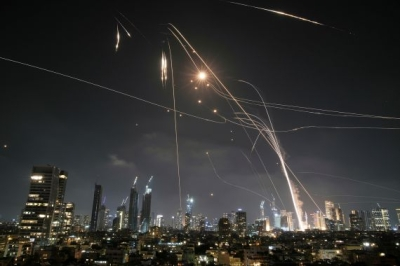
The past few hours have witnessed a dangerous military escalation in the Middle East, with the Israeli ambulance service (Magen David Adom) confirming that approximately 21 people were injured in Tel Aviv as a result of a heavy attack launched by Iran. This development comes amidst continued exchanges of fire between the two sides for the second consecutive day, signaling a new phase of direct conflict.
Details of the attack and declared objectives
In an official statement, the Iranian Revolutionary Guard Corps (IRGC) claimed responsibility for the latest wave of missile attacks, asserting that its target bank included sensitive strategic sites, most notably the Israeli Ministry of Defense headquarters and other vital military bases. This announcement marks a qualitative shift in the nature of the confrontation, moving from border skirmishes or proxy attacks to direct targeting of command and control centers deep inside Israel.
Israeli response and defensive measures
In response, the Israeli army announced the activation of its defense systems to deal with the threat, noting that its preemptive and deterrent strikes targeted a ballistic missile system and infrastructure dedicated to launching missiles, which, according to the military statement, contributed to thwarting dozens of launches that were directed towards Israeli cities.
Context of the conflict and history of the confrontation
This unprecedented escalation brings to an end years of what was known as the “shadow war” between Tehran and Tel Aviv, which was largely limited to cyberattacks, targeting of ships, intelligence operations, and strikes through proxies in the region. The shift to direct missile strikes and the targeting of capital cities represents a break from the traditional rules of engagement that have governed the relationship between the two sides for decades, and it presents the region with a host of unpredictable scenarios.
Expected regional and international repercussions
This development has serious repercussions that extend far beyond the geographical boundaries of the two sides. Locally, the bombing has paralyzed normal life in the targeted areas, forcing residents into shelters. Regionally, there are growing fears that the conflict will spread to other fronts, directly impacting the stability of the region and the security of global energy routes. The international community is watching this escalation with grave concern, amid calls for de-escalation to prevent the region from sliding into a full-blown war with potentially uncontrollable consequences.
Politics
UAE Defense Ministry: Details of intercepting 346 aerial targets and casualties in Dubai
The UAE Ministry of Defense issued a statement regarding the interception of 137 missiles and 209 Iranian drones, and details of 4 injuries at Dubai Airport, along with a review of the readiness of the country's air defense systems.

The UAE Ministry of Defense issued an official statement today (Sunday) announcing the success of its air and air defense forces in countering a large-scale air attack, as they were able to deal with and destroy 137 ballistic missiles and 209 drones launched from Iranian territory towards the country, in a precise military operation that reflects the high readiness of the armed forces.
In its detailed military statement, the Ministry explained that its monitoring and interception systems effectively dealt with the threats from the very first moments of the attack. Official statistics indicated the detection of 137 ballistic missile launches, of which 132 were successfully destroyed in the air by defenses, while 5 missiles fell into the sea without posing a direct threat. Regarding drones, 209 were detected, 195 of which were intercepted and shot down, while 14 drones crashed within the country's territory and waters, causing some collateral damage, including four injuries in the vicinity of Dubai International Airport, where the injured were immediately treated by specialized medical teams.
This operational success underscores the robustness of the UAE's air defense strategy, which has invested heavily over the past decades in building a multi-layered defense umbrella. The country relies on world-class systems such as THAAD and Patriot, specifically designed to intercept ballistic missiles at various altitudes, making Emirati airspace among the most secure in the region against complex aerial threats.
From a geopolitical perspective, this event carries significant implications for regional security and stability, demonstrating the Gulf states' ability to effectively protect their airspace and vital infrastructure. The swift interception of such a large number of projectiles sends a reassuring message to the international community and to global trade and aviation, particularly given the UAE's role as a global logistics and economic hub connecting East and West, and the fact that any threat to its airspace impacts global economic security.
The ministry concluded its statement by affirming that the UAE Armed Forces will remain the nation’s impregnable shield, and that they are on high alert to deal with any future threats, stressing that the security and safety of citizens, residents and the country’s lands is a red line that cannot be crossed, and that the defensive response was decisive and immediate to minimize losses and protect national gains.
-

 Local News 3 days ago
Saudi Arabia approves regulations for the continued presence of Gulf vehicles: duration and penalties
-
Local News 6 days ago
The Ministry of Interior begins procedures for a royal pardon for common law prisoners
-
Local news one week ago
19 requirements to reduce dust from projects in Riyadh and fines for violators
-
Politics, one week ago
Trump plans to create a $2 billion alternative to the World Health Organization
-
Culture and Art, 1 week ago
Amr Diab appears with his four sons and a highly anticipated concert in Türkiye
-
 Local news one week ago
Three billion riyals deposited as Ramadan aid for social security beneficiaries
-
Local news 14 hours ago
Jeddah Airport alerts for travelers due to airspace closure and flight disruptions
-
Local News 5 days ago
The deadline for property registration in Hail and Riyadh is Thursday