Politics
Deputy Foreign Minister meets with Rwandan Ambassador to the Kingdom
The Saudi Deputy Foreign Minister meets with the Rwandan Ambassador to strengthen the historic bilateral relations between the two countries, a step towards deeper diplomatic and economic cooperation.

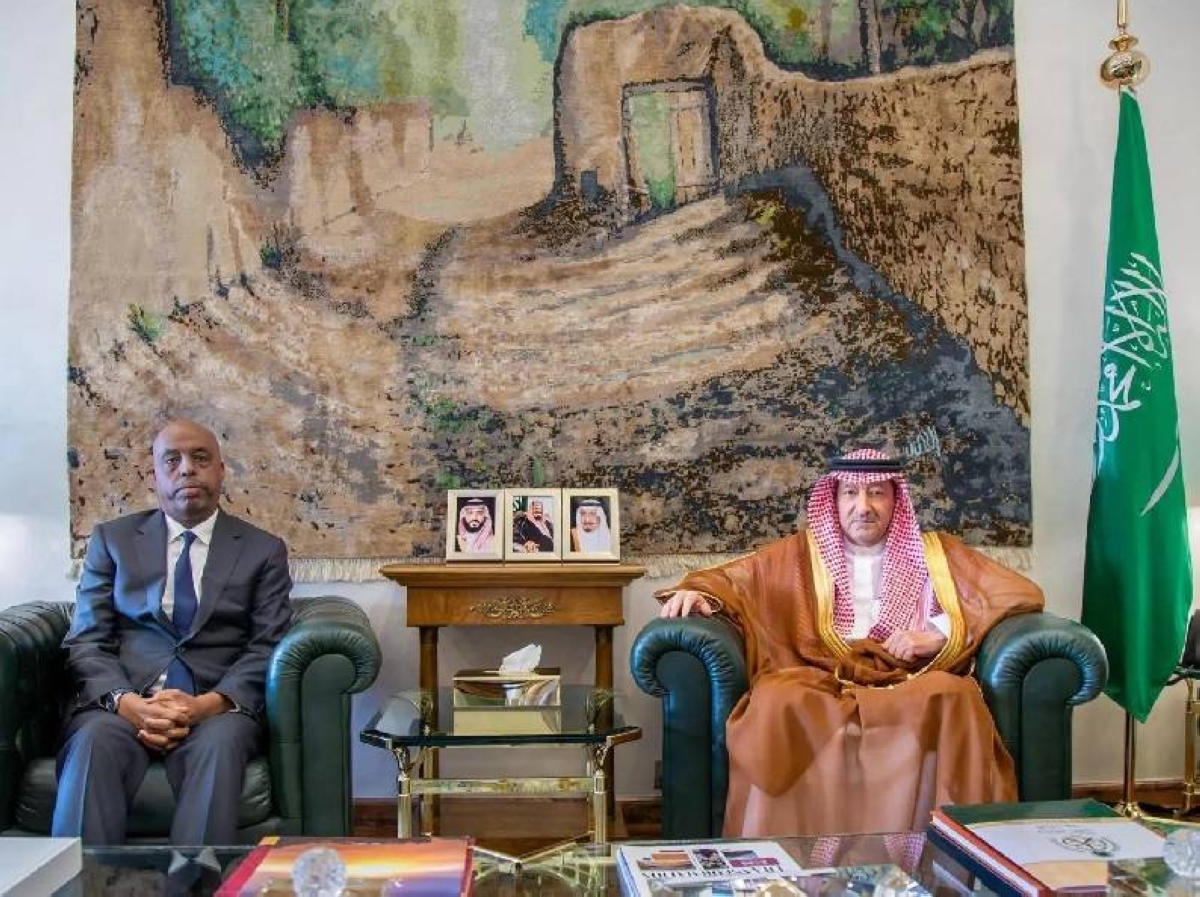
Strengthening bilateral relations between the Kingdom of Saudi Arabia and Rwanda
Saudi Deputy Foreign Minister, Engineer Waleed Al-Khuraiji, received the Ambassador of the Republic of Rwanda to the Kingdom, Eugene Segur Kayihura, at the Ministry headquarters in Riyadh today. This meeting comes within the framework of ongoing diplomatic efforts to strengthen bilateral relations between the two friendly countries.
strong historical relations
The Kingdom of Saudi Arabia and the Republic of Rwanda enjoy strong diplomatic and economic relations that extend back many years. These relations have witnessed remarkable development in recent years, as both countries seek to enhance cooperation in various fields to serve their common interests.
Discussing topics of common interest
During the meeting between the Saudi Deputy Foreign Minister and the Rwandan Ambassador, several issues of mutual interest were discussed. These included ways to enhance economic and trade cooperation between the two countries, as well as exploring mutual investment opportunities that could benefit both sides.
Economic and investment cooperation
Saudi Arabia seeks to expand its cooperation with African countries, including Rwanda, as part of its ambitious vision to strengthen economic and investment partnerships internationally. Rwanda is considered a key partner in this regard due to its strategic location and growing economic potential.
Saudi positive stance
These diplomatic meetings reflect the Kingdom of Saudi Arabia's commitment to building balanced and strong relations with various countries around the world. The Saudi position is positively demonstrated through its commitment to strengthening international cooperation and achieving sustainable development through effective and diverse partnerships.
In conclusion, this meeting represents a further step towards strengthening bilateral relations between the Kingdom and Rwanda, and opens new horizons for fruitful cooperation that serves the interests of both peoples and contributes to achieving the common goals of both countries.




Politics
Yemen: Giants Brigade seizes Iranian smuggling boat bound for Houthis
Southern Giants forces thwarted a smuggling attempt originating from the Iranian port of Bandar Abbas and seized a shipment of smuggled medicine destined for the Houthis. Details of the operation and confessions from the sailors.

In a high-quality security operation reflecting the vigilance of the military forces in securing the Yemeni coasts, the Southern Giants Forces announced on Wednesday that they had successfully seized a smuggling boat coming from Iranian territory, which was on its way to deliver an unauthorized shipment to areas under the control of the Houthi group.
Details of the security operation and the crew's confessions
A source within the security campaign of the Southern Giants Forces reported that maritime patrol units, following a precise intelligence operation, intercepted a boat exceeding 20 meters in length. The inspection revealed a large shipment containing 3,000 cartons of smuggled and unauthorized medicines, carefully concealed.
The source confirmed to Okaz newspaper that the forces arrested the boat's crew of five sailors, all of whom hail from Hodeidah Governorate. During initial investigations, the sailors confessed that they had departed directly from the Iranian port of Bandar Abbas, with their final destination being the port of Salif, north of Hodeidah, which the Houthi group uses as a major maritime gateway.
The Iranian smuggling route: a recurring pattern
This operation comes amid a long series of smuggling attempts in Yemeni territorial waters. The shipping route originating from Iranian ports, specifically Bandar Abbas, is one of the most prominent routes identified internationally and locally for transporting contraband to the Houthis. Previous UN reports indicate that this route is not only used for smuggling unlicensed goods, but has also been used in the past for smuggling fuel, weapons, and drone components, thus violating international resolutions and Security Council resolutions related to the arms embargo on armed groups.
The Southern Giants Forces and the Joint Forces on the West Coast play a pivotal role in securing the Bab al-Mandab Strait and the southern Red Sea, areas of high strategic sensitivity to global trade, making the seizure of such boats an achievement that transcends the local dimension to the regional and international dimension in protecting waterways.
Health and economic risks
Beyond the security implications, smuggled drug shipments pose serious health risks to citizens in Houthi-controlled areas. Medicines arriving via smuggling boats often lack even the most basic transport and storage standards (such as refrigeration) and are frequently of unknown origin or expired, transforming them into deadly poisons instead of treatments. Drug smuggling is also a source of illicit funding for Houthi-linked smuggling networks, enabling them to bolster their parallel economy beyond government oversight.
Presidential praise for security vigilance
In an official statement regarding the incident, Yemeni Presidential Leadership Council member Abdulrahman al-Mahrami (Abu Zara'a) praised this remarkable security achievement. Al-Mahrami commended the efforts of the security campaign forces and the Southern Giants Brigades in protecting the coast, emphasizing the need to enhance combat and security readiness to combat all forms of smuggling and prevent the arrival of any supplies that could be used by terrorist groups to destabilize the region.
The seized items were confiscated and the accused were detained to complete the legal procedures, in preparation for referring them to the competent authorities, in a step that confirms the determination of the legitimate government and the forces loyal to it to dry up the sources of smuggling in all its forms.
Politics
Qatar arrests Revolutionary Guard cells and intercepts Iranian missiles
Qatar announces the thwarting of an Iranian Revolutionary Guard plot to arrest spy and sabotage cells, and reveals the interception of ballistic missiles targeting Al Udeid Air Base without any casualties.

In a significant security development that reshuffles the cards in the Arabian Gulf region, Qatari authorities officially announced the thwarting of complex security plots targeting the country's sovereignty and stability. These operations included the arrest of two cells working for the Iranian Revolutionary Guard, coinciding with Qatari air defenses intercepting a ballistic missile attack targeting vital military installations—an event with far-reaching geopolitical implications.
Details of dismantling espionage and sabotage networks
The Qatar News Agency (QNA) quoted the State Security Service as detailing a precise intelligence operation that led to the dismantling of an organized espionage and sabotage network. As part of a proactive national security strategy, authorities successfully apprehended ten suspects who, during initial investigations, confessed to their direct affiliation with and receipt of instructions from the Iranian Revolutionary Guard.
According to the official statement, the tasks were divided among the network members as follows:
- The monitoring and espionage group: It consisted of 7 defendants who were tasked with collecting accurate and sensitive intelligence information about the infrastructure of vital and military facilities within the country.
- The execution and sabotage group: It included 3 defendants who received advanced military training on the use of drones. Digital coordinates of sensitive facilities, encrypted communication devices, and advanced technologies were seized from them, confirming the existence of a premeditated intention to carry out qualitative hostile operations.
Targeting Al Udeid Air Base: Strategic Dimensions
In a related development, the Qatari Ministry of Defense revealed that Qatari airspace was subjected to a hostile attack by two Iranian ballistic missiles. The ministry affirmed the high efficiency of Qatari air defense systems (which include the advanced Patriot and THAAD systems) in intercepting and destroying one of the missiles in the air, while the second missile landed in the vicinity of Al Udeid Air Base.
Targeting Al Udeid Air Base carries significant strategic and military weight. It is not merely an ordinary air base, but the largest US military base in the Middle East, and hosts the forward headquarters of US Central Command (CENTCOM). The base plays a pivotal role in joint security operations and counterterrorism efforts in the region, making its targeting a dangerous escalation that transcends national borders and impacts regional and international security.
A shift in the regional and diplomatic landscape
This explicit official announcement from Doha marks a radical shift in how Qatar addresses regional security threats. Qatar has long pursued a diplomatic policy based on dialogue and mediation, maintaining open channels of communication with Tehran due to geographical proximity and shared gas fields. However, the public revelation of the Iranian Revolutionary Guard's involvement indicates a growing lack of strategic patience and a firm Qatari stance against any infringement on its national sovereignty.
Observers believe that Doha’s success in dismantling these cells and intercepting the missiles reflects a tangible development in the intelligence and defense capabilities of the Gulf state, and confirms its readiness to deal with the growing challenges in the region, which is witnessing continuous tensions.
Calls for vigilance and official transparency
Security and military authorities concluded their statements by reassuring the public, confirming that the incident resulted in no casualties thanks to the complete readiness of the armed forces. They also called on citizens and residents to act responsibly and not to be swayed by rumors that could aim to destabilize the country, emphasizing the need to obtain information only from official sources, given the complete security control of the situation.
Politics
Rubio threatens Iran with military strikes, and Trump considers supporting the opposition
Washington escalates tensions with Tehran: Rubio hints at changing the rules of military engagement, and Trump considers supporting the Iranian opposition to bring about regime change. Details of the US strategic shift.

In a strong indication of a radical shift in US military and political doctrine toward Tehran, US Secretary of State Marco Rubio issued a series of explicit threats that could change the rules of the game in the Middle East. These hawkish statements coincide with press leaks suggesting that President Donald Trump is seriously considering unconventional options, including supporting armed Iranian opposition groups.
Rubio and changing the rules of military engagement
Senator Marco Rubio, in a firm press statement, asserted that the next phase would witness "a tangible change in the scale and level of military strikes against Iran." Rubio emphasized that the American red line of preventing Tehran from acquiring nuclear weapons remains in place and is non-negotiable. In a notable legal point, the senator addressed the ongoing debate surrounding war powers, explaining that the US administration adhered to the "American War Powers Act" despite its personal conviction that it is unconstitutional. This reflects the administration's desire for greater flexibility in making crucial military decisions without complex legislative constraints.
Regarding precautionary measures, Rubio revealed that approximately 9,000 American citizens have left the Middle East region since the outbreak of the recent tensions, while about 1,600 others are still requesting assistance for evacuation, reflecting an American intelligence assessment of the possibility of the conflict escalating to unprecedented levels.
"Maximum pressure" strategy and support for the opposition
In parallel with the external military threat, Washington appears to be moving toward activating the Iranian domestic front. The Wall Street Journal quoted US officials as saying that President Trump is showing increasing openness to the idea of supporting internal groups willing to take up arms against the regime. Political circles in Washington are discussing the possibility of transforming opposition factions into US-backed "ground forces," whether through advanced weaponry or intelligence coordination.
Reports indicate that Trump held direct talks with Iranian Kurdish leaders and other local figures, exploiting Tehran's economic and political weakness. This approach is based on the geopolitical importance of the border regions between Iraq and Iran, where the Kurds wield considerable influence on the ground that can be leveraged militarily.
Historical context and regional dimensions
These developments cannot be separated from the historical context of strained US-Iranian relations since 1979. However, the current approach is reminiscent of Trump's "maximum pressure" policy during his previous term, but with a more explicitly military dimension this time. Strategic analysts believe that the shift from economic sanctions to threats of "regime change" through military force and support for the opposition represents a dangerous escalation that could redraw the region's security map.
These moves gain further momentum in light of reports of Israeli airstrikes on targets in western Iran, suggesting a high level of coordination between Washington and Tel Aviv. Israel, which views Iran's nuclear program as an existential threat, may see the new US strategy as an opportunity to definitively undermine Iranian influence, meaning the region could be entering a new phase of field alliances aimed at encircling Tehran from within and without.
-

 Local News 6 days ago
Saudi Arabia approves regulations for the continued presence of Gulf vehicles: duration and penalties
-
Local news one week ago
The Ministry of Interior begins procedures for a royal pardon for common law prisoners
-
Local news one week ago
The deadline for property registration in Hail and Riyadh is Thursday
-
Local news one week ago
Under the patronage of the Minister of Information, an agreement was signed between the Ministry of Information and Waves Marketing Company
-
Culture and Art 6 days ago
The Devil's Prisons series was halted: The full story of "The Emperor's" being moved to YouTube
-
Local News 5 days ago
Saudi Energy: A new identity for electricity that aligns with Vision 2030
-
Local News 5 days ago
The Food and Drug Administration is recalling Bebelac and Aptamil milk due to potential contamination
-
Local news one week ago
Registration is now open for domestic pilgrims for the 1447 AH season: Dates and conditions via Nusuk