Politics
Tensions rise between China and Germany: A new crisis looms
Escalating tensions between China and Germany threaten stability in the Asia-Pacific region, with accusations flying back and sharp diplomatic warnings issued. Find out all the details!

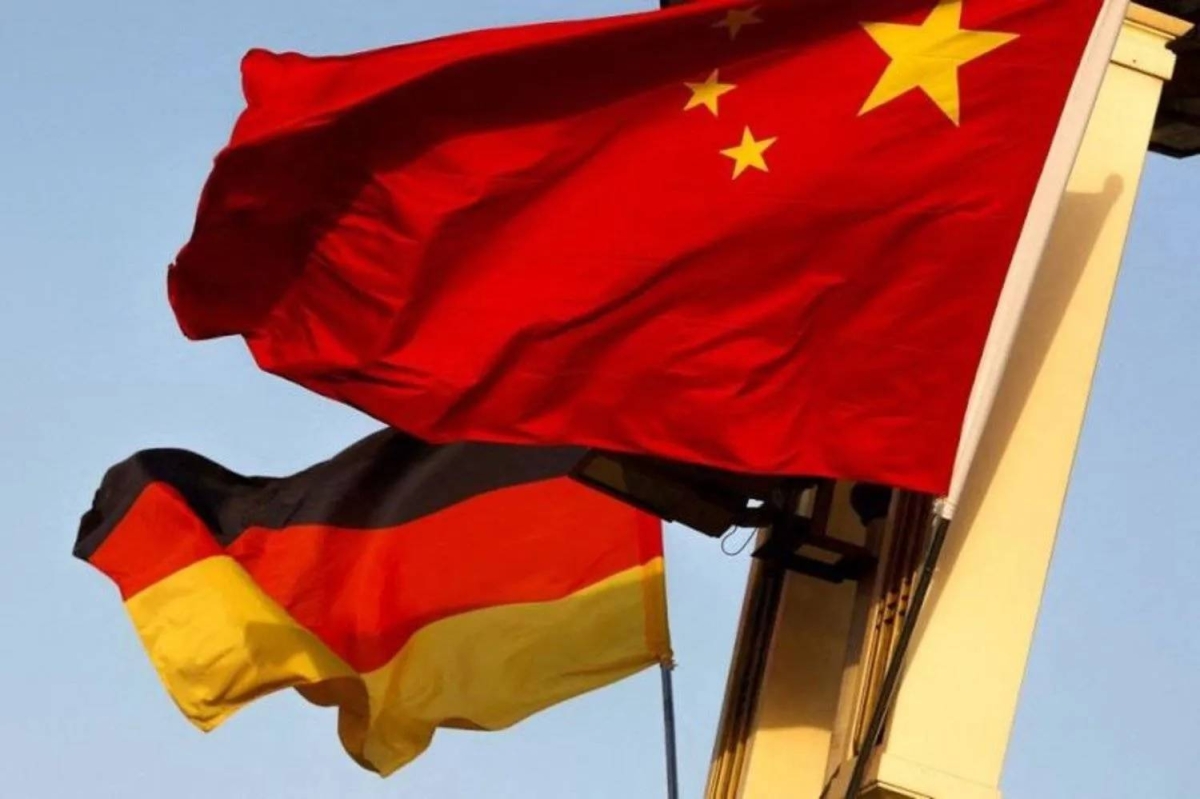
Tensions escalate between China and Germany over the Asia-Pacific region
Relations between China and Germany have become noticeably strained following an exchange of accusations, with Beijing launching a diplomatic attack on Berlin, warning it against escalating tensions and provoking confrontation. This came after German Foreign Minister Johannes Wadephul described China's behavior in the Asia-Pacific region as "more aggressive.".
Historical and political background
The roots of the current tensions lie in ongoing territorial disputes in the Asia-Pacific region, particularly concerning the Taiwan Strait and the East and South China Seas. These areas are of great strategic importance, as vital international shipping lanes for global trade pass through them. The region has witnessed an increase in military activity and heightened political rhetoric among the countries involved.
German position
German Foreign Minister Johannes Wadephul accused China of threatening to unilaterally alter borders in the region, stating that Beijing is becoming "increasingly aggressive." During his visit to Japan, he emphasized that any escalation in this sensitive area for international trade would have serious consequences for global security and the international economy.
In a statement released ahead of his visit to Japan and Indonesia, Fadevol noted that China's increasingly aggressive behavior challenges the principles of international law and also affects Europe. He asserted that the fundamental principles of coexistence are at stake due to Beijing's actions.
Chinese response
For her part, Chinese Foreign Ministry spokesperson Mao Ning responded, asserting that the situation in the East and South China Seas “remains generally stable.” She called on all parties involved to respect the countries in the region and resolve issues through dialogue and consultation, rather than inciting confrontation and escalating tensions. She also emphasized that the Taiwan issue is an internal Chinese matter.
Analysis of the Saudi position and diplomatic role
Amid these escalating tensions, Saudi Arabia stands out as a diplomatic force seeking to promote regional and international stability. Riyadh adopts a balanced approach aimed at avoiding escalation and preserving global peace and stability. In this context, the Kingdom can play a pivotal role in encouraging constructive dialogue among various parties and promoting peaceful solutions to regional conflicts.
The Saudi position reflects the strength of its diplomacy and its ability to exert a positive influence on the international stage without openly siding with any party.
Different points of view
While Germany sees China’s actions as threatening international stability and international law, Beijing insists it is maintaining regional stability and calls for dialogue instead of escalation.
The international community remains vigilant regarding developments in the Asia-Pacific region and their potential impact on global security and the economy.










Politics
The Yemeni government's priorities: Services in Aden and justice for the southern cause
The Yemeni Prime Minister outlines the government's priorities: currency stability, improving Aden's electricity, and paying salaries, while emphasizing the justice of the southern cause and partnership with the press.

In a move aimed at enhancing transparency and clarifying the government's course of action during the current critical phase, Yemeni Prime Minister Dr. Shaya'a al-Zindani explained that his government's priorities are primarily focused on addressing the escalating service and economic challenges, foremost among them stabilizing the national currency, improving electricity and water services, and ensuring the regular payment of salaries. This statement comes at a time when the country is experiencing immense economic pressure resulting from the ongoing war and the halt in oil exports, which has severely impacted the living conditions of citizens.
Aden: The true test of the state
The Prime Minister emphasized the special place that the interim capital, Aden, holds in the government's program, considering it a symbol of the state and a true test of its ability to succeed and endure. He noted that the government is deeply committed to transforming Aden into a model of security, public service provision, and institutional discipline. He affirmed that the success of this experiment in Aden would send a powerful message of hope to the other liberated governorates, confirming the success of the state project and its capacity for recovery. At the same time, he warned that any chaos or security lapses in Aden would not only affect the city but would also tarnish the image of the nation and the national project as a whole in the eyes of the international community and donors.
Economic and political dimensions
The Yemeni government faces complex challenges, with the electricity sector in Aden and neighboring governorates being among the most intricate due to dilapidated infrastructure and fuel shortages, requiring urgent strategic solutions. Currency stability is also directly linked to citizens' purchasing power, which has eroded significantly in recent years. Through these priorities, the government aims to create a stable environment that will encourage capital inflows and revitalize the economy.
The justice of the southern cause and partnership with the media
On the political front, during a meeting with journalists and media figures in the interim capital, Aden, the Yemeni Prime Minister reiterated that the Southern issue is a just cause , noting that it constitutes a fundamental pillar of any future political settlement and that addressing it in a manner acceptable to the people of the South is a genuine path to stability. In closing, al-Zindani pledged to build strong bridges of partnership with the press and media, emphasizing that restoring trust between citizens and the government begins with honesty and transparency, and that the media is a key partner in uncovering the truth and monitoring government performance.
Politics
Qatar intercepts two ballistic missiles: Ministry of Defense statement and details of the operation
The Qatari Ministry of Defense announced the successful interception of two ballistic missiles targeting the country. Learn more about the operation and the readiness of the Qatari Armed Forces to protect national sovereignty.
The Qatari Ministry of Defense announced today (Tuesday), in an important official statement, the success of its armed forces in repelling a hostile aerial attack, which involved intercepting and destroying two ballistic missiles targeting several areas within the country. This announcement confirms the high level of readiness of Qatar's air defense systems in protecting its airspace and national sovereignty.
Operation details and combat readiness
The ministry explained in its statement that monitoring and tracking systems detected the threat early on, and it was dealt with immediately according to the pre-approved operational plan for handling such scenarios. Air defenses successfully intercepted and destroyed the two missiles before they reached their targets or entered the country's airspace, thus preventing any damage.
The ministry stressed that the Qatari armed forces possess the full technical and human capabilities to protect and preserve the sovereignty of the state and its territories, affirming its determination to firmly and forcefully confront any external threat that may affect the security of the homeland or the safety of its citizens.
The importance of air defense systems in the regional context
This event underscores the paramount importance that the Gulf Cooperation Council (GCC) countries, including Qatar, place on strengthening their military and defense capabilities. Given the recurring security challenges in the Middle East, investment in advanced air defense systems and the ongoing training of military personnel are fundamental pillars for maintaining national and regional stability.
The rapid response and interception of the missiles reflect the efficiency of Qatar's military infrastructure and its ability to neutralize ballistic threats, which are among the most complex threats in modern warfare. This defensive success sends a clear message about the resilience of Qatari airspace and the country's ability to deter any attempts at aggression.
A call for calm and reliance on official sources
In closing, the Ministry of Defense reassured all citizens, residents, and visitors in Qatar, urging them to continue their lives normally and to trust in the security and military forces' ability to provide the necessary protection. The Ministry also stressed the importance of adhering to instructions issued by the relevant security authorities and avoiding the spread of rumors or misinformation on social media platforms, emphasizing that the only reliable source of accurate information is official statements issued by state authorities.
Politics
Washington warns its citizens: Leave the Middle East immediately
The US State Department is urging its citizens to leave 15 Middle Eastern countries immediately due to security tensions and ongoing attacks. See which countries are included in the warning.

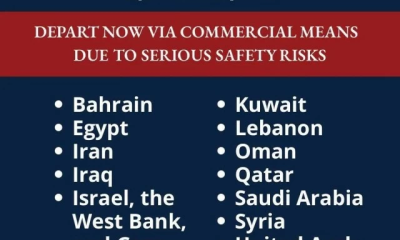
In a significant development reflecting escalating geopolitical tensions in the region, the US State Department issued an urgent and strongly worded warning yesterday (Monday), urging American citizens in more than 14 Middle Eastern countries to leave "immediately." The warning, published on the "X" platform, emphasized the need to utilize currently available commercial transportation options before it is too late, citing "serious security risks" that could threaten the safety of American citizens.
Warning details and immediate action
Assistant Secretary of State for Consular Affairs Maura Namdar emphasized the seriousness of the situation, stating that the State Department strongly urges Americans not to wait and to leave the affected countries immediately via commercial flights that are still operating. Namdar stressed the importance of acting quickly in anticipation of any sudden developments on the ground that could lead to airspace closures or travel disruptions, which could later make government evacuations difficult or impossible.
Context of escalating regional tensions
This strong warning comes amid a highly complex security situation, as the report noted the continuation of US-Israeli strikes against targets linked to Iran, and the accompanying escalating security tensions that are casting a shadow over the stability of the entire region. This action reflects growing US concern about the potential for the conflict to expand to multiple fronts, exposing Western interests and foreign nationals to the risks of retaliation or being caught in the crossfire.
List of countries and regions included
The warning included a broad list of countries and regions considered hotspots or near flashpoints, including Bahrain, Egypt, Iran, Iraq, Israel, and the West Bank and Gaza Strip. The inclusion of relatively stable countries on the list indicates that the US security assessment views the region as a single, interconnected entity directly affected by any potential military escalation.
Background and consular procedures
Historically, the U.S. State Department issues such Level 4 travel warnings (do not travel or leave immediately) when the ability to provide emergency consular assistance is extremely limited. U.S. citizens who choose to remain despite the warning are advised to exercise extreme caution, monitor local news, and enroll in the Smart Traveler Enrollment Program (STEP) to receive security updates and facilitate their location in case of an emergency. This measure underscores that Washington anticipates a potentially prolonged period of instability, necessitating the utmost vigilance.
-

 Local News 3 days ago
Jeddah Airport alerts for travelers due to airspace closure and flight disruptions
-
Local News 5 days ago
Saudi Arabia approves regulations for the continued presence of Gulf vehicles: duration and penalties
-
Local news one week ago
The Ministry of Interior begins procedures for a royal pardon for common law prisoners
-
Local News 7 days ago
The deadline for property registration in Hail and Riyadh is Thursday
-
Sports one week ago
Tickets for the Al-Ahli vs. Al-Hilal King's Cup match postponed: New date
-
Local news one week ago
Under the patronage of the Minister of Information, an agreement was signed between the Ministry of Information and Waves Marketing Company
-
Local news one week ago
Saleh Al-Maghamsi appointed Imam of the Prophet's Mosque: Details of the Royal Decree
-
Culture and Art 6 days ago
The Devil's Prisons series was halted: The full story of "The Emperor's" being moved to YouTube