Politics
Cabinet approves measurement and calibration system
The Custodian of the Two Holy Mosques, King Salman bin Abdulaziz, chaired the Cabinet meeting held today (Tuesday) in Riyadh.
And in


The Custodian of the Two Holy Mosques, King Salman bin Abdulaziz, chaired the Cabinet meeting held today (Tuesday) in Riyadh.
At the beginning of the session, the Cabinet discussed the content of the two calls made by the Crown Prince, Prime Minister, to the President of the Arab Republic of Egypt and the President of the Republic of Turkey, and what they included in terms of his emphasis on the Kingdom’s keenness to unify Arab and Islamic efforts to support the brotherly Palestinian people, and the need to exert all efforts to stop the escalation and ongoing Israeli violations.
The Cabinet approved the Measurement and Calibration System. It also reviewed the letter sent by the Crown Prince, Prime Minister, to the Prime Minister of the Kingdom of Tonga, and the content of his meeting with the President of the European Council.
Minister of Information Salman bin Yousef Al-Dossari explained in his statement to the Saudi Press Agency following the session that the Cabinet then reviewed the results of the Kingdom’s participation in a number of international meetings, as part of its interest in strengthening ties of cooperation and joint coordination with sisterly and friendly countries, and pushing multilateral action towards more progress and prosperity.
The Council praised the contents of the meeting of the Executive Committee of the Saudi-Qatari Coordination Council, which embodied the two countries’ keenness to strengthen relations and elevate them to broader horizons in various fields, in order to achieve the interests of their two brotherly peoples.
Achieving security and stability in the region and the world
The Cabinet followed the developments and events on the regional and international arenas, reiterating the Kingdom’s support for efforts aimed at achieving security, stability and sustainable development for the region and the world at large.
The Council stated that the occasion of the 50th anniversary of the establishment of the Saudi Fund for Development comes in light of its growing role and numerous achievements worldwide, and its contribution to building a bright future for less developed societies and developing countries.
Selecting national talents for "senior scholars" and "Shura Council"
On the domestic front, the members of the Council of Ministers considered the two royal decrees to reconstitute the Council of Senior Scholars and the Shura Council as an extension of the Custodian of the Two Holy Mosques’ care for the Council of Senior Scholars, and an embodiment of his keenness to select members of the Shura Council from national competencies that have contributions in various fields to continue their giving in service of religion and the nation.
The Council reviewed the topics on its agenda, including topics that the Shura Council had participated in studying. It also reviewed the conclusions reached by the Council of Political and Security Affairs, the Council of Economic and Development Affairs, the General Committee of the Council of Ministers, and the Council of Ministers’ Experts Committee regarding these topics. The Council concluded the following:
decisions:
The Ministry of Justice, represented by the Judicial Training Center, has joined the Euro-Arab Network for Judicial Training.
- Approval of an agreement between the Ministry of Environment, Water and Agriculture in the Kingdom of Saudi Arabia and the Arab Center for the Studies of Arid Zones and Dry Lands (ACSAD), for cooperation in the fields of environment, water and agriculture.
- Approval of two memoranda of understanding between the Saudi Ministry of Human Resources and Social Development and both the Ministry of Employment and Labor in the Republic of Korea for cooperation in the field of labor and employment, and the Ministry of Employment and Vocational Training in the Republic of Tunisia in the fields of labor.
- Approval of a memorandum of understanding between the Saudi Ministry of Health and the Tunisian Ministry of Health, for cooperation in health fields.
- Authorizing the Minister of Finance, Chairman of the Board of Directors of the General Authority for Endowments - or his representative - to discuss with the Omani side the draft memorandum of understanding between the Saudi General Authority for Endowments and the Ministry of Endowments and Religious Affairs in the Sultanate of Oman, in the field of endowments, and to sign it.
- Authorizing the Minister of Finance, Chairman of the Board of Directors of the Zakat, Tax and Customs Authority - or his representative - to sign the draft agreement between the Government of Saudi Arabia and the Government of the Federal Republic of Nigeria on cooperation and mutual assistance in customs matters.
- Approval of a memorandum of understanding for technical cooperation in the field of civil aviation between the Saudi General Authority of Civil Aviation and the Latin American Commission for Civil Aviation.
- Approval of a memorandum of understanding for cooperation in the legal field between the Council of Experts of the Saudi Cabinet and the Ministry of Legal Affairs in the Kingdom of Bahrain.
- Authorizing the Chairman of the Board of Directors of the Education and Training Evaluation Commission - or his representative - to discuss with the Arab Organization for Administrative Development - which is affiliated with the League of Arab States - the draft memorandum of understanding between the Saudi Education and Training Evaluation Commission and the Arab Organization for Administrative Development, for cooperation in the field of measurement, evaluation and accreditation, and to sign it.
– Approval of a memorandum of understanding between the Saudi Capital Market Authority and the Central Bank of Bahrain in the Kingdom of Bahrain.
– Approval of the measurement and calibration system.
- Approval of the final account of the Saudi Electricity Regulatory Authority for a previous fiscal year.
Upgrades:
Approval of promotions to the (fifteenth) and (fourteenth) ranks, as follows:
- Sulaiman bin Ibrahim bin Abdulaziz Al-Tuwaijri was promoted to the position of (Senior Business Advisor) at the (fifteenth) rank in the Ministry of the National Guard.
- Fahd bin Nasser bin Khalid bin Ahmed Al-Sudairi was promoted to the position of (Business Advisor) at the (fourteenth) rank in the Ministry of Interior.
- Abdul Latif bin Ibrahim bin Ali Al-Dawood was promoted to the position of (Issues Research Advisor) at the (fourteenth) rank in the Ministry of Interior.
- Engineer Musleh bin Badi bin Musleh Al-Dossari was promoted to the position of (Urban Planning Consultant) at the (fourteenth) rank in the Al-Kharj Governorate Municipality.
- Promoting Ayman bin Mohammed Yahya bin Ahmed Danish to the position of (General Manager) at the (fourteenth) rank in the Ministry of Industry and Mineral Resources.
- Abdulrahman bin Abdullah bin Abdulrahman Al-Sunaidi was promoted to the position of (Computer Engineering Technology Consultant) at the (fourteenth) rank in the General Secretariat of the Council of Ministers.
The Cabinet also reviewed a number of general topics on its agenda, including two annual reports from the National Competitiveness Center and the National Center for Documents and Archives, and took the necessary action regarding those topics.




Politics
Trump: Our operations in Iran continue despite the killing of 3 soldiers
In his first comment, President Trump confirmed the deaths of three American soldiers in Iran, warning of further losses and stressing the continuation of the fight until the objectives are achieved, via Truth Social.
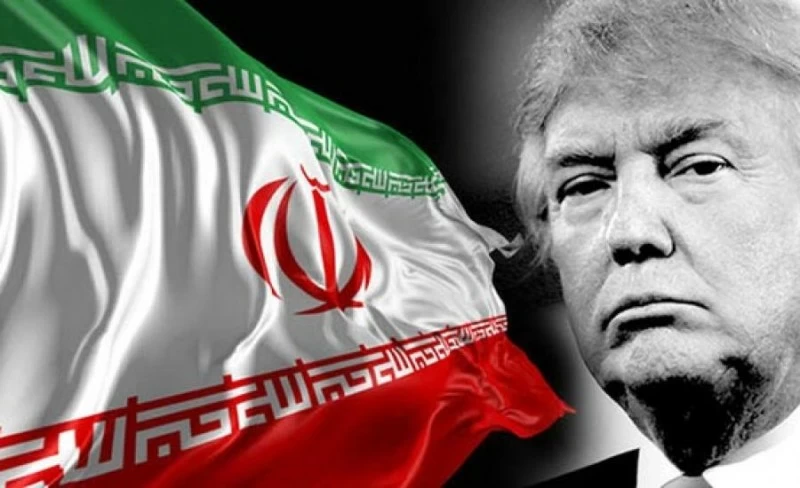
In a notable escalation of the military situation, US President Donald Trump confirmed on Sunday that further casualties among US forces during the ongoing combat mission inside Iranian territory are "likely," while stressing that military operations will not stop and will continue "until the United States achieves its objectives in full.".
Fiery statements via Truth Social
President Trump's remarks came in a video posted on his social media platform, Truth Social, where he adopted a firm and frank tone regarding the cost of the war. Trump stated, "The fighting continues at full force and will continue until all of our objectives are achieved. We have very strong objectives," refraining from elaborating on those strategic goals or revealing a timeline for the end of the operations. This leaves the door open to widespread speculation about the scope and scale of the conflict.
National mourning and the cost of confrontation
The US president had previously announced the deaths of three American service members, describing the event as tragic and affirming that the nation was in mourning. In his eulogy for the soldiers, he added, "As one nation, we mourn the patriots who made the ultimate sacrifice for their country." These statements serve to confront the American public with the stark reality of the human cost of this direct military involvement.
Context of historical conflict and tension
These developments are exceptionally dangerous given the history of strained relations between Washington and Tehran. While relations between the two countries have been tense for decades, the shift from proxy wars or naval skirmishes to a direct US "combat mission" and resulting casualties represents a radical change in the rules of engagement. Observers believe that Trump's talk of "strong targets" may indicate an effort to neutralize significant military capabilities or fundamentally alter the balance of power in the region, which explains his warning that there is still a long way to go.
Expected regional and international repercussions
This escalation is expected to cast a long shadow over the stability of the entire Middle East region. Continued military operations and the prospect of further casualties could trigger a chain reaction affecting international maritime security and global energy supplies. Furthermore, the US administration's insistence on pressing ahead until "all objectives are achieved" leaves the international community with a range of scenarios, from full-scale military escalation to intense diplomatic pressure aimed at containing the situation before it spirals completely out of control.
Politics
Exchanges of fire between Israel and Iran and escalation in Lebanon
Continuing the military escalation: Israel bombs Tehran and declares air superiority, and projectiles from Lebanon strike the north, amid global economic concerns following the killing of Khamenei.

In a dramatic turn of events in the Middle East, the Israeli army announced today (Monday) that sirens had been activated in several large areas of northern Israel, following the detection of rocket fire from Lebanese territory, indicating that the northern front is ablaze amid major regional tensions.
This escalation on the ground comes as Israel launched a new and extensive wave of direct airstrikes on the Iranian capital, Tehran. Iran responded by launching further missile barrages, in a scene reflecting the peak of military tension, especially as these events come just one day after the announcement of the death of Iranian Supreme Leader Ayatollah Ali Khamenei, an event that marked a pivotal turning point in the conflict.
Details of the attacks and air control
In detailing the military operations, the Israeli army noted that its air force had achieved complete air superiority over Tehran. Reports indicated that the wave of attacks targeting various parts of the Iranian capital focused precisely on strategic locations, including intelligence centers, security headquarters, and military command and control centers, in an attempt to cripple the enemy's ability to manage the battle.
Regional context and the shift in rules of engagement
This escalation represents a clear departure from the traditional rules of engagement that have governed the conflict between the two sides for many years, rules that have often relied on "shadow warfare" or proxy confrontations in the region. The shift to direct confrontation and the bombing of capital cities presents the region with open and complex scenarios, as targeting command centers in Tehran and assassinating a figure of the Supreme Leader's stature constitutes a radical shift in the balance of power and deterrence in the Middle East.
Global economic repercussions and fears of the unknown
The effects of this fierce military confrontation, which included US and Israeli attacks and the subsequent Iranian response, were not limited to the security sphere alone, but also caused a powerful shock across vital global economic sectors. Shipping and air travel were significantly affected, and global oil markets were disrupted amid fears of supply shortages.
International warnings continue to mount regarding a sharp rise in energy costs, which could further burden a global economy already struggling with inflation. There are also serious concerns about potential disruptions to business activity in the Arabian Gulf region, home to vital waterways that serve as the lifeblood of global energy trade, as well as a global trading hub connecting East and West.
Politics
The assassination of Ali Khamenei: The repercussions of the Supreme Leader's death and the future of regional conflict
A comprehensive analysis of the repercussions of the news of the assassination of Iranian Supreme Leader Ali Khamenei. Is the region heading towards a full-scale military escalation or a radical shift in Tehran's policies and the future of the resistance axis?
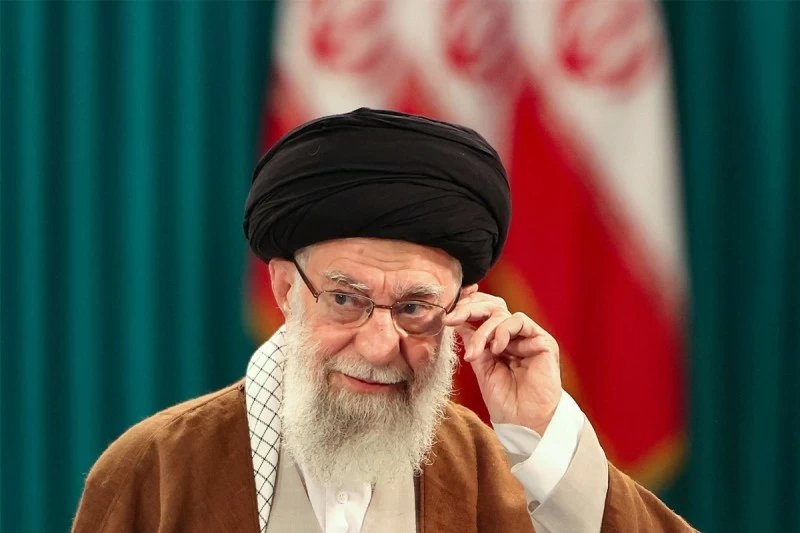
In a dramatic development that represents a geopolitical earthquake in the Middle East, the news circulating about the assassination of Iran's Supreme Leader, Ali Khamenei, in a joint US-Israeli airstrike has plunged the entire region into turmoil. This event is not merely the loss of a political figure, but rather the dismantling of the very top of the Islamic Republic's power structure, opening the door to unforeseen scenarios that could redraw the maps of influence and conflict.
The end of the era of the strongest man
With the passing of Ali Khamenei, Iran loses the man who held the reins of absolute power for more than three decades. Khamenei assumed the position of Supreme Leader in 1989, succeeding the founder of the Islamic Republic, Ruhollah Khomeini, during a critical transitional period following the Iran-Iraq War. Throughout his years in power, he consolidated his authority through complete control over the levers of the state, from the military establishment, represented by the Revolutionary Guard, to the judiciary and the media, becoming the ultimate authority, surpassing the presidency, the government, and parliament.
The nature of power and constitutional vacuum
The gravity of this event lies in the nature of the "Supreme Leader" position in the Iranian constitution, which grants the Supreme Leader broad religious and political powers. His sudden absence through foreign military action presents the Assembly of Experts with a historic and difficult test in choosing his successor, amidst speculation of internal power struggles between hardline conservatives and other factions, as well as the pivotal role the Revolutionary Guard will play in the transition process to ensure the regime's continuity.
Regional conflict scenarios
Regionally, Khamenei's assassination raises existential questions about the future of the "axis of resistance" he has nurtured for years. From Lebanon to Yemen, and from Syria to Iraq, militias and armed factions are ideologically and logistically linked to the Supreme Leader. Will his absence lead to the disintegration of this axis and a decline in Iranian influence? Or will the retaliatory response be violent and widespread, dragging the region into an all-out war?
The next phase will not be merely a change of names, but may witness a redefinition of Tehran’s military and political doctrine. This event will either pave the way for a major negotiating table that ends decades of hostility, or it will be the spark that ignites the powder keg in the entire Middle East.
-

 Local News 4 days ago
Saudi Arabia approves regulations for the continued presence of Gulf vehicles: duration and penalties
-
Local News 7 days ago
The Ministry of Interior begins procedures for a royal pardon for common law prisoners
-
Local news two days ago
Jeddah Airport alerts for travelers due to airspace closure and flight disruptions
-
Politics, one week ago
Trump plans to create a $2 billion alternative to the World Health Organization
-
Local News 6 days ago
The deadline for property registration in Hail and Riyadh is Thursday
-
Sports one week ago
Tickets for the Al-Ahli vs. Al-Hilal King's Cup match postponed: New date
-
Local News 6 days ago
Under the patronage of the Minister of Information, an agreement was signed between the Ministry of Information and Waves Marketing Company
-
Culture and Art 4 days ago
The Devil's Prisons series was halted: The full story of "The Emperor's" being moved to YouTube