Politics
A ship caught fire in Bahrain's Salman Industrial City due to missile fragments
Details of a ship fire in Salman Industrial City in Bahrain caused by shrapnel from an intercepted missile, resulting in deaths and injuries, and calls from the Ministry of Interior for citizens to remain calm.


The Bahraini Ministry of Interior issued an urgent official statement announcing a fire on a foreign vessel undergoing routine maintenance in Salman Industrial City. The fire was caused by debris from an intercepted missile falling into the Kingdom's airspace. Civil Defense teams and other relevant authorities responded with high professionalism and exceptional speed to control the situation and minimize damage.
The ministry explained in its detailed account of the unfortunate incident that shrapnel killed one Asian worker and seriously injured two others. The injured were immediately transported to receive necessary medical care. Authorities confirmed that the fire was completely extinguished and the site was cooled to prevent reignition, demonstrating the high level of preparedness of emergency response teams in handling sudden industrial and security incidents.
In a related matter concerning public safety measures, the Ministry called upon all citizens and residents to remain calm and proceed to the nearest safe place, emphasizing the importance of following news and instructions issued only through official channels, immediately upon the sounding of the sirens. These instructions are part of the approved Civil Defense protocols to ensure the safety of the population in emergency situations and to avoid rumors that could incite unwarranted panic.
Salman Industrial City (formerly Al Hidd Industrial Area) holds significant strategic and economic importance for the Kingdom of Bahrain, serving as one of the region's leading hubs for heavy industries and logistics. The city also houses vital ship repair and maintenance facilities, making it a key player in the maritime and shipping sector. This incident highlights the challenges that sensitive industrial areas may face; however, the swift containment of the fire underscores the robust safety infrastructure of Bahrain's maritime facilities.
On a regional and security level, the missile interception incident highlights the effectiveness of the Kingdom of Bahrain's air defense systems in protecting its airspace and vital installations. Bahrain plays a pivotal role in the security of the Arabian Gulf and international navigation, given its strategic geographic location. Experts confirm that such incidents, though rare, are handled according to the highest security standards to ensure the continued flow of trade and business in ports and industrial areas with minimal disruption.
In conclusion, the Bahraini authorities reassured the public that the situation is under control, stressing the importance of community awareness in dealing with emergency circumstances, and emphasizing that the safety of lives and property remains the top priority for all security and service agencies in the Kingdom.




Politics
Trump: Our operations in Iran continue despite the killing of 3 soldiers
In his first comment, President Trump confirmed the deaths of three American soldiers in Iran, warning of further losses and stressing the continuation of the fight until the objectives are achieved, via Truth Social.
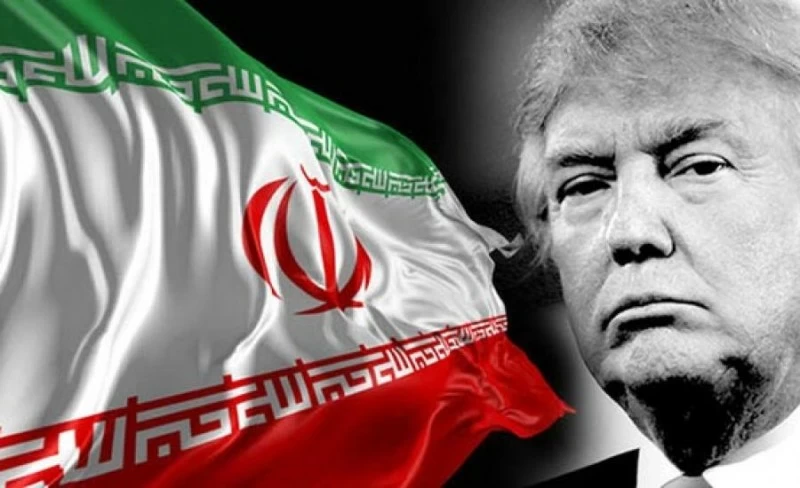
In a notable escalation of the military situation, US President Donald Trump confirmed on Sunday that further casualties among US forces during the ongoing combat mission inside Iranian territory are "likely," while stressing that military operations will not stop and will continue "until the United States achieves its objectives in full.".
Fiery statements via Truth Social
President Trump's remarks came in a video posted on his social media platform, Truth Social, where he adopted a firm and frank tone regarding the cost of the war. Trump stated, "The fighting continues at full force and will continue until all of our objectives are achieved. We have very strong objectives," refraining from elaborating on those strategic goals or revealing a timeline for the end of the operations. This leaves the door open to widespread speculation about the scope and scale of the conflict.
National mourning and the cost of confrontation
The US president had previously announced the deaths of three American service members, describing the event as tragic and affirming that the nation was in mourning. In his eulogy for the soldiers, he added, "As one nation, we mourn the patriots who made the ultimate sacrifice for their country." These statements serve to confront the American public with the stark reality of the human cost of this direct military involvement.
Context of historical conflict and tension
These developments are exceptionally dangerous given the history of strained relations between Washington and Tehran. While relations between the two countries have been tense for decades, the shift from proxy wars or naval skirmishes to a direct US "combat mission" and resulting casualties represents a radical change in the rules of engagement. Observers believe that Trump's talk of "strong targets" may indicate an effort to neutralize significant military capabilities or fundamentally alter the balance of power in the region, which explains his warning that there is still a long way to go.
Expected regional and international repercussions
This escalation is expected to cast a long shadow over the stability of the entire Middle East region. Continued military operations and the prospect of further casualties could trigger a chain reaction affecting international maritime security and global energy supplies. Furthermore, the US administration's insistence on pressing ahead until "all objectives are achieved" leaves the international community with a range of scenarios, from full-scale military escalation to intense diplomatic pressure aimed at containing the situation before it spirals completely out of control.
Politics
Exchanges of fire between Israel and Iran and escalation in Lebanon
Continuing the military escalation: Israel bombs Tehran and declares air superiority, and projectiles from Lebanon strike the north, amid global economic concerns following the killing of Khamenei.

In a dramatic turn of events in the Middle East, the Israeli army announced today (Monday) that sirens had been activated in several large areas of northern Israel, following the detection of rocket fire from Lebanese territory, indicating that the northern front is ablaze amid major regional tensions.
This escalation on the ground comes as Israel launched a new and extensive wave of direct airstrikes on the Iranian capital, Tehran. Iran responded by launching further missile barrages, in a scene reflecting the peak of military tension, especially as these events come just one day after the announcement of the death of Iranian Supreme Leader Ayatollah Ali Khamenei, an event that marked a pivotal turning point in the conflict.
Details of the attacks and air control
In detailing the military operations, the Israeli army noted that its air force had achieved complete air superiority over Tehran. Reports indicated that the wave of attacks targeting various parts of the Iranian capital focused precisely on strategic locations, including intelligence centers, security headquarters, and military command and control centers, in an attempt to cripple the enemy's ability to manage the battle.
Regional context and the shift in rules of engagement
This escalation represents a clear departure from the traditional rules of engagement that have governed the conflict between the two sides for many years, rules that have often relied on "shadow warfare" or proxy confrontations in the region. The shift to direct confrontation and the bombing of capital cities presents the region with open and complex scenarios, as targeting command centers in Tehran and assassinating a figure of the Supreme Leader's stature constitutes a radical shift in the balance of power and deterrence in the Middle East.
Global economic repercussions and fears of the unknown
The effects of this fierce military confrontation, which included US and Israeli attacks and the subsequent Iranian response, were not limited to the security sphere alone, but also caused a powerful shock across vital global economic sectors. Shipping and air travel were significantly affected, and global oil markets were disrupted amid fears of supply shortages.
International warnings continue to mount regarding a sharp rise in energy costs, which could further burden a global economy already struggling with inflation. There are also serious concerns about potential disruptions to business activity in the Arabian Gulf region, home to vital waterways that serve as the lifeblood of global energy trade, as well as a global trading hub connecting East and West.
Politics
The assassination of Ali Khamenei: The repercussions of the Supreme Leader's death and the future of regional conflict
A comprehensive analysis of the repercussions of the news of the assassination of Iranian Supreme Leader Ali Khamenei. Is the region heading towards a full-scale military escalation or a radical shift in Tehran's policies and the future of the resistance axis?
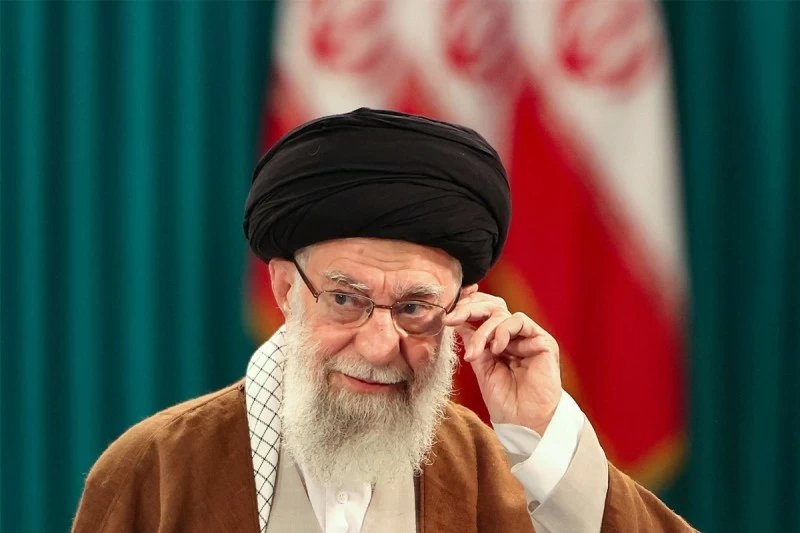
In a dramatic development that represents a geopolitical earthquake in the Middle East, the news circulating about the assassination of Iran's Supreme Leader, Ali Khamenei, in a joint US-Israeli airstrike has plunged the entire region into turmoil. This event is not merely the loss of a political figure, but rather the dismantling of the very top of the Islamic Republic's power structure, opening the door to unforeseen scenarios that could redraw the maps of influence and conflict.
The end of the era of the strongest man
With the passing of Ali Khamenei, Iran loses the man who held the reins of absolute power for more than three decades. Khamenei assumed the position of Supreme Leader in 1989, succeeding the founder of the Islamic Republic, Ruhollah Khomeini, during a critical transitional period following the Iran-Iraq War. Throughout his years in power, he consolidated his authority through complete control over the levers of the state, from the military establishment, represented by the Revolutionary Guard, to the judiciary and the media, becoming the ultimate authority, surpassing the presidency, the government, and parliament.
The nature of power and constitutional vacuum
The gravity of this event lies in the nature of the "Supreme Leader" position in the Iranian constitution, which grants the Supreme Leader broad religious and political powers. His sudden absence through foreign military action presents the Assembly of Experts with a historic and difficult test in choosing his successor, amidst speculation of internal power struggles between hardline conservatives and other factions, as well as the pivotal role the Revolutionary Guard will play in the transition process to ensure the regime's continuity.
Regional conflict scenarios
Regionally, Khamenei's assassination raises existential questions about the future of the "axis of resistance" he has nurtured for years. From Lebanon to Yemen, and from Syria to Iraq, militias and armed factions are ideologically and logistically linked to the Supreme Leader. Will his absence lead to the disintegration of this axis and a decline in Iranian influence? Or will the retaliatory response be violent and widespread, dragging the region into an all-out war?
The next phase will not be merely a change of names, but may witness a redefinition of Tehran’s military and political doctrine. This event will either pave the way for a major negotiating table that ends decades of hostility, or it will be the spark that ignites the powder keg in the entire Middle East.
-

 Local News 4 days ago
Saudi Arabia approves regulations for the continued presence of Gulf vehicles: duration and penalties
-
Local News 7 days ago
The Ministry of Interior begins procedures for a royal pardon for common law prisoners
-
Local news two days ago
Jeddah Airport alerts for travelers due to airspace closure and flight disruptions
-
Politics, one week ago
Trump plans to create a $2 billion alternative to the World Health Organization
-
Local News 6 days ago
The deadline for property registration in Hail and Riyadh is Thursday
-
Sports one week ago
Tickets for the Al-Ahli vs. Al-Hilal King's Cup match postponed: New date
-
Local News 6 days ago
Under the patronage of the Minister of Information, an agreement was signed between the Ministry of Information and Waves Marketing Company
-
Culture and Art 4 days ago
The Devil's Prisons series was halted: The full story of "The Emperor's" being moved to YouTube