Politics
Awad Al-Asmari: My father passed away before I was born... I eat leftover breakfast for suhoor
Professor Awad Al-Asmari combines the authenticity of his pride in his family and people, the courage to speak about a childhood marked by orphanhood, and the civility of his discourse

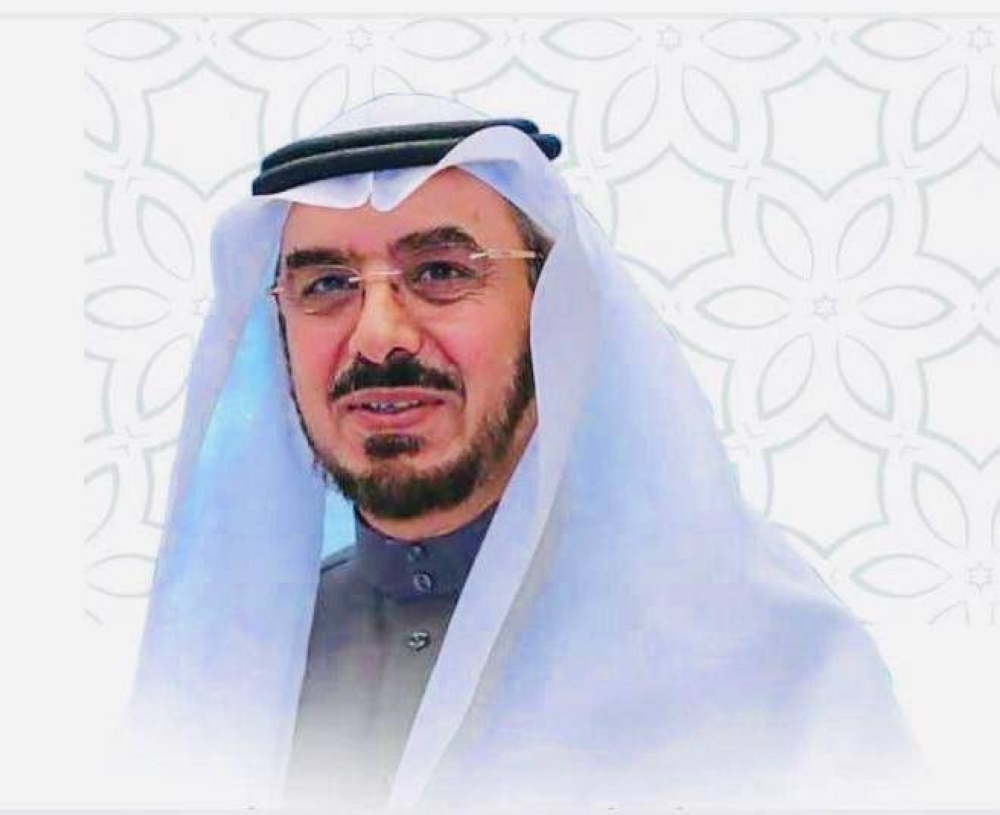
Professor Awad Al-Asmari combines the authenticity of his pride in his family and people, the courage to speak about a childhood marked by orphanhood, and the civility of speaking about himself, with all unpretentious humility, which reinforces in the mind of his interlocutor the integrated personality that God bestows upon whomever He wills of His servants, and the biography of a place and time that the man tells us and we convey to you from our Ramadan conversation with our guest:
She was born in Sabt Tanouma
• To begin with, when and where were you born and raised?
•• My father died while I was in my mother’s womb in the seventh month of pregnancy. This prompted my mother to go to her father’s house, Awad bin Talah Al-Shahri, in Sabt Tanuma, where I was born in 1959, in the summer, as my mother told me, corresponding to the year 1379 AH. I stayed in my grandfather’s house for about a year, and after that my mother married a man from Hawra, from Bani Manbah, who was not close to my father’s or grandfather’s house (may God have mercy on them all), as my father’s and grandfather’s house was in the village of Khurs in Balsamar.
I lived with my mother and her husband, the kind and generous man Musfir bin Ali bin Ghanem Al-Asmari from Hawra (may God have mercy on him).
• Your academic background and the positions you have held?
•• Elementary: in Hawra’a Balsamar, intermediate in Balsamar, secondary in Al-Yamamah High School in Riyadh, and I completed the third year of secondary school in Abha High School, and I obtained a Bachelor’s degree in Electrical Engineering from Riyadh University (currently King Saud University). After obtaining the Bachelor’s degree, I was appointed as a teaching assistant at the same university and worked for a year, then I was sent abroad to study at Ohio State University in Columbus, which is a prestigious public university. I completed my Master’s and Doctoral degrees at the University of Toledo in Ohio. I then returned to the Kingdom after completing the Doctoral degree and was appointed as an assistant professor at the university in 1412 AH. I obtained the degree of Associate Professor in 1416 AH, then I obtained the degree of Professor in approximately 1422 AH and worked as a consultant to several governmental and private entities.
I was a member of the Shura Council for four years, and about two months before the end of the Shura Council term, I was appointed President of Shaqra University, where I completed the term.
Ramadan is difficult abroad
• I spent Ramadan in the village, in the city, and outside the Kingdom. What is the difference between them? Which do you prefer?
• Fasting outside the Kingdom was very difficult, especially with the long daylight hours in the summer, where the sun sets at 9 pm and the fast begins around 3 am, making the night period very short. Despite the difficulty, the gathering of Muslims in the mosque for Taraweeh prayers was a special moment, as they came from different places, which added a special spirituality to the experience.
As for fasting in the city in the Kingdom, the fasting person in the Kingdom feels the true spirituality of Ramadan, as everyone is fasting, and the general atmosphere helps in worship, including: the atmosphere of breaking the fast, and Tarawih prayers, and it is full of spirituality and collective participation, which makes Ramadan completely different from fasting abroad.
As for fasting in the village in the past: the situation was difficult, as the resources were very limited, and breaking the fast often depended on dates and bread made from wheat, and if ghee was available, that was a special thing. Nowadays, the villages have become developed, and life in them has become more comfortable, and their atmosphere is more peaceful compared to the cities.
• Do you still have a relationship with your childhood friends to this day? And who do you remember from them?
•• Some of my elementary school classmates in Hawra: Professor Abdullah bin Fayez bin Atef, Nasser bin Madawi Al-Asmari, Obaid bin Abdulrahman Al-Maouk, Ali bin Khuzaym bin Surur, Saeed bin Musfir bin Ghanem, Ali bin Khaloufa (may God have mercy on him), and Nasser bin Muhammad bin Abdulaziz.
In middle school: My colleagues were from Othman Bin Affan Middle School, and its principal was Abdullah Bin Abdul-Moein (may God have mercy on him), who had a great role in supporting and encouraging me. Some of my colleagues in middle school were: Saeed Bin Dhafer Al-Ridan, Fahran Bin Al-Qabas (may God have mercy on him), Dean Dr. Abdulaziz Bin Abdullah Al-Khunain, and Hassan Bin Abdulrahman Al-Mousa (I ask God for his speedy recovery).
I entered the "tea room"
• A situation that is stuck in your mind that has affected your life.
In my third year at the Faculty of Engineering, my academic excellence caught the attention of one of the professors, the late Professor Mohamed Ali El-Shimi El-Masry. This distinction led him to take me by the hand to the tea room where the faculty members gathered. That room was filled with prominent engineers from various nationalities, and the place felt like an ivory tower to me, where the professors were like imposing military leaders.
It was extremely difficult for any student to dare go to that room, let alone enter it and sit with those scholars. Nevertheless, I entered the place I considered forbidden, with Professor Muhammad al-Shimi holding my hand. Perhaps if he hadn't been holding my hand, I would have fainted from the awe of the place and its people.
When we entered, he said, pointing at me with his other hand, “This student is Awad, a bright student, and he will have a great future.”.
These words deeply affected me, building within me towering castles of hope and lofty ambitions, and boosting my self-confidence and enthusiasm. They also eased the pain, stress, and wounds I had suffered greatly in my early youth, wounds that had plagued me throughout my studies at the Faculty of Engineering.
I love the evening very much
What is your favorite TV show?
•• I love cultural, historical and literary programs, and among the programs I follow are “Zero” and “Liwan,” as I find them to be valuable programs with distinctive interviews, and I like them very much, and I follow them regularly and care about them in every sense of the word.
• Sleep, exercise, reading... which one takes up the lion's share of your Ramadan schedule?
•• Reading takes the lion’s share, followed of course by sleep, and then by exercise. But I can almost guarantee that, God willing, I have a daily walking program. I used to be a member of a club, but my personal circumstances, my office work, and my travels have forced me to commit to walking and, very rarely, swimming.
• Some people dedicate the month of Ramadan to reading fundamental texts in Islamic culture. Are there any specific books that Ramadan brings you back to?
•• During Ramadan, I love the evenings very much. The time is good, so I take advantage of that time to write some scientific, literary, and cultural books. My reading is mostly scientific information related to future sciences. I have a number of lectures and I wrote a book in this field called “Future Sciences and Higher Education.” Ramadan really deepens your study of history and love of ancient history, especially regarding the Islamic conquests and invasions. I read in great detail, praise be to God, about the first, second, and third Saudi states, and also about King Abdulaziz, may God have mercy on him. I have many books in my library and outside the library, and God willing, it will be one of the libraries that are pointed out in this field.
My experience at university and the Shura Council
What is your favorite dish during Ramadan for both Iftar and Suhoor meals?
•• For breakfast, I must have samosas, soup, and berry juice in front of me, and for suhoor, it is usually kabsa or leftover breakfast.
• What Ramadan tradition do you wish would return?
•• One of the customs that I loved very much, and it is one of the old customs, was that there was a mosque in the village and the people’s conditions were not good, so there was an endowment for the mosque and there were a number of people who would bring us breakfast in the mosque, young and old, because the dates and bread that that person, may God have mercy on him, would bring were among the most beautiful and best things, and I was in the fourth grade at that time, so I really wish that those days and those beautiful customs would return, and that there would be a group breakfast for the neighborhood in the mosque and everyone would bring their plate.
• Which reciter's recitation moves you?
•• Sheikh Saad Al-Ghamdi, Sheikh Mishary bin Rashid Al-Afasy, Sheikh Abdul Rahman Al-Sudais, Sheikh Abdul Basit Abdul Samad, Sheikh Muhammad Al-Minshawi, and Sheikh Ahmed Al-Ajmi.
What were the results of your work at King Saud University, Al-Shura University, and Shaqra University?
•• My experience at King Saud University: I held a number of positions that gave me great experience in management, time management, and dealing with multiple groups such as faculty members, students, employees, and visitors.
My experience in the Shura Council: I consider it one of the most beautiful phases of my professional life, as I dealt with 150 members, many of whom were like independent universities in their experiences and knowledge. I had the opportunity to study the systems and laws, and to review the reports of various ministries and institutions, even though my background was not legal, as I was good in the technical field.
The experience at Shaqra University: When I took over the presidency of the university, I had diverse experiences (administrative, academic, research, and strategic), and through them I worked on developing and implementing the Shaqra University strategy, and I was able to achieve the goals that I set. The witness to this achievement is the Prince of Riyadh, Prince Faisal bin Bandar. This success would not have been possible without continuous and diligent work, to the point that on some days I would only sleep 4 to 6 hours due to the volume of work and responsibilities.
• Who is the person you remember every Ramadan?
•• We remember the people who used to fast with us and are now under the graves, may God have mercy on them.
• Is there a line of poetry that is always in your mind and that you constantly repeat?
•• This verse increases my patience, and I always remember and recite it since I was in the second year of high school:
Do not think glory is a date you can simply eat; you will not attain glory until you taste the bitterest of trials
A more hardworking student learns more
• What is your opinion on the quality of university education today compared to the past?
•• It is difficult to judge because current educational methods differ from previous educational methods. In the past, education relied on specific references, which made the student more miserable, but he was more knowledgeable and more capable, because he searched in libraries and books and suffered.
Nowadays, thank God, there are good sources of information such as ChatGPT. Also, any scientific paper you see, you can get it. But the difference between the past and the present is that you must work quickly and with skill. In the past, you worked with skill, and speed was not important because the growth of science in certain fields was slow. But the current time, which used to take a month for research, now takes minutes. Also, there is something new that will be available in the near future, and Google is interested in this matter, which is the quantum computer. Meaning, research that used to take minutes now takes a fraction of a second with this great computer.
• Do you still have contributions in the academic or consulting field after retirement?
•• Yes, but retirement helped me to gather previous things that I had delayed producing, scientific books, historical books, and cultural books. There are also consultations from scientific, educational, and academic bodies, as well as consultations for some private universities, and simple participations in lectures and some materials, and a simple research project that I and some colleagues are working on in several universities.
Related News




Politics
Iranian attacks on Qatar and Bahrain: Hamad Airport targeted, and the Gulf response
The Qatari Foreign Ministry announced the thwarting of Iranian attacks targeting Hamad International Airport and the downing of hostile aircraft, while Bahrain sounded its air raid sirens. Details of the Iranian escalation against the Gulf states.

In a dangerous escalation threatening the security and stability of the Arabian Gulf region, Iran has continued its blatant violations of international laws and norms through a series of flagrant attacks targeting vital civilian infrastructure in the Gulf Cooperation Council (GCC) countries. The Qatari Ministry of Foreign Affairs revealed today (Tuesday) details of a series of malicious attacks targeting Hamad International Airport, one of the world's most important air transport hubs, confirming that Qatari defenses successfully thwarted these hostile plots.
Details of the attacks on Qatari territory
The official spokesperson for the Qatari Ministry of Foreign Affairs, Dr. Majid Al-Ansari, stated that the Iranian attacks were not limited to military targets, but had taken a dangerous turn by encompassing the entire Qatari territory and targeting civilian facilities crowded with civilians and travelers. In his statement, Al-Ansari explained that Qatari authorities dealt firmly and efficiently with the Iranian aircraft that violated the country's airspace on Monday, issuing direct warnings before shooting them down to ensure the safety and security of Qatari airspace.
The spokesperson emphasized the readiness of Qatar's defense system to deal with any emergency, noting that Doha's stockpile of interceptor missiles remains undiminished and is capable of repelling any potential aggression. He concluded by firmly affirming that the State of Qatar reserves its full right to respond to these blatant attacks at the appropriate time and place, in a manner that guarantees the protection of its sovereignty and the security of its citizens and residents.
Security alert in the Kingdom of Bahrain
In conjunction with the rapidly unfolding events in Doha, the Kingdom of Bahrain experienced a state of high alert, with the Bahraini Ministry of Interior announcing the sounding of sirens throughout the country. The Ministry urged citizens and residents, through its official channels, to exercise caution and immediately seek shelter in safe locations, a clear indication of the seriousness of the threats affecting the region and the widening scope of the escalation.
Regional context and the importance of stability in the Gulf
These rapid developments come at a time of escalating geopolitical tensions in the Middle East, casting a shadow over the regional security landscape. The Arabian Gulf region holds paramount strategic importance for the entire world, not only as a major source of global energy but also as a vital artery for international trade, maritime navigation, and air traffic. The Gulf states have long been a pillar of stability in the region and have consistently strived to spare their people the ravages of conflict.
Violation of international conventions and threats to civilians
Targeting civilian facilities and vital infrastructure such as airports is a clear and blatant violation of international humanitarian law, UN charters, and the Geneva Conventions, which criminalize endangering civilians during conflicts or political tensions. Observers and political analysts believe that this unjustified Iranian escalation against neighboring countries could drag the region into disastrous scenarios, necessitating a firm and unified international stance to deter such practices that undermine regional and international peace and security and threaten the safety of civilian air navigation.
Politics
Netanyahu: War with Iran will not be eternal and a dangerous escalation of the confrontation
Netanyahu tells Fox News that the war against Iran will not be endless, amid mutual shelling that has reached Tel Aviv and Tehran and the conflict has expanded to include Lebanon and the Gulf on its fourth day.

In pivotal remarks reflecting the evolving military landscape in the Middle East, Israeli Prime Minister Benjamin Netanyahu asserted that the current war against Iran "will not last years," dismissing speculations that likened the present confrontation to previous protracted regional conflicts of attrition. These statements come at a highly sensitive time, as the conflict expands to encompass multiple fronts, from Lebanon to the Gulf states, foreshadowing major geopolitical shifts in the region.
Netanyahu's messages via American media
In an exclusive interview with Hannity on Fox News, Netanyahu was careful to send dual messages to both the Israeli public and the international community. He explained that the military operation might "take some time" to achieve its strategic objectives, but stressed that it "will not be an endless war." Analysts suggest that this statement aims to reassure Western allies concerned about the region sliding into a full-blown war, while simultaneously maintaining high expectations for the Israeli military.
Day Four: Tel Aviv Under Fire
On the ground, the confrontation entered its fourth day with unprecedented intensity (Tuesday), as Tel Aviv and its surrounding areas endured harrowing hours as explosions rocked the city center. Israel activated its advanced air defense systems to intercept volleys of Iranian missiles, a development that reshapes the traditional rules of engagement between the two sides and shifts the conflict from a proxy war to a direct and open confrontation deep within Israel's territory.
The target bank has expanded: from Tehran to Beirut
In a significant development reflecting the widening scope of operations, Israel launched a series of precise and daring airstrikes targeting a complex housing the Iranian state broadcaster in Tehran, a major symbolic and military escalation targeting symbols of Iranian sovereignty. Simultaneously, the northern front remained active, with the Israeli army targeting Hezbollah elements and infrastructure in several Lebanese towns, underscoring the interconnectedness of the various fronts in this complex conflict.
Regional and international dimensions of the conflict
These events cannot be understood in isolation from the broader regional context. The involvement of Gulf states in the crisis—whether through direct impact or political stances—places the entire region at a historical crossroads. Talk of the war spreading to the Gulf raises global concerns about energy security and international navigation, necessitating intensive diplomatic efforts. In this context, Arab positions, including the Saudi stance, emerge as a vital balancing force seeking to spare the region the devastation of a comprehensive war that could consume everything.
Politics
Afghanistan-Pakistan clashes: 42 dead and a dangerous military escalation
A UN report reveals that 42 civilians were killed in clashes between Afghanistan and Pakistan. Learn about the details of the military escalation in Kandahar, the background of the border conflict, and its impact on the region.

In a dangerous escalation of the security situation along the border, the United Nations Assistance Mission in Afghanistan (UNAMA) announced on Tuesday a staggering toll of civilian casualties resulting from the ongoing military operations. The mission reported that at least 42 civilians were killed and 104 others sustained injuries of varying severity during a wave of intense clashes between Afghan and Pakistani forces between February 26 and March 2.
The UN mission explained in its statement that these figures are still preliminary and subject to increase, noting that the vast majority of victims fell as a result of indirect artillery shelling and airstrikes that targeted populated areas and civilian homes on both sides of the border, at a time when the military conflict entered its sixth day amid fears of the confrontations widening.
Field developments and exchange of control
On the ground, military tensions remain at their peak, with Afghan authorities officially announcing their control over a new Pakistani military post in the southern province of Kandahar, confirming that fighting "is still ongoing" and that Afghan forces are on high alert to respond to any sources of fire.
Background of the conflict and historical tension
This military escalation is the latest episode in the ongoing tensions between the two neighbors, which have intensified significantly since the Taliban's return to power in Kabul in 2011. The disputes primarily revolve around the Durand Line, which Kabul does not recognize as an official international border, as well as mutual accusations of harboring armed groups. Islamabad accuses Afghanistan of turning a blind eye to the activities of the Pakistani Taliban, which carries out attacks inside Pakistani territory—an accusation Kabul consistently denies.
Humanitarian and political repercussions
This armed conflict exacerbates the humanitarian suffering of the Afghan people, who are already reeling from a crippling economic crisis and a series of natural disasters, the most recent being devastating earthquakes. The exchange of fire is displacing families from border villages and disrupting trade and border crossings, which are a lifeline for local residents. Observers believe that this escalation could lead to a deeper diplomatic rift, further complicating the international community's efforts to deliver humanitarian aid and stabilize a region plagued by chronic insecurity.
-

 Local News 3 days ago
Jeddah Airport alerts for travelers due to airspace closure and flight disruptions
-
Local News 5 days ago
Saudi Arabia approves regulations for the continued presence of Gulf vehicles: duration and penalties
-
Local news one week ago
The Ministry of Interior begins procedures for a royal pardon for common law prisoners
-
Local news one week ago
The deadline for property registration in Hail and Riyadh is Thursday
-
Sports one week ago
Tickets for the Al-Ahli vs. Al-Hilal King's Cup match postponed: New date
-
Local news one week ago
Under the patronage of the Minister of Information, an agreement was signed between the Ministry of Information and Waves Marketing Company
-
Local news one week ago
Saleh Al-Maghamsi appointed Imam of the Prophet's Mosque: Details of the Royal Decree
-
Culture and Art 6 days ago
The Devil's Prisons series was halted: The full story of "The Emperor's" being moved to YouTube