Politics
Araqchi and Woitkov clash: Will it end diplomacy and ignite war?
Details of the heated exchange between Abbas Araqchi and Steve Witkopf regarding Iran's nuclear program. Will it hasten the collapse of talks and the outbreak of a military confrontation? An NBC report reveals the behind-the-scenes details of the clash.

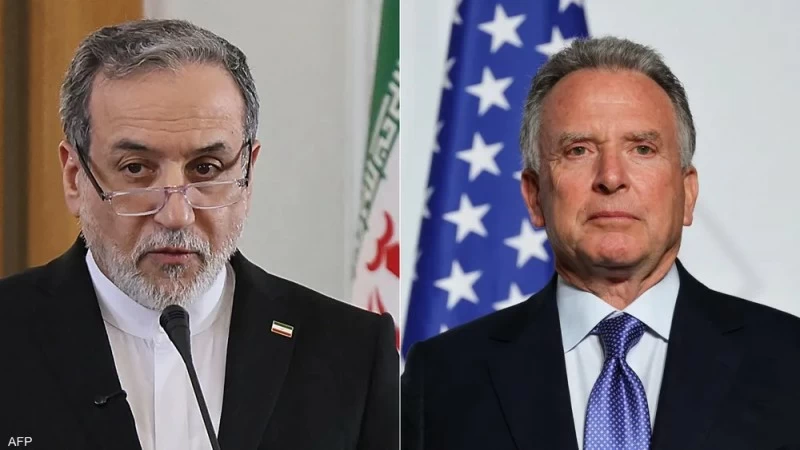
American media reports, citing NBC News, revealed details of a heated and unprecedented verbal exchange that took place behind closed doors between Iranian Foreign Minister Abbas Araqchi and US envoy Steve Wittkopf. This incident, which occurred during sensitive talks, is being interpreted as a dangerous sign that the diplomatic process has reached a dead end, paving the way for more dire scenarios that could include a direct military confrontation.
Details of the diplomatic clash
According to US administration officials, tensions rose at the meeting when the American delegation, led by Wittkopf, presented stringent conditions that Tehran considered a crossing of red lines. The American demand centered on Iran refraining from significant steps in its nuclear program, specifically a complete freeze on uranium enrichment for the next ten years. This proposal was met with firm rejection and strong reservations from the Iranian side.
During the debate, Abbas Araqchi reiterated his country's commitment to what he called its "inalienable right to uranium enrichment" for peaceful purposes, based on national sovereignty. However, the response from US envoy Steve Wittkopf was swift and sharp, as he interrupted his counterpart, stating that the United States also possessed "an inalienable right to defend its national security and prevent the proliferation of nuclear weapons that threaten global stability," thus ending the discussion on a high note.
Background to the nuclear crisis and history of setbacks
This dispute cannot be separated from the complex historical context of US-Iranian relations, particularly since Washington's unilateral withdrawal from the Joint Comprehensive Plan of Action (JCPOA) in 2018. Since then, the pace of Iran's nuclear program has accelerated, with reports from the International Atomic Energy Agency indicating that Tehran has reached enrichment levels close to weapons-grade (60%). This backdrop made the current talks a last chance to salvage the situation. However, the vast gap between US demands for a return to strict restrictions and Iran's insistence on lifting sanctions and preserving the gains of its nuclear program has made a clash inevitable.
The repercussions of failed diplomacy regionally and internationally
This diplomatic impasse carries serious implications that extend far beyond closed-door meetings. The failure of the talks effectively erodes peaceful options, placing the entire region on a knife's edge. Observers believe this clash could be the spark that precipitates military action, whether by Israel, which constantly threatens to strike nuclear facilities, or through a US-led mobilization to impose a suffocating isolation that could escalate into limited clashes. The shift from quiet diplomacy to direct verbal sparring between senior officials reflects Washington's growing strategic impatience and Tehran's readiness for confrontation, foreshadowing a new phase of escalation that could redraw the geopolitical map of the Middle East.




Politics
Trump hints at a ground intervention in Iran: The major strike has not yet begun
In a dangerous escalation, Trump confirms that a major strike against Iran is imminent and threatens a ground invasion. British Prime Minister Keir Starmer comments on the effectiveness of airstrikes for regime change.

In a striking development that portends a new phase of escalation in the Middle East, US President Donald Trump confirmed that the United States has not yet begun to launch its real and powerful strikes against Iran, indicating that what has happened so far is merely a prelude to what is to come.
In a fiery interview with CNN, Trump declared firmly, "We haven't even started hitting Iran hard yet. The big wave hasn't happened yet. The big strike is coming soon." The US president didn't stop at threatening airstrikes; he went further, indicating that he would not hesitate to make the dangerous strategic decision to send ground troops to Iran if necessary. This represents a radical shift in US military doctrine, which in recent years has relied on airstrikes and special operations.
The British position: Doubts about the effectiveness of air strikes
Across the Atlantic, a divergence of views emerged between Washington and London. British Prime Minister Keir Starmer addressed UK lawmakers, outlining his country's cautious stance. Starmer stated unequivocally, "I don't believe that attempting to remove Iran's leadership through airstrikes without a ground invasion will succeed." He explained that this military and political assessment was a key reason why the UK would not join the joint US-Israeli strikes against Iran, adding the deeply significant phrase, "This government does not believe in regime change from the sky," alluding to past lessons from conflicts in the region.
Context of tension and history of conflict
These statements come at a time of unprecedented tension in US-Iranian relations, reminiscent of the era of "maximum pressure." The Iranian issue has long been a major point of contention in international politics, with Washington accusing Tehran of destabilizing the region through its proxies and threatening international shipping. Analysts point out that the threat of a "ground invasion" constitutes a dangerous verbal escalation, given the immense geographical and military challenges posed by Iran's terrain, as well as the high human and material costs of such an intervention.
Regional repercussions and Arab concerns
In his remarks, Trump expressed surprise at the audacity of the Iranian strikes targeting Arab states, reflecting growing American concern about the security of its Gulf allies. Observers believe that any American ground military action against Iran would not only have repercussions for Tehran and Washington, but would ignite the entire region, potentially impacting global energy supplies and oil prices, in addition to the possibility of Iran activating its network of regional alliances to respond to any potential invasion.
Politics
Netanyahu in Beit Shemesh: Details of the visit to the Iranian missile site
Coverage of Netanyahu's visit to Beit Shemesh following the Iranian bombing that killed nine people. Details of Operation Lion's Roar and the Prime Minister's statements on the existential threat and the future of the conflict.

In a move carrying significant political and security implications, and in his first public appearance since the Iranian Revolutionary Guard announced the targeting of his office and the Air Force Command headquarters, Israeli Prime Minister Benjamin Netanyahu visited the site where Iranian missiles landed in Beit Shemesh, west of occupied Jerusalem. This visit took place amidst unprecedentedly tight security measures, reflecting the heightened tensions and security risks facing the Israeli leadership in light of the current escalation.
Details of the visit and the outcome of the bombing
Israeli media reported that Netanyahu arrived at the heavily guarded site, where he inspected the damage caused by the direct Iranian missile attack. Reports indicated that the bombing of the area yesterday killed nine people, marking one of the deadliest attacks on the Israeli home front in recent times.
During his tour of the rubble, Netanyahu addressed both Israeli and international audiences, saying, "I wish a speedy recovery to the wounded here in Beit Shemesh, and we will rebuild everything." He added, in remarks broadcast on Israeli television, "We are on the third day of Operation Lion's Roar, which we launched as a means to eliminate the existential threat we face." Netanyahu also took his usual stance on Tehran, stating, "The Iranian people need to be freed from the yoke of tyranny.".
Context of the conflict and the evolution of the confrontation
This visit gains significance from the broader context of the ongoing conflict between Israel and Iran, which has recently shifted from a "shadow war" and cyber or proxy attacks to direct and overt confrontations. Beit Shemesh, located approximately 30 kilometers west of Jerusalem, is a strategic and densely populated city, and its targeting by ballistic missiles represents a qualitative escalation in the target bank, indicating the missiles' ability to penetrate air defense systems and reach deep into the home front.
Political and security dimensions
Politically, Netanyahu is attempting to bolster his image as a leader "under fire," particularly after reports of an attack targeting his office. The use of the term "existential threat" reflects the Israeli security doctrine, which views Iran's missile and nuclear programs as an intolerable danger. Furthermore, the reference to Operation "Lion's Roar" suggests an Israeli intention to broaden the scope of its military response, potentially opening the door to an open-ended escalation that could draw in international and regional actors.
Observers believe that Netanyahu's focus on separating the Iranian regime from the Iranian people is part of an old diplomatic and media strategy aimed at undermining the legitimacy of the regime in Tehran internationally, in parallel with military operations on the ground.
Politics
Paphos airport in Cyprus evacuated after British bases targeted by drones
Cypriot authorities evacuated Paphos airport after drones were spotted. The government confirmed the target was the British base at Akrotiri, not Cyprus, amid escalating regional tensions.
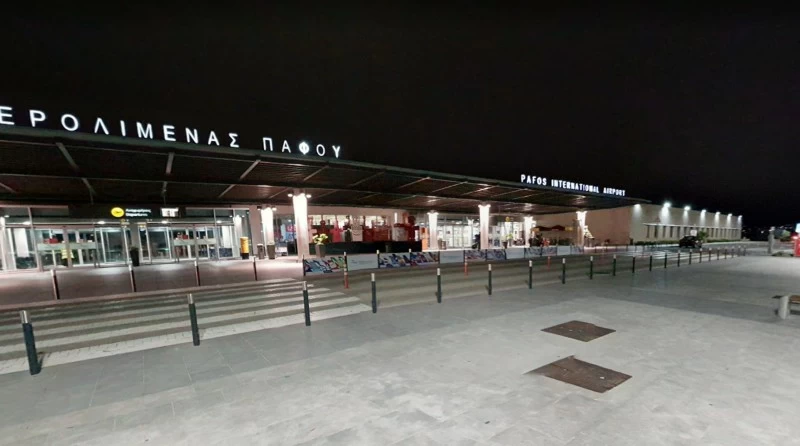
Cyprus witnessed a major security alert on Monday, leading authorities to evacuate Paphos International Airport, specifically the passenger terminal, and impose a tight security cordon in the surrounding area. This swift action came in response to aerial threats detected by radar systems, which were later determined to be related to drone activity in the airspace.
In an official statement clarifying the nature of the incident, a Cypriot government spokesperson announced that the island itself was not the target, but rather the threat was directed at the British military presence on the island. The spokesperson stated in a press conference: "The attacks were aimed directly at the British bases in Akrotiri, and initial information indicates that the drones used were Iranian-made." He emphasized that the authorities were treating the situation with the utmost seriousness to ensure the safety of civilians and travelers.
On the ground, global air traffic tracking platforms, such as Flightradar24, detected a disruption in air traffic, with 7 civilian aircraft departing Paphos Airport in a very short period of time, reflecting the activation of emergency protocols to evacuate the airspace and reduce potential risks to civil aviation.
The strategic importance of British bases in Cyprus
To understand the context of this event, one must consider the historical and political background of the British presence in Cyprus. The United Kingdom maintains two sovereign military bases on the island, Akrotiri and Dhekelia, under the 1960 Cyprus Independence Agreement. The Royal Air Force base at Akrotiri (RAF Akrotiri) is considered one of the most important strategic bases for Britain and NATO in the Eastern Mediterranean region.
This base has played a pivotal role in numerous military operations in the Middle East over the past decades, from operations in Iraq and Syria against terrorist organizations to its use as a logistical and strategic support point in recent regional tensions. Its geographical location, close to flashpoints, makes it a likely target in the current regional escalation.
The repercussions of the event amid regional tensions
This incident comes at a time of unprecedented geopolitical tensions in the Middle East and an escalation of proxy conflicts between regional and international powers. The use of Iranian-made drones—according to the Cypriot statement—suggests the potential for the conflict to expand to include Western troop concentrations in countries neighboring the conflict zones.
This incident raises concerns about the impact of security disturbances on tourism and the economy in Cyprus, which relies heavily on stability to attract visitors. However, the swift action taken by Cypriot authorities in evacuating the airport and securing the airspace demonstrates a high level of preparedness to deal with emergencies, in an effort to reassure the international community and airlines that the safety of Cypriot airspace remains a top priority.
-

 Local News 4 days ago
Saudi Arabia approves regulations for the continued presence of Gulf vehicles: duration and penalties
-
Local news two days ago
Jeddah Airport alerts for travelers due to airspace closure and flight disruptions
-
Local news one week ago
The Ministry of Interior begins procedures for a royal pardon for common law prisoners
-
Local News 6 days ago
The deadline for property registration in Hail and Riyadh is Thursday
-
Sports one week ago
Tickets for the Al-Ahli vs. Al-Hilal King's Cup match postponed: New date
-
Local News 7 days ago
Under the patronage of the Minister of Information, an agreement was signed between the Ministry of Information and Waves Marketing Company
-
Culture and Art 5 days ago
The Devil's Prisons series was halted: The full story of "The Emperor's" being moved to YouTube
-
Local news one week ago
Saleh Al-Maghamsi appointed Imam of the Prophet's Mosque: Details of the Royal Decree