Politics
The Arab League condemns Iranian attacks on Gulf states and Jordan
The Arab League strongly condemns the Iranian missile attacks on Qatar, Bahrain, Kuwait, the UAE and Jordan, affirming its full solidarity and the right of these countries to defend their sovereignty.

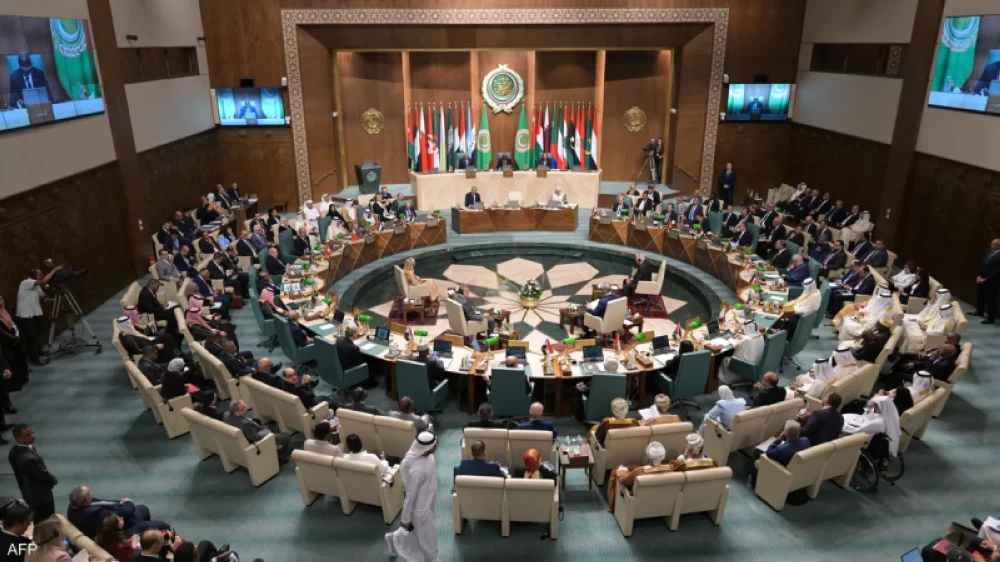
The General Secretariat of the League of Arab States issued a strongly worded statement condemning in the strongest terms the Iranian attacks targeting the State of Qatar, the Kingdom of Bahrain, the State of Kuwait, the United Arab Emirates, and the Hashemite Kingdom of Jordan. The League considered this missile bombardment a blatant and unprecedented violation of the sovereignty of strategically important states that have consistently advocated for peace and worked tirelessly to achieve stability in the region, and which have not been party to any direct military conflict.
Full Arab solidarity and support for the right to self-defense
In its official statement, the General Secretariat expressed its full and unwavering solidarity with the five Arab states in the face of these brutal attacks. The League affirmed its complete support for any legal or security measures these states take to defend their territories, protect their borders, and ensure the safety of their people and residents, emphasizing that the security of these states is an integral part of Arab national security in its comprehensive sense.
Context of the crisis: Targeting of peace advocates and mediators
In analyzing the political situation, the General Secretariat emphasized the dangerous paradox of this escalation, noting that the targeted Arab states have consistently adopted clear and balanced positions on the Iranian crisis. These states refused to be drawn into calls for military action against Tehran, and instead exerted tremendous diplomatic efforts and played pivotal mediating roles to de-escalate tensions and avert the military escalation the region is witnessing today. This attack undermines those peaceful efforts and places the entire region on the brink of disaster.
Geopolitical dimensions and the seriousness of the situation
The General Secretariat expressed its concern about the immense danger inherent in this escalation, warning of a slide into regional chaos that could prove difficult to control. Observers point out that targeting the Gulf states and Jordan simultaneously carries serious implications for global energy security and waterways, given the strategic importance of the Gulf states as a major energy source and Jordan's pivotal role in the stability of the Levant region.
A call to the international community
The university concluded its statement by emphasizing the need for the international community to assume its responsibilities regarding these violations, which contravene the UN Charter, the principles of good neighborliness, and international law. This dangerous development necessitates a serious response to prevent further escalation and to protect civilians and the resources of Arab peoples from any reckless military adventures.




Politics
Emergency European meeting and Security Council discuss Iranian escalation
Kaya Kallas announces an emergency meeting of EU foreign ministers to discuss Iranian escalation and mutual strikes, coinciding with Security Council discussions to contain the threat of war.
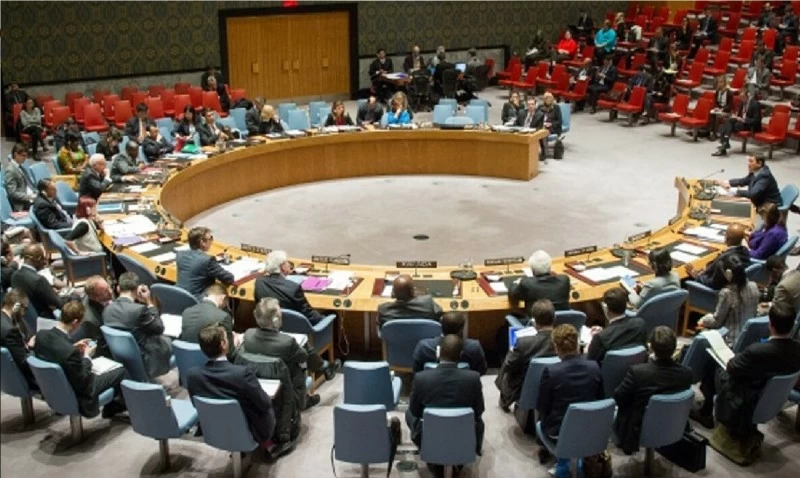
The EU's foreign policy chief, Kaja Kallas, announced that the bloc's foreign ministers will hold an emergency meeting today (Sunday) to discuss the rapidly evolving situation related to the Iranian issue, following a series of recent US-Israeli strikes and Iranian retaliatory attacks in the region.
“The indiscriminate attacks launched by the Iranian regime against its neighbors pose a real risk of dragging the entire region into a wider and disastrous war,” Callas wrote on her official X platform account, explaining that the ministers would meet via video conference to ensure rapid coordination and keep pace with the rapidly evolving events on the ground.
The European official indicated that it is extremely important that the scope of the war does not expand further, while stressing the need for the Iranian regime to make decisive decisions to de-escalate rather than escalate.
International moves and fears of sliding into the abyss
In a related context, European Council President Antonio Costa described the exchange of strikes as a "serious escalation" in the military situation in the Middle East, expressing his deep concern about the deteriorating security situation.
These European diplomatic moves coincide with the start of the UN Security Council's discussions on the developments in the war, as the international community strives to contain the situation before it reaches a point of no return. This intensified diplomatic activity is a direct response to global fears that the conflict could escalate from limited skirmishes or proxy wars into a direct and full-scale military confrontation between major regional and international powers.
Background of the conflict and its regional repercussions
These meetings are of exceptional importance given the complex historical and geopolitical context of the Middle East. The current escalation not only threatens regional security but also casts a shadow over international peace and security. European countries, in particular, fear the direct repercussions of any large-scale war, which could include new waves of refugees, a threat to global energy security, and disruption to supply chains passing through the region's vital straits.
Observers believe that the emergency European meeting and the Security Council session aim to unify international positions to pressure all parties to exercise restraint. The major powers recognize that the continued exchange of missile strikes and airstrikes could lead to catastrophic miscalculations, making preventive diplomacy at this stage an urgent necessity, not merely a political option, especially given the fragile situation in neighboring countries that could be directly affected by any large-scale armed conflict.
Politics
Trump announces Khamenei's death via Truth Social despite Iranian denials
Donald Trump announced the death of Iranian Supreme Leader Ali Khamenei via the Truth Social platform, confirming cooperation between US and Israeli intelligence, amid official denials from Tehran and regional tension.
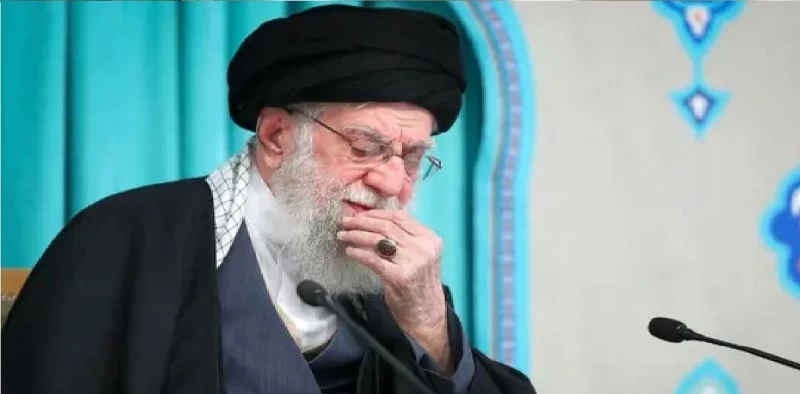
In a surprising development that shook the international political scene, US President Donald Trump announced today (Saturday) the assassination of Iranian Supreme Leader Ali Khamenei in a controversial post on his social media platform, Truth Social. This announcement comes amidst a great deal of conflicting information, with official authorities in Tehran quickly denying the report outright and affirming that the Supreme Leader continues to carry out his duties.
Details of Trump's announcement and the accusations made
The US president did not merely announce the news; he launched a scathing attack on Khamenei, describing him as "one of the most evil people in history." Trump wrote in his post: "Khamenei is dead... This is not only justice for the Iranian people, but for all Americans, and those people from many countries around the world, who have been killed or maimed by Khamenei and his gang of bloodthirsty thugs." Trump emphasized the precision of the intelligence operation, explaining that the Iranian leader "was not able to evade our intelligence and highly sophisticated tracking systems," and confirming close coordination with Israel in this regard. He added that "there was nothing he or the other leaders killed with him could do.".
Context of the US-Iran conflict
To understand the implications of this announcement, one must consider the long history of hostility between Washington and Tehran, spanning more than four decades since the 1979 Islamic Revolution. The previous Trump administration witnessed an unprecedented escalation known as the "maximum pressure" policy, which included withdrawing from the nuclear agreement and reimposing crippling economic sanctions. The world is also reminded of the 2020 assassination of Quds Force commander Qassem Soleimani in Baghdad, ordered directly by Trump, which places this current announcement, despite Iranian denials, within the context of the ongoing confrontation between the two sides.
The importance of the mentor's role and the impact of absence
Ali Khamenei, who assumed office in 1989 following Khomeini's death, occupies the apex of Iran's political and religious hierarchy. As the "Supreme Leader," he wields absolute power in the country, including control over the Revolutionary Guard, foreign policy, the media, and the judiciary. Therefore, any discussion of his absence raises existential questions about the future of the Iranian regime. A vacancy in this position could trigger a power struggle within the corridors of power in Tehran, particularly between the religious establishment and the Revolutionary Guard, over the identity of the potential successor—a possibility Trump alluded to when he described the event as "the only great opportunity for the Iranian people to take back their country.".
Israel's role and the regional dimension
Trump’s reference to “working closely with Israel” highlights the covert war raging in the Middle East. Tehran has long accused Tel Aviv of carrying out sabotage operations and assassinations of nuclear scientists and military leaders inside Iranian territory. If these reports are confirmed, it would represent a geopolitical earthquake that could redraw alliances in the region and directly impact the influence of pro-Iranian factions in Lebanon, Syria, Iraq, and Yemen.
Politics
Kuwait summons Iranian ambassador to protest missile attacks
The Kuwaiti Foreign Ministry summoned the Iranian ambassador and handed him a strongly worded protest note in response to the targeting of Kuwaiti territory and Kuwait International Airport, affirming its full right to respond.
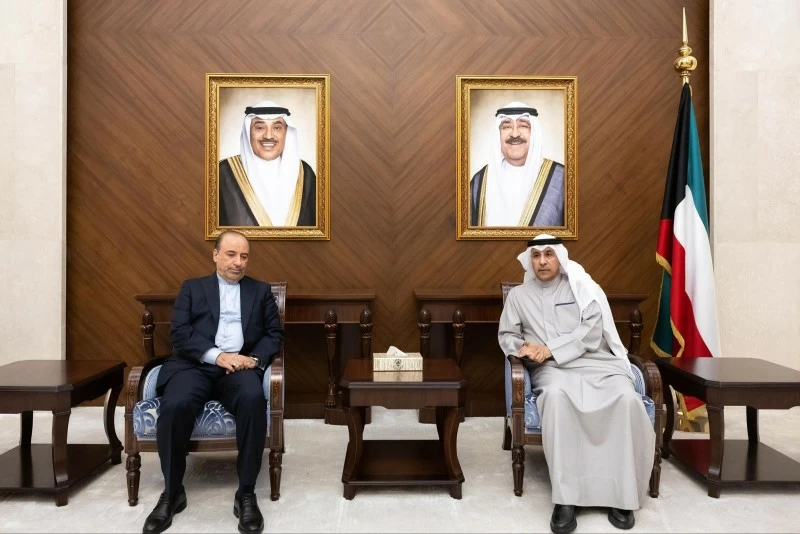
In a significant diplomatic and security development, the Kuwaiti Ministry of Foreign Affairs, represented by Acting Deputy Foreign Minister Ambassador Aziz Rahim Al-Daihani, summoned the Ambassador of the Islamic Republic of Iran to Kuwait, Mohammad Tutunji, on Saturday. This summons was to deliver a formal protest note in which Kuwait expressed its strong condemnation and denunciation of the attacks, which it described as heinous, targeting Kuwaiti territory with ballistic missiles and drones—a dangerous precedent that threatens the security and stability of the region.
Violation of sovereignty and international agreements
During the meeting, the Kuwaiti Ministry of Foreign Affairs affirmed that these attacks constitute a blatant violation of Kuwait's sovereignty and the inviolability of its territory and airspace. They also represent a clear breach of the UN Charter and the principles of international law governing relations between states and mandating respect for the sovereignty of neighboring countries. This Kuwaiti diplomatic move comes within the framework of official steps to document the attacks and reaffirm Kuwait's position rejecting any infringement upon its national security. Summoning the ambassador is considered one of the strongest diplomatic tools for expressing official outrage and demanding urgent clarifications and guarantees against recurrence.
Targeting civilians and Kuwait International Airport
In its protest note, the Ministry emphasized the gravity of targeting vital civilian facilities, specifically Kuwait International Airport. It explained that endangering civilian air traffic and targeting infrastructure serving civilians constitutes a clear and serious violation of international humanitarian law and the Geneva Conventions, which categorically prohibit attacks on civilian objects and criminalize endangering civilian lives. Targeting international airports carries serious implications that transcend political disputes, threatening the safety of global air transport and thus necessitating a firm international stance.
Regional dimensions and the legitimate right of reply
These developments are of paramount importance given Kuwait's strategic location in the Arabian Gulf region and its pivotal role in global energy markets. Any threat to Kuwait's security not only has domestic repercussions but also casts a shadow on regional stability and the security of energy supplies. In closing, the Ministry of Foreign Affairs reiterated Kuwait's full and inherent right to defend itself and protect its territory and citizens, in accordance with Article 51 of the UN Charter, which guarantees states the right of self-defense. The Ministry affirmed that it will take all necessary legal and diplomatic measures to deter such attacks and safeguard the country's security.
-

 Local News 3 days ago
Saudi Arabia approves regulations for the continued presence of Gulf vehicles: duration and penalties
-
Local News 6 days ago
The Ministry of Interior begins procedures for a royal pardon for common law prisoners
-
Local news one week ago
19 requirements to reduce dust from projects in Riyadh and fines for violators
-
Politics, one week ago
Trump plans to create a $2 billion alternative to the World Health Organization
-
Culture and Art, 1 week ago
Amr Diab appears with his four sons and a highly anticipated concert in Türkiye
-
 Local news one week ago
Three billion riyals deposited as Ramadan aid for social security beneficiaries
-
Local news 12 hours ago
Jeddah Airport alerts for travelers due to airspace closure and flight disruptions
-
Local News 5 days ago
The deadline for property registration in Hail and Riyadh is Thursday