Politics
The Arab League condemns the targeting of the port of Duqm and an oil tanker in Oman
Aboul Gheit condemns the Iranian attacks on the port of Duqm and an oil tanker off the coast of Oman, stressing the Arab League’s solidarity with the Sultanate and its rejection of the threat to international navigation and the security of the region.

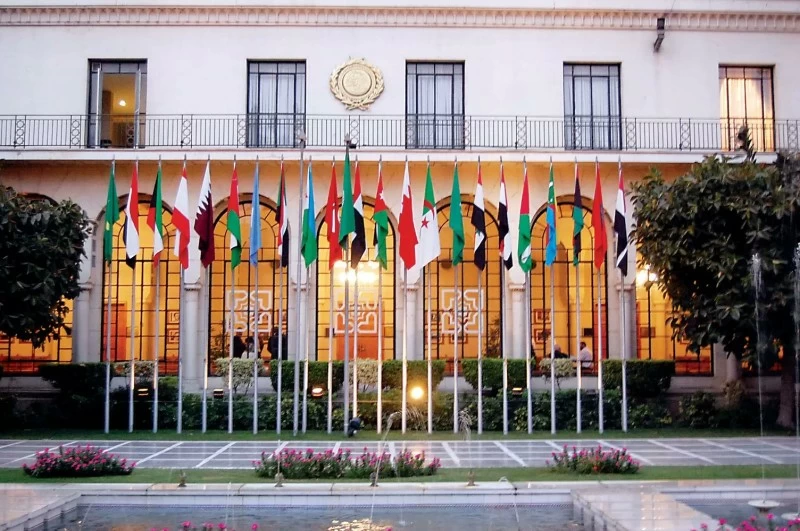
The Secretary-General of the League of Arab States, Ahmed Aboul Gheit, strongly condemned the attacks targeting the port of Duqm in the Sultanate of Oman, as well as the targeting of an oil tanker off the Omani coast by Iranian missiles. Aboul Gheit described this escalation as a dangerous development that threatens the security and stability of the region, expressing his full solidarity with the Sultanate, which has historically been known as a pillar of stability and a voice of wisdom in the region.
In his remarks on the incident, the Secretary-General commended the pivotal role played by Oman's active diplomacy in addressing highly complex regional and international issues. He noted that targeting facilities in a country that has made, and continues to make, serious and recognized efforts in mediation and bridging differences, particularly between the United States and Iran, is an unjustifiable act that undermines the prospects for de-escalation in the region. The Sultanate of Oman has always pursued a policy of neutrality in conflicts, making any attack on its territory or territorial waters a dangerous precedent that warrants a firm international response.
This incident takes on alarming strategic dimensions given the geopolitical importance of the Port of Duqm and its surrounding economic zone, a global logistics hub and vital maritime gateway to the Arabian Sea and the Indian Ocean. Any threat to this waterway not only affects Omani national security but also poses a direct threat to international shipping lanes and global energy supplies at a time when the world is highly sensitive to any disruptions in supply chains and oil markets.
Secretary-General Ahmed Aboul Gheit reiterated the Arab League's firm stance in condemning all Iranian attacks and aggressions targeting civilian infrastructure in Arab Gulf states. He emphasized that these actions constitute a completely unacceptable attack on the national sovereignty of Arab states and a flagrant violation of international law and international humanitarian law, which criminalizes targeting civilian objects and threatening the safety of maritime navigation. He called on the international community to assume its responsibilities in curbing these actions that undermine international peace and security.




Politics
Trump: Iran is requesting dialogue and I will speak with them to end the confrontation
Donald Trump reveals to The Atlantic magazine that the new Iranian leadership is willing to engage in dialogue to end military tensions, confirming his agreement to negotiate and the existence of signs of success.
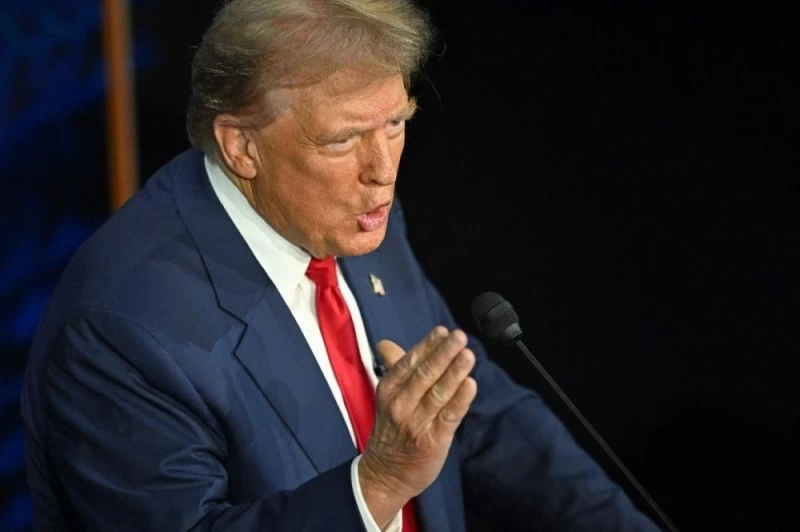
In a remarkable interview with The Atlantic, US President Donald Trump revealed the outlines of a new era that may be emerging in US-Iranian relations, indicating signs of a genuine diplomatic breakthrough with Tehran.
During the interview, Trump confirmed that the new Iranian leadership had shown a clear and serious desire to open channels of dialogue to end the military confrontation and the existing tensions. He added explicitly that he agreed with this approach and that he intended to speak with them at the appropriate time. Despite this positive development, the US president added, "I cannot give a precise date for direct talks with the Iranians," leaving the door open to speculation about the timing and mechanism of these potential negotiations.
In an interesting detail, Trump pointed out that some of the Iranian figures who participated in the rounds of negotiation or communication during the last few weeks have passed away, without providing additional details about their identities or the circumstances of their deaths. However, he returned to emphasize that the success being achieved now in this file is “unbelievable,” and that things are going very well and beyond expectations.
Context of the transformation in relations
These statements come at a time of cautious anticipation in the region, particularly after years of Washington's "maximum pressure" policy toward Tehran, which included the US withdrawal from the nuclear agreement in 2018 and the reimposition of crippling economic sanctions. Observers suggest that Trump's talk of a "new Iranian leadership" may be a reference to internal political changes in Iran and the rise of new figures seeking to ease the impact of sanctions through diplomacy. This aligns with Trump's persistent desire to strike major deals that differ from the traditional approach of previous administrations.
Strategic importance and expected impact
This announcement carries significant strategic importance at both the regional and international levels. Any potential rapprochement between the US and Iran would reshape the geopolitical landscape of the Middle East. The success of such a dialogue is expected to reduce tensions in the Arabian Gulf, secure energy routes, and potentially influence other contentious issues in the region, such as the situations in Yemen, Lebanon, and Syria. Global markets are also closely monitoring these statements, as any diplomatic breakthrough often has a positive impact on the stability of oil prices and financial markets.
Analysts believe that Trump is seeking, through this move, to achieve a quick diplomatic victory that proves his ability to resolve intractable crises in his own way, relying on the principle of direct negotiation from a position of strength, which may open a completely new page in the history of the decades-long hostile relations between Washington and Tehran.
Politics
The succession of the Iranian Supreme Leader: The struggle for inheritance and the future of the regime
An analysis of the succession scenarios for the Iranian Supreme Leader and the mechanisms of the Assembly of Experts. Will the position pass to Mojtaba Khamenei or Hassan Khomeini? And what impact will this have on Tehran's regional policies?.

The question of succession to the Supreme Leader in Iran is one of the most sensitive issues within the political system, as constitutional provisions intertwine with the power dynamics within the religious and security establishment. While no official candidate has been declared, the legal process is clear, and the names circulating reflect a silent struggle between the logic of continuity and the logic of revolutionary symbolism.
Constitutional mechanism for selecting the Supreme Leader
Articles 107 and 111 of the Iranian Constitution stipulate that the Supreme Leader is chosen by the Assembly of Experts, a body composed of 88 Shiite clerics elected by popular vote every eight years, after their eligibility is approved by the Guardian Council. The Assembly of Experts has the power to appoint the Supreme Leader, oversee his performance, and even dismiss him if he loses any of the qualifications for leadership. However, observers believe that the final decision does not depend solely on the Assembly's vote, but is subject to complex agreements involving key power centers in Tehran.
Historical context and the 1989 experience
To understand the complexities of the current situation, it is necessary to go back to 1989, when the founder of the Islamic Republic, Ruhollah Khomeini, died. At that time, the constitution was amended to remove the requirement of "Marja'iyya" (that the Supreme Leader be a Marja' Taqlid), paving the way for Ali Khamenei to come to power despite not holding the rank of Grand Ayatollah at the time. This historical precedent opens the door to similar scenarios, where the most politically and militarily powerful figure can prevail over the most learned in Islamic jurisprudence, thus enhancing the chances of figures who may not be at the top of the clerical hierarchy but who wield considerable influence.
Mojtaba Khamenei and Hassan Khomeini: A struggle for influence and symbolism
Behind the scenes in Tehran, a "son and grandson" dichotomy is emerging. On one hand, the name of Mojtaba Khamenei , the current Supreme Leader's second son, is frequently mentioned. He is believed to wield considerable influence within the "Supreme Leader's household" and the security apparatus, making him a representative of the continuity and status quo. On the other hand, the name of Hassan Khomeini , the founder's grandson, is also mentioned. He embodies revolutionary symbolism but is politically aligned with the reformist and moderate factions, making him a difficult choice given the conservatives' dominance, unless a consensus figure is needed to appease public opinion.
The pivotal role of the Revolutionary Guard and its effects
The succession of the Supreme Leader cannot be discussed without considering the role of the Iranian Revolutionary Guard Corps (IRGC), which has transformed over the past decades into a formidable economic, military, and political force. Analysts believe that the next Supreme Leader must have the blessing of the IRGC leadership to ensure the regime's stability. This growing influence of the military may favor the candidate who safeguards the interests of this institution and the continuation of its regional policies, potentially diminishing the chances of reformist-leaning candidates.
Expected regional and international repercussions
The identity of the new Supreme Leader will not only shape Iran's domestic policies but will also have repercussions across the Middle East and the world. The Supreme Leader holds the ultimate authority on strategic issues such as the nuclear program, relations with the West, and support for armed groups in the region. The arrival of a hardliner could mean a continuation of the "resistance" policy and escalation, while the arrival of a pragmatist could open new avenues for diplomacy, making the world watch this development with great caution.
Politics
Three US soldiers killed and five wounded in operations against Iran – Details
The US Central Command announced that three soldiers were killed and five others wounded in military operations against Iran. Learn more about the statement and the implications of the escalation in the Middle East.

The U.S. Central Command (CENTCOM) announced Sunday evening in an official statement that three American soldiers were killed and five others seriously wounded in ongoing military operations against Iranian targets. This announcement marks a significant development in the course of events on the ground, casting a shadow over the security and political landscape in the region.
Details of the military statement and the withholding of information
In a brief statement posted on its social media platform X (formerly Twitter), U.S. Central Command explained that the casualties occurred during specific military operations. However, it did not provide any further details about the precise nature of these operations or the specific geographic locations where the clashes took place. In accordance with strict U.S. Department of Defense (Pentagon) protocols, the command declined to release the identities of the soldiers killed or wounded, pending formal notification of their families before releasing their names to the media and the public.
Regional context and escalating tensions
This incident comes at a time of escalating tensions and sharp polarization in the Middle East. The US military presence in the region, overseen by US Central Command (CENTCOM), is strategically aimed at protecting American interests and those of its allies, and ensuring the security of waterways and energy supplies. Relations between the United States and Iran have long been a source of significant security and political tension, with Washington repeatedly accusing Tehran of destabilizing the region, while Tehran views the US presence as a direct threat to its national security.
Strategic importance and potential repercussions
The killing of American soldiers in direct combat carries serious implications that could affect the balance of power and the rules of engagement in the region. Historically, casualties among American forces have been a red line for successive US administrations, and such incidents often lead to comprehensive reviews of military plans and may pave the way for more robust military or diplomatic responses. This event could increase domestic pressure in Washington to take decisive action and raise the level of alert among all regional actors, who fear a wider escalation.
Injury management protocols
Regarding the five injured soldiers, initial reports indicate that their injuries are serious, typically necessitating urgent medical evacuations to advanced military medical facilities, either in neighboring countries or to major US bases in Europe (such as Germany), for treatment. Political and military circles are closely monitoring updates expected from the Pentagon in the coming hours, which are anticipated to reveal further details about the incident once the necessary security and administrative procedures are completed.
-

 Local News 3 days ago
Saudi Arabia approves regulations for the continued presence of Gulf vehicles: duration and penalties
-
Local News 6 days ago
The Ministry of Interior begins procedures for a royal pardon for common law prisoners
-
Local news one day ago
Jeddah Airport alerts for travelers due to airspace closure and flight disruptions
-
Politics, one week ago
Trump plans to create a $2 billion alternative to the World Health Organization
-
 Local news one week ago
Three billion riyals deposited as Ramadan aid for social security beneficiaries
-
Local News 5 days ago
The deadline for property registration in Hail and Riyadh is Thursday
-
Sports one week ago
Tickets for the Al-Ahli vs. Al-Hilal King's Cup match postponed: New date
-
Local News 6 days ago
Under the patronage of the Minister of Information, an agreement was signed between the Ministry of Information and Waves Marketing Company