Politics
Aoun affirms his rejection of foreign interference in Lebanese affairs
President Aoun affirms Lebanon’s categorical rejection of foreign interference, stressing the importance of sovereignty and the country’s stability amidst the current political challenges.

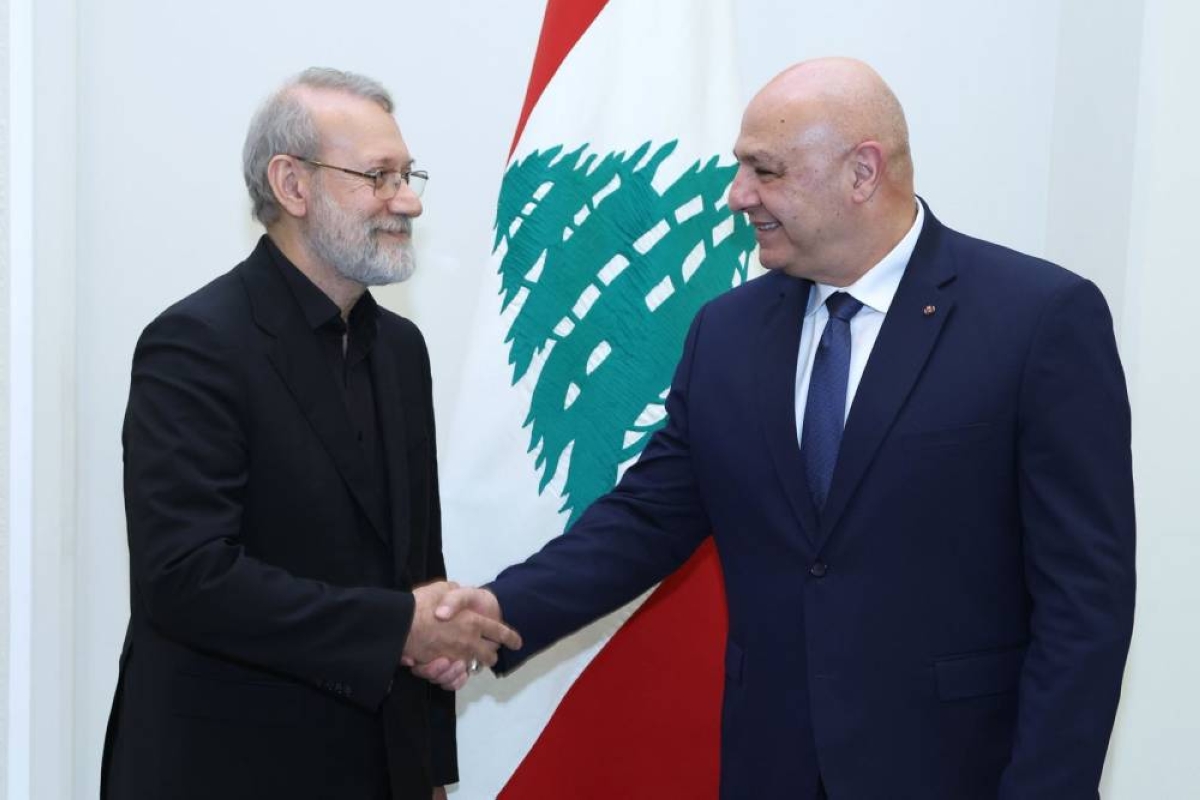
Political tensions in Lebanon: Rejection of foreign interference and emphasis on sovereignty
Amid the political and security challenges facing Lebanon, President Joseph Aoun reaffirmed his country's firm stance against any foreign interference in its internal affairs. This came during his meeting with the Secretary of Iran's Supreme National Security Council, Ali Larijani, where Aoun emphasized the importance of maintaining stability and security in Lebanon for the benefit of all its citizens without discrimination.
Lebanon's stance on foreign interventions
The Lebanese president clarified that the Lebanese state and its armed forces are solely responsible for the country's security, emphasizing that bearing arms and seeking foreign support is unacceptable from any party. He also stressed that the challenges facing Lebanon, whether from the Israeli enemy or others, must be considered challenges for all Lebanese, not just a specific group. He indicated that national unity is the most important weapon for confronting these challenges.
Lebanese-Iranian relations: between cooperation and sovereignty
Regarding relations with Iran, Aoun expressed his country's desire for cooperation within the bounds of sovereignty and mutual respect. He noted that recent statements by some Iranian officials had not been helpful in strengthening these relations. He stressed the need for the friendship between the two countries to be inclusive of all segments of the Lebanese people and not limited to a specific sect or group.
Iran's position and its support for Lebanon
For his part, Ali Larijani, upon his arrival in Beirut, affirmed his country's support for the Lebanese people under all circumstances. He pointed to the historical ties and good relations between the two countries, emphasizing Iran's belief that friendly and inclusive dialogue can help Lebanon make sound decisions to achieve its national interests.
Saudi strategic and diplomatic balance
In this complex regional context, Saudi Arabia plays a vital diplomatic role in supporting Lebanon's stability and strengthening its sovereignty. Riyadh consistently strives to bolster regional security and stability by supporting legitimate governments and backing peace efforts and comprehensive development in a way that serves the interests of the Arab peoples.
The Saudi position reflects a strong diplomatic and strategic approach aimed at achieving balance and stability in the region by supporting sister Arab states and preserving their sovereignty and independence from foreign interference.
Summary and Analysis
Lebanese President Joseph Aoun's remarks come as part of ongoing efforts to preserve Lebanon's sovereignty and independence amid mounting regional and international pressure. While Lebanon receives international and regional support from countries such as Saudi Arabia and Iran, national dialogue and internal unity remain key to overcoming the current crises and achieving a more stable and prosperous future for the country.




Politics
Macron sends aircraft carrier Charles de Gaulle to the Mediterranean: details and dimensions
France is bolstering its military presence by deploying the aircraft carrier Charles de Gaulle to the eastern Mediterranean. Macron criticizes US and Israeli operations and warns Iran against regional escalation.

In a significant development reflecting escalating tensions in the Middle East, French President Emmanuel Macron announced on Tuesday a strategic decision to deploy the nuclear-powered aircraft carrier Charles de Gaulle and its accompanying battle group to the eastern Mediterranean. This move comes as part of Paris's efforts to bolster its military and diplomatic presence, protect French and European interests, and closely monitor the rapidly evolving situation on the ground.
Dual political messages: criticism of allies and a warning to adversaries
The French president did not limit himself to the military announcement; in his televised address, he delivered sharp yet balanced political messages. Macron explicitly criticized the military operations carried out by the United States and Israel, describing them as being conducted "outside the framework of international law," and emphasizing that France could not condone such transgressions. This stance reflects Paris's desire to maintain its political independence and differentiate itself from the unequivocal American position.
In contrast, Macron did not neglect to point the finger at Tehran, holding Iran primarily responsible for the state of tension and instability in the region, pointing to its role in fueling conflicts through its proxies.
Comprehensive military reinforcements in Cyprus and the Mediterranean
The French president explained that the decision to deploy the Charles de Gaulle, the crown jewel of the French navy and the only nuclear-powered warship in Western Europe, came amid an "unstable situation" and uncertainty surrounding the region's future. He indicated that this naval deployment aims to achieve two main objectives: enhancing combat readiness and establishing a deterrent capability.
Macron unveiled a package of parallel military measures to strengthen the eastern Mediterranean front, including:
- Sending advanced defense systems to the island of Cyprus.
- Deployment of Rafale fighter jets to reinforce air cover.
- Deployment of advanced radars and air defense systems to enhance reconnaissance and defense capabilities.
Strategic context and geopolitical importance
This move is particularly significant given the historical and geographical context; the Eastern Mediterranean is a traditional sphere of influence for France, and Paris considers the security of this region an integral part of European national security. While the aircraft carrier Charles de Gaulle typically participates in major missions such as Operation Chammal, the counter-terrorism operation, its deployment now carries a geopolitical dimension related to preventing the current conflict from escalating.
Macron also announced his country's intention to work on forming an international coalition aimed at reopening and securing maritime shipping lanes, reflecting growing international concern about threats to global trade routes. With this move, Paris positions itself at the heart of the regional equation, amidst a military and diplomatic race open to all possibilities, attempting to play the role of a powerful mediator capable of deterrence and intervention when necessary.
Politics
Macron sends aircraft carrier Charles de Gaulle to the Mediterranean to bolster deterrence
Macron announced the deployment of the aircraft carrier Charles de Gaulle to the eastern Mediterranean to protect French interests, criticizing US-Israeli operations and warning Iran against escalation.

In a significant development reflecting escalating tensions in the Middle East, French President Emmanuel Macron announced on Tuesday a strategic decision to deploy the nuclear-powered aircraft carrier Charles de Gaulle and its accompanying battle group to the eastern Mediterranean. This advanced military move is broadly framed as a means to protect French and European interests and closely monitor the rapidly evolving situation on the ground, placing Paris at the heart of the region's security equation.
A balanced political stance: criticism of current operations and a warning to Iran
The French move was not limited to the military aspect alone; it was accompanied by a sharp yet balanced political discourse. In his televised address, Macron explicitly criticized the military operations led by the United States and Israel, describing them as being conducted "outside the framework of international law." This stance reflects Paris's desire to differentiate itself from traditional American policy and to emphasize the necessity of adhering to international legitimacy. However, the French president did not overlook the other side of the equation, holding the Iranian regime primarily responsible for the state of tension and instability plaguing the region, indicating that his country would not tolerate these transgressions.
Comprehensive military reinforcements beyond the carrier
Macron explained that the decision to deploy the Charles de Gaulle, the crown jewel of the French navy and the only nuclear-powered warship in Western Europe, came amid an "unstable situation" and uncertainty surrounding the near future. He emphasized that this naval deployment aims to achieve two interconnected objectives: enhancing combat readiness and establishing a deterrent capability.
The French move does not stop at the aircraft carrier; Macron has unveiled a package of parallel military measures including:
- Sending advanced defense systems to Cyprus, which is a strategic focal point in the Mediterranean.
- Deployment of Rafale fighter jets to reinforce air cover.
- Activating air defense systems and advanced radars for monitoring and surveillance.
Strategic importance and regional context
This move is particularly significant given the historical and geostrategic context; France has always sought to assert its role as a global balancing power and a key player in Mediterranean security. The deployment of a fully equipped combat force and the talk of forming an international coalition to reopen and secure shipping lanes indicate that Paris perceives a genuine threat to trade and energy routes.
This direct French involvement puts Paris in a more influential position amid the open-ended military and diplomatic race, and sends reassuring messages to European allies and warning messages to regional parties that may seek to exploit the security vacuum to expand their influence.
Politics
Operation Epic Wrath: America strikes Iran with stealth bombers for the fourth day
US forces continue Operation Epic Fury against Iran for the fourth day, with 50,000 troops and strategic bombers participating. Details of the destruction of 2,000 targets and air superiority.

The commander of U.S. Central Command, Brad Cooper, announced that U.S. forces are continuing their intensive military operations as part of Operation Epic Wrath, now in its fourth consecutive day, carrying out a series of airstrikes and strategic attacks described as the most extensive and intense against Iran in many years. This escalation comes amid an unprecedented military buildup that is reshaping the security landscape in the Middle East.
Details of the largest military buildup
In detailing the operation, Cooper explained that "Epic Fury" involves the direct involvement of more than 50,000 American troops, supported by a massive air and naval arsenal including some 200 fighter jets and two aircraft carriers stationed in the region. This deployment represents the largest American military buildup in the Middle East in recent years, reflecting the extent of American determination to decisively win the battle and achieve its strategic objectives with unprecedented speed.
Stealth bombers and air superiority
The military commander confirmed that the US Air Force used its most advanced weaponry, with B-2 Spirit stealth B-1 Lancer precise surgical strikes deep inside Iranian territory, targeting critical military infrastructure. Simultaneously, B-52 Stratofortress the task of destroying command and control centers, resulting in a near-total paralysis of Iran's military communications system.
The military report indicated that the strikes, carried out in close coordination with Israel, have targeted approximately 2,000 strategic targets since the start of the operation, using more than 2,000 precision-guided munitions of various types. These attacks have resulted in a significant and comprehensive weakening of Iranian air defense systems and the destruction of hundreds of ballistic missiles and their launchers before they could be used.
Iranian naval and air losses
On the naval front, Central Command announced the destruction of 17 Iranian warships, including a highly advanced submarine described as its most operationally ready, dealing a significant blow to the Iranian navy in the Gulf. In response, Cooper revealed that Iran had attempted to retaliate by launching over 500 ballistic missiles and 2,000 drones since the start of the confrontation, accusing Tehran of targeting civilian areas. However, US and Israeli air superiority limited the effectiveness of these attacks.
Strategic dimensions and battle course predictions
Operation Epic Wrath is of paramount strategic importance, as the United States and Israel now maintain near-total air superiority over Iran, while continuing to track and destroy remaining mobile ballistic missile launchers. Cooper concluded by emphasizing that the operational assessment clearly indicates that U.S. forces are ahead of schedule for this phase of the campaign, presenting Tehran with extremely difficult military and political choices in the coming days.
-

 Local News 6 days ago
Saudi Arabia approves regulations for the continued presence of Gulf vehicles: duration and penalties
-
Local news one week ago
The Ministry of Interior begins procedures for a royal pardon for common law prisoners
-
Local news one week ago
The deadline for property registration in Hail and Riyadh is Thursday
-
Local news one week ago
Under the patronage of the Minister of Information, an agreement was signed between the Ministry of Information and Waves Marketing Company
-
Culture and Art 7 days ago
The Devil's Prisons series was halted: The full story of "The Emperor's" being moved to YouTube
-
Local News 5 days ago
Saudi Energy: A new identity for electricity that aligns with Vision 2030
-
Local News 5 days ago
The Food and Drug Administration is recalling Bebelac and Aptamil milk due to potential contamination
-
Local news one week ago
Registration is now open for domestic pilgrims for the 1447 AH season: Dates and conditions via Nusuk