
Politics
Al-Sheikh signs an agreement with the Mufti of North Macedonia
Al-Sheikh signs an Islamic cooperation agreement with the Mufti of North Macedonia, strengthening economic relations and opening new horizons for cooperation between the two countries.


Islamic cooperation between Saudi Arabia and North Macedonia: Economic analysis and potential impacts
The Saudi Minister of Islamic Affairs, Dawah and Guidance, Sheikh Dr. Abdul Latif bin Abdulaziz Al-Sheikh, signed an executive program for a memorandum of understanding with the President of the Islamic Union and Grand Mufti of the Republic of North Macedonia, Hafiz Shakir Fatahu. This program comes within the framework of the distinguished relations between the Kingdom and North Macedonia and aims to enhance cooperation in Islamic fields.
Executive Program Content and Objectives
The program includes holding training courses for imams, preachers, orators, and muezzins, as well as implementing outreach programs to promote moderation and tolerance. It also includes providing the Islamic Council with publications from the Ministry and the King Fahd Complex for Printing the Holy Quran, and exchanging invitations to conferences, seminars, and Quranic competitions.
This collaboration reflects the Kingdom's commitment to promoting a moderate and balanced approach that advocates for mercy, tolerance, and justice, and rejects violence and extremism. Through these efforts, the Kingdom seeks to strengthen the tolerant values of Islam and disseminate sound Islamic knowledge.
Economic and political implications of cooperation
Economically , this cooperation can be viewed as part of a broader strategy to strengthen bilateral relations between the two countries. Improving cultural and religious ties could open new avenues for economic and trade cooperation between Saudi Arabia and North Macedonia. For example, this cooperation could contribute to boosting religious and educational tourism between the two nations.
Politically , the signing of these agreements reflects the Kingdom's desire to enhance its regional and global influence by promoting the values of moderate Islam and strengthening cultural and religious ties with other countries. This type of cooperation can contribute to improving the Kingdom's global image and bolstering its position as a religious and political leader in the Islamic world.
Impact on the local and global economy
Domestically , strengthening relations with North Macedonia could lead to increased joint investments and economic projects that would benefit the Saudi economy. It could also contribute to diversifying national income sources away from oil by boosting other sectors such as education and tourism.
Globally , this cooperation reflects a trend toward building international alliances based on shared values and mutual interests. This could lead to improved global political and economic stability by fostering cultural and religious understanding and reducing tensions arising from misunderstanding or extremism.
Future expectations
In the short term : These initiatives are expected to increase cultural and religious exchange between the two countries and improve each other’s understanding, thereby strengthening mutual trust and opening the door to further economic and political cooperation.
In the long term : If the programs are implemented effectively and mutual support continues, we may see remarkable growth in economic and trade relations between Saudi Arabia and North Macedonia, which will contribute positively to the economies of both countries and enhance regional stability.
In conclusion
The signing of the executive program for the memorandum of understanding between Saudi Arabia and North Macedonia represents a significant step towards strengthening bilateral relations based on shared values and mutual interests. This cooperation is expected to have a positive impact at the local, regional, and global levels if properly leveraged to achieve its intended objectives.







Politics
The Saudi Foreign Minister discusses regional developments with his Ethiopian counterpart
Prince Faisal bin Farhan received the Ethiopian Foreign Minister in Riyadh to discuss strengthening bilateral relations and to discuss developments in the Horn of Africa and issues of common interest.
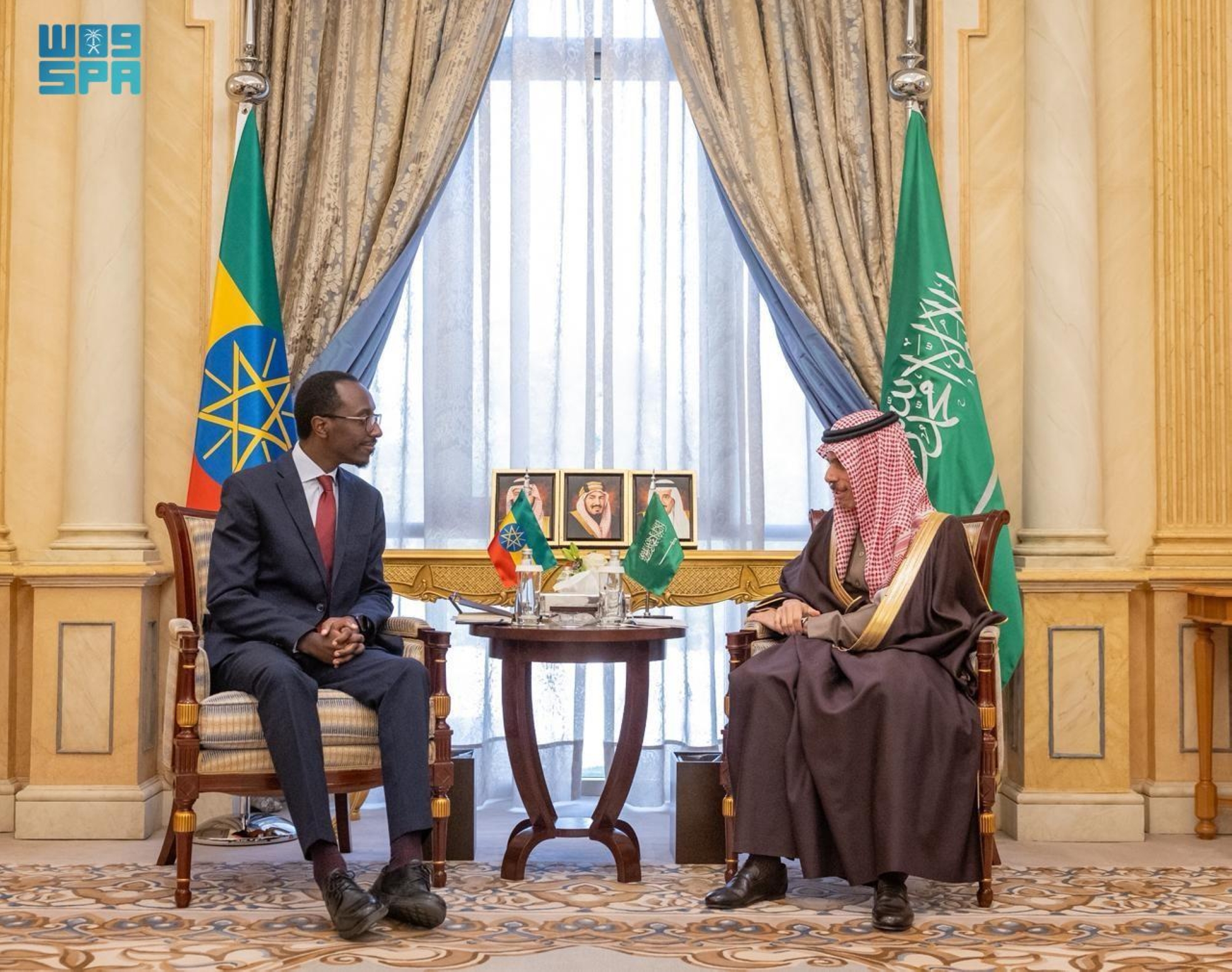
His Highness Prince Faisal bin Farhan bin Abdullah, the Saudi Minister of Foreign Affairs, received at the Ministry’s headquarters in Riyadh today (Monday), His Excellency Dr. Gedion Timotheos, Minister of Foreign Affairs of the Federal Democratic Republic of Ethiopia, on an official visit aimed at strengthening cooperation frameworks between the two friendly countries.
During the reception, an official meeting was held, during which the strong bilateral relations between the Kingdom of Saudi Arabia and the Republic of Ethiopia were reviewed, and ways to strengthen and develop them in various political, economic and security fields, in a way that serves the interests of the two peoples and countries.
Discussions on regional security and the Horn of Africa
During the meeting, the two sides discussed the latest developments in the region, particularly in the Horn of Africa and the Red Sea basin. These talks reflect the Kingdom of Saudi Arabia's commitment to strengthening security and stability in this vital region, given Ethiopia's significant strategic and geographical influence in East Africa.
The two ministers also discussed a number of regional and international issues of common interest, stressing the importance of continued political coordination and consultation between Riyadh and Addis Ababa on matters of concern to both countries, and supporting all efforts aimed at establishing the foundations of peace and development.
The importance of Saudi-Ethiopian relations
Relations between the Kingdom and Ethiopia are of particular importance due to their geographical proximity across the Red Sea and the historical and human ties that bind the two peoples. The Kingdom plays a pivotal role in supporting stability and development in Africa, and Ethiopia, as a key gateway to East Africa and the headquarters of the African Union, is essential for coordinating with it to address shared challenges such as combating terrorism and securing international shipping lanes.
The reception was attended on the Saudi side by His Excellency the Deputy Minister of Foreign Affairs, Engineer Waleed bin Abdulkarim Al-Khuraiji, and His Excellency the Undersecretary of the Ministry of Foreign Affairs for Political Affairs, Ambassador Dr. Saud bin Mohammed Al-Sati, reflecting the high-level interest in developing the course of relations with the Ethiopian side.
Politics
Faisal bin Farhan congratulates the new Kuwaiti Foreign Minister and they discuss regional issues
Saudi Foreign Minister Faisal bin Farhan congratulated his Kuwaiti counterpart, Sheikh Jarrah Al-Sabah, on his appointment. The two discussed strengthening fraternal relations, recent regional developments, and Gulf cooperation.
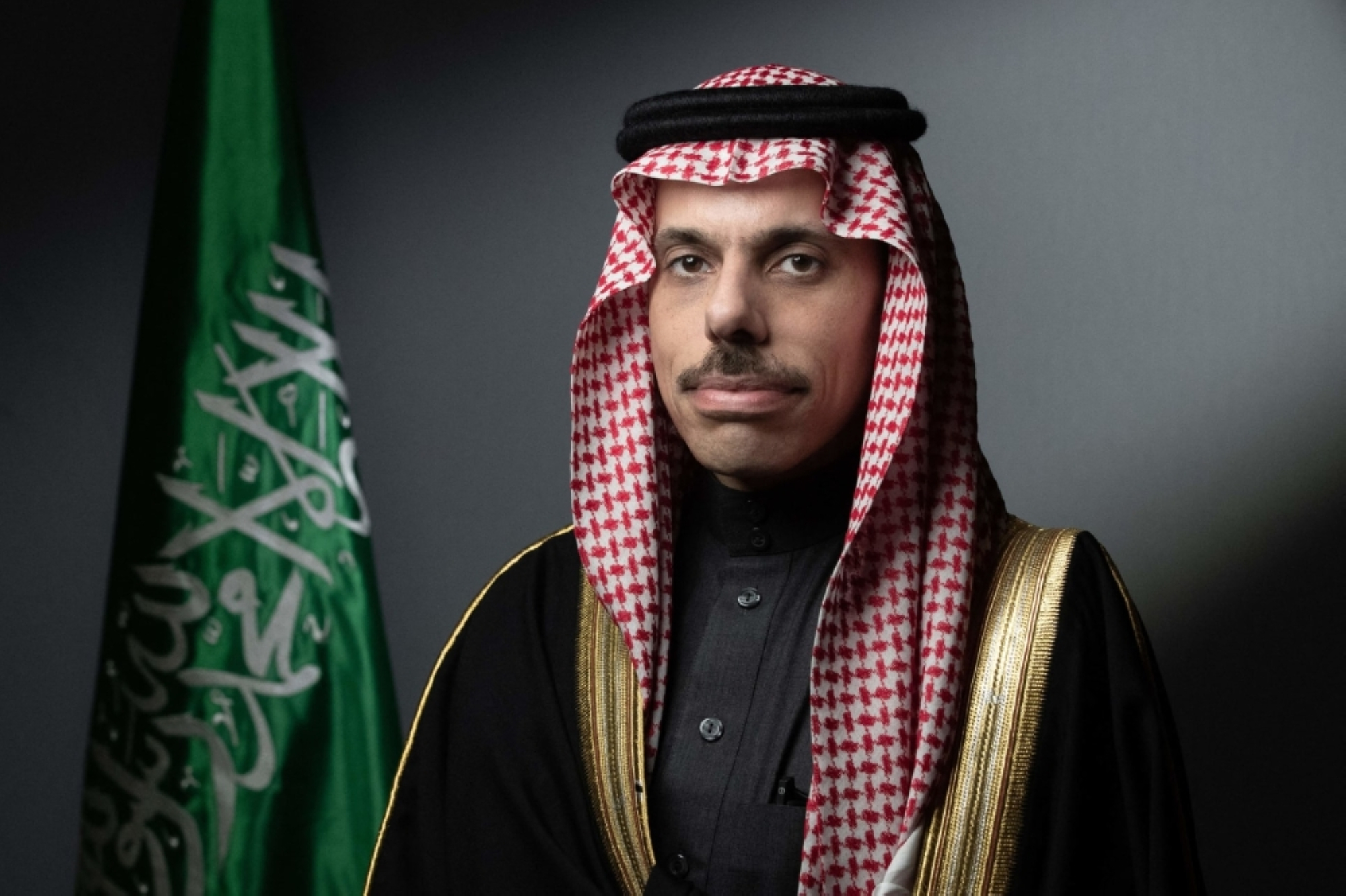
His Highness Prince Faisal bin Farhan bin Abdullah, the Saudi Minister of Foreign Affairs, made a telephone call today, Monday, to the Minister of Foreign Affairs of the sisterly State of Kuwait, Sheikh Jarrah Jaber Al-Ahmad Al-Sabah, as part of the ongoing communication and continuous coordination between the leaderships and officials of the two sisterly countries.
At the outset of the call, His Highness the Minister of Foreign Affairs congratulated Sheikh Jarrah Al-Sabah on the Amiri trust bestowed upon him and his appointment as Minister of Foreign Affairs, expressing his sincere wishes for his success in his new duties and for the continued progress and prosperity of the brotherly Kuwaiti people. During the call, His Highness emphasized his eagerness for close and collaborative work with his Kuwaiti counterpart to further strengthen the deep-rooted and fraternal relations between the Kingdom of Saudi Arabia and the State of Kuwait.
Strengthening the Gulf Cooperation Council's work process
During the call, both sides emphasized the importance of advancing joint Gulf cooperation towards broader horizons, in order to fulfill the aspirations of the leaders of the Gulf Cooperation Council (GCC) states and the peoples of the region. This high-level diplomatic exchange reflects the depth of the strategic ties that bind Riyadh and Kuwait, ties that serve as a model for relations between nations, based on a long historical legacy of brotherhood, shared destiny, and the bonds of kinship and close relations that unite the two peoples.
Coordinating positions on regional issues
The call also addressed a number of regional and international issues of mutual interest. The two ministers discussed the importance of continued coordination and consultation on pressing regional issues to ensure regional security and stability. The Kingdom of Saudi Arabia and the State of Kuwait play a pivotal role in shaping policies aimed at resolving conflicts peacefully and promoting international peace and security.
Depth of historical relations
Saudi-Kuwaiti relations are uniquely characterized by a convergence of visions and stances on various issues and challenges facing the Arab and Islamic world. Bilateral cooperation between the two countries' foreign ministries forms a cornerstone of unifying the Gulf and Arab ranks in international forums. The appointment of Sheikh Jarrah Jaber Al-Ahmad Al-Sabah at this crucial juncture reinforces the continuity of Kuwait's balanced diplomatic approach, complementing Saudi Arabia's proactive diplomacy in addressing current global political and economic challenges.
Politics
Reopening of the Rafah Crossing in 2024: Details and conditions of crossing between Gaza and Egypt
After a long closure, Israel has partially reopened the Rafah crossing. Learn about the new conditions, the permitted numbers, and the humanitarian and political impact on the Gaza Strip.
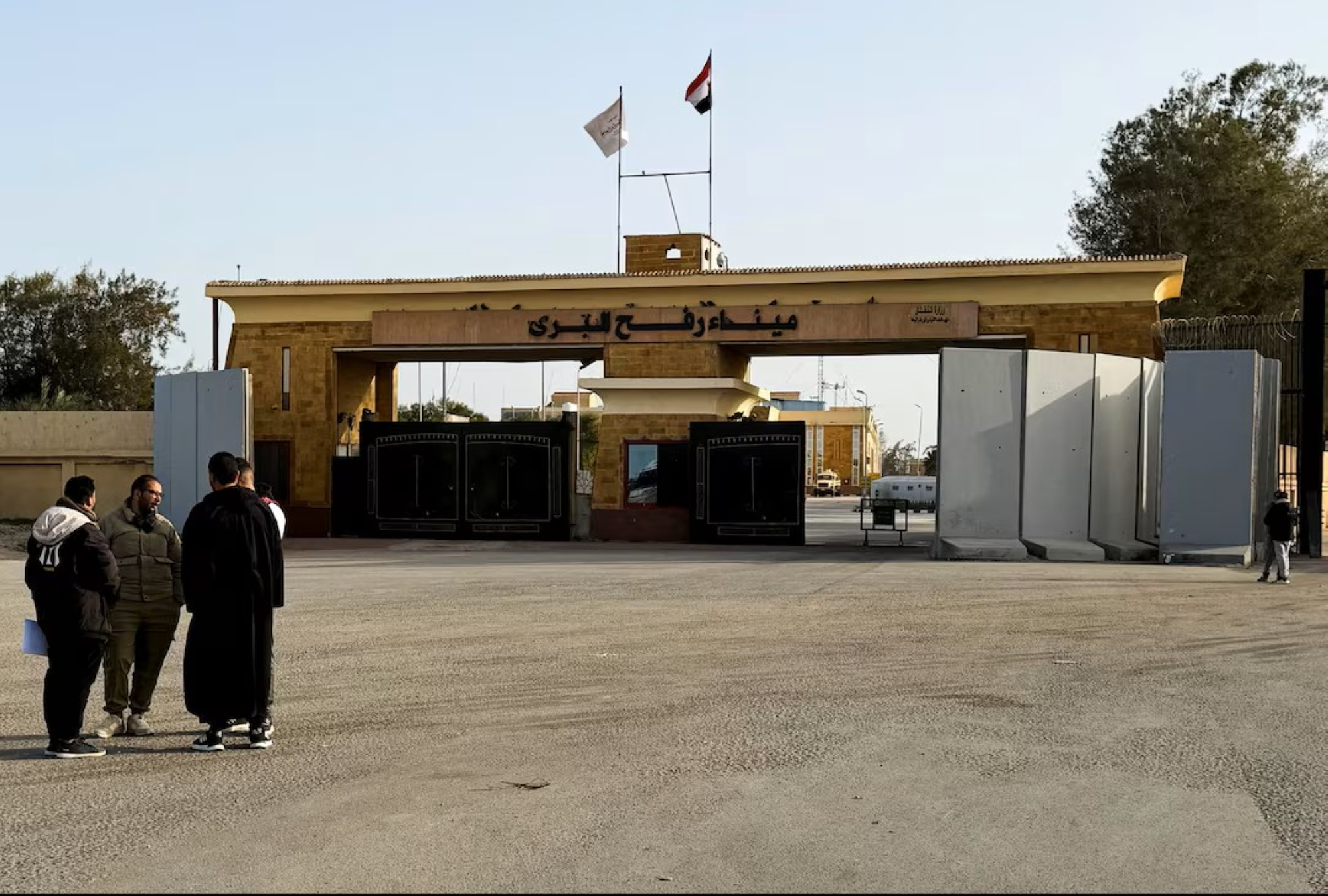
The Rafah crossing has reopened in both directions amid strict Israeli restrictions
In a long-awaited move, Israeli authorities partially reopened the Rafah border crossing between the Gaza Strip and Egypt on Monday, allowing limited movement of people after a near-total closure that lasted several months. This experimental step comes amid strict security arrangements and stringent restrictions, raising questions about its effectiveness in alleviating the dire humanitarian crisis facing the residents of the Gaza Strip.
Historical background and strategic importance of the crossing
The Rafah crossing is considered the lifeline of the Gaza Strip, being its only land access point to the outside world that does not pass directly through Israeli territory. Since the imposition of the blockade on Gaza in 2007, the crossing has been subject to intermittent opening and closing policies, linked to the political and security situation between Egypt, Hamas, and Israel. However, the crisis escalated dramatically after Israeli forces seized control of the Palestinian side of the crossing in May 2014, as part of their military operations in Rafah, leading to a complete halt in the movement of travelers and the flow of vital humanitarian aid.
Details of partial operation and new restrictions
According to reports, the current reopening is being conducted on a trial basis and on a limited scale. Reuters reported that Israel is requiring thorough security checks for all Palestinians entering and leaving the crossing. In the initial phase, operations will be limited to six hours daily, from 9:00 AM to 3:00 PM. AFP quoted security sources as saying that the numbers will be very limited, with only 50 travelers allowed to cross in each direction daily, with the number expected to gradually increase to around 150, including patients requiring urgent medical treatment abroad.
Humanitarian impact and anticipation in Gaza
The closure of the crossing represents a true humanitarian catastrophe, leaving thousands of patients, students, and holders of foreign residency permits stranded. Over the past months, the crossing has served as the primary escape route for more than 100,000 Palestinians fleeing the ravages of war, according to Palestinian officials. The partial reopening, despite its limitations, offers a glimmer of hope to those stranded. On the Egyptian side, authorities have raised the alert level at hospitals in North Sinai to receive emergency medical cases. Cairo News Channel reported that ambulances and psychological support teams have been deployed to provide immediate assistance to those crossing.
Political dimensions and an uncertain future
This move comes amid international and regional pressure, particularly from Egypt and the United States, to alleviate the humanitarian suffering in Gaza. Observers believe the partial reopening may be linked to ongoing ceasefire negotiations, either as a goodwill gesture or as part of broader understandings. However, the future remains uncertain. Palestinians are demanding a full and permanent opening of the crossing without restrictions, allowing the free flow of humanitarian aid and goods—a fundamental requirement for the survival of more than two million people living in catastrophic conditions. The success and sustainability of this step depend heavily on the progress of political negotiations and the stabilization of the fragile security situation on the ground.
-

 Local news one week ago
Landslide in Riyadh: Details of the incident in Al-Sahafa neighborhood and containment efforts
-
 Local news one week ago
The death penalty was carried out against a citizen who stabbed another to death in Tabuk
-

 Culture and Art, 1 week ago
Haifa Wehbe's absence in Riyadh: A photo crisis or a strained relationship with the media?
-
 Local news one week ago
Riyadh collapse: Emergency plans to secure water after a main pipeline burst
-

 Culture and Art, 1 week ago
City Kitchen series: A drama of conflict and the middle class during Ramadan
-

 Culture and Art, 1 week ago
The series "Kasra": Dawood Hussein in a moving social drama this Ramadan
-

 Local news one week ago
Applying for the 1447 Opportunities Program for Teachers via the Fares System
-

 Local News 5 days ago
Ramadan 2026 discounts in Saudi Arabia: Offers valid for 54 days