
Politics
Ahmad al-Sharaa: From the Garden of Riyadh to the Leadership of Syria
Syrian President Ahmed al-Sharaa’s visit to Riyadh combines politics and humanitarianism, as he celebrates his birthday in his hometown, adding significant dimensions to the scene.


Syrian President's Visit to Riyadh: Political and Humanitarian Dimensions
The Saudi capital, Riyadh, witnessed a remarkable political and humanitarian event with the visit of Syrian President Ahmed al-Sharaa to participate in the Future Investment Initiative 2025 conference. This visit was not just participation in an economic event, but turned into a humanitarian scene when al-Sharaa celebrated his 43rd birthday in the Kingdom, where he was born and raised in his early years.
Historical and political background
Syrian President Ahmed al-Sharaa was born in the al-Rawdah neighborhood of Riyadh in 1982 and spent his early childhood there before returning to Syria. His current visit comes amid a balanced diplomatic movement in the region, reflecting the desire of Arab states to strengthen cooperation and rapprochement after years of political tensions.
Future Investment Conference: A platform for dialogue and cooperation
In the conference hall, which was attended by Crown Prince Mohammed bin Salman and a number of prominent international figures, the Syrian president spoke about his vision for a new Syria and his determination to develop his country in various fields. He noted the symbolism of his presence in Riyadh, saying, "I had forgotten my birthday, but my dear wife reminded me. I was born in Saudi Arabia, in beloved Riyadh, where I am today... and today I am also a guest of the Crown Prince." This statement reflects the depth of the historical and personal ties that bind him to the Kingdom.
Symbolism of time and place
The timing and location of the conference were not mere coincidence for the Syrian president, who considered its postponement to coincide with his birthday a good omen. This symbolism was not limited to the personal sphere but extended to include diplomatic signals aligned with the path of Arab rapprochement being skillfully and diplomatically led by Saudi Arabia.
Public and media reaction
The hashtag #AhmedAlSharaa quickly trended on social media in Saudi Arabia, Syria, and other countries, with many expressing their admiration for the humanitarian and political symbolism of the visit. The majority of comments agreed that the event transcended a personal matter, becoming part of major regional shifts in which Riyadh plays a pivotal role.
The Saudi position: Diplomatic strength and strategic balance
The Syrian president's visit to Riyadh and the praise from observers for the Saudi role reflect the Kingdom's ability to combine humanitarian and political dimensions to promote regional stability. This is clearly demonstrated by its hosting of such major events that bring world leaders together under one roof for constructive discussion and dialogue.
In doing so, the Kingdom of Saudi Arabia continues to consolidate its position as a major destination for regional summits and transformations, based on a long history of wise diplomacy and balanced strategies that seek to achieve peace and sustainable development for all the peoples of the region.



Politics
The Peace Winds 2026 exercise between Saudi Arabia and Oman has concluded
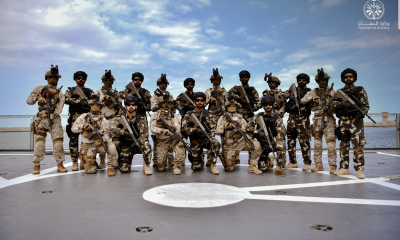
The Saudi and Omani naval forces successfully concluded the 'Peace Winds 2026' exercise, with the aim of enhancing joint operations and securing vital waterways in the region.

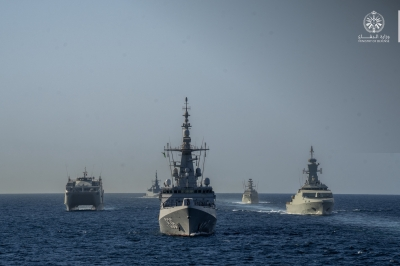
The Royal Saudi Naval Forces and their counterparts in the Royal Navy of Oman concluded today (Sunday) the joint bilateral naval exercise “Winds of Peace 2026,” which took place in Omani territorial waters. This exercise culminates a previous phase of joint planning and training and reflects the depth of military cooperation between the two brotherly nations to enhance security and stability in the region.
Strategic context and in-depth partnership
Exercise “Peace Winds 2026” is the latest in a series of ongoing defense cooperation between the Kingdom of Saudi Arabia and the Sultanate of Oman, two pivotal states in the Gulf Cooperation Council (GCC). This partnership is based on a shared vision of the importance of securing vital waterways in the region, such as the Strait of Hormuz and the Arabian Sea, which are crucial arteries for global trade and energy supplies. These exercises are gaining increasing importance in light of the security challenges facing the region, necessitating enhanced combat readiness and operational coordination among the naval forces of the GCC member states to ensure their ability to counter any potential threats, whether from terrorist organizations, piracy, or any attempts to destabilize maritime navigation.
Specific objectives and training to enhance combat efficiency
The exercise focused on achieving a range of strategic objectives, most notably unifying operational concepts and enhancing joint operations between the two navies. During the maneuvers, complex scenarios and drills were conducted, including advanced naval formations, naval helicopter exercises, and realistic counter-terrorism and search and rescue scenarios. The training also encompassed vital aspects such as electronic warfare and countering fast boat attacks, a common threat in the region. To further enhance realism, the exercise included live-fire missile and ammunition drills, allowing participating crews to test their capabilities and weaponry in conditions that simulated real-world operations.
Integrated stages and meticulous planning
This exercise was not a spur-of-the-moment decision, but rather a continuation of the first phase conducted at King Faisal Naval Base in the Western Fleet of the Kingdom of Saudi Arabia in April 2025. That phase involved intensive training in mission planning and preparation at various command levels, with ship crews from both sides executing scenarios and testing operational plans using advanced simulation systems. This integrated approach, combining theoretical planning with practical execution, ensures maximum benefit from the exercise and accurately measures the effectiveness of joint plans.
Regional and international importance
The success of Exercise Peace Winds 2026 carries a clear message on both the regional and international levels. Regionally, the exercise underscores the unity of the Gulf Cooperation Council and its ability to collectively protect its interests and security. Internationally, it reassures international partners and the global community that key regional powers are committed to and capable of ensuring freedom of navigation in one of the world's most vital waterways, thus contributing to the stability of global energy markets and supply chains. This cooperation further strengthens the two countries' position as active players in the global maritime security system.
Politics
Israel partially reopens Rafah crossing to Gaza residents
After a closure that lasted for months, Israel announced the limited reopening of the Rafah crossing for Gaza residents, in a trial move that comes amid a crippling humanitarian crisis and in coordination with Egypt and the European Union.
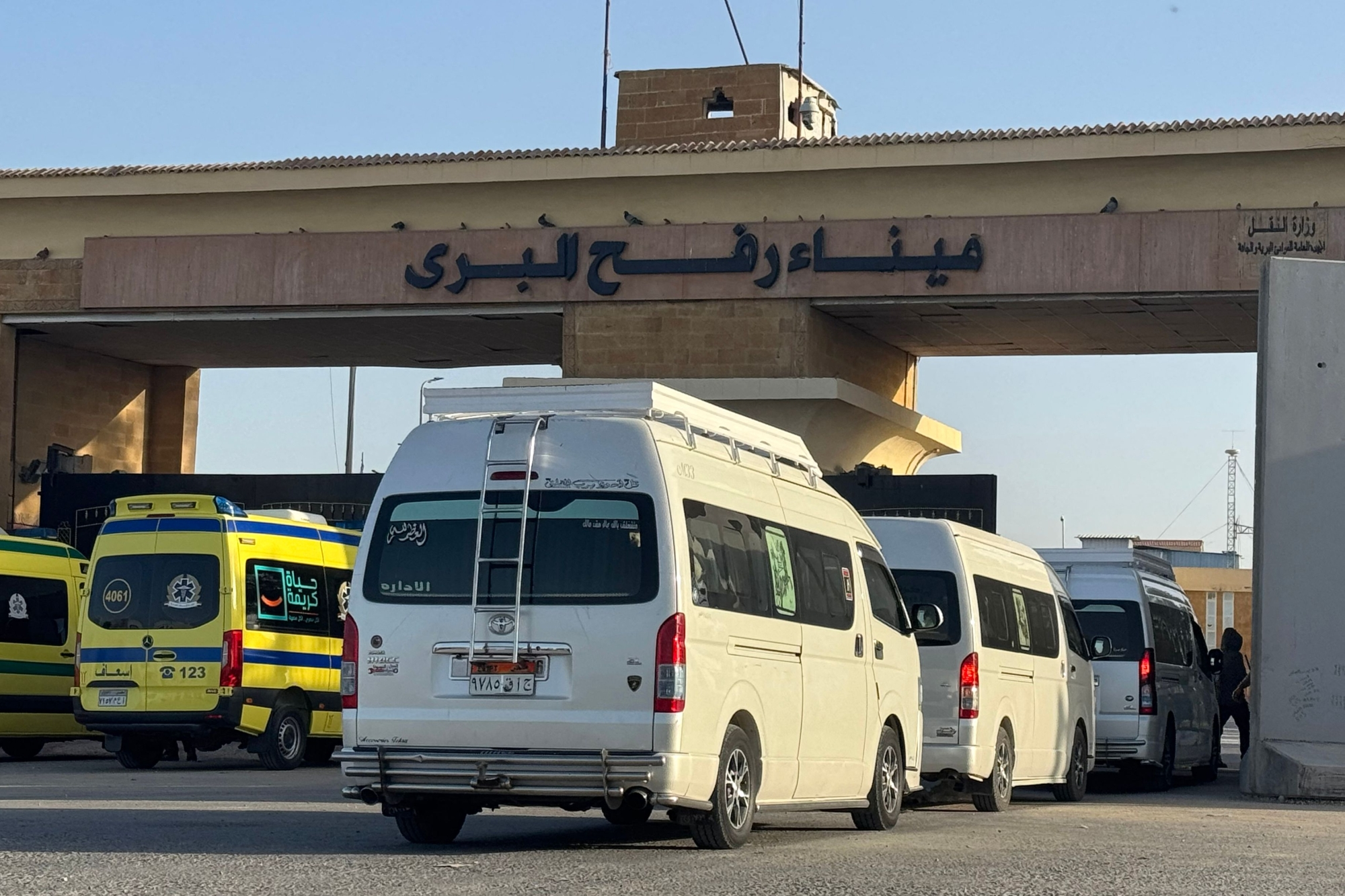
Israeli authorities announced on Sunday morning the limited reopening of the Rafah border crossing between the Gaza Strip and Egypt, after a closure that had lasted since Israeli forces took control of it in May 2014. According to the statement issued, this step will allow only residents of the Strip to pass through in an initial experimental phase.
Background and context of the closure
The Rafah crossing is the main lifeline for the residents of the Gaza Strip. It is the only land crossing that does not pass through Israel, and it connects the Strip directly to Egypt and from there to the outside world. Historically, the crossing has been controlled by various entities, but it gained paramount importance after the Israeli blockade imposed on Gaza since 2007. Its closure last May, as part of the Israeli military operation in Rafah, exacerbated the humanitarian crisis catastrophically, halting the flow of vital aid and trapping hundreds of thousands of Palestinians, including patients, students, and holders of foreign residency permits, inside the Strip.
Details of the pilot phase
The Israeli government's Coordinator of Government Activities in the Territories (COGAT) explained that the decision was made "in accordance with the ceasefire agreement and directives from the political leadership." It added that this initial pilot phase is being conducted in full coordination with the European Union Border Assistance Mission (EUBAM), the Egyptian authorities, and all relevant parties. This coordination aims to ensure an orderly and safe passage for the population, with continuous assessment of the situation to inform future decisions regarding the operation of the crossing.
Importance and expected effects
Locally, this limited opening offers a glimmer of hope for Gaza's residents, who have endured a suffocating blockade. It could provide an opportunity for patients requiring urgent medical treatment abroad, for students enrolled in foreign universities, and for families separated by the war. Regionally, this step underscores Egypt's pivotal role as a key mediator in the Palestinian issue and an indispensable partner in managing the crossing. Internationally, this move comes in response to immense pressure exerted by humanitarian organizations and the international community on Israel to open the crossings, facilitate the delivery of aid, and alleviate the humanitarian suffering in the Gaza Strip. While this step is positive, it remains limited and does not address the vast scale of humanitarian needs in Gaza, and the situation remains contingent on future political and field developments.
Politics
Trump and Iran: A strategy of military ambiguity and maximum pressure
President Trump revealed that Washington's allies were not informed of specific plans against Iran, amid escalating tensions and diplomatic efforts to defuse the crisis in the Middle East.
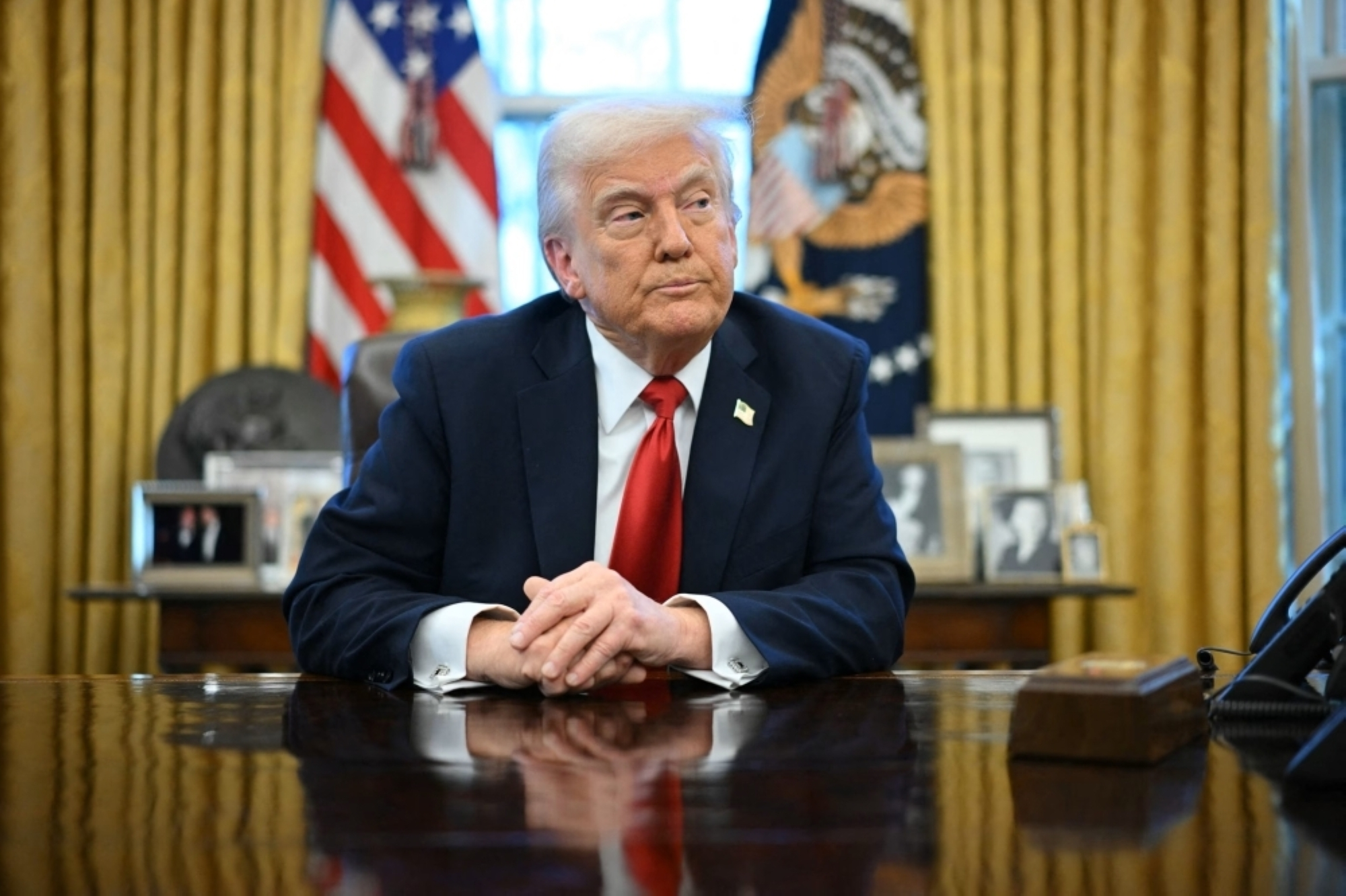
Former US President Donald Trump, in a statement reflecting his dual strategy toward Tehran, confirmed that his administration did not share any specific military plans with US allies in the region regarding potential strikes against Iran. This statement, made at the height of tensions between the two countries, added a layer of ambiguity to Washington's true intentions and represents part of his administration's "maximum pressure" policy.
Trump added that “Tehran is talking to Washington,” hinting at the existence of communication channels and leaving the door open for diplomacy by saying, “We’ll see if we can do something, and if not, we’ll see what happens.” He reiterated that a “large American fleet” is heading to the region, a military message intended to deter Iran and demonstrate strength, without specifying the nature of the fleet’s mission or the likelihood of a military attack.
Background to the tension: Withdrawal from the nuclear agreement
The roots of this crisis lie in President Trump's decision in May 2018 to unilaterally withdraw from the Joint Comprehensive Plan of Action (JCPOA), commonly known as the Iran nuclear deal, which was signed in 2015 between Iran and world powers. Following the withdrawal, Washington reimposed harsh economic sanctions on Tehran with the aim of crippling its economy and forcing it back to the negotiating table to reach a new, more comprehensive agreement that addresses its missile program and regional influence.
The importance of the event and its regional and international impact
Trump's statements carried significant weight on several levels. Domestically, they were intended to project an image of him as a strong leader who would not hesitate to use force but who preferred diplomacy. Regionally, this policy alarmed Washington's traditional allies in the Gulf, who are on the front line with Iran, as the lack of transparency regarding specific plans left them uncertain. Internationally, this policy strained relations with European allies (Britain, France, and Germany) who had worked hard to preserve the nuclear agreement as a means of preventing Iran from developing nuclear weapons.
For its part, the Iranian leadership, represented by then-President Hassan Rouhani, maintained that war would not benefit any party in the Middle East, emphasizing that Tehran would not negotiate under pressure or threats. These divergent positions reflected a dangerous state of tension, with the region teetering on the brink of military confrontation on several occasions, amidst intensive diplomatic efforts by international and regional actors to defuse the crisis and prevent a slide into a wider conflict.
-

 Local news one week ago
Landslide in Riyadh: Details of the incident in Al-Sahafa neighborhood and containment efforts
-
 Local news one week ago
The death penalty was carried out against a citizen who stabbed another to death in Tabuk
-

 Culture and Art 7 days ago
Haifa Wehbe's absence in Riyadh: A photo crisis or a strained relationship with the media?
-
 Local news one week ago
First birth on the Riyadh train: A heartwarming story at Andalus station
-
 Local News 7 days ago
Riyadh collapse: Emergency plans to secure water after a main pipeline burst
-

 Culture and Art 7 days ago
City Kitchen series: A drama of conflict and the middle class during Ramadan
-

 Culture and Art 7 days ago
The series "Kasra": Dawood Hussein in a moving social drama this Ramadan
-

 Local News 6 days ago
Applying for the 1447 Opportunities Program for Teachers via the Fares System