Politics
A recruitment crisis raises concerns within the occupying army
Against the backdrop of the war in Gaza, the Israeli occupation army is facing a recruitment crisis; therefore, it has resorted to studying expanding the decision to extend service

Against the backdrop of the war in Gaza, the Israeli occupation army is facing a recruitment crisis; therefore, it has resorted to studying expanding the decision to extend mandatory military service to include new combat units.
Israel's Channel 12 quoted a military report saying that "the Israeli army is considering extending mandatory service for an additional year for other combat units, following the previous decision to apply the extension to all reconnaissance battalions in infantry brigades.".
Despite the army's denial of a comprehensive and final decision, the extension of service has already begun in elite units, specifically in the "Yahalom" unit specializing in combat engineering, and it is likely to be extended soon to other units such as "Maglan," "Duvdevan," and "Egoz," in addition to artillery units.
The plan stipulates raising the mandatory service period from 32 months to 44 months, or from about 3 years to approximately 4 years, which constitutes a radical change in the equation of mandatory service, which has always sparked controversy within Israel, especially when compared to the exemptions granted to Haredi circles.
This trend coincides with government efforts in the Knesset to pass a bill that would exempt tens of thousands of yeshiva (Haredi) students from military service.
The report revealed concerns within the security establishment about a potential collapse in manpower, stemming from increasing desertions among career soldiers and a decline in the number of those willing to remain. This prompted the army command to call upon first sergeants and their deputies in infantry brigades to remain in service and postpone their discharge. According to military estimates, thousands of soldiers will soon receive official notifications postponing their discharge for an additional year.
According to a Channel 12 report, officers from the Nahal Brigade conveyed shocking accounts of the soldiers' exhaustion to the head of the Southern Command during his visit to the troops. One officer stated that "the soldiers are literally fighting over every space inside the armored personnel carrier." This reflects the extent of the fatigue experienced by the soldiers after nearly two years of continuous fighting in Gaza.
A number of soldiers sent an angry letter of protest to the head of the army's manpower directorate, stating: "You have found fools in our sons to burden with endless hardships." They added that their sons had been subjected to traumatic experiences that would haunt them for the rest of their lives, with no real prospect of ending their suffering.
With the negotiations faltering and the war continuing without a clear resolution, voices within the occupying army have grown louder, calling for an end to the war in order to restore human and operational balance.
According to military sources, there is growing concern that this crisis will lead to a decline in the army's efficiency in the long term, as the number of reserve and regular soldiers is decreasing, while the required field missions in Gaza and other areas are increasing.












Politics
Trump vows to retaliate against the attack on the US embassy in Riyadh
Trump confirms imminent response to drone attack on US embassy in Riyadh. Saudi defense ministry reveals details, raising expectations of escalating tensions in the region.

In a new escalation of events in the Middle East, US President Donald Trump affirmed that the military and political response to the attack targeting the US embassy in the Saudi capital, Riyadh, would be "soon and decisive." The US president indicated that the administration is currently studying the available options and that details of the anticipated US action would be announced shortly, reflecting Washington's seriousness in dealing with threats against its diplomatic missions.
Details of the attack and the Saudi position
Trump’s fiery remarks came during an exclusive interview with News Nation, which was relayed by the network’s correspondent via the X platform, where the president stressed that the United States would not tolerate this blatant attack, especially as it comes amid escalating regional tensions and the deaths of American soldiers in indirect confrontations during the ongoing conflict with Iran and its proxies in the region.
For its part, the Saudi Ministry of Defense quickly clarified the circumstances of the incident, issuing an official statement in the early hours of Tuesday morning via the "X" platform. The ministry explained that the initial assessment of the incident indicates that the embassy was subjected to a hostile attack by two drones, confirming that the attack resulted in a small fire within the embassy perimeter, which was brought under control without any major damage.
Context of regional and international tension
This incident comes at a time of heightened geopolitical tension in the region, where targeting diplomatic missions is a serious violation of international norms and laws, specifically the Vienna Convention on Diplomatic Relations, which mandates special protection for embassies. Observers believe this attack not only targets the diplomatic building itself but also represents a direct challenge to American influence in the region and to the deep strategic partnership between Washington and Riyadh.
Historically, US-Saudi relations have been a cornerstone of security in the Middle East, and the United States typically responds firmly to any threats to its interests or those of its strategic allies in the Gulf. Military experts note that the use of drones in such attacks has become a common tactic for armed groups in the region to destabilize it, prompting Washington to bolster its defense systems and vow to deter the perpetrators.
Expected repercussions
This incident is expected to cast a shadow over the political and security landscape in the region, as the anticipated US response could lead to changes in the current rules of engagement. Furthermore, targeting a major and pivotal capital like Riyadh carries serious implications that may necessitate high-level security and military coordination between the United States and Saudi Arabia to ensure regional security and the safety of vital waterways and global energy supplies, which could be affected by any large-scale military escalation.
Politics
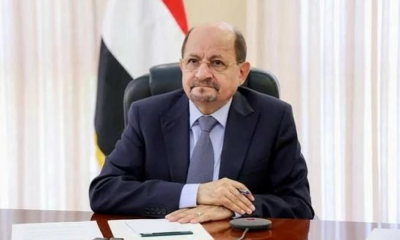
The Yemeni government's priorities: Services in Aden and justice for the southern cause
The Yemeni Prime Minister outlines the government's priorities: currency stability, improving Aden's electricity, and paying salaries, while emphasizing the justice of the southern cause and partnership with the press.

In a move aimed at enhancing transparency and clarifying the government's course of action during the current critical phase, Yemeni Prime Minister Dr. Shaya'a al-Zindani explained that his government's priorities are primarily focused on addressing the escalating service and economic challenges, foremost among them stabilizing the national currency, improving electricity and water services, and ensuring the regular payment of salaries. This statement comes at a time when the country is experiencing immense economic pressure resulting from the ongoing war and the halt in oil exports, which has severely impacted the living conditions of citizens.
Aden: The true test of the state
The Prime Minister emphasized the special place that the interim capital, Aden, holds in the government's program, considering it a symbol of the state and a true test of its ability to succeed and endure. He noted that the government is deeply committed to transforming Aden into a model of security, public service provision, and institutional discipline. He affirmed that the success of this experiment in Aden would send a powerful message of hope to the other liberated governorates, confirming the success of the state project and its capacity for recovery. At the same time, he warned that any chaos or security lapses in Aden would not only affect the city but would also tarnish the image of the nation and the national project as a whole in the eyes of the international community and donors.
Economic and political dimensions
The Yemeni government faces complex challenges, with the electricity sector in Aden and neighboring governorates being among the most intricate due to dilapidated infrastructure and fuel shortages, requiring urgent strategic solutions. Currency stability is also directly linked to citizens' purchasing power, which has eroded significantly in recent years. Through these priorities, the government aims to create a stable environment that will encourage capital inflows and revitalize the economy.
The justice of the southern cause and partnership with the media
On the political front, during a meeting with journalists and media figures in the interim capital, Aden, the Yemeni Prime Minister reiterated that the Southern issue is a just cause , noting that it constitutes a fundamental pillar of any future political settlement and that addressing it in a manner acceptable to the people of the South is a genuine path to stability. In closing, al-Zindani pledged to build strong bridges of partnership with the press and media, emphasizing that restoring trust between citizens and the government begins with honesty and transparency, and that the media is a key partner in uncovering the truth and monitoring government performance.
Politics
Qatar intercepts two ballistic missiles: Ministry of Defense statement and details of the operation
The Qatari Ministry of Defense announced the successful interception of two ballistic missiles targeting the country. Learn more about the operation and the readiness of the Qatari Armed Forces to protect national sovereignty.
The Qatari Ministry of Defense announced today (Tuesday), in an important official statement, the success of its armed forces in repelling a hostile aerial attack, which involved intercepting and destroying two ballistic missiles targeting several areas within the country. This announcement confirms the high level of readiness of Qatar's air defense systems in protecting its airspace and national sovereignty.
Operation details and combat readiness
The ministry explained in its statement that monitoring and tracking systems detected the threat early on, and it was dealt with immediately according to the pre-approved operational plan for handling such scenarios. Air defenses successfully intercepted and destroyed the two missiles before they reached their targets or entered the country's airspace, thus preventing any damage.
The ministry stressed that the Qatari armed forces possess the full technical and human capabilities to protect and preserve the sovereignty of the state and its territories, affirming its determination to firmly and forcefully confront any external threat that may affect the security of the homeland or the safety of its citizens.
The importance of air defense systems in the regional context
This event underscores the paramount importance that the Gulf Cooperation Council (GCC) countries, including Qatar, place on strengthening their military and defense capabilities. Given the recurring security challenges in the Middle East, investment in advanced air defense systems and the ongoing training of military personnel are fundamental pillars for maintaining national and regional stability.
The rapid response and interception of the missiles reflect the efficiency of Qatar's military infrastructure and its ability to neutralize ballistic threats, which are among the most complex threats in modern warfare. This defensive success sends a clear message about the resilience of Qatari airspace and the country's ability to deter any attempts at aggression.
A call for calm and reliance on official sources
In closing, the Ministry of Defense reassured all citizens, residents, and visitors in Qatar, urging them to continue their lives normally and to trust in the security and military forces' ability to provide the necessary protection. The Ministry also stressed the importance of adhering to instructions issued by the relevant security authorities and avoiding the spread of rumors or misinformation on social media platforms, emphasizing that the only reliable source of accurate information is official statements issued by state authorities.
-

 Local News 3 days ago
Jeddah Airport alerts for travelers due to airspace closure and flight disruptions
-
Local News 5 days ago
Saudi Arabia approves regulations for the continued presence of Gulf vehicles: duration and penalties
-
Local news one week ago
The Ministry of Interior begins procedures for a royal pardon for common law prisoners
-
Local News 7 days ago
The deadline for property registration in Hail and Riyadh is Thursday
-
Sports one week ago
Tickets for the Al-Ahli vs. Al-Hilal King's Cup match postponed: New date
-
Local news one week ago
Under the patronage of the Minister of Information, an agreement was signed between the Ministry of Information and Waves Marketing Company
-
Culture and Art 6 days ago
The Devil's Prisons series was halted: The full story of "The Emperor's" being moved to YouTube
-
Local news one week ago
Saleh Al-Maghamsi appointed Imam of the Prophet's Mosque: Details of the Royal Decree