Politics
A person was arrested for trafficking 14 kilograms of hashish in the Eastern Province
The General Directorate of Drug Control arrested a citizen in the Eastern Province for trafficking (14) kilograms of hashish

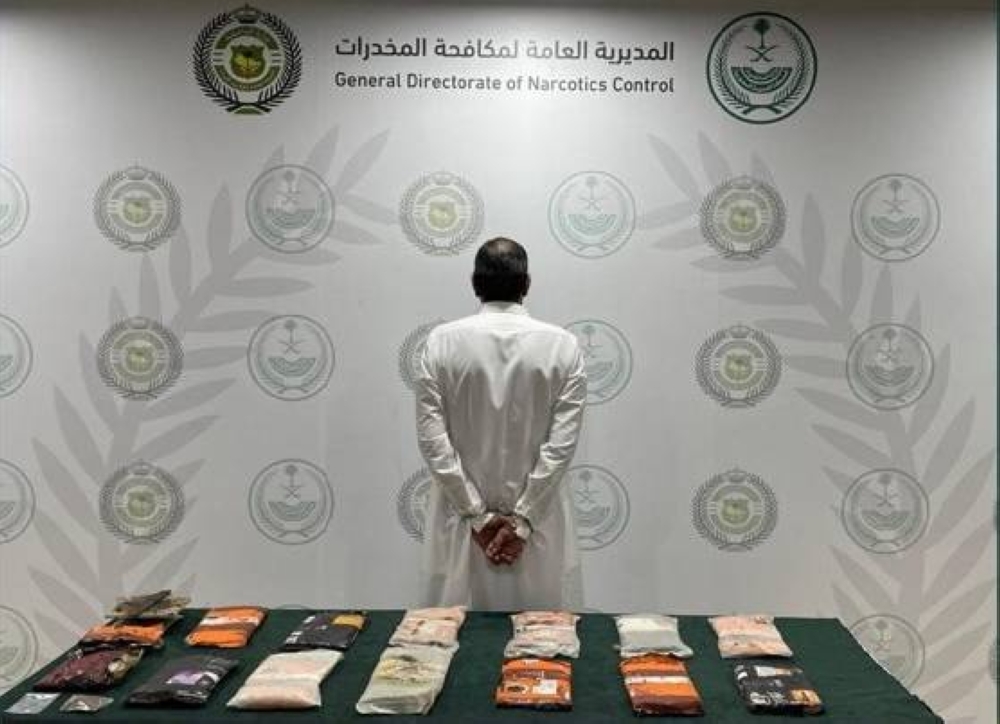
The General Directorate of Drug Control arrested a citizen in the Eastern Province for promoting (14) kilograms of hashish and amphetamine. He was detained, legal procedures were taken against him, and he was referred to the Public Prosecution.
The security authorities urge citizens and residents to report any information they may have about any activities related to smuggling or promoting drugs, by calling the numbers (911) in the regions of Makkah, Riyadh and the Eastern Province, and (999) in the rest of the regions of the Kingdom, and the number of the General Directorate of Drug Control for reporting (995), and via email 995@gdnc.gov.sa. All reports will be treated with complete confidentiality.









Politics
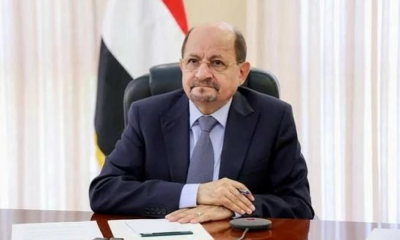
The US is urging its citizens to leave 12 Middle Eastern countries immediately
Washington orders its citizens to leave 12 Middle Eastern countries and closes its embassies in Saudi Arabia and Kuwait, amid military escalation, fears of a wider regional war, and disruption to energy supplies.

In a rapidly evolving geopolitical situation in the region, the US State Department issued an urgent and decisive directive for its citizens to immediately leave more than 12 countries in the Middle East. This decision comes amid an unprecedented escalation of direct military confrontation between the United States and Israel on one side, and Iran on the other, threatening to expand the conflict to multiple fronts.
Details of warnings and evacuation procedures
Assistant Secretary of State for Consular Affairs Maura Namdar explained that the increased security risks necessitate the immediate departure of American citizens using available commercial transportation. The list of countries included in the warnings comprised Bahrain, Egypt, Iran, Iraq, Israel, the West Bank, Gaza, Jordan, Kuwait, Lebanon, Oman, Qatar, Saudi Arabia, Syria, the United Arab Emirates, and Yemen. Simultaneously, the State Department ordered the departure of non-essential government personnel and their families from its missions in Bahrain, Iraq, and Jordan as a precautionary measure for their protection.
In a move reflecting the seriousness of the situation, the United States announced the closure of several of its embassies in Arab countries until further notice, specifically in Kuwait and Saudi Arabia. The US embassy in Amman, Jordan, also saw its staff temporarily evacuated due to a “security threat,” the nature of which was not disclosed. Meanwhile, an interagency emergency task force was activated in Washington to manage the crisis and coordinate responses.
Background of the conflict and its regional effects
This diplomatic and security mobilization follows a series of airstrikes launched by the United States and Israel last Saturday against strategic targets inside Iran, which, according to sources, resulted in the deaths of several senior Iranian leaders, including Supreme Leader Ali Khamenei. Tehran responded by targeting American and Israeli sites and interests, as well as targets in Iraq and the Gulf Cooperation Council countries, putting the entire region on a knife's edge.
Economic repercussions and global concerns
The repercussions of this escalation are not limited to the military and political spheres; they extend to the global economy. Energy markets have witnessed a significant price surge, driven by fears of disruptions to oil supplies. These fears are amplified by threats from Iranian officials to close the Strait of Hormuz or target ships transiting it. The Strait of Hormuz is a vital artery for the global economy, with millions of barrels of crude oil passing through it daily, and any disruption to navigation there could lead to a severe global energy crisis.
For his part, US President Donald Trump stated that this conflict could last for a period of four to five weeks, with the possibility of it continuing for a longer period, indicating that the region is heading towards a phase of instability that could reshape the political and security map of the Middle East.
Politics
Oman: Duqm port targeted by drones for the second time in days
The Sultanate of Oman announced that the port of Duqm was attacked by drones targeting fuel tanks, in the second such incident in three days. Authorities confirmed that the situation was under control and that there were no casualties.

The Sultanate of Oman announced on Tuesday morning that the Special Economic Zone in Duqm had been subjected to a new security incident, which was the targeting of fuel tanks in the commercial port of Duqm by a number of drones. This is the second incident of its kind to occur in the vital area in less than 72 hours.
The official Oman News Agency quoted a responsible security source confirming that the airstrike damaged one of the port's fuel tanks. Authorities explained that emergency teams and relevant agencies were able to fully contain the damage caused by the attack, confirming that no casualties were reported. This reflects the port's readiness to handle emergencies.
Details of the previous incident and escalating tensions
This attack comes just days after a similar incident last Sunday, when Omani authorities announced that the port of Duqm had been targeted by two drones. The first attack resulted in injuries to an expatriate worker when one of the drones struck a mobile workers' accommodation, while the debris from the other drone fell near fuel tanks without causing significant material damage or further casualties.
The Sultanate of Oman has expressed its strong condemnation of this repeated targeting of civilian and economic infrastructure, stressing that it is taking all necessary security and precautionary measures to deal with this event and ensure the safety of the facilities and workers in them.
The strategic importance of the port of Duqm
This event is of particular importance given the strategic location of the Port of Duqm. Situated on the southeastern coast of the Sultanate of Oman, the port directly overlooks the Arabian Sea and the Indian Ocean. The Duqm Special Economic Zone is one of the largest economic projects in the Middle East and North Africa, designed to be a global logistics and industrial hub.
The importance of Duqm lies in its location outside the Strait of Hormuz, making it a vital artery for oil and gas exports and container trade, far removed from the tensions that might arise in the strait. The port includes a major oil refinery and petrochemical storage facilities, making it a cornerstone of the Sultanate of Oman's economic diversification strategy (Vision 2040).
Impacts of the event on energy security and navigation
The repeated targeting of vital facilities in a politically and security-wise stable region like the Sultanate of Oman raises questions about the growing security challenges facing energy and maritime shipping lanes in the region. Economic and political circles are viewing these events with great seriousness, given the role that Omani ports play in global supply chains.
Despite these events, initial indicators confirm the continuation of operations at the port and the ability of the Omani authorities to contain the situation, in light of regional and international support for the stability of the Sultanate and the security of its waterways.
Politics
Trump vows to retaliate against the attack on the US embassy in Riyadh
Trump confirms imminent response to drone attack on US embassy in Riyadh. Saudi defense ministry reveals details, raising expectations of escalating tensions in the region.
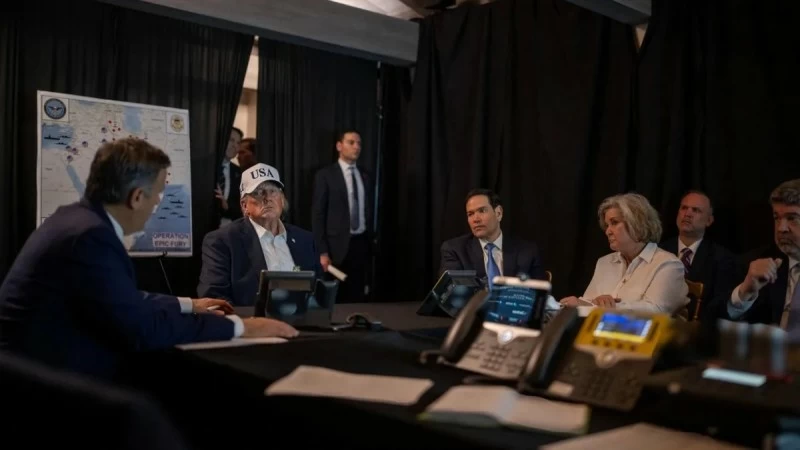
In a new escalation of events in the Middle East, US President Donald Trump affirmed that the military and political response to the attack targeting the US embassy in the Saudi capital, Riyadh, would be "soon and decisive." The US president indicated that the administration is currently studying the available options and that details of the anticipated US action would be announced shortly, reflecting Washington's seriousness in dealing with threats against its diplomatic missions.
Details of the attack and the Saudi position
Trump’s fiery remarks came during an exclusive interview with News Nation, which was relayed by the network’s correspondent via the X platform, where the president stressed that the United States would not tolerate this blatant attack, especially as it comes amid escalating regional tensions and the deaths of American soldiers in indirect confrontations during the ongoing conflict with Iran and its proxies in the region.
For its part, the Saudi Ministry of Defense quickly clarified the circumstances of the incident, issuing an official statement in the early hours of Tuesday morning via the "X" platform. The ministry explained that the initial assessment of the incident indicates that the embassy was subjected to a hostile attack by two drones, confirming that the attack resulted in a small fire within the embassy perimeter, which was brought under control without any major damage.
Context of regional and international tension
This incident comes at a time of heightened geopolitical tension in the region, where targeting diplomatic missions is a serious violation of international norms and laws, specifically the Vienna Convention on Diplomatic Relations, which mandates special protection for embassies. Observers believe this attack not only targets the diplomatic building itself but also represents a direct challenge to American influence in the region and to the deep strategic partnership between Washington and Riyadh.
Historically, US-Saudi relations have been a cornerstone of security in the Middle East, and the United States typically responds firmly to any threats to its interests or those of its strategic allies in the Gulf. Military experts note that the use of drones in such attacks has become a common tactic for armed groups in the region to destabilize it, prompting Washington to bolster its defense systems and vow to deter the perpetrators.
Expected repercussions
This incident is expected to cast a shadow over the political and security landscape in the region, as the anticipated US response could lead to changes in the current rules of engagement. Furthermore, targeting a major and pivotal capital like Riyadh carries serious implications that may necessitate high-level security and military coordination between the United States and Saudi Arabia to ensure regional security and the safety of vital waterways and global energy supplies, which could be affected by any large-scale military escalation.
-

 Local News 3 days ago
Jeddah Airport alerts for travelers due to airspace closure and flight disruptions
-
Local News 5 days ago
Saudi Arabia approves regulations for the continued presence of Gulf vehicles: duration and penalties
-
Local news one week ago
The Ministry of Interior begins procedures for a royal pardon for common law prisoners
-
Local news one week ago
The deadline for property registration in Hail and Riyadh is Thursday
-
Sports one week ago
Tickets for the Al-Ahli vs. Al-Hilal King's Cup match postponed: New date
-
Local news one week ago
Under the patronage of the Minister of Information, an agreement was signed between the Ministry of Information and Waves Marketing Company
-
Culture and Art 6 days ago
The Devil's Prisons series was halted: The full story of "The Emperor's" being moved to YouTube
-
Local news one week ago
Saleh Al-Maghamsi appointed Imam of the Prophet's Mosque: Details of the Royal Decree