
Politics
A 5.5 magnitude earthquake strikes Papua New Guinea
An earthquake measuring 5.5 on the Richter scale struck Papua New Guinea on Saturday, according to the German Meteorological Service

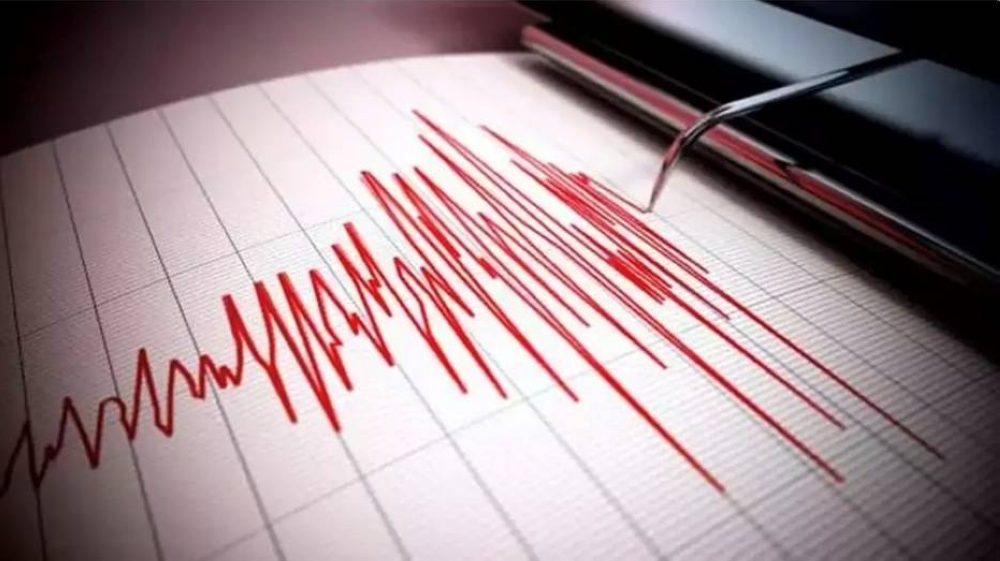
An earthquake measuring 5.5 on the Richter scale struck Papua New Guinea on Saturday, according to the German Research Centre for Geosciences.
The center explained that the earthquake occurred at a depth of 198 kilometers below the Earth's surface, with no immediate reports of damage or injuries.
Related News




Politics
Kim Jong Un paves the way for his daughter Kim Ju Ae to succeed him as ruler of North Korea
Intelligence reports reveal Kim Jong Un's plans to hand over power to his daughter Kim Ju Ae, amid anticipation of a meeting of the ruling Workers' Party that could determine the fate of the fourth generation of leadership.
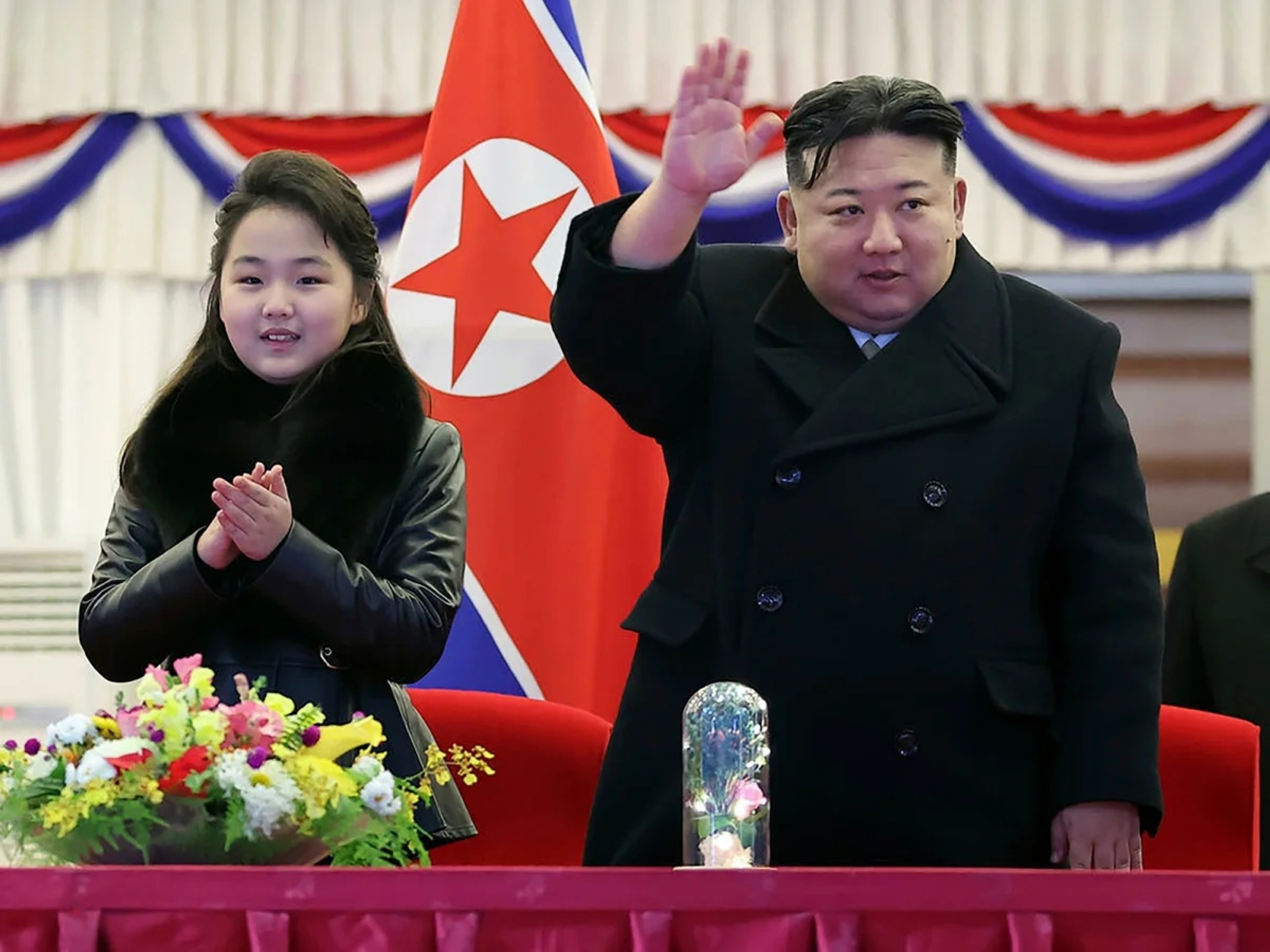
Recent South Korean intelligence reports have revealed serious and systematic moves by North Korean leader Kim Jong Un to pave the way for his daughter, Kim Ju-ae, to become the likely successor to power in the nuclear-armed state. Two South Korean lawmakers reported on Thursday, citing a briefing from the National Intelligence Service, that there are strong indications the daughter is becoming increasingly involved in political affairs beyond mere protocol appearances.
Strengthening the position of the "first daughter"
Parliamentarians explained that the intelligence service is closely monitoring upcoming developments, specifically Kim Ju-ae's potential attendance at the ruling Workers' Party's upcoming meeting, how she will be presented to the media and the public, and whether she will be granted an official position within the party structure. It is estimated that the nature of her roles at public events suggests she has begun to make political contributions, and that she is effectively being treated within the inner circles of power as the second most powerful figure in the country.
Historical context: The fourth generation of the family's rule
This development comes within the long-established historical context of the Pyongyang regime, which has relied entirely on the dynastic succession of power since the founding of the state by grandfather Kim Il-sung, through father Kim Jong-il, and up to the current leader. The potential rise of Ju-ae is a clear indication of Kim Jong-un's desire to secure the continuation of family rule for a fourth generation, a cornerstone of the regime's stability and its political ideology based on the cult of personality.
Significance of military and political emergence
Kim Ju-ae, believed to be in her early teens, is increasingly appearing in North Korean state media, often alongside her father at highly sensitive locations such as inspecting weapons programs and missile launch sites. Political analysts see this deliberate association of the daughter with the military as sending a message to both the international community and the North Korean leadership that the country's strategic and defense policies will continue unabated under the next generation of leaders.
Anticipation for the Labour Party meeting
All eyes are now on the opening session of the Ninth Workers' Party Congress, scheduled for late February. This event is considered pivotal, as experts expect it to reveal the main political directions for the coming years, particularly regarding the economy, foreign policy, and defense. It will also be a true test of the seriousness with which Kim Ju-ae can be presented to the ruling elite as the official successor to her father.
Politics
US House of Representatives votes to overturn Trump's tariffs on Canada
The US House of Representatives voted to repeal tariffs imposed by Trump on Canadian goods, amid Republican divisions and defiance of the president's threats. Details of the decision and its repercussions.

In a move reflecting escalating political tensions between the legislative and executive branches in the United States, the US House of Representatives voted in favor of a resolution to rescind the tariffs imposed by President Donald Trump on Canadian goods. This vote represented a direct challenge to the White House's trade policies, with several Republican representatives disregarding the president's direct warnings and political threats regarding the potential repercussions of this defiance in the upcoming elections.
Details of the vote and the party split
The House chamber witnessed intense democratic activity to pass the resolution, which ultimately garnered 219 votes in favor and 211 against. What was striking about this vote was not only the Democratic majority, but also the defection of six Republican representatives to the Democratic camp, prioritizing their states' economic interests and neighborly relations with Canada over the strict party loyalty demanded by Trump. The US president attempted to intervene until the last minute, issuing warnings to his party's representatives, but his efforts failed to dissuade them from voting in favor of the resolution.
The context of the trade war and the "America First" policy
This decision comes within the broader context of President Trump's "America First" protectionist policies, which included imposing sweeping tariffs on steel, aluminum, and numerous other goods from traditional US allies, including Canada and the European Union. These policies have sparked considerable controversy within the American economic community, with opponents arguing that the tariffs harm American manufacturers who rely on imported raw materials and ultimately lead to higher prices for the end consumer.
Legislative obstacles and the future of the decision
Despite the Democrats' success in passing this bill in the House of Representatives, its path to becoming law remains blocked. Procedurally and constitutionally, repealing any tariffs imposed by the president requires Senate approval, and the Senate is often more hesitant to challenge the president on national security and trade issues. Even in the unlikely scenario of overcoming the Senate hurdle, the resolution needs the president's signature to become law, and Trump is certain to veto it, rendering the House move more of a political symbol than an immediate executive action.
The economic importance of US-Canadian relations
These moves are particularly significant given the enormous volume of trade between the United States and Canada, which share the world's longest land border and deeply intertwined economies. Canada is the United States' largest trading partner in many sectors, and any disruption to supply chains resulting from tariffs directly impacts jobs and economic stability in both countries. Therefore, the House vote is seen as an attempt by Congress to reclaim its constitutional authority to regulate foreign trade and to curb the executive branch's use of tariffs as a tool of political pressure without legislative oversight.
Politics
Trump to Netanyahu: I am committed to negotiations with Iran to reach an agreement
President Trump assured Netanyahu at the White House of his determination to continue negotiations with Iran, considering that reaching an agreement is his preferred option to ensure regional stability.
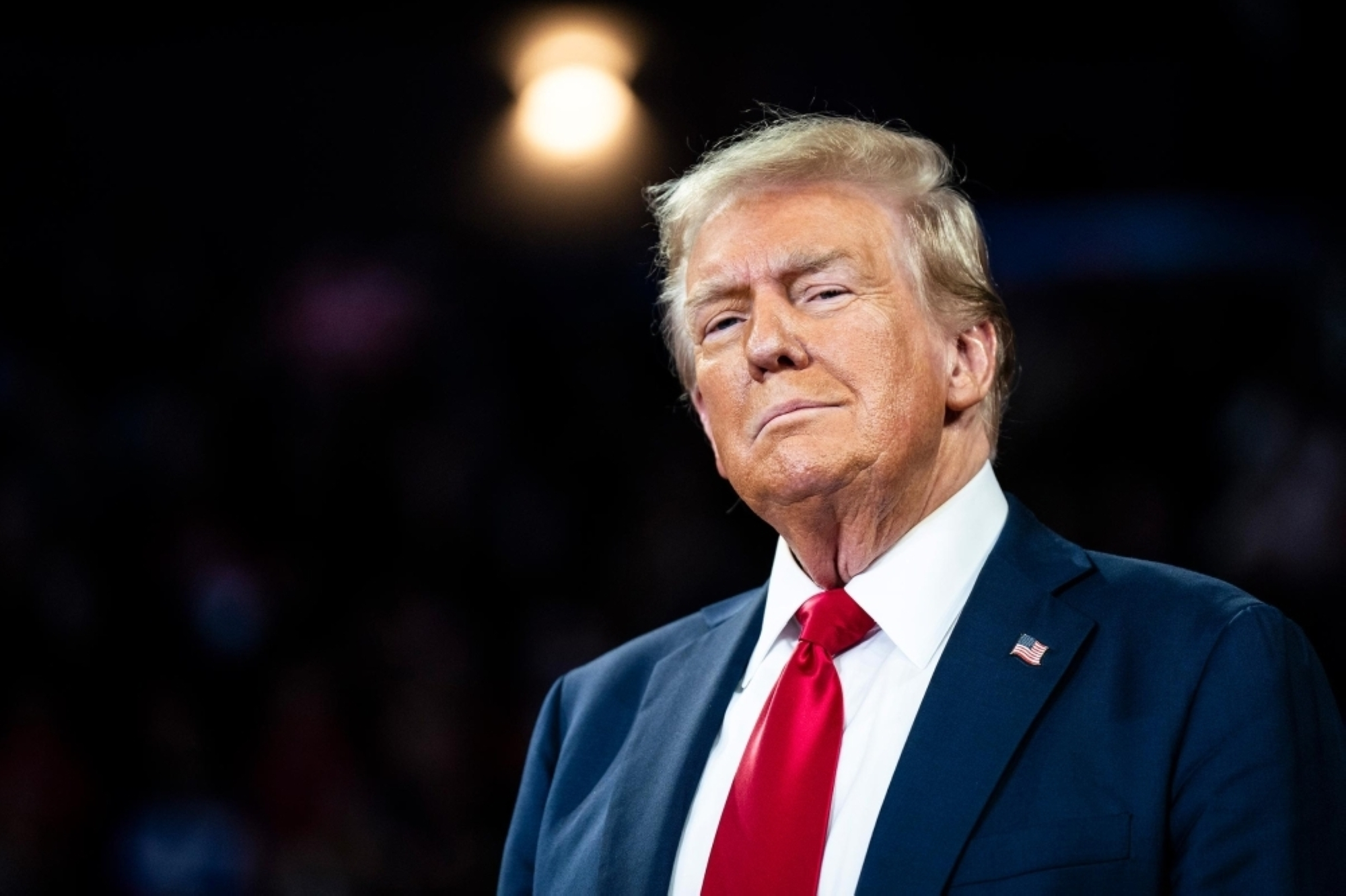
US President Donald Trump affirmed today (Wednesday) a decisive stance during his meeting with Israeli Prime Minister Benjamin Netanyahu at the White House, stressing his explicit desire to continue the diplomatic track and talks with Iran with the aim of reaching a new agreement, despite the well-known Israeli reservations regarding this issue.
Details of the meeting and adherence to the diplomatic option
In remarks following the closed-door meeting, President Trump clarified that no final decisions were reached regarding future dealings, except for one crucial point: his insistence on continuing negotiations. Describing the meeting's outcome, Trump said, "Nothing final was reached except that I insisted on continuing negotiations with Iran to see if an agreement is possible." The US president indicated that he had made it clear to Netanyahu directly that "reaching an agreement, if possible, would be his preferred option," reflecting the US administration's desire to exhaust all diplomatic avenues before resorting to other escalation options.
General context and background of strained relations
This announcement comes at a sensitive time for the Middle East, as all eyes turn to Washington to see what US foreign policy toward Tehran will look like. The relationship between the United States and Iran has long been characterized by ebbs and flows, particularly regarding the nuclear issue. Observers believe that Trump's insistence on negotiations reflects a strategy aimed at achieving a "grand bargain" that safeguards US interests and curbs Iranian nuclear ambitions through a binding agreement, rather than relying solely on a policy of maximum pressure or direct military confrontation that could plunge the region into unpredictable chaos.
The Israeli position and regional influences
On the other hand, this American stance poses a challenge to the vision of the Israeli government, headed by Benjamin Netanyahu, which has long questioned the usefulness of talks with Tehran, believing that the Iranian regime is merely using the time to develop its nuclear capabilities. Historically, Israel has pushed for stricter sanctions and brandished the threat of military action. However, Trump's insistence on negotiations puts US-Israeli relations to the test of coordination, as Washington seeks to reassure its strategic ally that any potential agreement will address Tel Aviv's security concerns.
Regionally and internationally, this approach carries important messages for the Gulf states and global energy markets, as continued negotiations could contribute to reducing tensions in the Gulf and the Strait of Hormuz, positively impacting the stability of oil supplies and the global economy. The question remains, however, regarding Tehran's flexibility in dealing with American conditions and Washington's ability to formulate an agreement that satisfies its allies in the region and achieves lasting security.
-

 Local news one week ago
Launch of the city's shuttle bus service in Ramadan 1447 AH: Routes and stations
-
Culture and Art, 1 week ago
The series "Rouh OFF" was permanently canceled by a decision of the Actors' Syndicate
-
Culture and Art, 1 week ago
Yasser Galal and Radwa El Sherbiny: Details of a new artistic project that brings them together
-
Local news one week ago
Schedule of Taraweeh and Tahajjud prayers at the Two Holy Mosques for Ramadan 1447 AH
-
Local news one week ago
The Ministry of Education revokes the licenses of 74 private schools due to safety and quality violations
-
Local news one week ago
Saudi Arabia weather: Rain in Riyadh, the Eastern Province, and Qassim, and dense fog
-
Local news one week ago
Mohammed Al-Rasasmeh appointed as official spokesperson for the Ministry of Municipalities and Housing
-
Culture and Art, 1 week ago
Poster for the series "Two Others": Asser Yassin and Dina El Sherbiny in Ramadan


