Politics
3.74 million domestic workers are covered by insurance
The number of domestic workers covered by insurance on their contracts in the Kingdom reached 3.74 million, in line with


The number of those covered by insurance on domestic worker contracts in the Kingdom reached 3.74 million domestic workers, in line with the efforts of the Ministry of Human Resources and Social Development seeking to develop the recruitment sector and protect the rights of the domestic worker and the employer, registering the largest domestic worker sector in the Middle East.
The insurance service for domestic worker contracts guarantees the preservation of the domestic worker's rights, such as: compensating the worker in the event of total permanent disability, or partial permanent disability resulting from an accident, and compensating him in the event of the employer's failure to pay salaries and financial dues as a result of the employer's death or total permanent disability or partial permanent disability. The service allows for compensation for the employer and the domestic worker in a range of cases starting from the date the domestic worker begins work. The insurance service for domestic worker contracts also contributes to achieving many benefits for the employer, such as compensating him for recruitment expenses in the event of absence, escape, death, or the worker's inability to work or his contraction of chronic diseases that prevent him from performing his work, in addition to compensating him for the expenses of returning the body, belongings and personal property in the event of the worker's death.
The Ministry of Human Resources and Social Development had previously launched the Wage Protection Program for domestic workers to preserve the wage rights of domestic workers in the Kingdom, the Electronic Contract Documentation Program, the Labor Culture Awareness Program, and the Unified Contract Program for the recruitment of domestic workers, which stipulates the existence of a unified contract binding on both parties to the contract that preserves contractual rights and defines the obligations of both parties, in addition to setting a higher ceiling for the recruitment of domestic workers from a number of countries, in addition to several joint agreements.
The insurance service for domestic worker contracts coming to the Kingdom was introduced for the first time through the Musaned platform, starting from February 2024, to clarify the terms of contracts between domestic workers and employers, and to grant both parties their rights, including: guaranteeing salaries, compensating the employer in case of escape or absence, and other guarantees. The insurance service for domestic worker recruitment contracts will be included in the procedures for the employer’s contract with the recruitment office or company for the first two years from the beginning of the contract, and the insurance after two years will be optional for the employer.




Politics
Ship hit near Fujairah; Trump orders security measures in place
A security incident targeted a ship off Fujairah, and Trump directed that security cover and military escort be provided for oil tankers to ensure the stability of global energy supplies through the Strait of Hormuz.


In a significant security development that underscores the geopolitical tensions in vital waterways, the United Kingdom Maritime Trade Operations (UKMTO) reported a security incident involving a commercial vessel just seven nautical miles east of the port of Fujairah in the United Arab Emirates. This incident raises renewed concerns about the safety of international shipping lanes in the Arabian Gulf region.
Details of the incident and crew safety
According to a statement issued by the authority, the ship's captain reported a direct hit from an "unidentified projectile," resulting in material damage to the ship's steel hull. Despite the alarming nature of the attack, field reports confirmed that no crew members were injured, and no fires or water ingress into the vessel were detected, thus preventing an environmental or humanitarian disaster in this sensitive area.
Urgent US move to secure energy
In a swift response aimed at containing the situation and ensuring market stability, US President Donald Trump unveiled a package of measures to safeguard trade. Trump announced directives to the US International Development Finance Corporation to provide insurance coverage against political risks, along with financial guarantees to reassure global shipping companies.
The American side did not stop at financial support, but Trump also hinted at preemptive military options, indicating the possibility of the US Navy escorting oil tankers as they cross the Strait of Hormuz if necessary, in a clear deterrent message to any parties that might try to threaten global energy security.
The strategic importance of the Strait of Hormuz and Fujairah
This incident cannot be understood in isolation from the paramount strategic importance of the location; the port of Fujairah is a vital artery for oil exports, situated outside the Strait of Hormuz, giving it a strategic advantage in circumventing any potential closure of the strait. The port is also one of the world's largest bunkering centers.
On the other hand, the Strait of Hormuz is the world's most important waterway for oil flows, with approximately one-fifth of the world's petroleum consumption passing through it daily. Historically, the safety of navigation in this strait has been a cornerstone of US and international national security, with international naval forces regularly present to ensure freedom of navigation.
Economic and geopolitical repercussions
Such incidents cast a long shadow over the global economy, typically leading to an immediate surge in marine insurance premiums, particularly those related to "war risk insurance." This increase, in turn, is reflected in higher shipping costs and subsequently in the prices of goods and energy for the end consumer.
Therefore, the American move to provide insurance cover and military escort is not only aimed at protecting ships, but also seeks to maintain the stability of oil prices and prevent supply shocks, confirming Washington’s commitment to protecting global economic interests in the Middle East region.
Politics
Saudi Arabia's defense forces intercepted and destroyed nine drones that breached its airspace
The Saudi Ministry of Defense announced the interception and destruction of 9 drones as soon as they entered the Kingdom's airspace, affirming its full right to protect its security and sovereignty and to respond to any aggression that threatens its stability.

The official spokesperson for the Saudi Ministry of Defense, Major General Turki al-Maliki, announced on Wednesday that the Royal Saudi Air Defense Forces successfully intercepted and destroyed nine drones immediately after they entered Saudi airspace. This successful operation underscores the high level of readiness and constant vigilance of the Saudi Armed Forces in protecting the nation's borders and assets from any potential aerial threats. The hostile targets were engaged with extreme precision and efficiency, preventing them from achieving their objectives.
This dangerous escalation comes just one day after Saudi Arabia, on Tuesday, expressed its categorical rejection and strongest condemnation of the brutal Iranian attack targeting the US embassy in Riyadh. Observers have linked the timing of the attempted airspace breach to the Kingdom's recent firm political stances against foreign interference in the region, suggesting a desperate attempt to undermine security and stability.
The context of regional tensions and the Saudi position
In a related context, the Kingdom stressed that the repetition of this blatant Iranian behavior constitutes a flagrant violation of international laws and norms. Official sources explained that this aggression comes despite the Iranian authorities' certain knowledge of the balanced Saudi position. The Kingdom has repeatedly affirmed that it will not allow its airspace or territory to be used as a platform to target Iran or any other country, in line with its consistent policy of non-aggression. However, it will not compromise in defending its sovereignty.
Strategic analysts believe that the aggressor's insistence on violating Saudi airspace, despite Saudi assurances that its territory would not be used for hostile acts, will push the entire region toward further escalation and undesirable tension. This incident underscores the Kingdom's crucial role as a stabilizing force in the region and its commitment to avoiding military adventures, while fully reserving its right to deter.
The right of reply and the protection of national sovereignty
The Kingdom concluded its statement by reaffirming its legitimate and absolute right to take all necessary measures to protect its national security. This includes preserving its territorial integrity, protecting its citizens and residents, and safeguarding vital interests and economic facilities. It clearly indicated that the option of responding to aggression remains available and guaranteed under international conventions that grant states the right to self-defense against any attack on their sovereignty, emphasizing that the Kingdom's security is a red line that cannot be crossed.
Politics
Mojtaba Khamenei as Supreme Leader of Iran: Details of the selection of Khamenei's successor
Reports indicate that Mojtaba Khamenei has been chosen as Iran's Supreme Leader, succeeding his father, under pressure from the Revolutionary Guard. Learn about the behind-the-scenes details of this decision and the implications of this dynastic succession in Tehran.
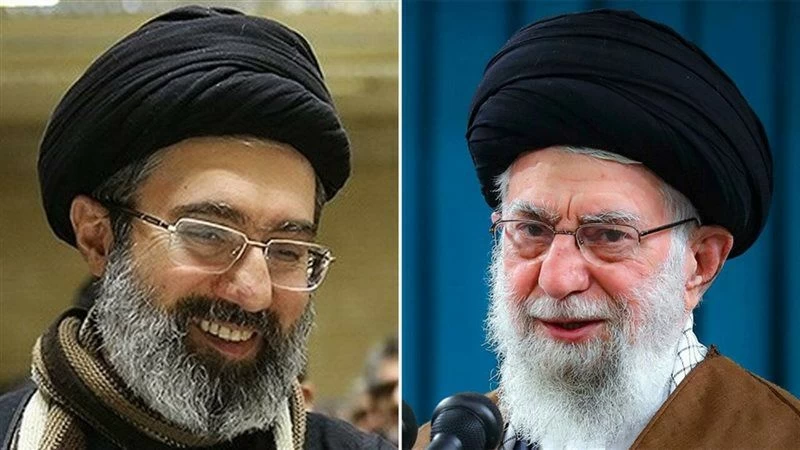
Media reports, citing the London-based Iran International channel, indicate that Iran's Assembly of Experts has selected Mojtaba Khamenei , son of current Supreme Leader Ali Khamenei, as the next Supreme Leader of the Islamic Republic. According to sources described as well-informed, this decision was made in complete secrecy and under direct and intense pressure from commanders of the Iranian Revolutionary Guard Corps , suggesting a significant shift in the balance of power within Tehran.
Behind the scenes of the secret selection and the role of the Revolutionary Guard
Sources reported that Mojtaba Khamenei was chosen during a secret meeting of the Assembly of Experts, amid unprecedented security measures described as "at the highest possible level." This news confirms earlier speculation in Iranian media that the succession issue would be resolved this week. It is believed that the Revolutionary Guard, which now controls key sectors of the country's economy and security apparatus, strongly pushed for this choice to ensure the continuation of the regime's policies and protect its strategic interests in the post-Ali Khamenei era.
Who is Mojtaba Khamenei? A path from obscurity to the top
Mojtaba Khamenei is known as the most influential figure in the "Supreme Leader's household," despite his limited media appearances. His biography reveals a blend of military and religious background; he joined the ranks of the Revolutionary Guard and participated in the Iran-Iraq War (1980-1988), which established his close ties with the current military leadership. In the late 1990s, he pursued religious studies at the Qom seminary , further solidifying his religious legitimacy.
His name became prominent following the 2005 presidential elections, and then in the events of 2009, when the reformist opposition accused him of playing a pivotal role in managing the security file and suppressing protests, as well as expanding the influence of the Revolutionary Guard's intelligence apparatus to become a rival to the official Ministry of Intelligence.
Historical context and the succession crisis
If officially confirmed, this event would mark a historic turning point in the course of the 1979 Iranian Revolution against the Shah's hereditary rule. The transfer of power from father to son is generating considerable debate about the concept of "republic" within the regime and recalls the 1989 transfer of power from Khomeini to Khamenei, which was also a carefully orchestrated political process. However, the difference today lies in the dominant role of the military establishment, represented by the Revolutionary Guard, which appears to be seeking to install a leader who can guarantee the loyalty of the security apparatus.
Expected local and regional repercussions
The appointment of Mojtaba Khamenei is expected to solidify the Iranian regime's hardline policies, both domestically regarding social and political freedoms, and internationally in managing regional and nuclear issues. Observers believe this choice reflects the desire of the regime's "hard core" to preempt any surprises that might arise from a power vacuum, especially given the geopolitical tensions plaguing the Middle East.
-

 Local News 6 days ago
Saudi Arabia approves regulations for the continued presence of Gulf vehicles: duration and penalties
-
Local news one week ago
The Ministry of Interior begins procedures for a royal pardon for common law prisoners
-
Local news one week ago
The deadline for property registration in Hail and Riyadh is Thursday
-
Local news one week ago
Under the patronage of the Minister of Information, an agreement was signed between the Ministry of Information and Waves Marketing Company
-
Culture and Art 7 days ago
The Devil's Prisons series was halted: The full story of "The Emperor's" being moved to YouTube
-
Local News 5 days ago
Saudi Energy: A new identity for electricity that aligns with Vision 2030
-
Local News 5 days ago
The Food and Drug Administration is recalling Bebelac and Aptamil milk due to potential contamination
-
Local news one week ago
Registration is now open for domestic pilgrims for the 1447 AH season: Dates and conditions via Nusuk