Politics
26 countries condemn Israel's targeting of journalists in Gaza
An international coalition of 26 countries condemns the targeting of journalists in Gaza and calls for a ceasefire and protection for media workers, demanding that foreign media be allowed entry.


An international coalition warns against targeting journalists and calls for the protection of media in Gaza
An international coalition of 26 countries issued a joint statement today (Thursday) through the British Foreign Office, warning Israeli occupation authorities against the deliberate targeting of journalists. The coalition demanded that foreign media be allowed access to the Gaza Strip and that journalists there be protected, in addition to calling for an immediate ceasefire.
The media plays a vital role in conflict zones
The statement emphasized that journalists and media professionals play a crucial role in highlighting the devastating realities left by wars. It noted that their access to conflict zones is essential for them to effectively fulfill this role. The coalition added, “We oppose all attempts to restrict press freedom and prevent journalists from entering conflict zones.”.
The statement also strongly condemned all acts of violence directed against journalists and media professionals, noting the huge number of victims among them and the cases of their arrest and detention.
Calls to guarantee freedom of media work
The coalition, which includes countries such as Britain, Italy, Denmark, Belgium, Australia and Sweden, called on the Israeli occupation and all other parties to make every effort to ensure that journalists in Gaza, Israel, the West Bank and East Jerusalem – both local and foreign – can do their work freely and safely.
The statement indicated that the deliberate targeting of journalists is unacceptable, emphasizing that international humanitarian law protects civilian journalists during armed conflicts. It called for an investigation into all attacks against media professionals and for those responsible to be held accountable under national and international law.
Calls for a ceasefire and the facilitation of humanitarian aid
In addition to protecting journalists, the international coalition called for an immediate ceasefire and the unconditional release of the remaining hostages. It also stressed the importance of the unimpeded flow of humanitarian aid and working towards a two-state solution as a sustainable way to resolve the conflict.
analysis:
These calls come amid escalating tensions and violence in the region, where the media plays a crucial role in reporting the facts and documenting events on the ground. Ensuring the safety of journalists and their ability to work freely is vital not only for protecting human rights but also for promoting transparency and accountability during armed conflicts.




Politics
Iran accuses Israel and the US of attacking the Natanz nuclear facility
The head of Iran's Atomic Energy Organization announces that the Natanz facility was attacked by Israel and the United States, and calls on the International Atomic Energy Agency to end its silence regarding the repeated violations of nuclear facilities.
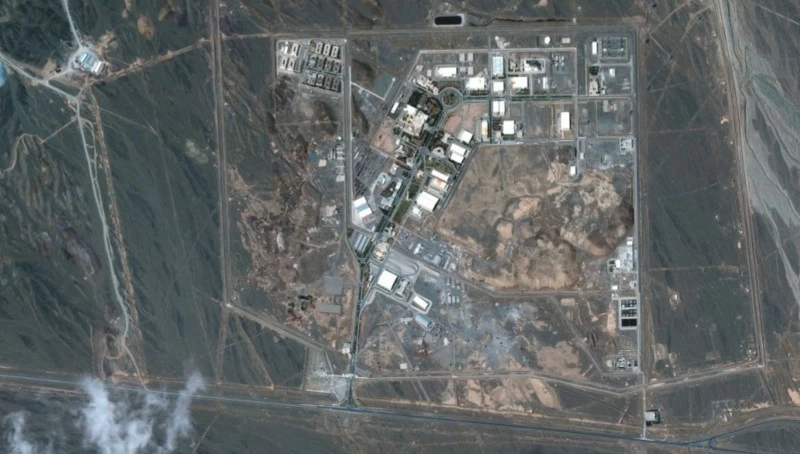
The head of Iran’s Atomic Energy Organization, Mohammad Eslami, announced today (Monday) that the vital Natanz nuclear facility was subjected to a joint Israeli-American attack carried out in two phases, in a new escalation of the ongoing confrontation over Iran’s nuclear program.
In an official letter addressed to the Director General of the International Atomic Energy Agency (IAEA), Rafael Grossi, Eslami stated, “We strongly protest the repeated and brutal attacks by the American and Israeli regimes against our peaceful nuclear facilities.” The Iranian official explained that these attacks not only constitute an assault on Iranian sovereignty but also a blatant violation of the Geneva Conventions, the IAEA Statute, the Treaty on the Non-Proliferation of Nuclear Weapons (NPT), and the Comprehensive Safeguards Agreement signed between Tehran and the Agency.
Calls to end international silence
Islami called on the International Atomic Energy Agency (IAEA) to break its silence, putting an end to what he described as its "state of silence and inaction" regarding these violations. He stressed the need to condemn these actions, which blatantly contravene international law, and to fulfill the agency's obligations under its statute to protect facilities under its supervision.
Natanz: A history of targeting and sabotage
The Natanz facility holds paramount strategic importance in Iran's nuclear program. Located in the center of the country, it houses a massive complex of uranium enrichment centrifuges, much of which is underground to protect it from airstrikes. Due to its significance, the facility has been the target of several acts of sabotage and cyberattacks over the past decade.
Among the most significant events in the history of targeting this facility was the infamous Stuxnet cyberattack, discovered in 2010, which destroyed hundreds of centrifuges and was widely attributed to US-Israeli intelligence cooperation. The facility also experienced an explosion in April 2021 that caused a power outage and damaged enrichment systems, an incident Tehran described at the time as "nuclear terrorism" and accused Israel of being behind.
The repercussions of the conflict and its impact on the region
This Iranian announcement comes at a time of unprecedented tension in the region, with Israel continuing to assert that it will not allow Iran to acquire nuclear weapons, constantly brandishing the military option as a last resort. Meanwhile, Tehran seeks to strengthen its negotiating position and develop its nuclear capabilities in response to what it describes as Western pressure and economic sanctions.
Observers believe that the continuation of mutual attacks, whether cyber or physical, complicates the chances of reviving the nuclear agreement and increases the risk of a wider regional confrontation, especially in light of the stalled diplomatic efforts and hardening positions between Tehran and the Western powers.
Politics
US Central Command denies targeting aircraft carrier Abraham Lincoln
The US Central Command denies Iran's claims of sinking the aircraft carrier Abraham Lincoln, confirms the safety of its forces and reveals details of the targeting of the Iranian ship Shahid Bagheri.
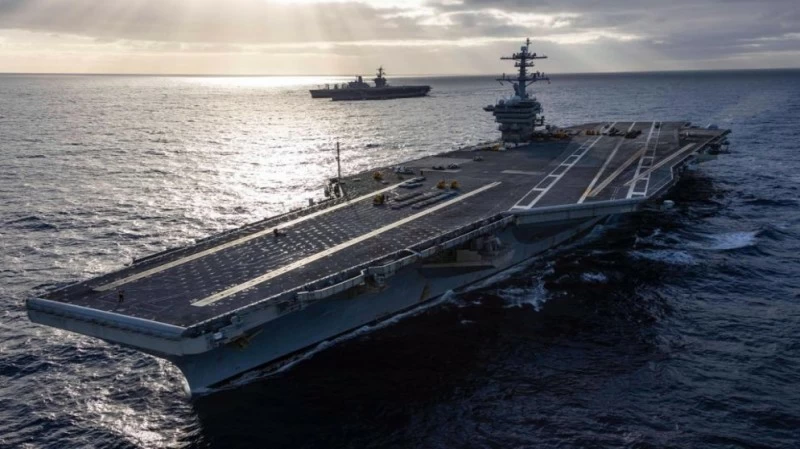
U.S. Central Command (CENTCOM) categorically denied reports and claims circulated by Iranian media outlets regarding the sinking or damaging of a U.S. aircraft carrier in the Arabian Gulf. In an official statement, CENTCOM asserted that these claims are part of a systematic disinformation campaign by the Iranian regime, describing the reports as "outright lies.".
The true field situation of the aircraft carrier Abraham Lincoln
In a statement released via its X platform, U.S. Central Command clarified that the aircraft carrier USS Abraham Lincoln sustained no damage and that the alleged missiles or threats never even approached its vicinity. The statement emphasized that the carrier is operating at full capacity, with its aircraft continuing routine takeoffs and landings in support of Central Command's ongoing missions, which are primarily aimed at protecting U.S. interests and defending regional security against Iranian threats and its proxies.
The story of “Martyr Bagheri” and the deliberate confusion
In refuting the Iranian narrative, the Central Command revealed a crucial military detail clarifying the true nature of the incident, stating that the only vessel actually struck was the Iranian ship "Shahid Bagheri." The Command explained that this vessel is not an aircraft carrier in the traditional sense, but rather an oil tanker that was converted and modified locally to serve as a drone launch platform. This reflects Tehran's attempts to exaggerate its military capabilities in the media by conflating strategic naval assets with modified vessels.
Strategic context and information warfare
This incident comes at a time of escalating tensions in the Middle East and a parallel psychological warfare campaign alongside the ground battles. American aircraft carriers, such as the nuclear-powered USS Abraham Lincoln (a Nimitz-class vessel), serve as floating air bases and symbols of global American military power. An attack on a vessel of this size is typically a major geopolitical event that cannot be ignored, given its crew size of over 5,000 sailors and the strict international monitoring of international waterways.
Observers believe that Tehran's resort to such claims falls within its asymmetric warfare strategy, seeking to boost domestic morale and send political messages to the region, even if these messages lack factual accuracy. The continued presence of the USS Abraham Lincoln in the region underscores the United States' commitment to maintaining freedom of navigation in vital waterways and deterring any attempts to destabilize the region.
Politics
Israeli airstrikes on Lebanon: Iranian official assassinated, southern suburbs bombed
A dangerous escalation in Lebanon: Israel launches violent raids on the southern suburbs of Beirut, assassinating an official in the Quds Force and a leader in Islamic Jihad, while targeting Al-Qard Al-Hasan centers.

The Lebanese arena witnessed a dramatic and dangerous shift in the course of military confrontations today (Monday), as Israeli operations reached their peak with attacks unprecedented in both their nature and targets. Specifically, Israeli warships targeted the old Iranian embassy building in Beirut, in a complex security and military operation that resulted in the assassination of the deputy commander of the Quds Force in Lebanon. According to available information, the targeted official was an Iranian national and is believed to have been directly responsible for managing and securing Hezbollah's precision missile depots, indicating an Israeli decision to target strategic links between Tehran and the group.
Targeting the financial and economic infrastructure
In parallel with the security operations, Israeli warplanes carried out a wide-ranging barrage of more than 70 airstrikes concentrated on Beirut's southern suburbs, as well as villages in southern Lebanon and the Bekaa Valley in eastern Lebanon. A notable aspect of this wave of raids was the expansion of the target bank to include Hezbollah's financial infrastructure, with the Al-Qard Al-Hasan Foundation's centers being intensively targeted. This foundation is considered the party's vital financial lifeline and support base, indicating that the Israeli escalation has shifted from direct military targeting to an attempt to cut off its financial resources and exert immense economic and social pressure on the Lebanese population.
Assassinations targeting Palestinian factions
In a related development, the assassinations were not limited to Iranian leaders or Hezbollah operatives. The Palestinian Islamic Jihad movement officially announced the assassination of Adham Adnan al-Othman, commander of its military wing, the Al-Quds Brigades, in Lebanon. This assassination resulted from a precise Israeli airstrike targeting his location in a Beirut suburb, confirming that Israeli intelligence is working to eliminate key leaders of Palestinian factions operating from Lebanese territory.
Implications of the escalation and its regional dimensions
This escalation carries serious implications for the region. Targeting a high-ranking Quds Force figure inside a former diplomatic building is a direct message to Tehran that it has crossed traditional red lines. Furthermore, the intensity of the airstrikes and the diversity of targets—military, financial, and leadership-related—reflect an Israeli strategy aimed at crippling Hezbollah and its allies' command and control capabilities. This development presents the region with a range of open-ended scenarios, as these operations are expected to have significant repercussions on the existing rules of engagement, amid international fears of a slide into a full-blown regional war that would be difficult to contain.
-

 Local News 4 days ago
Saudi Arabia approves regulations for the continued presence of Gulf vehicles: duration and penalties
-
Local news two days ago
Jeddah Airport alerts for travelers due to airspace closure and flight disruptions
-
Local news one week ago
The Ministry of Interior begins procedures for a royal pardon for common law prisoners
-
Local News 6 days ago
The deadline for property registration in Hail and Riyadh is Thursday
-
Sports one week ago
Tickets for the Al-Ahli vs. Al-Hilal King's Cup match postponed: New date
-
Local News 7 days ago
Under the patronage of the Minister of Information, an agreement was signed between the Ministry of Information and Waves Marketing Company
-
Culture and Art 5 days ago
The Devil's Prisons series was halted: The full story of "The Emperor's" being moved to YouTube
-
Local news one week ago
Saleh Al-Maghamsi appointed Imam of the Prophet's Mosque: Details of the Royal Decree