Politics
State Properties: Our approval is a condition for government entities to lease properties outside Saudi Arabia
The General Authority for State Properties has stipulated regulations for government entities to lease properties outside the Kingdom, and has put forward those regulations

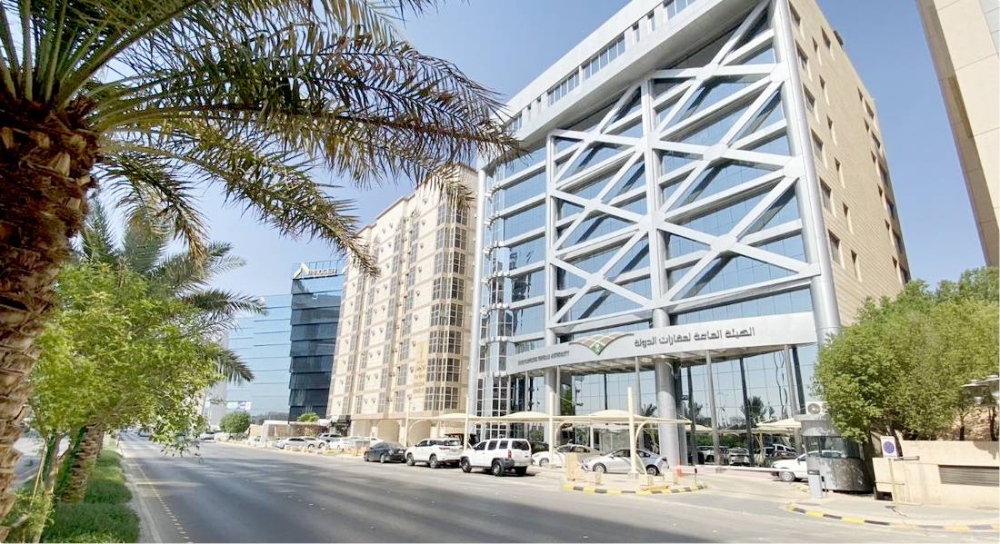
The General Authority for State Properties stipulated controls for government agencies to rent properties outside the Kingdom, and presented these controls for surveying and gathering opinions about them in order to approve them in the future.
According to the regulations, renting properties outside the Kingdom requires that the property not belong to an employee of the Authority or the government agency, or a relative of his up to the third degree, or someone who has a direct influence on the rental process.
The regulations stressed that no government entity may rent a property outside the Kingdom except when it is in dire need of it, after the approval of the Authority, provided that the government entity does not have a property that meets its need that is usable and unutilized, and that the Authority does not have a property that meets the need of the government entity, and that there is no vacant space within the state’s properties in the same city that can be used to meet the need of the government entity, after obtaining the approval of the government entity utilizing the property, and without prejudice to the work of any other government entity sharing the same property.
The regulations stipulated that the government entity must have the necessary financial credit to rent and utilize the property, and that the government entity must obtain the approval of the Ministry of Foreign Affairs if it wishes to rent an office or independent building outside the mission headquarters. The balance between the interest of purchasing and renting must be taken into account according to the government entity’s plan for the need for properties outside the Kingdom.
The regulations clarified that, except for those whose housing is stipulated by the regulations, housing for employees of the government entity is not considered among the needs that permit renting. If the purpose of renting is to house employees whose housing is required by the regulations, then what the government entity pays for rent may not exceed the cash accommodation allowance for the beneficiary at the time of renting, extension, or renewal. This excludes what has been issued regarding royal decrees, orders, or decisions.
Free from structural defects
The conditions for the property to be leased included that it be free of structural defects, meet the necessary licensing requirements from the relevant authorities in the host country, and that its specifications be suitable for the needs of the government entity. The conditions also stipulated that the area of the property to be leased be within the limits of the needs of the government entity seeking to lease it, according to the standards adopted by the Authority; that it be insured by the lessor – if available – in accordance with the laws of the host country; that it not be subject to any violations by any competent authority that would affect its use; that it not be the subject of any dispute; and that it not belong to any employee of the Authority or the government entity, or a relative up to the third degree, or anyone who has a direct influence on the leasing process. Among the conditions included in the regulations was that the property not belong to any person with whom dealings are prohibited, according to the regulations, bylaws, and decisions issued by the relevant authorities in the Kingdom or the host country.
The contract is for 5 years
In accordance with the requirements, the government entity shall contact the competent security authorities to ensure that the selected properties do not belong to persons or entities with whom dealing is prohibited. The contract shall be for a period not exceeding (five) years, and shall be automatically renewed for a similar period or periods – after the approval of the Authority – not exceeding (twenty) years from the date of concluding the contract, unless one of the parties notifies the other of its unwillingness to renew, at least (sixty) days before the end date of the contract, taking into account the laws of the host country with regard to the provisions for notifying of unwillingness to renew. Without prejudice to the provisions of the regulations, two or more government entities may – after obtaining the approval of the Authority – rent one property that meets their needs in the host country, according to the form prepared for that purpose.
The regulations indicated that the government entity, when concluding the contract, must ensure its compliance with the regulations, in a manner that does not conflict with the laws of the host country and prevailing customs, with the inclusion of a clause stipulating that the lessor shall bear the responsibility for carrying out corrective (corrective and renewal) maintenance of the basic equipment of the leased property at his own expense, and the lessor shall not be compensated or have his rent increased for carrying out corrective maintenance work that limits the use of the property during the term of the contract, with the addition of a clause that grants it the right to terminate the contract in the event of force majeure or emergency circumstances, and the contract shall also include a clause obligating the lessor to bear the value and costs of marketing and brokerage.




Politics
King Abdullah II orders restructuring of the Jordanian army
King Abdullah II issued directives to restructure the Jordanian army within 3 years to enhance its capabilities and confront modern threats, stressing the importance of building a lean and flexible force.
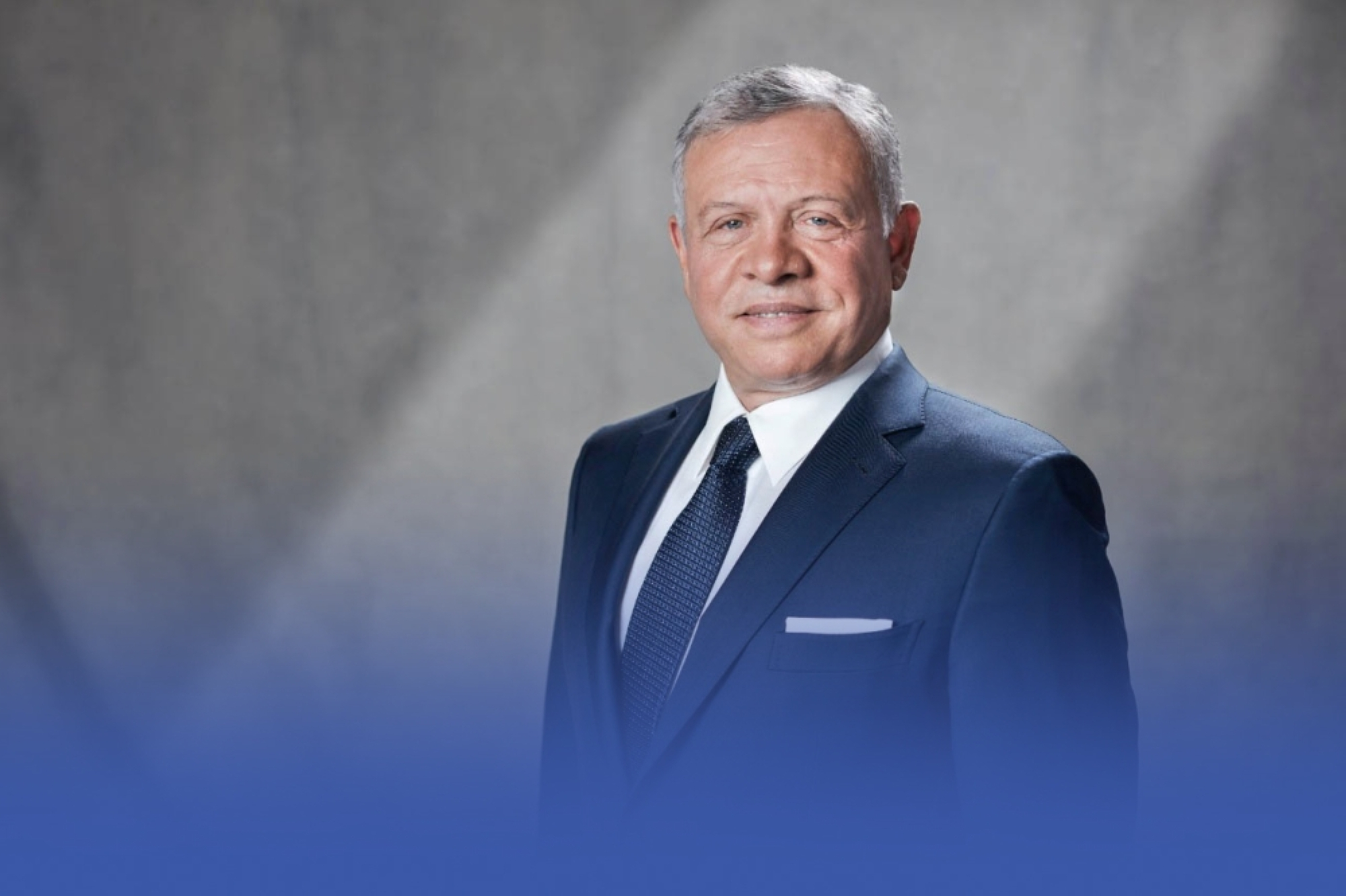
On Saturday, King Abdullah II, the Supreme Commander of the Armed Forces, directed the Chairman of the Joint Chiefs of Staff to prepare a comprehensive strategy and a clearly defined roadmap aimed at achieving a structural transformation of the Jordanian Armed Forces – the Arab Army – over the next three years. These royal directives reflect the ongoing commitment to developing and modernizing the military establishment to enable it to effectively and competently confront current and future challenges.
Historical background and vision for modernization
The Jordanian Armed Forces, whose roots trace back to the Arab Legion established in the 1920s, are a cornerstone of stability in the Hashemite Kingdom of Jordan and the region. Throughout its history, the army has faced numerous challenges and demonstrated its ability to adapt and evolve. King Abdullah II's directives today are not issued in a vacuum, but rather are a continuation of a long process of modernization and development within the armed forces, aimed at transforming them from a traditional army into a modern military force capable of engaging with the unconventional and hybrid warfare tactics that have become characteristic of 21st-century conflicts.
Strategic importance and expected impacts
This restructuring process holds immense strategic importance both domestically and regionally. Domestically, it aims to bolster national security and protect the Kingdom's borders, situated in the heart of a volatile region, while countering emerging threats such as terrorism and the smuggling of drugs and weapons across borders. Regionally, a strong and modernized Jordanian army reinforces Jordan's role as a stabilizing force in the Middle East and sends a strategic deterrent message to any entity that might seek to threaten the Kingdom's security. Furthermore, developing military capabilities strengthens Jordan's international partnerships, particularly with strategic allies who participate in joint exercises and peacekeeping operations.
Towards agile and flexible armed forces
King Abdullah II expressed his ambition to build a “lean, flexible, and high-quality armed forces,” prepared, equipped, and trained according to the latest combat methods. He emphasized the need for the new organizational structure to align with the demands of combat in diverse operational environments, with a focus on the effective utilization of both defensive and offensive capabilities. His Majesty added, “It is imperative to consider the requirements related to modernizing, developing, and restructuring the armed forces… in a way that ensures mastery of modern warfare tactics.”.
The King emphasized the importance of possessing an effective, reliable, and secure command, control, and communications system, and employing modern defense technologies in partnership with friendly local and international defense industries. In concluding his directives, King Abdullah II commended the members of the Jordanian Armed Forces, affirming that they will remain “a national institution of which every Jordanian is proud,” and will continue to serve their country with courage, dedication, and loyalty.
Politics
The European Union suspends trade measures against the US for six months
The European Commission has decided to extend the suspension of a package of retaliatory trade measures against the United States, in a move to promote dialogue and avoid a trade war that could affect the global economy.

In a move aimed at easing transatlantic trade tensions, the European Commission intends to propose a six-month extension of the suspension of a package of retaliatory trade measures against the United States. This package, valued at €93 billion, was scheduled to take effect on February 7, but the new decision postpones its implementation and allows more time for diplomatic negotiations.
Background and historical context of the trade dispute
This tension stems from the trade policies adopted by the previous US administration under President Donald Trump, which included imposing tariffs on steel and aluminum imports from several countries, including traditional allies in the European Union, under Section 232 of the Trade Expansion Act of 1962, ostensibly to protect US national security. The European Union responded by preparing a list of countermeasures targeting symbolic US goods, such as motorcycles and agricultural products, with the aim of exerting political and economic pressure to force a reconsideration of the tariffs.
The importance of the suspension decision and its expected impact
The decision to extend the suspension is of paramount importance both regionally and internationally. At the European level, it spares European industries, particularly the automotive sector, from a costly trade war that could negatively impact economic growth and employment rates. At the American level, it provides a much-needed boost to US exporters to Europe and helps maintain market stability. Internationally, this move is seen as a positive signal toward a return to a rules-based global trading system, one based on dialogue rather than confrontation and unilateral tariffs, sending a reassuring message to a global economy already grappling with uncertainty.
Joint statement and the future of trade relations
This retaliatory package was first suspended last August after Brussels and Washington reached a joint statement aimed at defusing the crisis and working towards a negotiated solution. Olof Gill, the Commission's spokesperson, explained that with the US threats of new tariffs receding, it was now possible to focus on "the important work of implementing the joint statement." He added that the Commission would soon submit a formal proposal to extend the suspension of the measures, while emphasizing that "the EU reserves the right to lift this suspension in the future if necessary," thus keeping all options open should circumstances change.
Politics
Saudi Arabia strengthens its role in the Organization for the Prohibition of Chemical Weapons
Ambassador Shaher Al-Khunaini presented his credentials as Saudi Arabia’s representative to the Organization for the Prohibition of Chemical Weapons, affirming the Kingdom’s commitment to supporting disarmament and global security efforts.
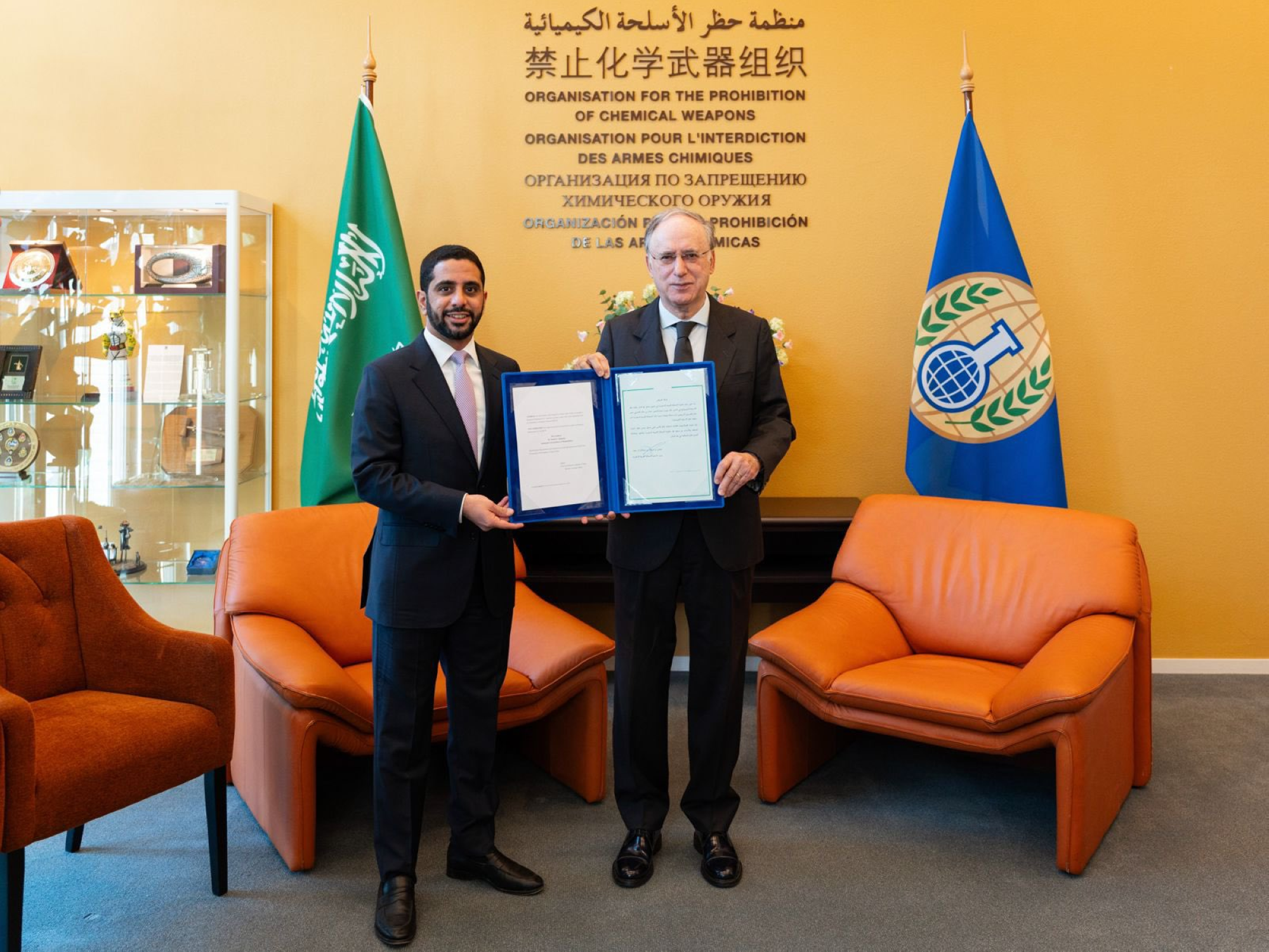
In a diplomatic move reflecting the Kingdom of Saudi Arabia's commitment to supporting international peace and security, the Ambassador of the Custodian of the Two Holy Mosques to the Kingdom of the Netherlands, Mr. Shaher bin Khalid Al-Khunaini, presented his credentials as the Kingdom's Permanent Representative to the Organisation for the Prohibition of Chemical Weapons (OPCW). The credentials presentation ceremony took place at the OPCW headquarters in The Hague, where he was received by the Director-General, Mr. Fernando Arias.
General context and role of the Organisation for the Prohibition of Chemical Weapons
The Organisation for the Prohibition of Chemical Weapons (OPCW), established in 1997, is the implementing body of the Chemical Weapons Convention, an international treaty aimed at eliminating an entire class of weapons of mass destruction. The OPCW verifies the destruction of declared stockpiles of chemical weapons and prevents their re-emergence anywhere in the world. For its tireless efforts in this area, the OPCW was awarded the Nobel Peace Prize in 2013, underscoring its pivotal role in the contemporary global security architecture.
The importance of the step and its expected impact
This appointment underscores the active role played by the Kingdom of Saudi Arabia in international organizations and its commitment to contributing to global efforts aimed at disarmament and non-proliferation. As a State Party to the Chemical Weapons Convention, the Kingdom consistently supports the Organization's activities and programs, believing in the importance of multilateral action to address global challenges. The presence of a permanent representative of the Kingdom enhances coordination and cooperation with the Organization and its member states, and contributes to conveying the Kingdom's vision and positions on issues related to chemical security.
Regional and international repercussions
Regionally, this step is of particular importance, as it reaffirms the Kingdom's ongoing call to make the Middle East a region free of all weapons of mass destruction, a cornerstone for achieving stability and sustainable security in the region. Internationally, this high-level diplomatic representation enhances Saudi Arabia's standing as a responsible and reliable international partner, actively participating in shaping international policies related to security and disarmament. It is worth noting that Ambassador Al-Khunaini presented his credentials to His Majesty King Willem-Alexander of the Kingdom of the Netherlands on Wednesday, as the Kingdom's ambassador, embodying the dual role of Saudi diplomacy in strengthening bilateral relations and supporting international collective action.
-

 Reports one week ago
Achievements of Saudi government sectors in 2025
-
Local News 3 weeks ago
FDA warns of contaminated Nestle infant formula | Recall details
-
Technology 3 weeks ago
Saudi Arabia launches the world's largest government data center, 'Hexagon'
-
Technology 4 weeks ago
Merging KSA Map and Baladi Plus: A step towards Saudi digital sovereignty
-
Technology 3 weeks ago
Hexagon: Saudi Arabia strengthens its data sovereignty with the world's largest government center
-
Technology 3 weeks ago
European banks and artificial intelligence: A plan to lay off 200,000 employees
-
Politics 4 weeks ago
The coalition destroys smuggled Emirati weapons in Mukalla in a qualitative strike
-
Local News 4 weeks ago
Saudi Arabia's 2026 Decisions: Major Transformations in Real Estate and Logistics