Politics
Jumblatt launches campaign to vote for Joseph Aoun as President of Lebanon
The opposition forces, after a meeting held today (Wednesday) as part of their regular meetings, have not yet decided on the name of their candidate for the presidential election session

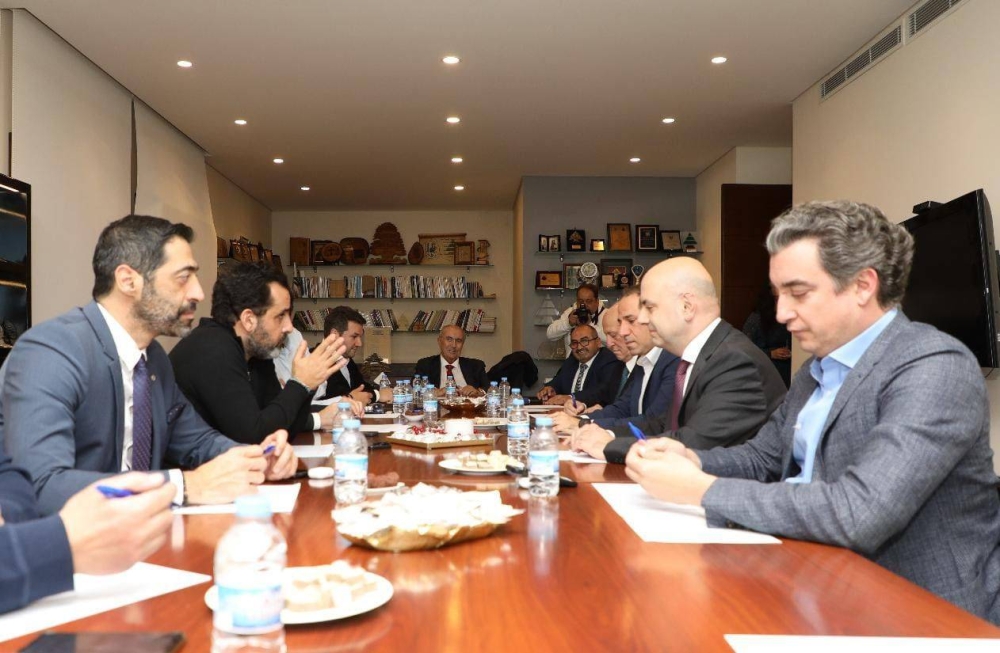
The opposition forces, after a meeting held today (Wednesday) as part of their regular meetings, have not yet decided on the name of their candidate for the presidential election session scheduled for January 9.
The opposition, in its statement, considered that dealing with the entitlement with the necessary will should lead to the election of a president of the republic, which would be a prelude to saving Lebanon, provided that it moves away from the approach that prevailed throughout the period of paralysis, and goes to choose a figure capable of measuring the requirements of the stage, stressing that the next president has the task of respecting and implementing the Lebanese constitution, the National Accord Document, and the international resolutions that guarantee sovereignty, and restoring Lebanon’s Arab and international relations, which will restore confidence in it, and the full implementation of the ceasefire agreement, which necessitates confining weapons to the hands of the legitimate constitutional forces throughout the Lebanese territories, north of the Litani as well as south of it, which is what the attendees will be keen to monitor closely.
The participants considered that the next stage is the stage of building Lebanon on solid constitutional foundations, starting from the moment the president is elected, with a commitment to a clear roadmap that begins with the reconciliation of the Lebanese with each other, and working with a prime minister and a cohesive government whose ministerial statement is limited to the interest of Lebanon and its people, and working on a workshop of structural reforms in administration and the economy after the years of collapse witnessed by the state and institutions, and a commitment to financial and economic reform and stopping corruption.
However, the Democratic Gathering bloc made its decision and announced, after its meeting today in the presence of the former president of the Progressive Socialist Party, Walid Jumblatt, and the head of the bloc, the head of the Progressive Socialist Party, MP Taymour Jumblatt, its support for the election of Army Commander General Joseph Aoun as President of the Republic.
Informed sources revealed that Jumblatt's nomination of Joseph Aoun comes after Jumblatt's return from Paris, during which he conveyed a message to Nabih Berri stating that the international forces support the arrival of the army commander.
Although what was reported by Speaker of Parliament Nabih Berri to his visitors today confirms that the man has not decided on his position regarding Joseph Aoun, as it is linked to the position of Hezbollah, he said that there are difficulties in electing Army Commander General Joseph Aoun as president because the matter requires a constitutional amendment. As for Gebran Bassil’s sources, they quickly responded to Jumblatt by saying: “It is not Jumblatt who will run for the Christians.”.




Politics
Netanyahu in Beit Shemesh after his office was bombed: Details of Operation Lion's Roar
Comprehensive coverage of Netanyahu’s visit to Beit Shemesh after his office was targeted by Iranian missiles, and details of the exchange of fire and the casualty toll in Israel and Iran as part of Operation Lion’s Roar.

In a move carrying significant political and military implications, Israeli Prime Minister Benjamin Netanyahu made an urgent visit to the city of Beit Shemesh, near occupied Jerusalem. This marked his first public appearance since the Iranian Revolutionary Guard announced it had targeted his office and the Israeli Air Force headquarters with "Khaibar" missiles. The visit, conducted under heavy security, reflects the heightened tensions in the region on the third day of what Israel has dubbed "Operation Lion's Roar.".
Netanyahu's message from the heart of the destruction: "We are with you."
Standing amidst the rubble of buildings damaged by Iranian missiles, Netanyahu delivered a dual message to both the Israeli public and the Iranian people. Speaking in English, in an attempt to address both international and Iranian public opinion, Netanyahu declared, "I have said for years that they threaten not only Israel, not only America, but the entire world." He added in his fiery remarks that the objective of the current military operation is "to remove the existential threat," indicating that the Iranian regime needs to be freed from "the yoke of tyranny," and emphasizing Israel's support for the Iranian people against their regime.
Context of the conflict: From shadow war to direct confrontation
This escalation represents a radical shift in the rules of engagement between Tehran and Tel Aviv. After decades of a "shadow war" relying on cyberattacks, assassinations, and proxy operations in the region, the conflict has now moved into a phase of direct and open military confrontation. Targeting the Israeli Prime Minister's office and key sovereign institutions such as the Air Force Command crosses all traditional red lines and indicates that the region has entered a new phase of instability, where attacks are no longer limited to border military targets but have reached the strategic depth of both sides.
Human and material losses on both sides
On the ground, reports revealed a bloody toll from the ongoing clashes. On the Israeli side, sources confirmed the deaths of nine people and the disappearance of 11 others in central Israel after a building collapsed onto a shelter following a direct hit. In addition, injuries were reported in Beit Shemesh and Beersheba. Meanwhile, coinciding with the third day of the joint US-Israeli bombing campaign, the Iranian Red Crescent announced shocking figures, stating that 555 people had been killed and 131 Iranian cities damaged since the start of the war.
The Israeli military released images documenting the targeting of missile platforms and command centers in Tehran, including a police station responsible for protecting diplomatic missions and an intelligence building in Mahabad, which caused buildings in the center of the Iranian capital to shake and huge explosions to be heard.
Expected regional and international repercussions
This escalation carries significant risks for regional and international peace and security. Regionally, the continued exchange of fire could draw in other parties, threatening to expand the war to include neighboring countries caught in the crossfire—a possibility Netanyahu alluded to when he said the Iranians "fired at a large part of the region." Internationally, this conflict puts global energy markets on high alert, given Iran's strategic location and the region's vital role as a major oil artery, potentially further impacting the already struggling global economy.
Politics
Trump hints at a ground intervention in Iran: The major strike is coming
Trump insists the major strike against Iran has not yet begun and hints at a ground intervention. Britain refuses to participate in airstrikes without a comprehensive plan, and NATO affirms its readiness to deter.

In a dangerous escalation of tensions in the Middle East, US President Donald Trump confirmed that the United States has not yet used its full military force against Tehran, hinting at the possibility of a large-scale ground operation. These remarks came during an interview with CNN, where Trump stated unequivocally: "We haven't even started hitting Iran hard yet. The big wave hasn't happened yet. The big hit is coming soon.".
The US president indicated that he would not hesitate to send ground troops to Iran if necessary, a statement with significant strategic implications, shifting the confrontation from mere airstrikes or economic sanctions to the potential for a full-scale conventional war. Trump also expressed surprise at the audacity of the Iranian strikes targeting Arab states, suggesting a US desire to reshape the balance of deterrence in the region.
The British position: No air strikes without a ground invasion
Across the Atlantic, a divergence of views emerged between Washington and London. British Prime Minister Keir Starmer announced to lawmakers his refusal to join the initial US-Israeli strikes against Iran. Starmer justified his position with a military and political perspective based on past lessons, saying, "I don't believe that attempting to remove the Iranian leadership through airstrikes without a ground invasion will succeed.".
Starmer added, explaining his government's philosophy: "This government does not believe in regime change from the sky," emphasizing that any military action must be based on a solid legal foundation, a well-thought-out and feasible plan, and realistic objectives. He affirmed his commitment to his decision, saying, "It is my duty to assess what is in Britain's national interest. That is what I have done, and I stand by my decision," despite noting that President Trump had expressed his objection to this British position.
NATO and regional security
In the context of international developments related to the crisis, NATO has become involved. Secretary General Mark Rutte stated that he discussed the Iranian issue and regional security with Turkish President Recep Tayyip Erdoğan. Both sides agreed on the importance of the Alliance's comprehensive security approach and its readiness to address threats.
“We are always ready to deter and counter any threat, from any quarter,” Roth wrote in a post on the X platform, reflecting the state of high alert that Western military institutions are experiencing in anticipation of any dramatic developments that may result from recent American threats and movements in the region.
Politics
The clash between Witkoff and Araqchi: Behind the scenes of the collapse of nuclear negotiations and war
NBC reports reveal a heated argument between Abbas Araqchi and Steve Witkopf that preceded the military confrontation. Learn the details of the collapse of the nuclear talks and the role of Trump and the intelligence community in the decision.
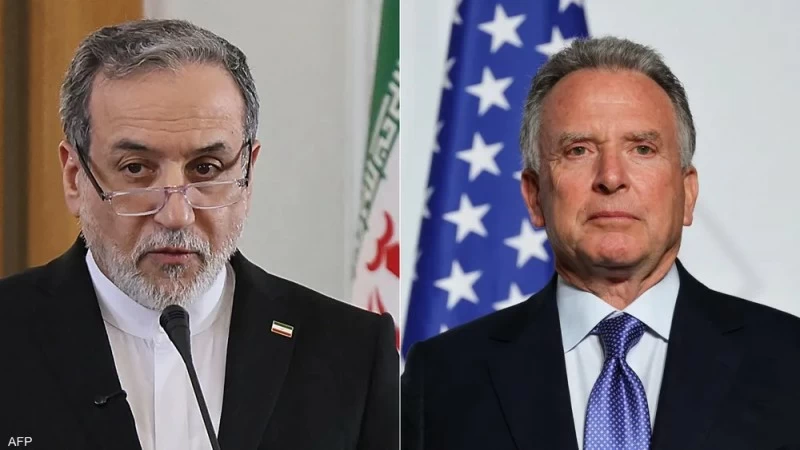
Recent US media reports have revealed details of the final moments leading up to the outbreak of military confrontation, highlighting the dramatic collapse of the diplomatic track between Washington and Tehran. According to NBC News, closed-door talks witnessed an unprecedentedly heated exchange between Iranian Foreign Minister Abbas Araqchi and US envoy Steve Wittkopf, which observers considered the final nail in the coffin of diplomatic efforts.
Details of the altercation: a clash of wills and rights
Sources reported that tensions reached a peak when the American delegation presented a crucial condition: that Iran refrain from specific steps toward developing a nuclear weapon, most notably halting uranium enrichment for the next 10 years. This proposal was met with outright rejection and strong reservations from the Iranian side. In an angry response, Araqchi asserted during the talks that his country possessed an "inalienable right to uranium enrichment" as part of its national sovereignty.
The American response was swift, with envoy Steve Wittkopf responding sharply, saying that the United States, in turn, has an "inalienable right to prevent this," in a clear indication of Washington's readiness to use all options, including the military option, to prevent Tehran from acquiring nuclear weapons.
Last-hour communications and the role of intelligence
In a related development, ABC News revealed precise intelligence that played a pivotal role in the decision to go to war. The CIA had been monitoring the movements of Iranian Supreme Leader Ali Khamenei for months, including his daily schedule. When intelligence indicated a planned meeting between senior military commanders and Khamenei on Saturday, the timing of the attack was adjusted to be more impactful.
On the political front, multiple sources confirmed that US President Donald Trump held a crucial phone call on Thursday, the day before the operation, with his envoys Steve Wittkopf and Jared Kushner. During the call, the envoys informed the president that Tehran had shown no seriousness in ending or dismantling its nuclear program, reinforcing the White House's conviction that the negotiating process had reached an impasse.
Context of the nuclear crisis and history of setbacks
To understand the depth of this dispute, one must consider the complex historical background of the Iranian nuclear program. Since the United States withdrew from the Joint Comprehensive Plan of Action (JCPOA) in 2018, Tehran has accelerated its uranium enrichment program, raising purity levels to near-military grade (60%). Washington and its Western allies have long considered reducing the breakout time to nuclear capability a red line, which explains the US insistence in recent talks on a decade-long freeze on enrichment.
The repercussions of the collapse of diplomacy
This shift from backroom verbal sparring to direct military confrontation represents a strategic turning point in the Middle East. The failure of diplomacy to contain Iran’s nuclear ambitions leaves the region open to escalation scenarios, with repercussions extending beyond Iran’s borders to encompass the security of waterways, the stability of global energy markets, and the regional balance of power. Despite Trump’s public statements to ABC that the talks were “going well,” the reality on the ground and private assessments have demonstrated that the gap between the two sides was too wide to be bridged by words alone.
-

 Local news one week ago
The Ministry of Interior begins procedures for a royal pardon for common law prisoners
-
Local News 6 days ago
Saudi Arabia approves regulations for the continued presence of Gulf vehicles: duration and penalties
-
Local news one week ago
The deadline for property registration in Hail and Riyadh is Thursday
-
Culture and Art 6 days ago
The Devil's Prisons series was halted: The full story of "The Emperor's" being moved to YouTube
-
Local news one week ago
Under the patronage of the Minister of Information, an agreement was signed between the Ministry of Information and Waves Marketing Company
-
Local News 5 days ago
Saudi Energy: A new identity for electricity that aligns with Vision 2030
-
Local News 5 days ago
The Food and Drug Administration is recalling Bebelac and Aptamil milk due to potential contamination
-
Local news one week ago
Registration is now open for domestic pilgrims for the 1447 AH season: Dates and conditions via Nusuk