Politics
The Syrian presidency publishes details of the meeting between al-Sharaa and the US envoy
The Syrian Presidency published details in the early hours of Sunday morning of the meeting between Syrian President Ahmed al-Sharaa and the US envoy

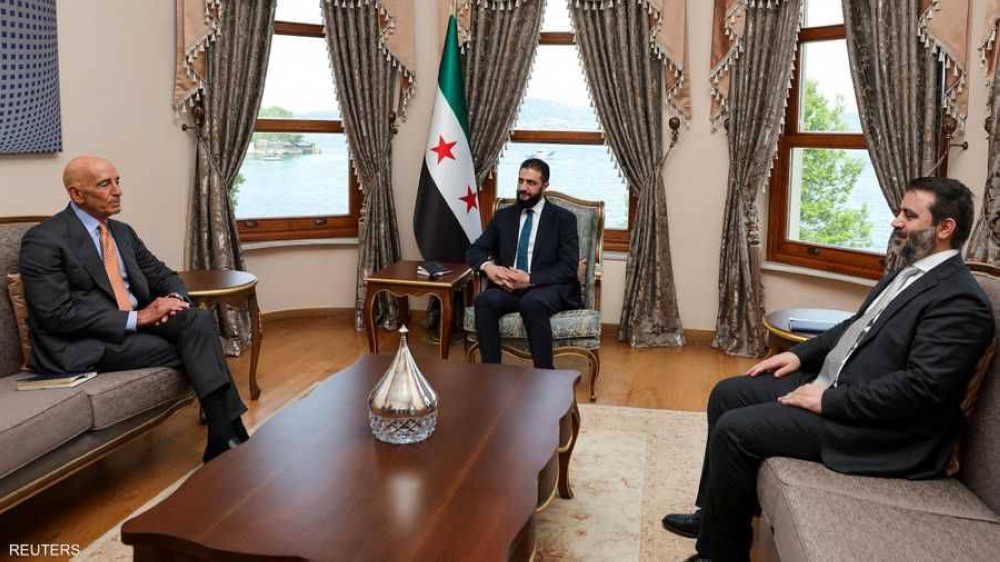
The Syrian Presidency published in the early hours of Sunday morning details of the meeting between Syrian President Ahmed al-Sharaa and US envoy to Damascus Tom Barak in Istanbul on Saturday.
The presidential statement said that al-Sharaa, along with Syrian Foreign Minister Asaad al-Shaibani, met with Barak "as part of the new Syrian government's efforts to rebuild strategic relations with the United States.".
The meeting focused on discussing a number of vital issues, foremost among them the follow-up on the implementation of the decision to lift the US sanctions imposed on Syria, where President Al-Sharaa stressed during the meeting that these sanctions still constitute a great burden on the Syrian people and hinder economic recovery efforts.
The Washington envoy indicated that his country had already begun procedures to ease sanctions, in implementation of the decision of US President Donald Trump, and that “the process is continuing until it is fully and comprehensively lifted.”.
According to the statement, the two sides also discussed ways to support foreign investment in Syria, particularly in the energy and infrastructure sectors. The Syrian side expressed its readiness to provide the necessary facilities to attract investors and contribute to reconstruction efforts, while ensuring a stable and secure environment.
Related News
Al-Sharaa stressed “the rejection of any attempts to divide the country,” affirming the government’s commitment to the unity and sovereignty of Syrian territory. He also emphasized “the importance of implementing the 1974 Disengagement of Forces Agreement between Syria and Israel to ensure stability in southern Syria.”.
The two sides discussed the issue of chemical weapons, where they “agreed on the need to completely eliminate them in cooperation with the international community, and in accordance with relevant international agreements.”.
The meeting also discussed “ways of joint security cooperation to confront regional challenges, including combating terrorism, controlling borders and enhancing security and stability in the region.”.
They stressed the need to “implement a comprehensive agreement with the Syrian Democratic Forces (SDF) that guarantees the return of the Syrian government’s sovereignty over all Syrian territory, while exploring mechanisms for integrating these forces into state institutions, in a way that contributes to unity of decision and national sovereignty.”.




Politics
America uses Prism missiles for the first time and destroys 20 Iranian ships
The US Central Command announced the first use of PRISM missiles and the destruction of 20 Iranian ships, including the Soleimani barge, amid heavy Israeli bombardment and diplomatic tension with Türkiye.

In a significant military development indicating a radical shift in the rules of engagement at sea and in the air in the Middle East, the US Central Command (CENTCOM) announced on Wednesday the first-ever use of PrSM (Precision-Sensitive Micro-Specific Missiles) in warfare during the ongoing confrontations with Iranian forces. This announcement marks a turning point in US military strategy, replacing conventional systems with more lethal and precise technologies.
Details of Operation "Epic Fury" and the use of Prism missiles
Central Command described the event as a "historic precedent," confirming that these advanced missiles entered active combat service during what it called "Operation Epic Fury." The PRISM (Precision Strike Missile) missiles are distinguished by their superior maneuverability and ability to target both moving and stationary targets at ranges exceeding the capabilities of previous ATACMS systems, providing US forces with an unprecedented ability to deliver deep and impactful strikes in record time.
Commenting on this military achievement, the commander of the US Central Command, Admiral Brad Cooper, stated: “I am extremely proud of our men and women in the armed forces who employ innovation to put the enemy in a difficult position,” noting that the integration of modern technology in the field has confounded the adversary’s calculations.
Heavy naval losses: The sinking of the "Soleimani" ship
On the ground, the US Central Command revealed heavy Iranian losses, with US forces targeting and sinking more than 20 Iranian regime vessels since the start of operations. Reports indicated that last night saw a significant blow: the destruction of the advanced Soleimani-class warship, sending it to the bottom of the sea. This vessel is considered one of the most modern ships in the Iranian navy, and its destruction carries considerable symbolic and military weight, diminishing Tehran's ability to maneuver its ships in vital waterways.
Air Front: 5,000 Israeli bombs
In parallel with the American operations, the Israeli military is escalating its aerial campaign to an unprecedented degree. The military spokesperson announced that the air force has dropped more than 5,000 bombs on targets inside Iran since the start of the current conflict. Israeli military sources confirmed that their aircraft continue to consolidate air superiority and control over the skies throughout Iran, with a heavy focus on operations over the capital, Tehran, indicating the targeting of command and control centers and critical infrastructure.
Regional repercussions: Diplomatic tension with Türkiye
The repercussions of this military escalation were not confined to Iran's borders, but extended to neighboring countries. A Turkish diplomatic source stated that Ankara summoned the Iranian ambassador to the Foreign Ministry today to deliver a formal protest note. This diplomatic move came to express Turkey's deep concern over Iran's launch of a ballistic missile that took a dangerous trajectory toward Turkish airspace, reflecting fears of a wider conflict and the possibility of military miscalculations that could draw other countries into the confrontation.
This combined escalation, by sea and air, and the use of weapons entering the field for the first time, represents a dangerous indication of a new phase of conflict that could redraw the security and political maps of the region for years to come.
Politics
Qatar warns Iran: Targeting Hamad Airport and gas will not go unanswered
Qatar’s foreign minister warns Iran that attacks on Hamad Airport and gas facilities will not go unanswered, while Iranian President Pezeshkian justifies the position as self-defense.
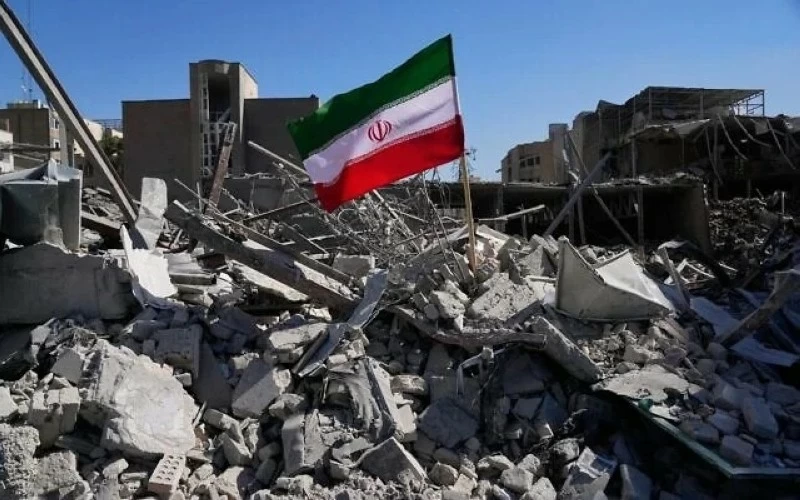
In a significant development in the Gulf region, Qatar issued a strongly worded warning to its neighbor Iran, asserting that targeting its territory and vital infrastructure constitutes a red line that cannot be crossed. This came during a phone call between Qatari Prime Minister and Foreign Minister Sheikh Mohammed bin Abdulrahman Al Thani and his Iranian counterpart Abbas Araqchi, in which the two discussed the serious repercussions of the recent attacks.
Details of the Qatari warning: a violation of sovereignty
Sheikh Mohammed bin Abdulrahman Al Thani expressed Doha's strong condemnation of Iranian actions targeting civilian and residential areas within the country. According to a statement from the Qatari Ministry of Foreign Affairs, on-the-ground evidence confirmed that the vicinity of Hamad International Airport , as well as vital infrastructure and industrial areas housing liquefied natural gas production facilities, were targeted. The Qatari minister considered these actions a "flagrant violation of Qatar's sovereignty and the principles of international law," emphasizing that these attacks "cannot go unanswered."
The minister indicated that Tehran's current approach seeks to drag neighboring countries into "a war that is not theirs," calling for an immediate halt to these hostile acts, which reflect no genuine desire for de-escalation but rather confirm an escalatory trajectory that harms the security and stability of the entire region. He affirmed that Doha will confront any aggression that threatens its national security or territorial integrity.
Iran's position: Self-defense amid tensions
In response, Iranian President Masoud Pezeshkian attempted to defuse the escalating diplomatic crisis, emphasizing his country's respect for the sovereignty of its neighbors. Pezeshkian stated that Tehran had made intensive diplomatic efforts to avert war, but that what he termed "American-Israeli military aggression" left his country with no option but to defend itself.
In a message addressed via the "X" platform to the leaders of neighboring countries, the Iranian president said: "Your Majesties, heads of friendly and neighboring countries, we have sought with you and through diplomacy to avoid war… We respect your sovereignty and believe that the security and stability of the region must be achieved through the combined efforts of its countries.".
Regional context and repercussions of the crisis
This unprecedented tension between Doha and Tehran comes at a time of heightened geopolitical turmoil in the Middle East. The incident is particularly significant given Qatar's position as a major player in the global energy market, as targeting its liquefied natural gas facilities not only threatens the Qatari economy but also casts a shadow over global energy security.
Observers believe that Qatar's shift in diplomatic rhetoric from its usual conciliatory tone to one of threatening retaliation reflects the extent of the damage and danger Doha perceived. This escalation also raises international concerns about the conflict widening to directly involve the Gulf states, potentially leading to fundamental changes in regional security and political alliances and putting the principle of "collective security," as advocated by the Iranian president, to the test.
Politics
What does Washington want from Tehran: regime change or behavior change?
Analysis of Washington's strategy towards Iran: Is it seeking regime change or behavior modification? A reading of the Politico report and expert opinions on the future of US-Iranian relations.
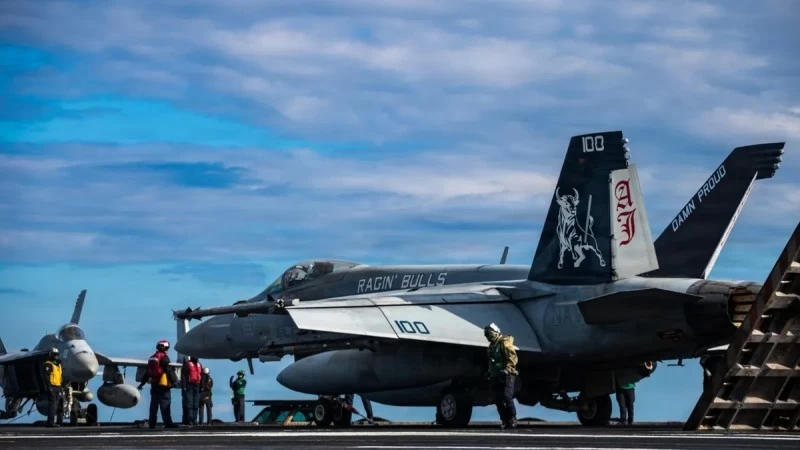
Amid the ongoing tensions in relations between the United States and Iran, the fundamental question that preoccupies observers and political analysts remains: What is the ultimate goal of the American strategy towards Tehran? While a wide segment of followers believe that US President Donald Trump (during his term) aimed directly at “regime change” in Iran, a report by the American website “Politico” revealed a different and more complex vision circulating in the corridors of the White House.
The strategy is to change behavior, not people
The report indicates that the actual objective was not to overthrow the entire Iranian regime, but rather to exert maximum pressure to force it to "change its behavior" in line with US interests and policies. This approach relies on the idea of removing or curtailing the influence of senior hardliners without dismantling the entire state structure, thus avoiding the chaos that could result from a power vacuum.
The report quoted a U.S. official as saying clearly: “Our concept of regime change is behavior change. We have learned some hard lessons from our experiences in Iraq and Afghanistan,” referring to the high cost and counterproductive results of nation-building policies following direct military intervention.
Historical context and lessons learned
To understand this approach, it is necessary to revisit the historical background of US-Iranian relations since the 1979 revolution. Washington has consistently oscillated between containment, confrontation, and diplomacy. Following its withdrawal from the nuclear agreement, Washington adopted a policy of “maximum pressure,” aimed at crippling the Iranian economy to force Tehran to the negotiating table on new terms encompassing not only the nuclear issue but also its ballistic missile program and regional influence.
Expert opinion: Transform the system rather than change it
In its in-depth analysis, the report cited Ali Vaez, senior Iran analyst at the International Crisis Group, who clarified the subtle difference in US strategy. Vaez argues that the traditional concept of “regime change” requires massive “state-building” efforts, a path Trump and his team do not favor. Instead, they are pursuing the concept of “regime transformation,” which means largely preserving the state’s administrative and political structure, but forcing the leadership to adopt behaviors that serve US interests, even if these contradict the regime’s revolutionary ideology.
American demands and potential risks
The American demands center on specific points: abandoning nuclear ambitions, halting ballistic missile development, and ending support for regional allies in the Middle East, activities which Washington considers a direct threat to US national security and the security of its allies. Trump has previously indicated his willingness to negotiate with Iranian leaders and even integrate the armed forces with what he called "Iranian patriots," provided these conditions are met.
However, the report’s author warned that excessive pressure or ill-considered military intervention could lead to disastrous scenarios, such as Iran becoming a “failed state” and a breeding ground for extremist groups, or the military establishment taking complete control of the state’s institutions and imposing a new kind of tyranny, thus complicating the regional and international landscape instead of resolving it.
-

 Local News 6 days ago
Saudi Arabia approves regulations for the continued presence of Gulf vehicles: duration and penalties
-
Local news one week ago
The Ministry of Interior begins procedures for a royal pardon for common law prisoners
-
Local news one week ago
The deadline for property registration in Hail and Riyadh is Thursday
-
Local news one week ago
Under the patronage of the Minister of Information, an agreement was signed between the Ministry of Information and Waves Marketing Company
-
Culture and Art, 1 week ago
The Devil's Prisons series was halted: The full story of "The Emperor's" being moved to YouTube
-
Local News 6 days ago
The Food and Drug Administration is recalling Bebelac and Aptamil milk due to potential contamination
-
Local News 6 days ago
Saudi Energy: A new identity for electricity that aligns with Vision 2030
-
Local news one week ago
Registration is now open for domestic pilgrims for the 1447 AH season: Dates and conditions via Nusuk