
Politics
Are 130,000 Russian soldiers enough to invade Ukraine?
Russia is amassing around 130,000 troops on the Ukrainian border, reinforced with more effective weapons systems, as Moscow supplies these forces with the necessary resources

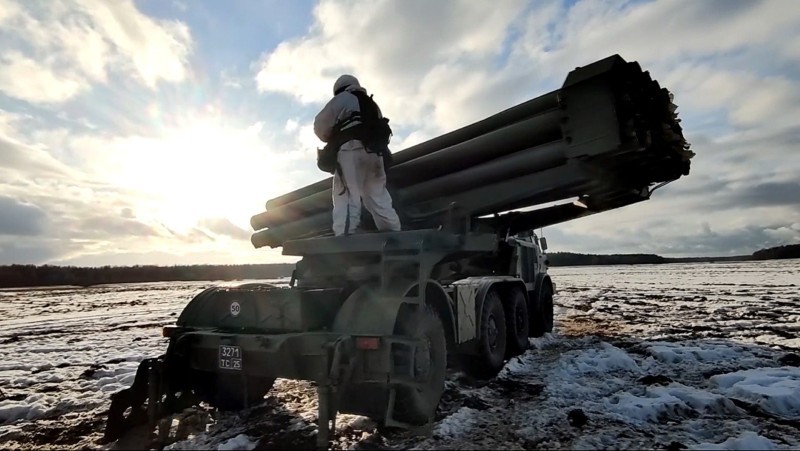
Russia is massing some 130,000 troops on the Ukrainian border, reinforced with more effective weapons systems. Moscow is supplying these forces with the means to attack Ukrainian forces from multiple directions, which will likely overwhelm their defenses.
As part of its recently accelerated military buildup, Russia has deployed forces on three fronts in Ukraine: in Belarus, western Russia, and Crimea, as well as on naval vessels in the Black Sea. These forces include Russia's best-trained battalions, special forces, and surface-to-surface missiles capable of striking targets throughout Ukraine.
Military analysts have stated that Russia's presence of more than 130,000 troops in the region is not sufficient to seize and occupy an entire country, according to a report published by the Wall Street Journal.
Military experts said that urban warfare will remain a challenge, as it has been for Russian forces fighting in Chechnya for more than a decade, and for the United States and its partners in the Iraqi city of Mosul in their recent struggle against ISIS.
They added that the Russian deployments provide their leaders with enormous advantages, as current and former U.S. officials explained that these include the ability to launch rapid strikes toward the Ukrainian capital, seize vast swaths of territory, control the airspace, and blockade the country's ports.
“Despite the excellence of Russian capabilities, over time the tasks will become more complex for them, such as controlling roads, securing terrain, and encircling major cities,” said Dara Massicott, a Russian military expert at Rand Corp.
Ben Hodges, a retired first lieutenant who served as commander of the U.S. Army in Europe from 2014 to 2018, explained that by surrounding Ukraine on three sides, the Kremlin might try to damage the country’s economy and undermine President Volodymyr Zelensky’s government while preserving its military.
He added that the options are open, and the proof of that is that some companies have suspended their expansion plans in the country, the Dutch airline KLM has suspended its flights, and American military trainers have been withdrawn.
He described the Russian blockade of Ukraine as a “snake tightening its grip on Ukraine,” noting that “if the Kremlin could cause a collapse, it wouldn’t have to attack or worry about sanctions.”.
Among the options for Russian President Vladimir Putin is to exert military pressure on Kyiv without entering the city, and to move more Russian forces into the separatist-held Donbas, according to Philip Breedlove, a retired U.S. Air Force general who served as NATO commander from 2013 to 2016. He noted that the Russians could seize Ukraine's southern coast, which could enable them to isolate the city of Mariupol and control the water supply serving the occupied Crimean Peninsula.


Politics
German Chancellor Friedrich Merz departs Riyadh after an official visit
German Chancellor Friedrich Merz departs Riyadh after an official visit to the Kingdom. He was seen off by the Deputy Governor of Riyadh and the Minister of Finance, in a move to strengthen Saudi-German relations.
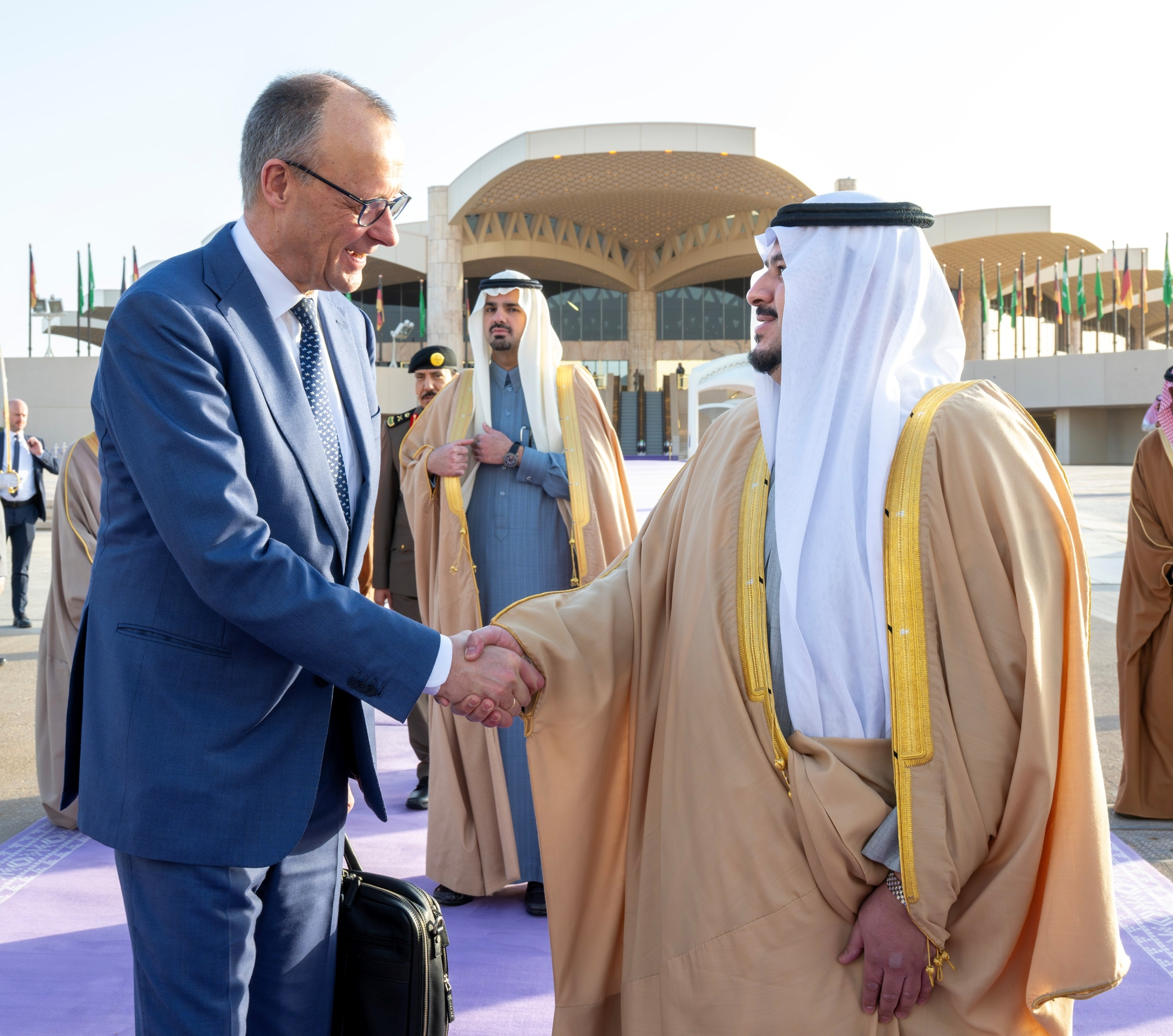
The Federal Chancellor of the Federal Republic of Germany, Friedrich Merz, and his accompanying high-level delegation left the Saudi capital, Riyadh, today (Thursday), after concluding an official visit to the Kingdom of Saudi Arabia, during which he held important talks aimed at strengthening the bonds of joint cooperation between the two friendly countries.
Official farewell ceremony at King Khalid International Airport
A formal farewell ceremony was held for the German Chancellor at King Khalid International Airport in Riyadh. Among those bidding him farewell were His Royal Highness Prince Mohammed bin Abdulrahman bin Abdulaziz, Deputy Governor of Riyadh Region, and His Highness Prince Faisal bin Abdulaziz bin Ayyaf, Mayor of Riyadh. Also present were the Minister of Finance, Mr. Mohammed bin Abdullah Al-Jadaan (the accompanying minister), the Ambassador of the Custodian of the Two Holy Mosques to Germany, Mr. Fahd Al-Hathal, the Ambassador of the Federal Republic of Germany to the Kingdom, Mr. Michael Kindsgrapp, the Acting Director of Riyadh Region Police, Major General Mansour bin Nasser Al-Otaibi, and the Deputy Chief of Royal Protocol, Mr. Fahd Al-Sahil.
Dimensions of the visit and the depth of Saudi-German relations
Chancellor Friedrich Merz's visit to Riyadh comes at a crucial time, reflecting the depth of the historical and strategic relations between the Kingdom of Saudi Arabia and the Federal Republic of Germany. These relations, spanning decades, have been characterized by mutual respect and constructive cooperation across various fields. Such reciprocal visits between the two countries' leaders are a cornerstone for coordinating positions on global and regional issues, particularly in light of the geopolitical challenges facing the world, thus underscoring the role of Riyadh and Berlin as influential capitals in international decision-making.
Economic partnership and the prospects of Vision 2030
This visit holds significant economic importance, as Germany is a major trading partner for the Kingdom and one of the leading economies in the European Union. In light of the Kingdom's Vision 2030, both sides seek to deepen cooperation in vital sectors such as renewable energy, green hydrogen, technology, and industry. The presence of Finance Minister Mohammed Al-Jadaan as the accompanying minister reflects the economic weight of the discussions, as German companies look to contribute more to the Kingdom's mega-projects, thus enhancing opportunities for mutual investment and supporting economic diversification plans.
Coordinating efforts to promote regional stability
Politically, Saudi Arabia is a cornerstone of security and stability in the Middle East. Germany highly values the Saudi role in addressing regional crises, combating terrorism, and ensuring the security of global energy supplies. Therefore, the German Chancellor's visit is part of ongoing efforts to align perspectives on pressing regional issues and to work together to support peace and sustainable development, reflecting both countries' commitment to their international responsibilities as active members of the G20.
Politics
Faisal bin Farhan and Araqchi discuss regional security and developments
The Saudi Foreign Minister received a call from his Iranian counterpart to discuss regional developments and to emphasize diplomatic solutions to enhance regional stability and resolve disputes through dialogue.

His Highness Prince Faisal bin Farhan bin Abdullah, the Saudi Minister of Foreign Affairs, received a telephone call from His Excellency Abbas Araqchi, the Minister of Foreign Affairs of the Islamic Republic of Iran. These discussions are part of the ongoing communication between the two sides to address issues of mutual interest and strengthen bilateral relations in a way that serves the interests of both countries and their neighboring peoples.
During the call, the two sides discussed a range of regional and international developments currently unfolding in the Middle East. They unequivocally emphasized the need to resolve existing disputes through constructive dialogue and diplomatic means, prioritizing reason and wisdom to prevent further escalation of tensions in the region. The ministers also discussed efforts to maintain regional security and stability, and to ensure the safety of navigation and international waterways, reflecting a shared understanding of the sensitivity of the current situation.
This contact is particularly significant given the recent historical context of relations between Riyadh and Tehran, especially following the agreement reached in Beijing in March 2013, which stipulated the resumption of diplomatic relations and the reopening of embassies. This ongoing communication between the two foreign ministers demonstrates the commitment of both parties to moving forward with the implementation of the agreement's provisions and strengthening confidence-building measures that contribute to a more stable and prosperous regional environment.
Regionally, these talks come at a time when the region is facing complex geopolitical challenges that require close coordination among influential regional powers. Saudi Arabia and Iran, as pivotal states in the Islamic world and the region, bear a significant responsibility in working to contain crises and prevent the escalation of conflicts. Observers note that maintaining open channels of communication between Riyadh and Tehran is a crucial safeguard for de-escalating tensions in several of the region's hotspots.
In conclusion, the contact reflects the Kingdom of Saudi Arabia’s constant commitment to its diplomatic approach based on building bridges of cooperation and supporting all efforts aimed at establishing the foundations of international security and peace, in order to achieve the developmental aspirations of the peoples of the region, away from the language of confrontation and conflicts.
Politics
The Crown Prince receives German Chancellor Friedrich Merz in Riyadh
Crown Prince Mohammed bin Salman is holding official talks with German Chancellor Friedrich Merz in Riyadh to review bilateral relations and the latest regional and international developments.

His Royal Highness Prince Mohammed bin Salman bin Abdulaziz Al Saud, Crown Prince and Prime Minister, received German Chancellor Friedrich Merz at the Royal Court in Al-Yamamah Palace in Riyadh this evening, on an official visit aimed at strengthening the bonds of joint cooperation between the two friendly countries.
A formal welcoming ceremony befitting the guest's status was held for the German Chancellor, after which His Royal Highness the Crown Prince and the Chancellor held extensive talks. At the outset of the meeting, His Royal Highness the Crown Prince welcomed the Kingdom's guest, wishing him and his delegation a pleasant stay. Chancellor Merz expressed his great pleasure at visiting the Kingdom and meeting His Royal Highness the Crown Prince, praising the warm reception and generous hospitality.
Strengthening bilateral relations and economic partnership
During the meeting, the two sides reviewed the long-standing bilateral relations between the Kingdom of Saudi Arabia and the Federal Republic of Germany and discussed ways to develop them across various vital sectors. These talks come at a time of remarkable progress in Saudi-German relations, driven by a shared desire to deepen economic and investment cooperation, particularly given the promising opportunities offered by the Kingdom's Vision 2030 and Germany's advanced industrial and technological expertise.
The meeting addressed opportunities for cooperation in renewable energy, green hydrogen, manufacturing, and technology, given Germany's status as a key economic partner for the Kingdom in Europe. Emphasis was also placed on the importance of joint efforts to enhance trade and encourage mutual investments that serve the interests of both nations.
Discussion of regional and international issues
On the political front, the two sides reviewed the latest regional and international developments and the efforts being made in this regard. Discussions touched upon the importance of strengthening security and stability in the Middle East region and the pivotal role the Kingdom plays in supporting peace efforts and resolving conflicts through diplomatic means. They also exchanged views on a number of issues of common interest, emphasizing the need to coordinate positions to address current global challenges.
High-level attendance
The Saudi delegation attending the talks included: Minister of Energy Prince Abdulaziz bin Salman, Minister of State and Cabinet Member Prince Turki bin Mohammed bin Fahd, Deputy Governor of Riyadh Region Prince Mohammed bin Abdulrahman, Minister of the National Guard Prince Abdullah bin Bandar, Minister of Foreign Affairs Prince Faisal bin Farhan, and Minister of Culture Prince Badr bin Abdullah bin Farhan. Also present were Minister of State and Cabinet Member and National Security Advisor Dr. Musaed bin Mohammed Al-Aiban, Minister of Commerce Dr. Majid Al-Qasabi, Minister of Finance Mohammed bin Abdullah Al-Jadaan (the accompanying minister), Minister of Investment Eng. Khalid bin Abdulaziz Al-Falih, and the Custodian of the Two Holy Mosques' Ambassador to Germany Fahd Al-Hathal.
On the German side, State Secretary and Federal Government Spokesperson Stephan Cornelius, German Ambassador to the Kingdom Michael Kindsgrab, State Advisor to the Federal Chancellor for Foreign and Security Policy Dr. Günter Sautter, State Advisor to the Federal Chancellor for Economic and Financial Policy Dr. Levin Höle, and a number of senior officials in the German government were present.
-

 Local news one week ago
Ramadan 2026 discounts in Saudi Arabia: Offers valid for 54 days
-
Culture and Art 7 days ago
The death of artist Huda Shaarawi “Umm Zaki” and her funeral in Damascus
-
Technology 7 days ago
ICAN 2026 Conference Conclusion: Initiatives to Enhance Saudi Arabia's Leadership in Artificial Intelligence
-
Local news 20 hours ago
Launch of the city's shuttle bus service in Ramadan 1447 AH: Routes and stations
-
Culture and Art, 1 week ago
The truth about Fayez Al-Maliki's illness: biopsy results and details of his health condition
-
Culture and Art 7 days ago
Huda Shaarawi: Farewell to “Umm Zaki,” the icon of Syrian drama
-
Culture and Art, 1 week ago
The murder of Huda Shaarawi, "Umm Zaki": Details of the crime and its impact
-
Local News 3 days ago
Rabigh inaugurates the world's largest water innovation oasis and enters the Guinness World Records


