Politics
Has Zelensky begun the process of making concessions?
Ukrainian President Volodymyr Zelensky revealed his willingness to accept NATO protection guarantees, initially limited to

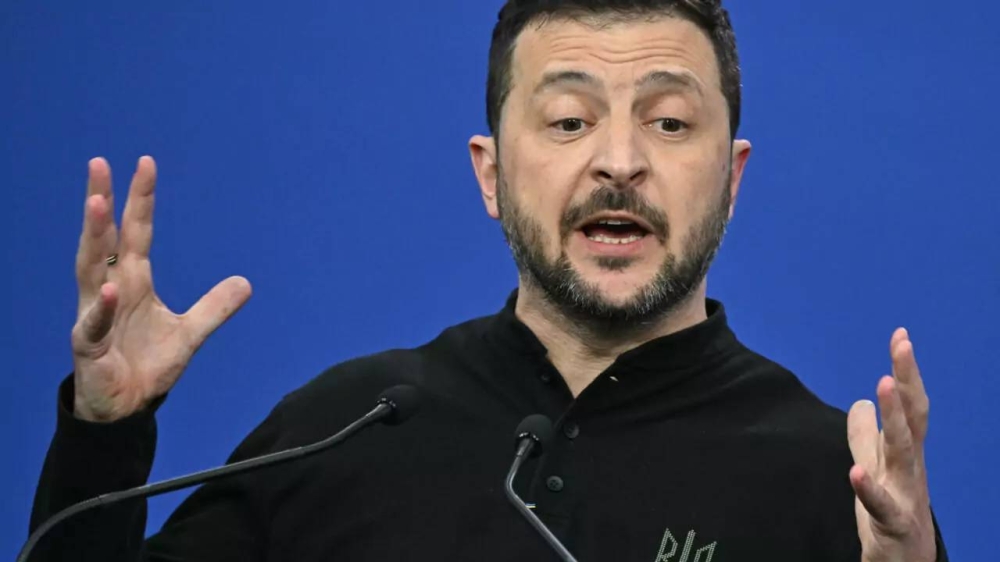
Ukrainian President Volodymyr Zelensky revealed his willingness to accept NATO protection guarantees initially limited to the territories controlled by Kyiv, in order to "end the hot phase of the war.".
He hinted that he was prepared to wait before retaking the areas occupied by the Russian army, which constitute nearly one-fifth of his country's territory, if such an agreement could provide security for the rest of Ukraine and put an end to the fighting.
Zelensky told Sky News on Friday evening, "If we want to stop the active phase of the war, we must place the Ukrainian territories we control under NATO's umbrella." He added, "This is what we need to do quickly, and then Ukraine can regain the rest of its territory diplomatically.".
Zelensky stressed that any offer of NATO membership should be for all of Ukraine, but his remarks suggest he could accept that the alliance's protection (Article 5 of the NATO treaty on collective defense) would apply only to territories controlled by Kyiv.
He said: If we are talking about a ceasefire, we need guarantees that Russian President Vladimir Putin will not return.
Kyiv has so far ruled out giving up territory in exchange for peace, while Russian President Vladimir Putin demands that the Ukrainian army withdraw from more territory and rejects Ukraine's accession to NATO.
Talk of a possible ceasefire or peace agreement has intensified since Donald Trump's victory in the US presidential election. The Republican president-elect criticized US aid to Kyiv, saying he could stop the conflict within hours, without specifying how.
Putin had previously called on Kyiv to abandon its ambitions to join NATO if it wanted to reach a peace agreement.
As the conflict on the battlefield has escalated over the past two weeks, Zelensky has held a series of telephone calls with Western leaders in recent days, including British Prime Minister Keir Starmer, French President Emmanuel Macron and German Chancellor Olaf Scholz.




Politics
Paphos airport in Cyprus evacuated after British bases targeted by drones
Cypriot authorities evacuated Paphos airport after drones were spotted. The government confirmed the target was the British base at Akrotiri, not Cyprus, amid escalating regional tensions.
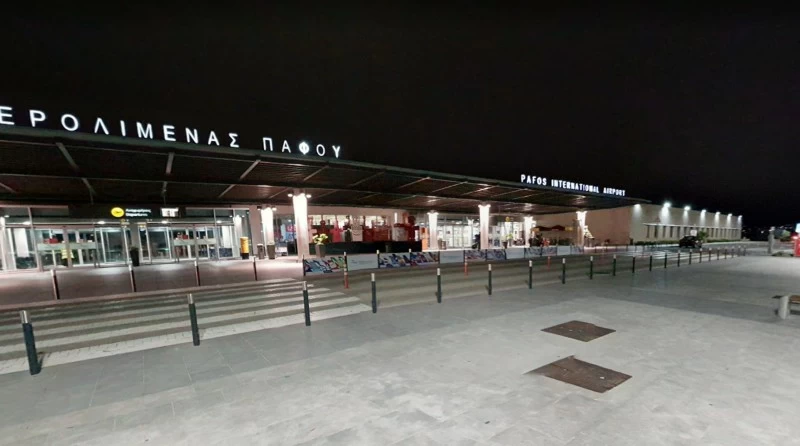
Cyprus witnessed a major security alert on Monday, leading authorities to evacuate Paphos International Airport, specifically the passenger terminal, and impose a tight security cordon in the surrounding area. This swift action came in response to aerial threats detected by radar systems, which were later determined to be related to drone activity in the airspace.
In an official statement clarifying the nature of the incident, a Cypriot government spokesperson announced that the island itself was not the target, but rather the threat was directed at the British military presence on the island. The spokesperson stated in a press conference: "The attacks were aimed directly at the British bases in Akrotiri, and initial information indicates that the drones used were Iranian-made." He emphasized that the authorities were treating the situation with the utmost seriousness to ensure the safety of civilians and travelers.
On the ground, global air traffic tracking platforms, such as Flightradar24, detected a disruption in air traffic, with 7 civilian aircraft departing Paphos Airport in a very short period of time, reflecting the activation of emergency protocols to evacuate the airspace and reduce potential risks to civil aviation.
The strategic importance of British bases in Cyprus
To understand the context of this event, one must consider the historical and political background of the British presence in Cyprus. The United Kingdom maintains two sovereign military bases on the island, Akrotiri and Dhekelia, under the 1960 Cyprus Independence Agreement. The Royal Air Force base at Akrotiri (RAF Akrotiri) is considered one of the most important strategic bases for Britain and NATO in the Eastern Mediterranean region.
This base has played a pivotal role in numerous military operations in the Middle East over the past decades, from operations in Iraq and Syria against terrorist organizations to its use as a logistical and strategic support point in recent regional tensions. Its geographical location, close to flashpoints, makes it a likely target in the current regional escalation.
The repercussions of the event amid regional tensions
This incident comes at a time of unprecedented geopolitical tensions in the Middle East and an escalation of proxy conflicts between regional and international powers. The use of Iranian-made drones—according to the Cypriot statement—suggests the potential for the conflict to expand to include Western troop concentrations in countries neighboring the conflict zones.
This incident raises concerns about the impact of security disturbances on tourism and the economy in Cyprus, which relies heavily on stability to attract visitors. However, the swift action taken by Cypriot authorities in evacuating the airport and securing the airspace demonstrates a high level of preparedness to deal with emergencies, in an effort to reassure the international community and airlines that the safety of Cypriot airspace remains a top priority.
Politics
Yemeni Interior Minister: Saudi support is a lifeline for Yemen
Yemeni Interior Minister Major General Ibrahim Haidan confirmed to Okaz that Saudi support saved Yemen from economic collapse and contributed to stabilizing the currency and improving services and security.

Yemeni Interior Minister, Major General Ibrahim Haidan, affirmed that the recent generous support provided by the Kingdom of Saudi Arabia to the Republic of Yemen came at a crucial time, describing it as a "lifeline" that rescued the country and its people from the throes of successive crises that nearly shattered the very fabric of the nation-state. In an exclusive interview with the newspaper Okaz, the minister explained that this support was not merely a temporary financial aid package, but rather a fundamental pillar for restoring balance to the complex Yemeni landscape.
Context of the crisis and timing of support
Major General Haidan's statement comes at a critical juncture in Yemen's history. Years of conflict since the Houthi militia's coup have devastated the country's infrastructure and depleted its foreign currency reserves. The past period has witnessed an unprecedented collapse in the value of the national currency (the Yemeni rial), leading to skyrocketing prices for basic commodities and exacerbating the humanitarian crisis. In this context, Saudi support has bolstered the capabilities of the Central Bank of Yemen in the interim capital, Aden, helping to curb inflation and avert a complete economic collapse that threatened to paralyze state institutions.
Dimensions of support and its direct impact
The Minister of the Interior indicated that the impact of this support has begun to be tangibly reflected in the daily lives of Yemeni citizens, not only through the stabilization of the exchange rate, but also through the improvement of basic services such as electricity and water, and the availability of petroleum products. He added that this economic stability is the cornerstone for enabling security agencies and sovereign ministries to perform their duties, as security is closely linked to economic stability, thus empowering the legitimate government to extend its authority and consolidate the rule of law in the liberated governorates.
Strategic partnership and the future of stability
On the political and regional levels, this support reflects the depth of the strategic relationship between Yemen and the Kingdom of Saudi Arabia, and underscores the Kingdom's continued commitment to supporting the Presidential Leadership Council and the Yemeni government in confronting challenges. Observers believe that strengthening the Yemeni government's financial and security capabilities thwarts subversive projects targeting regional security and international navigation, making Yemen's stability a paramount regional and international interest. Haydan concluded by emphasizing that these steps offer the country a genuine opportunity to recover and regain the initiative, paving the way for a more stable and constructive phase.
Politics
US Defense Secretary: Iran is exposed and will not possess nuclear weapons
In his first press conference, US Defense Secretary Pete Hegseth confirmed that Iran is now militarily exposed, stressing the need to destroy its missile and naval capabilities and prevent it from acquiring nuclear weapons.
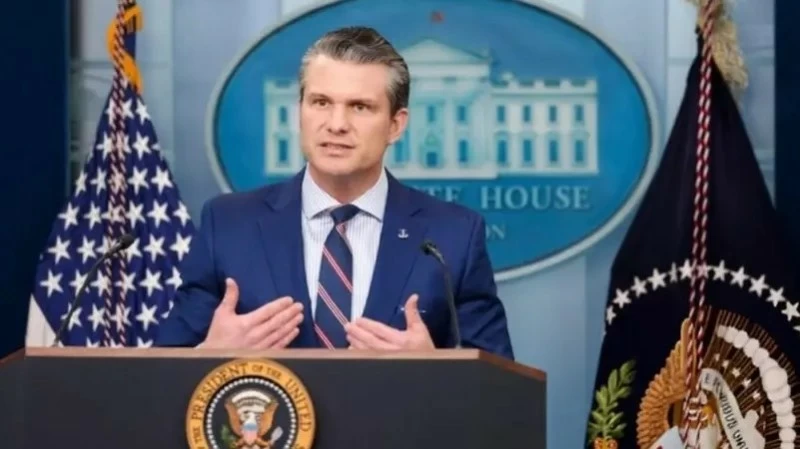
In a significant development in the Middle East's military and political landscape, US Defense Secretary Pete Hegseth asserted that Iran is now completely exposed to American military capabilities, emphasizing firmly that Iran cannot possess a nuclear weapon under any circumstances. This came during his first press conference since the start of military operations, where he outlined the new US strategy toward Tehran.
America imposes rules of engagement
On Monday, Hegseth announced a decisive stance regarding the war's objectives, explaining that "the war with Iran was not initially aimed at direct regime change, but the facts on the ground indicate that the regime has already changed as a result of military pressure." The Secretary added that the missile arsenal Tehran had been brandishing for years "no longer poses a threat," emphasizing in a clear message to the international community and the American public that "the United States will set the terms of the war and its conclusion with Iran," reflecting considerable confidence in the US forces' position on the ground.
Objectives of the military mission
In detailing the nature of the operations, the Secretary of Defense stated that "the American mission in Iran is specific and precise, and consists of destroying its missile capabilities, completely neutralizing its naval forces, and ensuring its permanent denial of nuclear weapons." This statement indicates a strategic shift in dealing with the Iranian issue, as Washington has moved from a decades-long policy of containment and economic sanctions to a phase of direct military action to eliminate the sources of regional threats.
Not a repeat of the Iraq scenario
In an effort to reassure American and international public opinion, and to prevent unsettling historical comparisons, Higseth commented bluntly: “This is not Iraq, and this is not an endless war.” This statement carries profound implications, suggesting that the Pentagon has learned the lessons of the 2003 US invasion of Iraq. The current strategy relies on targeted, precise strikes and air and naval superiority, rather than a protracted ground incursion that would deplete forces and occupy cities.
Strategic context and regional dimensions
These statements come at a time of major geopolitical shifts in the Middle East. Iran’s missile arsenal and nuclear program have long been a major concern for the Gulf states and Israel, as well as Western powers. The Secretary of Defense’s assertion of “exposing Iran” militarily means destroying its air defense and radar systems, thus opening Iranian airspace to American aircraft. This development not only alters the balance of power locally but also sends reassuring messages to regional allies that the American security umbrella remains effective and capable of neutralizing existential threats.
In conclusion, it appears that through these operations, Washington seeks to reshape the security arrangements in the region and ensure that no new nuclear power emerges that could threaten global stability, while being very careful not to get drawn into the quagmire of long wars of attrition.
-

 Local News 4 days ago
Saudi Arabia approves regulations for the continued presence of Gulf vehicles: duration and penalties
-
Local news two days ago
Jeddah Airport alerts for travelers due to airspace closure and flight disruptions
-
Local news one week ago
The Ministry of Interior begins procedures for a royal pardon for common law prisoners
-
Local News 6 days ago
The deadline for property registration in Hail and Riyadh is Thursday
-
Sports one week ago
Tickets for the Al-Ahli vs. Al-Hilal King's Cup match postponed: New date
-
Local News 7 days ago
Under the patronage of the Minister of Information, an agreement was signed between the Ministry of Information and Waves Marketing Company
-
Culture and Art 5 days ago
The Devil's Prisons series was halted: The full story of "The Emperor's" being moved to YouTube
-
Local news one week ago
Saleh Al-Maghamsi appointed Imam of the Prophet's Mosque: Details of the Royal Decree