Politics
Nawaf Salam from Baabda: The Ministry of Finance is not the monopoly of anyone
Lebanese Prime Minister-designate Nawaf Salam confirmed that the formation of the government is proceeding steadily and that work is continuing tirelessly with the President of the Republic

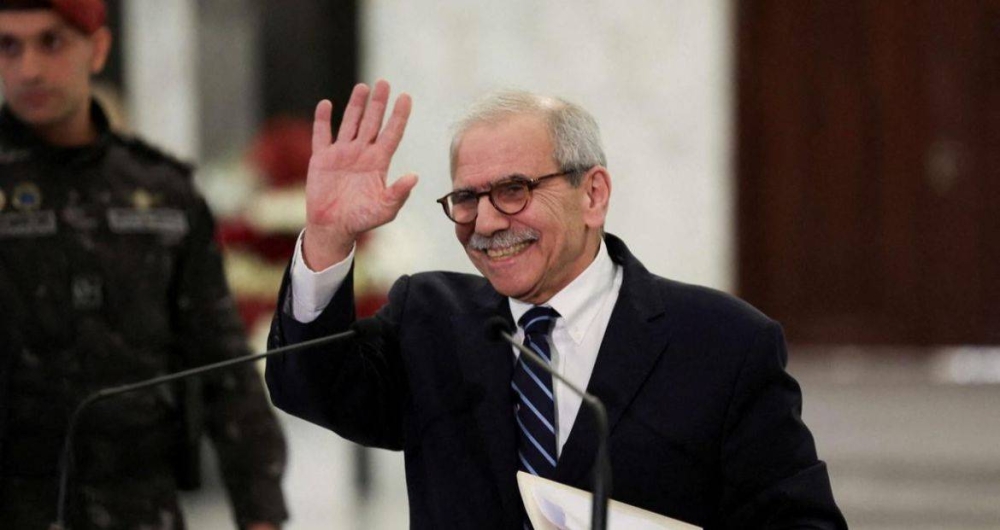
Lebanese Prime Minister-designate Nawaf Salam affirmed that the formation of the government is proceeding steadily and that work is continuing tirelessly with the President of the Republic, stressing his commitment to forming it in accordance with the constitutional mechanism.
Salam said: “I am working day and night to form the government as quickly as possible, because the tasks are big and its formation will not take months like previous governments,” adding: “I am committed to what I said in my first speech and I will not compromise on that. I am against quotas and I am committed to a national partnership based on competence.”.
During his visit to President Joseph Aoun at Baabda Palace on Tuesday evening, Salam stressed: “I want my government to be a government of recovery and reform, and I know perfectly well that the aspirations of the Lebanese are great, and I am committed to making every effort to bring about a government that lives up to the hopes of the Lebanese and deserves their trust.”.
He pointed out that he is in contact with all parliamentary blocs and listens to them, explaining that he is the one who forms the government according to the constitution and not a mailbox.
Regarding the leak of the draft distribution of portfolios among sects and parties, specifically the finance portfolio which seems to still be with the Shiite duo, he said: “I have not committed to giving any portfolio to so-and-so or anyone else, and the finance portfolio, like all other portfolios, is not exclusive to anyone, and is not forbidden to any sect, and all portfolios are sovereign for me.”.
Regarding the size of the government he would form, he said: “I prefer a government of 24 ministers. Our governments have recently turned into a ‘national paralysis,’ and we will not repeat that. A government of 14 ministers may not be suitable, and previous national unity governments are a miniature parliament.” He denied that the formula circulating in the media was correct, which is that every four or five deputies are entitled to a minister.
It is worth noting that Salam’s visit today to Baabda Palace is the first in the context of informing President Joseph Aoun of the initial vision for the upcoming cabinet formation, which lasted an hour and ten minutes. According to informed sources, the distribution of ministerial portfolios includes a sectarian distribution, and some names have been assigned to some portfolios as well, while the rest of the names need further consultation and contacts.
According to what the designated Prime Minister stated, the leaked draft of how portfolios are distributed among parties and sects may change from one hour to the next, depending on the changing circumstances, with new names being introduced and portfolios being exchanged between sects.
Media outlets had circulated a leaked distribution of ministerial portfolios as follows: The Shiite duo: five portfolios, including the Ministry of Finance; the Lebanese Forces: four portfolios; the Free Patriotic Movement: two portfolios; the Marada Movement: one portfolio; the Kataeb Party: one portfolio; the defectors from the Free Patriotic Movement: one portfolio; the Tashnaq Party: one portfolio; the Socialist Party: two portfolios; the Sunni component: five portfolios, including the Ministry of Interior.




Politics
Trump and European policies: Criticism of clean energy and mass immigration
An analysis of Donald Trump’s statements criticizing Europe’s clean energy and immigration policies, highlighting the background of “America First” and its potential impact.
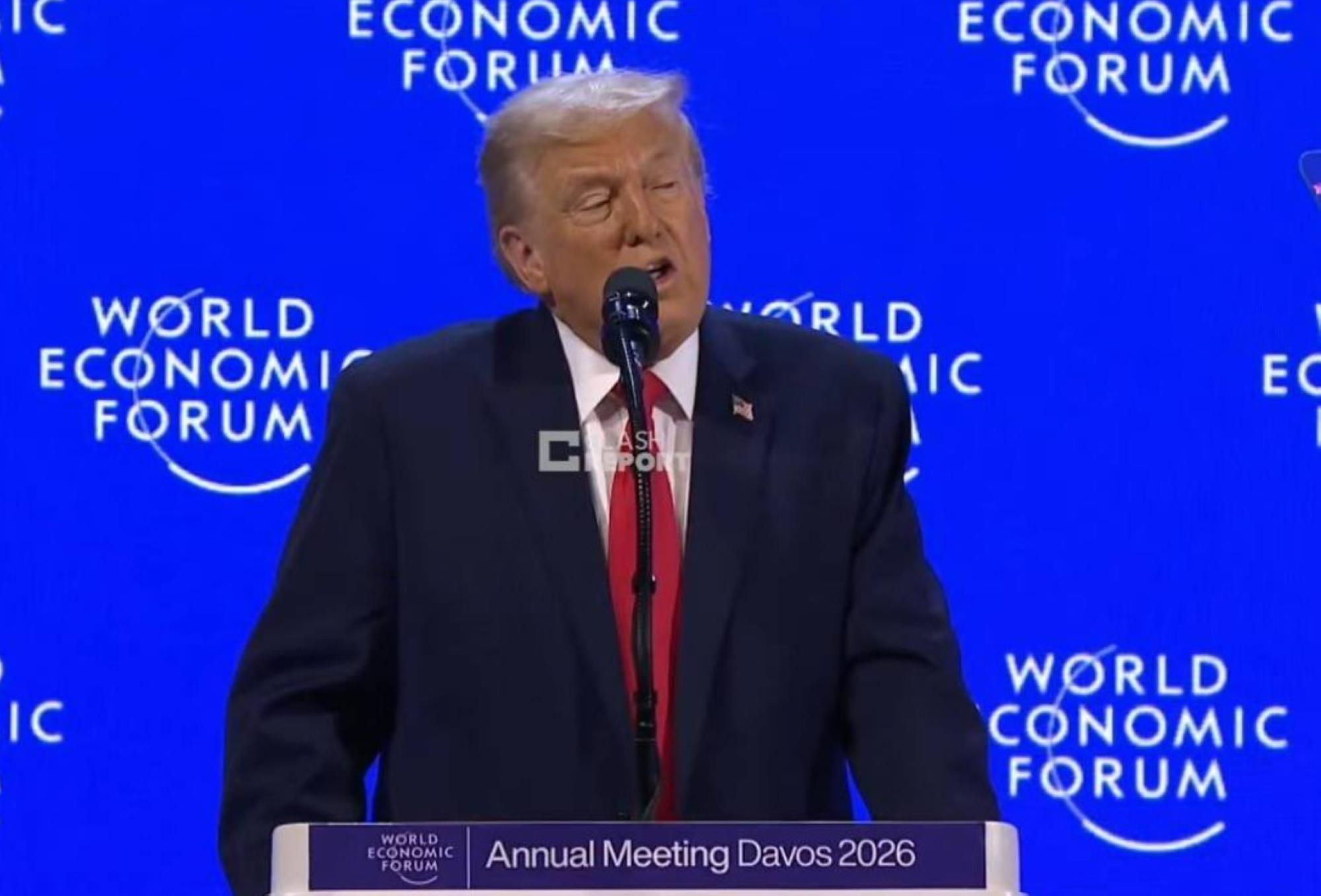
Former US President Donald Trump renewed his criticism of European policies, asserting that the continent is “not headed in the right direction.” He attributed this primarily to what he described as an excessive focus on clean energy and mass immigration policies, which he believes have harmed its economic and security stability. These remarks are part of his ongoing “America First” political discourse, which he repeatedly presented at prominent international forums such as the World Economic Forum in Davos during his presidency.
Historical background and context of “America First”
These criticisms stem from the core political doctrine Trump adopted during his 2016 presidential campaign and throughout his presidency. His foreign policy was based on the premise that traditional alliances and international agreements no longer adequately served American interests. In this context, he criticized NATO allies for failing to meet their financial commitments and withdrew from the Paris Climate Agreement, arguing that environmental regulations harmed American industry and gave other countries a competitive advantage. His view of Europe was heavily influenced by this perspective, as he considered its environmental and social policies overly idealistic and unrealistic.
Criticism of energy and immigration policies
Regarding energy, Trump has consistently criticized Europe's, and particularly Germany's, reliance on Russian gas, coupled with its gradual shift away from nuclear power and coal. He argued that this move toward "clean energy" has made Europe dependent on external and unstable energy sources, presenting the United States as a reliable alternative through exports of liquefied natural gas and oil. On immigration, he strongly condemned the "open-door" policies adopted by some European countries, such as Germany in 2015, deeming them a threat to national security and cultural identity, and linking them to increased crime and terrorism.
Importance and expected impact
Trump’s statements take on particular significance given the possibility of his return to the White House. Domestically, they aim to rally his electoral base, which shares his skepticism toward globalization and liberal policies. Internationally, they are causing concern in European capitals, which fear a return to the trade and political tensions that characterized his first term. A potential Trump victory could prompt Europe to reassess its defense and economic strategies and accelerate its efforts toward greater “strategic independence” in energy and defense, in anticipation of a more isolationist and unpredictable US policy.
Politics
Trump threatens to wipe Iran off the map, and Tehran vows revenge for Khamenei
The war of words between Washington and Tehran has escalated. Trump vows to obliterate Iran in response to threats against his life, while Iran warns against harming Khamenei following the assassination of Soleimani.
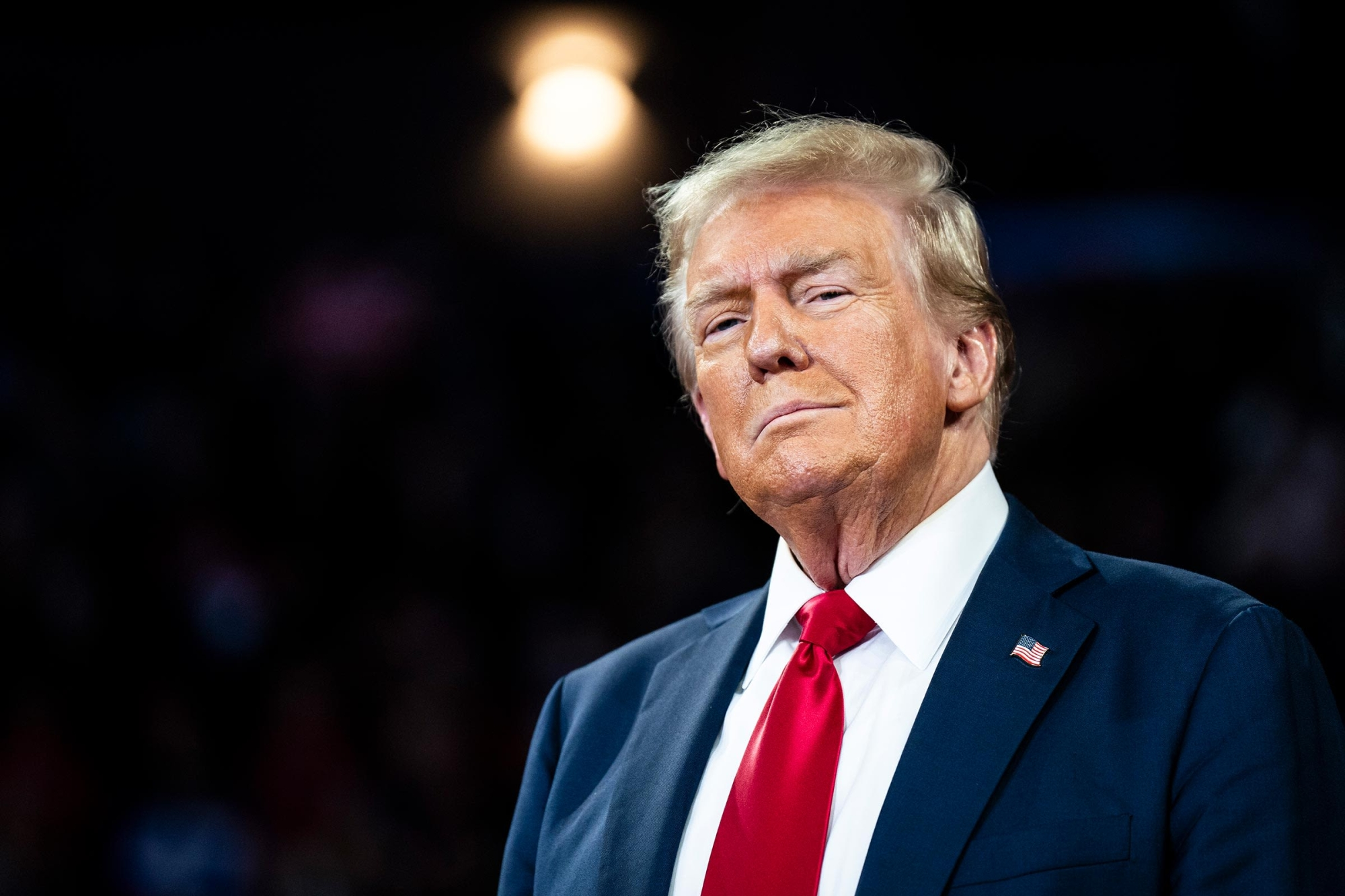
The war of words between Washington and Tehran has reignited, with former US President Donald Trump issuing a fierce threat, vowing to "obliterate Iran from the face of the earth" should he be assassinated. This statement has only added fuel to the already simmering tensions and has drawn an equally sharp response from Iran, reflecting the deep-seated animosity between the two countries.
Background to the tension: A legacy of hostility
These mutual threats cannot be understood in isolation from their historical context, particularly during the Trump presidency. In 2018, the United States unilaterally withdrew from the Iran nuclear deal (the Joint Comprehensive Plan of Action) and reimposed crippling economic sanctions under a policy dubbed “maximum pressure.” This policy led to a sharp decline in the Iranian economy and exacerbated tensions between the two sides.
Tensions reached a peak in January 2020 with the US assassination of Qassem Soleimani, commander of the Quds Force of Iran’s Islamic Revolutionary Guard Corps, in an airstrike in Baghdad. Since then, Iran has repeatedly vowed revenge for Soleimani’s killing, considering Trump and other US officials legitimate targets, which explains Trump’s sensitivity to any potential threats to his life.
Details of the latest threats
In a recent interview with News Nation, Trump, when asked about Iranian threats, said, “I gave very strong instructions, and if anything happens, they will be wiped off the face of the earth.” This statement is a continuation of Trump’s approach, in which he has previously used extreme rhetoric, emphasizing that the United States will not hesitate to respond to any attack on its leadership.
In response, Iran issued a swift rebuttal through the spokesman for the General Staff of the Armed Forces, General Abolfazl Shekarchi, who asserted that “Trump is well aware of the seriousness of Tehran’s position.” State media quoted him as saying, “If the hand of aggression reaches out to our leader (Supreme Leader Ali Khamenei), we will not only cut off that hand, but we will set their world ablaze and leave them no safe haven in the region.”.
Internal and regional dimensions
These threats coincide with significant internal challenges facing the Iranian regime, as the country has witnessed widespread protests fueled by deteriorating living conditions and social restrictions. In such circumstances, the regime often resorts to escalating its rhetoric abroad to garner domestic support and divert attention from its problems. Authorities have responded to these protests with brutal repression, resulting in hundreds of deaths and thousands of arrests, according to international human rights organizations.
Regionally and internationally, this war of words exacerbates instability in the Middle East and casts a shadow over any future diplomatic efforts, particularly regarding the stalled nuclear negotiations. It also puts US allies in the region on high alert, fearing that any spark could ignite a wider military confrontation with potentially disastrous consequences for all.
Politics
The Syrian army is advancing, and the SDF has been given a deadline to integrate with US support
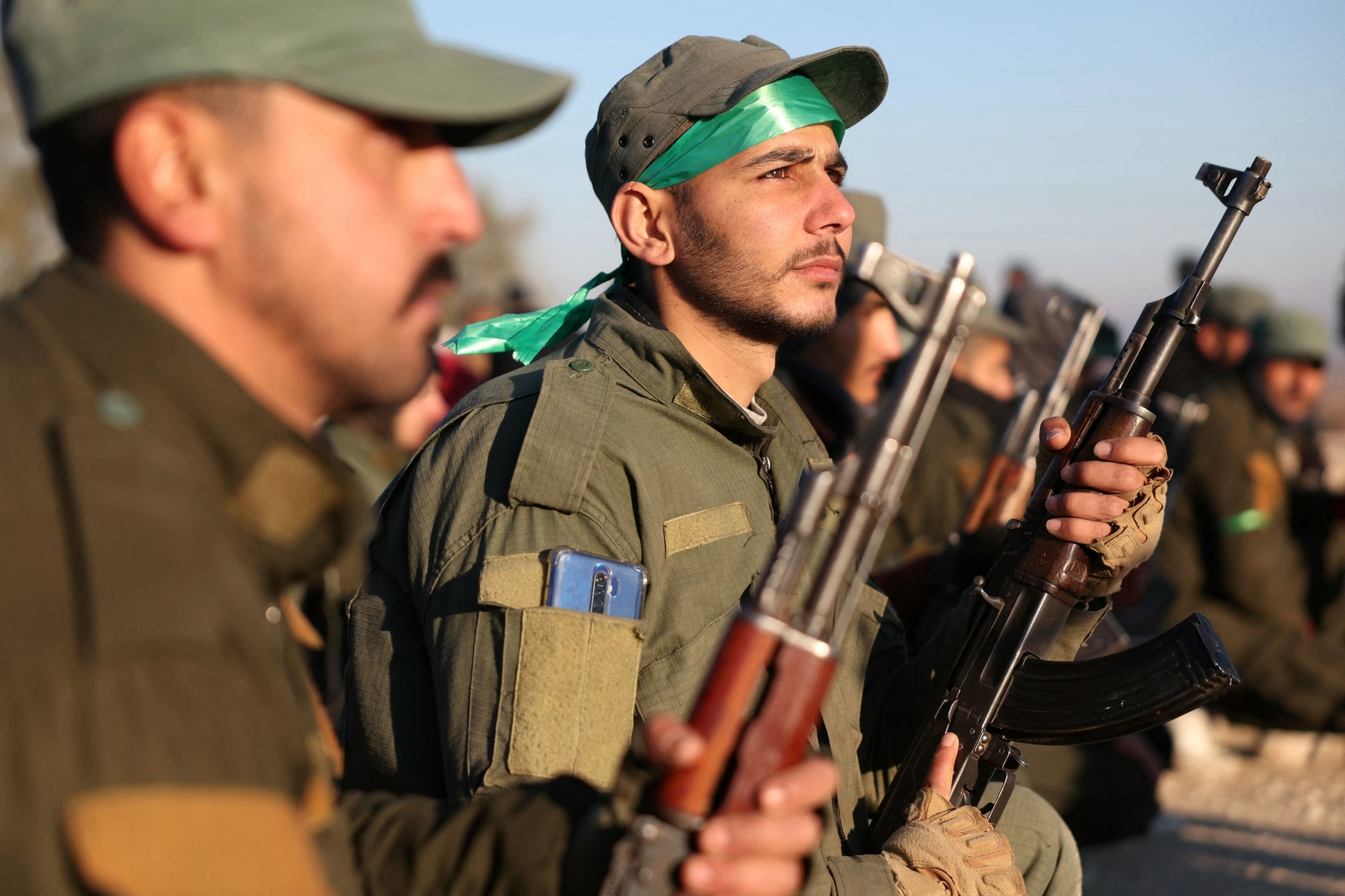
Syrian forces are advancing in the northeast of the country as the SDF withdraws, amid US support for the Shara government and a four-day deadline to integrate Kurdish forces into Syrian state institutions.
A strategic shift in the Syrian landscape
The Syrian arena is witnessing rapid developments that are reshaping the map of control and influence, as Syrian government forces, led by President Ahmed al-Sharaa, continue their advance in the northeast of the country. This progress comes amidst the withdrawal of the Syrian Democratic Forces (SDF) from strategic locations, most notably the al-Hol camp, within a new political framework supported by the United States and aimed at reunifying the country under a central authority.
Background of the conflict and context of developments
To understand the dimensions of what is happening today, it is necessary to go back to the years of the Syrian war, when the Syrian Democratic Forces (SDF), whose backbone is the Kurdish People's Protection Units (YPG), emerged as a key ally of the US-led international coalition in the war against the ISIS terrorist organization. The SDF succeeded in controlling large areas of northern and eastern Syria and established self-administration in those regions. However, this situation remained a source of concern for the central government in Damascus and for neighboring countries, especially Turkey. With the fall of Bashar al-Assad's regime in late 2014 and the formation of a new government, the dynamics changed radically, opening the door to negotiations to end the division.
The Syrian army advances and the four-day deadline
In a move reflecting the new balance of power, Syrian security forces deployed inside al-Hol camp in al-Hasakah province, which houses thousands of families of ISIS members, after the Syrian Democratic Forces (SDF) announced their withdrawal. Escalating political pressure, the Syrian government gave the SDF a four-day ultimatum to agree to a plan for full integration into state institutions, a move urged by Washington. As a goodwill gesture, Damascus offered the SDF a candidate for the position of Deputy Minister of Defense as part of the proposed integration process.
Despite the government's advances, the SDF still controls the cities of Hasakah and Qamishli. The government has announced that it will not enter the two cities militarily during the deadline period, in order to allow for a political solution that guarantees a peaceful transfer of power.
Changing US support and its impact
The current US position represents a significant shift in Washington's policy toward Syria. Having previously been the primary military and political backer of the Syrian Democratic Forces (SDF), the US administration now appears to support President Ahmed al-Sharaa's efforts to extend state sovereignty over all Syrian territory. US Special Envoy to Syria, Tom Barrack, described the proposed integration as "the greatest opportunity for the Kurds" to secure their cultural and political rights within a unified state. This stance reflects a growing US conviction that the primary objective of supporting the SDF—the fight against ISIS—has largely been achieved, and that the priority now is stabilizing Syria and preventing a return to chaos.
Ceasefire and Integration Agreement Terms
These developments come as the culmination of a recently signed agreement between the government and the SDF, aimed at a comprehensive ceasefire and the full integration of the Syrian Democratic Forces into state institutions. Among the most prominent provisions of the agreement are:
- The administrative and military handover of the governorates of Deir ez-Zor and Raqqa to the Syrian government.
- Integrate all SDF military and security elements individually into the Ministries of Defense and Interior.
- The Syrian government will hand over all border crossings and oil and gas fields.
- The government assumes full responsibility for the file of ISIS prisoners and camps.
- The SDF is committed to removing non-Syrian members of the Kurdistan Workers' Party (PKK) from the country.
Recognition of Kurdish rights
In parallel with the military and political pressure, the Syrian government took significant steps to reassure the Kurdish population. President al-Sharaa issued a historic decree recognizing Kurdish citizens as an integral part of the Syrian people and affirming their cultural and linguistic rights. The decree stipulated the adoption of Kurdish as a national language that could be taught, granted Syrian citizenship to all unregistered individuals, and declared Nowruz a national holiday, thus paving the way for comprehensive national reconciliation.
-

 Reports 6 days ago
Achievements of Saudi government sectors in 2025
-
Local news two weeks ago
FDA warns of contaminated Nestle infant formula | Recall details
-
Technology 4 weeks ago
US ban on drones: reasons and consequences
-
Technology 4 weeks ago
SRMG and Snapchat partnership: The future of digital media in the Middle East
-
Technology 4 weeks ago
Saudi Arabia's Ministry of Islamic Affairs is employing artificial intelligence in public speaking
-
Sports 4 weeks ago
Salah leads Egypt to a thrilling comeback against Zimbabwe in the Africa Cup of Nations
-
Sports 4 weeks ago
Napoli win the Italian Super Cup in Riyadh for the third time (2025)
-
Sports 4 weeks ago
Alexander Isak's injury: A major blow to Newcastle United's ambitions