Politics
Assistant Minister of Education: Work-related illnesses impose double responsibility
Assistant Minister of Education, Engineer Mohammed Al-Ghamdi, revealed that chronic diseases resulting from work conditions have become a growing threat

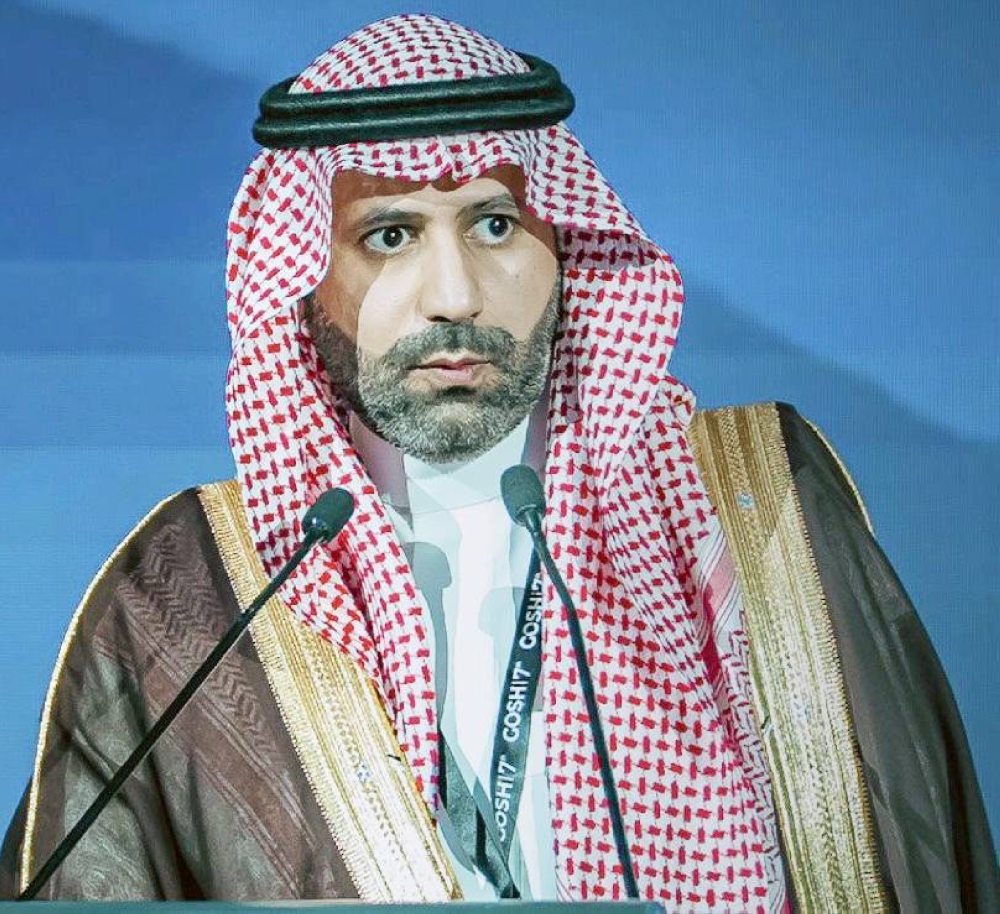
Assistant Minister of Education, Engineer Mohammed Al-Ghamdi, revealed that chronic diseases resulting from work conditions have become a growing threat to the health of workers and the safety of the work environment, stressing the need for authorities and institutions to bear double responsibility towards this escalating phenomenon.
During his participation in the Occupational Safety and Health Conference, he said: “Traditional treatments are no longer sufficient, as the latest reports indicate that chronic diseases due to working conditions pose a threat and impose a double responsibility on us, requiring us not to remain in reaction, but to move to anticipation and anticipation.”.
He stressed that dealing with the challenge requires developing advanced scientific models based on data analysis, understanding human behavior, and adapting technology to serve work environments, noting that the shift from reactive methods to a proactive approach enhances the protection of workers and raises the efficiency of institutional performance in various sectors.
Related News




Politics
Iranian attacks on Qatar and Bahrain: Hamad Airport targeted, and the Gulf response
The Qatari Foreign Ministry announced the thwarting of Iranian attacks targeting Hamad International Airport and the downing of hostile aircraft, while Bahrain sounded its air raid sirens. Details of the Iranian escalation against the Gulf states.

In a dangerous escalation threatening the security and stability of the Arabian Gulf region, Iran has continued its blatant violations of international laws and norms through a series of flagrant attacks targeting vital civilian infrastructure in the Gulf Cooperation Council (GCC) countries. The Qatari Ministry of Foreign Affairs revealed today (Tuesday) details of a series of malicious attacks targeting Hamad International Airport, one of the world's most important air transport hubs, confirming that Qatari defenses successfully thwarted these hostile plots.
Details of the attacks on Qatari territory
The official spokesperson for the Qatari Ministry of Foreign Affairs, Dr. Majid Al-Ansari, stated that the Iranian attacks were not limited to military targets, but had taken a dangerous turn by encompassing the entire Qatari territory and targeting civilian facilities crowded with civilians and travelers. In his statement, Al-Ansari explained that Qatari authorities dealt firmly and efficiently with the Iranian aircraft that violated the country's airspace on Monday, issuing direct warnings before shooting them down to ensure the safety and security of Qatari airspace.
The spokesperson emphasized the readiness of Qatar's defense system to deal with any emergency, noting that Doha's stockpile of interceptor missiles remains undiminished and is capable of repelling any potential aggression. He concluded by firmly affirming that the State of Qatar reserves its full right to respond to these blatant attacks at the appropriate time and place, in a manner that guarantees the protection of its sovereignty and the security of its citizens and residents.
Security alert in the Kingdom of Bahrain
In conjunction with the rapidly unfolding events in Doha, the Kingdom of Bahrain experienced a state of high alert, with the Bahraini Ministry of Interior announcing the sounding of sirens throughout the country. The Ministry urged citizens and residents, through its official channels, to exercise caution and immediately seek shelter in safe locations, a clear indication of the seriousness of the threats affecting the region and the widening scope of the escalation.
Regional context and the importance of stability in the Gulf
These rapid developments come at a time of escalating geopolitical tensions in the Middle East, casting a shadow over the regional security landscape. The Arabian Gulf region holds paramount strategic importance for the entire world, not only as a major source of global energy but also as a vital artery for international trade, maritime navigation, and air traffic. The Gulf states have long been a pillar of stability in the region and have consistently strived to spare their people the ravages of conflict.
Violation of international conventions and threats to civilians
Targeting civilian facilities and vital infrastructure such as airports is a clear and blatant violation of international humanitarian law, UN charters, and the Geneva Conventions, which criminalize endangering civilians during conflicts or political tensions. Observers and political analysts believe that this unjustified Iranian escalation against neighboring countries could drag the region into disastrous scenarios, necessitating a firm and unified international stance to deter such practices that undermine regional and international peace and security and threaten the safety of civilian air navigation.
Politics
Netanyahu: War with Iran will not be eternal and a dangerous escalation of the confrontation
Netanyahu tells Fox News that the war against Iran will not be endless, amid mutual shelling that has reached Tel Aviv and Tehran and the conflict has expanded to include Lebanon and the Gulf on its fourth day.

In pivotal remarks reflecting the evolving military landscape in the Middle East, Israeli Prime Minister Benjamin Netanyahu asserted that the current war against Iran "will not last years," dismissing speculations that likened the present confrontation to previous protracted regional conflicts of attrition. These statements come at a highly sensitive time, as the conflict expands to encompass multiple fronts, from Lebanon to the Gulf states, foreshadowing major geopolitical shifts in the region.
Netanyahu's messages via American media
In an exclusive interview with Hannity on Fox News, Netanyahu was careful to send dual messages to both the Israeli public and the international community. He explained that the military operation might "take some time" to achieve its strategic objectives, but stressed that it "will not be an endless war." Analysts suggest that this statement aims to reassure Western allies concerned about the region sliding into a full-blown war, while simultaneously maintaining high expectations for the Israeli military.
Day Four: Tel Aviv Under Fire
On the ground, the confrontation entered its fourth day with unprecedented intensity (Tuesday), as Tel Aviv and its surrounding areas endured harrowing hours as explosions rocked the city center. Israel activated its advanced air defense systems to intercept volleys of Iranian missiles, a development that reshapes the traditional rules of engagement between the two sides and shifts the conflict from a proxy war to a direct and open confrontation deep within Israel's territory.
The target bank has expanded: from Tehran to Beirut
In a significant development reflecting the widening scope of operations, Israel launched a series of precise and daring airstrikes targeting a complex housing the Iranian state broadcaster in Tehran, a major symbolic and military escalation targeting symbols of Iranian sovereignty. Simultaneously, the northern front remained active, with the Israeli army targeting Hezbollah elements and infrastructure in several Lebanese towns, underscoring the interconnectedness of the various fronts in this complex conflict.
Regional and international dimensions of the conflict
These events cannot be understood in isolation from the broader regional context. The involvement of Gulf states in the crisis—whether through direct impact or political stances—places the entire region at a historical crossroads. Talk of the war spreading to the Gulf raises global concerns about energy security and international navigation, necessitating intensive diplomatic efforts. In this context, Arab positions, including the Saudi stance, emerge as a vital balancing force seeking to spare the region the devastation of a comprehensive war that could consume everything.
Politics
Afghanistan-Pakistan clashes: 42 dead and a dangerous military escalation
A UN report reveals that 42 civilians were killed in clashes between Afghanistan and Pakistan. Learn about the details of the military escalation in Kandahar, the background of the border conflict, and its impact on the region.

In a dangerous escalation of the security situation along the border, the United Nations Assistance Mission in Afghanistan (UNAMA) announced on Tuesday a staggering toll of civilian casualties resulting from the ongoing military operations. The mission reported that at least 42 civilians were killed and 104 others sustained injuries of varying severity during a wave of intense clashes between Afghan and Pakistani forces between February 26 and March 2.
The UN mission explained in its statement that these figures are still preliminary and subject to increase, noting that the vast majority of victims fell as a result of indirect artillery shelling and airstrikes that targeted populated areas and civilian homes on both sides of the border, at a time when the military conflict entered its sixth day amid fears of the confrontations widening.
Field developments and exchange of control
On the ground, military tensions remain at their peak, with Afghan authorities officially announcing their control over a new Pakistani military post in the southern province of Kandahar, confirming that fighting "is still ongoing" and that Afghan forces are on high alert to respond to any sources of fire.
Background of the conflict and historical tension
This military escalation is the latest episode in the ongoing tensions between the two neighbors, which have intensified significantly since the Taliban's return to power in Kabul in 2011. The disputes primarily revolve around the Durand Line, which Kabul does not recognize as an official international border, as well as mutual accusations of harboring armed groups. Islamabad accuses Afghanistan of turning a blind eye to the activities of the Pakistani Taliban, which carries out attacks inside Pakistani territory—an accusation Kabul consistently denies.
Humanitarian and political repercussions
This armed conflict exacerbates the humanitarian suffering of the Afghan people, who are already reeling from a crippling economic crisis and a series of natural disasters, the most recent being devastating earthquakes. The exchange of fire is displacing families from border villages and disrupting trade and border crossings, which are a lifeline for local residents. Observers believe that this escalation could lead to a deeper diplomatic rift, further complicating the international community's efforts to deliver humanitarian aid and stabilize a region plagued by chronic insecurity.
-

 Local News 3 days ago
Jeddah Airport alerts for travelers due to airspace closure and flight disruptions
-
Local News 5 days ago
Saudi Arabia approves regulations for the continued presence of Gulf vehicles: duration and penalties
-
Local news one week ago
The Ministry of Interior begins procedures for a royal pardon for common law prisoners
-
Local news one week ago
The deadline for property registration in Hail and Riyadh is Thursday
-
Sports one week ago
Tickets for the Al-Ahli vs. Al-Hilal King's Cup match postponed: New date
-
Local news one week ago
Under the patronage of the Minister of Information, an agreement was signed between the Ministry of Information and Waves Marketing Company
-
Culture and Art 6 days ago
The Devil's Prisons series was halted: The full story of "The Emperor's" being moved to YouTube
-
Local news one week ago
Saleh Al-Maghamsi appointed Imam of the Prophet's Mosque: Details of the Royal Decree