Politics
The Diriyah talks dissolve the differences between the two poles
Taking a photo in Riyadh of the ministers of the world's two greatest superpowers is both encouraging and thought-provoking! Which country has managed to achieve this?

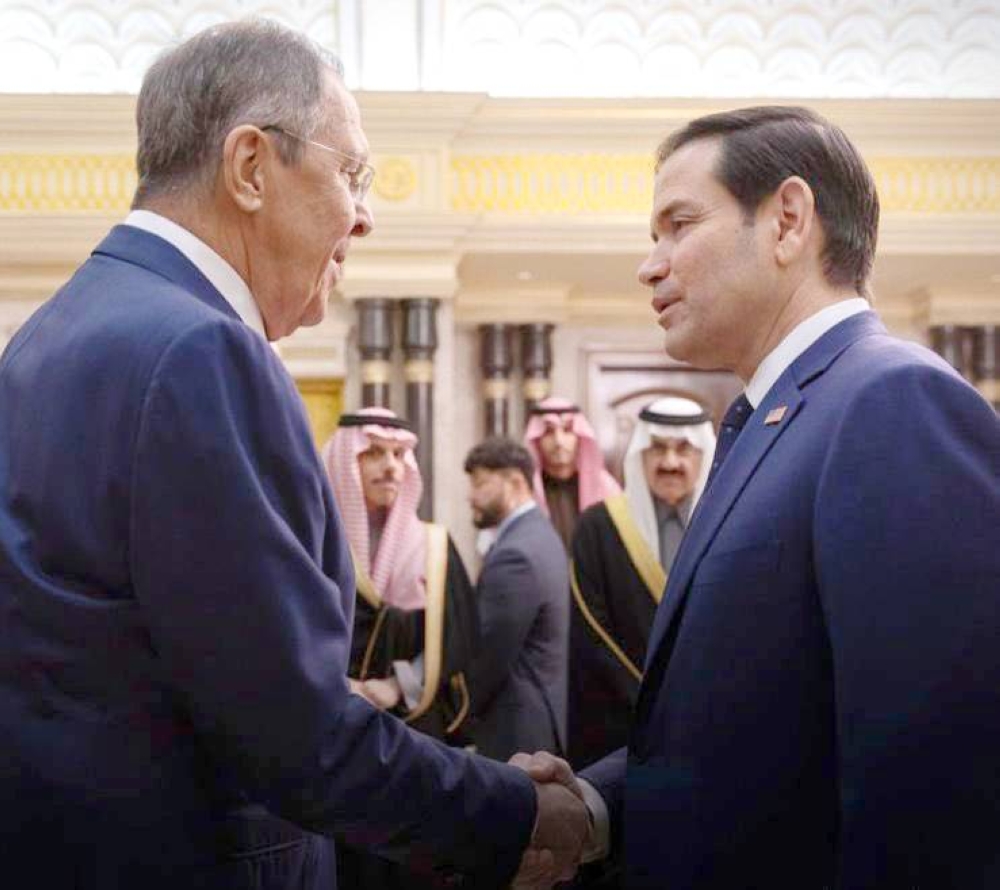
Taking a picture in Riyadh of the ministers of the two largest superpowers in the world is something that calls for optimism and reflection! Which country was able to melt the ice between two countries that have deep gaps between them at all levels?.
A week ago, the world looked different and the pattern of US-Russian political relations was bleak. It only took a touch of political mediation from Riyadh for the image of US-Russian coordination to return to the forefront to what it was before the Ukrainian crisis.
Riyadh was on the cusp of a major event and a profound change on the international political map when US Secretary of State Marco Rubio and his Russian counterpart Sergey Lavrov met in the Saudi capital, Riyadh. No other party in the world was able to capture such a picture at a time when US-Russian relations were at their lowest point since February 2022 when the Russian-Ukrainian war began, but Riyadh's political qualifications and international reputation prompted it to hold such a meeting.
In its report, CNN said that Moscow had achieved real practical results. Also, US Secretary of State Marco Rubio suggested that the US and Russian embassies return to a higher level of representation, after reciprocal expulsions that began when Russia used a nerve agent on British soil against former Russian spy Sergei Skripal.
Russia is coming back from isolation, perhaps for very logical reasons, but that comeback, which began with the Kremlin's release of American teacher Mark Fogel, is now continuing with a partial restoration of diplomatic norms.
In contrast, the United States of America won a round of rearranging the world, especially with a country the size of Russia. This also enables it to rearrange the relationship with Europe, which has always been fluctuating during the Trump era due to security considerations. This means that this Russian-American meeting is a meeting of "winners".
Although the primary objective of this meeting in Riyadh was to demonstrate goodwill from both sides, Riyadh's ambition is greater than that, aiming for a Russian-American summit between US President Donald Trump and his Russian counterpart Vladimir Putin. This would set new parameters for the world, given that they are the two most influential countries in all political and economic conflicts and disputes.
Related News
Over the past years, Riyadh has been a destination for many major meetings and a place of appeal to the world. If we look at the range of international political relations that Riyadh has, from Washington to Moscow to Beijing, we see that the Saudi initiative is qualified to be the beginning of defining the Russian-American relationship, and thus arranging the world from the perspective of the major players.
It is difficult to bring together two heads and two giants, Russia and America, and it is even more difficult to bring together the solid and stubborn Putin and the volatile and resolute Donald Trump. Perhaps it is a historic meeting that carries within it the challenges of success, because bringing together the two men would indeed change a lot of this world.
We must ask why Saudi Arabia is playing this role, and how it can succeed in sending a new message to the world that the new international system must be based on visions agreed upon by the major powers
There is no doubt that the political trust enjoyed by the Kingdom of Saudi Arabia is rare in this world, which is experiencing a state of polarization. The second issue is that Riyadh, in all circumstances, has relied on its political weight and its balanced relations between East and West. Although Saudi Arabia is the historical ally of the United States of America, it is at the same time an ally of Russia and China. Herein lies the qualification of the Saudi leadership for such dialogues and mediations between the two largest powers in the world.
Saudi Arabia has taken the first step towards US-Russian rapprochement through the two foreign ministers who emerged with a high dose of optimism in rearranging problems and dilemmas in order to solve them. As for the second step to move to the higher level, it is still being prepared, but all indications say that the (Putin-Trump) meeting is imminent. This meeting is awaited by Europe, China, India and many countries, and it seems that it will be the major transformation at the global level, especially if two people of the stature of Trump and Putin agree. Then Saudi Arabia will have contributed to achieving the deal of the century for the security and stability of the region and the world.
Saudi Arabia has engaged in many mediations and contributed to resolving many global conflicts, due to the political credibility it enjoys, and today it certainly relies on this deep political legacy of credibility and reliability.




Politics
Banning Hezbollah's military activities: A historic government decision led by Joseph Aoun
The Lebanese cabinet, headed by Joseph Aoun, has decided to ban Hezbollah's military activities. An analysis of the historic decision and its impact on state sovereignty and Lebanon's political future.

The decision taken by the Lebanese cabinet, headed by President Joseph Aoun, on Monday, to ban Hezbollah's military and security activities was not merely a knee-jerk reaction to a passing security incident. Rather, it was a deliberate and strategic political step in response to an escalating trend that began with the ceasefire agreement of November 2014. During this critical period, the state's authority has been subjected to continuous and severe testing, coinciding with Hezbollah's escalating and repeated rhetoric and its persistent insinuations that weapons outside the legitimate institutions constitute a guarantee of the state's survival. Faced with this complex reality, the government and its de facto head, constitutionally speaking, were presented with two options, and only two: either to practically establish the state's authority and enforce its sovereignty, or to accept its gradual and eventual erosion.
Historical context and the equation of the state
In this context, the Cabinet's decision acquires pivotal and historic significance. For the first time, a Lebanese government has taken a clear and direct decision to ban illegal armed displays, which recalls the essence of the Taif Agreement (1989), which explicitly stipulated the dissolution of militias and the monopoly of arms by the Lebanese state. The issue of illegal weapons has long been the most prominent obstacle in Lebanese politics, as the proliferation of arms has paralyzed political life and isolated Lebanon from its Arab and international environment for many years. This governmental move reaffirms the concept of the "state's monopoly on violence" as a fundamental pillar for building stable nations.
Political and strategic dimensions
This bold move, spearheaded by President Joseph Aoun, marks a turning point in the official approach to international resolutions, particularly Resolutions 1559 and 1701, which the international community has long demanded be fully implemented. The shift from a phase of "crisis management" and acquiescence to a phase of "decision-making" reflects a genuine desire to restore the prestige of the state and its military and security institutions. This decision sends a clear message, both domestically and internationally, that the Lebanese government has resolved to reclaim its sovereign decision-making power, independent of the regional influences that have dominated the scene for years.
Expected impacts locally and internationally
Domestically, this decision is expected to usher in a new era of security and stability, which could positively impact economic confidence and attract investments that fled the country due to security concerns and political uncertainty. Regionally and internationally, banning Hezbollah's military activities will reopen channels of diplomatic and financial support for Lebanon, as donor countries and the International Monetary Fund have long conditioned their aid on the state extending its full sovereignty over its territory and borders. This is a pivotal moment, presenting Lebanon with an existential choice: either to enshrine the rule of law and institutions, or to revert to chaos. It appears the government has made its choice in favor of the state.
Politics
Khamenei's wife dies after US-Israeli attack: Details and repercussions
Iran announced the death of Mansoureh Khojasti, Khamenei's wife, from injuries sustained in the US-Israeli attack. Learn details of the assassination and the Revolutionary Guard's escalation in the Strait of Hormuz.
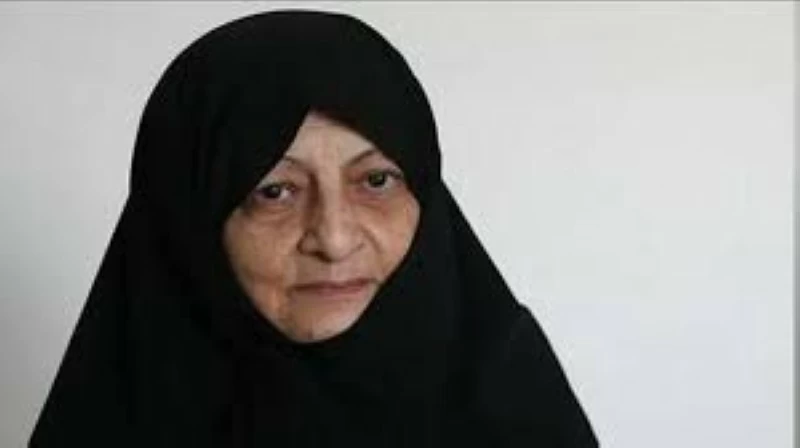
Iranian state media announced on Monday the death of Mansoureh Khojasti Bagherzadeh , wife of Iranian Supreme Leader Ali Khamenei, from injuries sustained in the recent US-Israeli attack. This announcement further heightens the already unprecedented tensions in the region, particularly following reports confirming that the Supreme Leader's residence in Tehran was targeted.
Details of the attack and confirmation of the death
According to the Tasnim news agency and other official sources, Ms. Mansoureh Khojasti passed away two days after the US and Israeli attack last Saturday, which directly targeted the presidential residence and the Supreme Leader's headquarters. This attack, according to the official account, resulted in the death of Supreme Leader Ali Khamenei and several members of his family, in what is considered the most serious incident of its kind in the history of the conflict between Tehran and Washington.
In the context of official procedures, the Iranian authorities declared a period of national mourning for 40 days, in addition to suspending official departments and declaring a 7-day holiday, in honor of the victims and to emphasize the severity of the injury inflicted on the political system in Iran.
Historical background and context of the event
Mansoureh Khojasti Bagherzadeh remained a prominent figure throughout her husband's rule, having married Ali Khamenei in 1964 and stood by him through the Iranian Revolution and subsequent major political events. Her passing, along with her husband, at this time marks a pivotal turning point in the Iranian domestic landscape.
This military escalation comes at a time when international relations are experiencing significant complications, as observers believe that targeting the head of the pyramid in the Iranian regime represents a radical change in the rules of engagement, and shifts the confrontation from proxy wars to direct clashes that could drag the region into unknown scenarios.
Military escalation in the Strait of Hormuz
Coinciding with the announcement of the death, military activity in the territorial waters escalated. The Iranian Revolutionary Guard announced that it had targeted a fuel tanker in the Strait of Hormuz with two drones, causing it to catch fire. The Strait of Hormuz is a vital waterway through which a large portion of the world's oil supply passes, and any tension there has an immediate impact on energy markets and the global economy.
The Revolutionary Guard confirmed launching a new wave of retaliatory attacks, while media reports spoke of the use of new missile models that had not been previously revealed, indicating that the Iranian response may go beyond the traditional boundaries of previous confrontations, amid international fears of the conflict expanding to include international shipping lanes and military bases in the region.
Politics
Araqchi and Woitkov clash: Will it end diplomacy and ignite war?
Details of the heated exchange between Abbas Araqchi and Steve Witkopf regarding Iran's nuclear program. Will it hasten the collapse of talks and the outbreak of a military confrontation? An NBC report reveals the behind-the-scenes details of the clash.
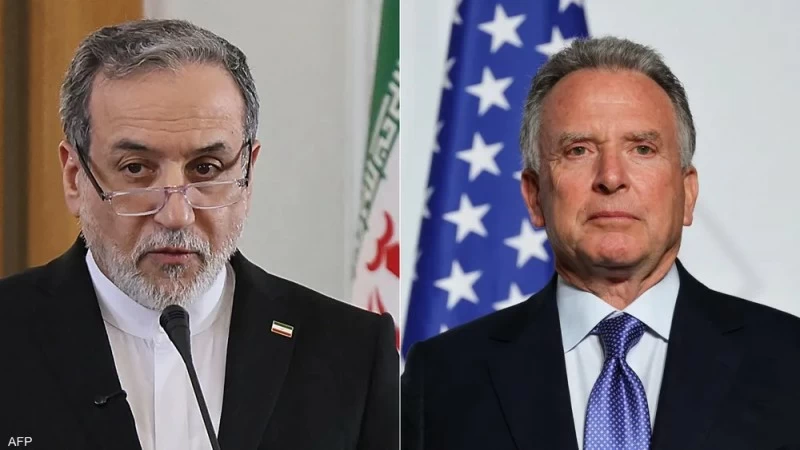
American media reports, citing NBC News, revealed details of a heated and unprecedented verbal exchange that took place behind closed doors between Iranian Foreign Minister Abbas Araqchi and US envoy Steve Wittkopf. This incident, which occurred during sensitive talks, is being interpreted as a dangerous sign that the diplomatic process has reached a dead end, paving the way for more dire scenarios that could include a direct military confrontation.
Details of the diplomatic clash
According to US administration officials, tensions rose at the meeting when the American delegation, led by Wittkopf, presented stringent conditions that Tehran considered a crossing of red lines. The American demand centered on Iran refraining from significant steps in its nuclear program, specifically a complete freeze on uranium enrichment for the next ten years. This proposal was met with firm rejection and strong reservations from the Iranian side.
During the debate, Abbas Araqchi reiterated his country's commitment to what he called its "inalienable right to uranium enrichment" for peaceful purposes, based on national sovereignty. However, the response from US envoy Steve Wittkopf was swift and sharp, as he interrupted his counterpart, stating that the United States also possessed "an inalienable right to defend its national security and prevent the proliferation of nuclear weapons that threaten global stability," thus ending the discussion on a high note.
Background to the nuclear crisis and history of setbacks
This dispute cannot be separated from the complex historical context of US-Iranian relations, particularly since Washington's unilateral withdrawal from the Joint Comprehensive Plan of Action (JCPOA) in 2018. Since then, the pace of Iran's nuclear program has accelerated, with reports from the International Atomic Energy Agency indicating that Tehran has reached enrichment levels close to weapons-grade (60%). This backdrop made the current talks a last chance to salvage the situation. However, the vast gap between US demands for a return to strict restrictions and Iran's insistence on lifting sanctions and preserving the gains of its nuclear program has made a clash inevitable.
The repercussions of failed diplomacy regionally and internationally
This diplomatic impasse carries serious implications that extend far beyond closed-door meetings. The failure of the talks effectively erodes peaceful options, placing the entire region on a knife's edge. Observers believe this clash could be the spark that precipitates military action, whether by Israel, which constantly threatens to strike nuclear facilities, or through a US-led mobilization to impose a suffocating isolation that could escalate into limited clashes. The shift from quiet diplomacy to direct verbal sparring between senior officials reflects Washington's growing strategic impatience and Tehran's readiness for confrontation, foreshadowing a new phase of escalation that could redraw the geopolitical map of the Middle East.
-

 Local News 4 days ago
Saudi Arabia approves regulations for the continued presence of Gulf vehicles: duration and penalties
-
Local news two days ago
Jeddah Airport alerts for travelers due to airspace closure and flight disruptions
-
Local news one week ago
The Ministry of Interior begins procedures for a royal pardon for common law prisoners
-
Local News 6 days ago
The deadline for property registration in Hail and Riyadh is Thursday
-
Sports one week ago
Tickets for the Al-Ahli vs. Al-Hilal King's Cup match postponed: New date
-
Local News 7 days ago
Under the patronage of the Minister of Information, an agreement was signed between the Ministry of Information and Waves Marketing Company
-
Local news one week ago
Saleh Al-Maghamsi appointed Imam of the Prophet's Mosque: Details of the Royal Decree
-
Culture and Art 5 days ago
The Devil's Prisons series was halted: The full story of "The Emperor's" being moved to YouTube