
Politics
Manipulators of human lives
They disregard human lives in pursuit of financial gain, selling their consciences to the devil, leaving them dead and unchecked, and they cheat in products


They disregard human lives in pursuit of financial gain, selling their consciences to the devil, so they become dead and unchecked. They cheat in food products to promote expired goods, only to fall into the evil of their deeds after trading in people's health and lives.
The eyes of the relevant authorities and security personnel are vigilant, monitoring these violations at all times in order to protect human health and protect society from these evils.
A few days ago, three expatriates were arrested for fraud involving expired and unknown-origin food products. The Public Prosecution announced that it had begun the investigation procedures carried out by the Economic Crimes Prosecution, which revealed that the defendants had offered and stored more than 55 tons of chicken meat of unknown origin and expired, changed its packaging, and placed on it commercial data that did not conform to the truth, with an incorrect expiry date and place of production. They were arrested and referred to the Criminal Court to apply the penalties against them according to the Anti-Commercial Fraud and Commercial Data Laws.
The Public Prosecution affirmed that it will not hesitate to demand deterrent legal penalties against anyone who dares to commit such criminal acts that harm human health.
225 spoiled products
The Ministry of Commerce had previously publicized an establishment specializing in the sale of nuts and spice products after a court ruling convicted it and those responsible for it of violating the anti-commercial fraud system as a result of possessing and displaying expired food products.
The Ministry’s inspection teams in Rabigh Governorate revealed the seizure of 225 expired and spoiled products, which consist of almond oil, thyme, cardamom, black seed oil, aromatic flavors, and others.
The ministry published the court ruling issued by the Criminal Court in Jeddah, which included fining the violators, publicly shaming them, closing the facility for a week, and confiscating and destroying the seized products.
Tampering with expiration dates
The General Authority for Food and Drug seized about five tons of expired poultry whose expiry dates had been tampered with, in addition to seizing poultry and meat of unknown origin in a warehouse in Riyadh, which was prepared and ready for sale.
The Food and Drug Administration explained that during the inspection tours it carries out on food products and establishments, it visited a warehouse and found non-compliant food items, tools, and labels used to change expiration dates.
The Authority indicated that all food items, including poultry and meat, were seized and destroyed, in addition to imposing a financial penalty of 500,000 riyals on the establishment for violating an article of the Food Law which states that “it is not permissible to trade food if it is adulterated, or contains deceptive methods or practices that mislead the consumer.”.
Exploitation, monitoring, and confiscation
A three-member committee headed by the Jeddah Municipality confiscated 78 tons of adulterated honey, which was seized in a private factory belonging to one of the perfumery shops in Jeddah. This came after the General Administration for Monitoring and Addressing Negative Phenomena in the Jeddah Municipality monitored the second floor of the perfumery shop, which was operating an illegal and unlicensed factory to produce adulterated honey and store it in poor conditions and with a low level of hygiene, in addition to several other violations.
The site inspection resulted in the seizure of adulterated honey, in addition to detecting practices of changing trademarks and expiry dates. Dozens of packages of cosmetics, oils, and kohl powder that had been subjected to changes in their expiry dates were seized inside the shop and all were destroyed.
The Ministry of Commerce affirmed its continued commitment to addressing violations of the Anti-Commercial Fraud Law and applying the prescribed penalties against violators. The law stipulates penalties of up to three years imprisonment, fines of up to one million riyals, or both, and publicizing the violations at their own expense.
The ministry urged all consumers to report commercial violations.
187 violating establishments were identified
The General Authority for Food and Drug seized approximately 187 violating establishments and 277 types of products during 1959 monitoring and investigation tours that it carried out on establishments and products under its supervision in all regions of the Kingdom during May 2024.
Among the most notable seizures was that of a food establishment in Riyadh that was manufacturing and producing fresh juices inside an unlicensed warehouse with no external signage and a low level of hygiene. Expired raw materials were also found, and workers present during the inspection visit did not have health certificates. As a result of these violations, the establishment was closed, fined, and all products were seized and confiscated.
In the Eastern Province, the Food and Drug Authority received a report about a residential apartment where imported food items were being stored in an irregular manner. After verifying the storage violation, food products, some of which were expired, were found inside. The violating products were destroyed and official procedures were taken.
The Public Prosecution warns against product fraud
The Public Prosecution warned against committing the crime of product adulteration, emphasizing that such conduct is a major offense warranting arrest. This means classifying the product as non-compliant with approved standard specifications or unfit for use or consumption. The Public Prosecution clarified that any product that has been altered or tampered with in any way, thereby diminishing its material or intrinsic value—whether through addition, manufacturing, or otherwise—is prohibited and considered a major crime warranting arrest. This applies to the product's nature, type, form, components, attributes, requirements, characteristics, source, or quantity, including weight, volume, size, number, energy, or purity. The adulterated product or the materials used in its adulteration are harmful to human or animal health or affect their safety.
Deception, fraud, and violation
Lawyer and legal consultant Abdulaziz Dabshi confirmed that the Anti-Commercial Fraud Law has specified in its second article those who violate it, namely anyone who deceives or attempts to deceive in any way regarding any of the following matters: the nature of the product, its type, its kind, its components, its essential characteristics, the source of the product, and the quantity of the product, whether by weight, measure, size, number, energy, or standard. He said: “Anyone who adulterates or attempts to adulterate a product, or sells or displays an adulterated product, or possesses an adulterated product for the purpose of trading, or manufactures, produces, possesses, sells, or displays products that do not conform to approved standard specifications, is considered to be in violation of the system. Also, anyone who uses vessels, containers, packaging, or labels that do not conform to approved standard specifications in preparing or packaging products intended for sale, or who packs, bundles, ties, distributes, stores, or transports a product in violation of approved standard specifications, or who imports, manufactures, prints, possesses, sells, displays, or imports an adulterated product, is also considered to be in violation of the system.”.
Penalties for violators
Dabshi explained that Article 16 of the Violations System stipulates that anyone who commits one of the violations stipulated in this system shall be punished with a fine not exceeding 500,000 riyals, or imprisonment for a period not exceeding two years, or both.
Article 18 stipulates a fine not exceeding one million riyals, or imprisonment for a period not exceeding three years, or both, in two cases: first, if the act of deception—or attempted deception—is accompanied by the use of counterfeit or altered scales, measures, weights, stamps, or other testing instruments; or by the use of methods and means that render the weighing, measuring, or testing of the product inaccurate; or second, if the adulterated product or the materials used in its adulteration are harmful to human or animal health; or third, if any of the violations stipulated in Articles (3), (7), and (9) of this law are committed. It was emphasized that Article 25 stipulates that a summary of the final judgment of conviction for one of the violations stipulated in the preceding articles shall be published, at the expense of the convicted person, in two daily newspapers, one of which must be published in the region where the violation occurred or the nearest region.








Politics
Arabian Gulf Security Exercise 4: Enhancing security cooperation to counter threats
The “Arabian Gulf Security 4” exercise was launched in Qatar with specialized Saudi participation, with the aim of raising readiness and enhancing joint action among the Gulf Cooperation Council countries to confront security threats.
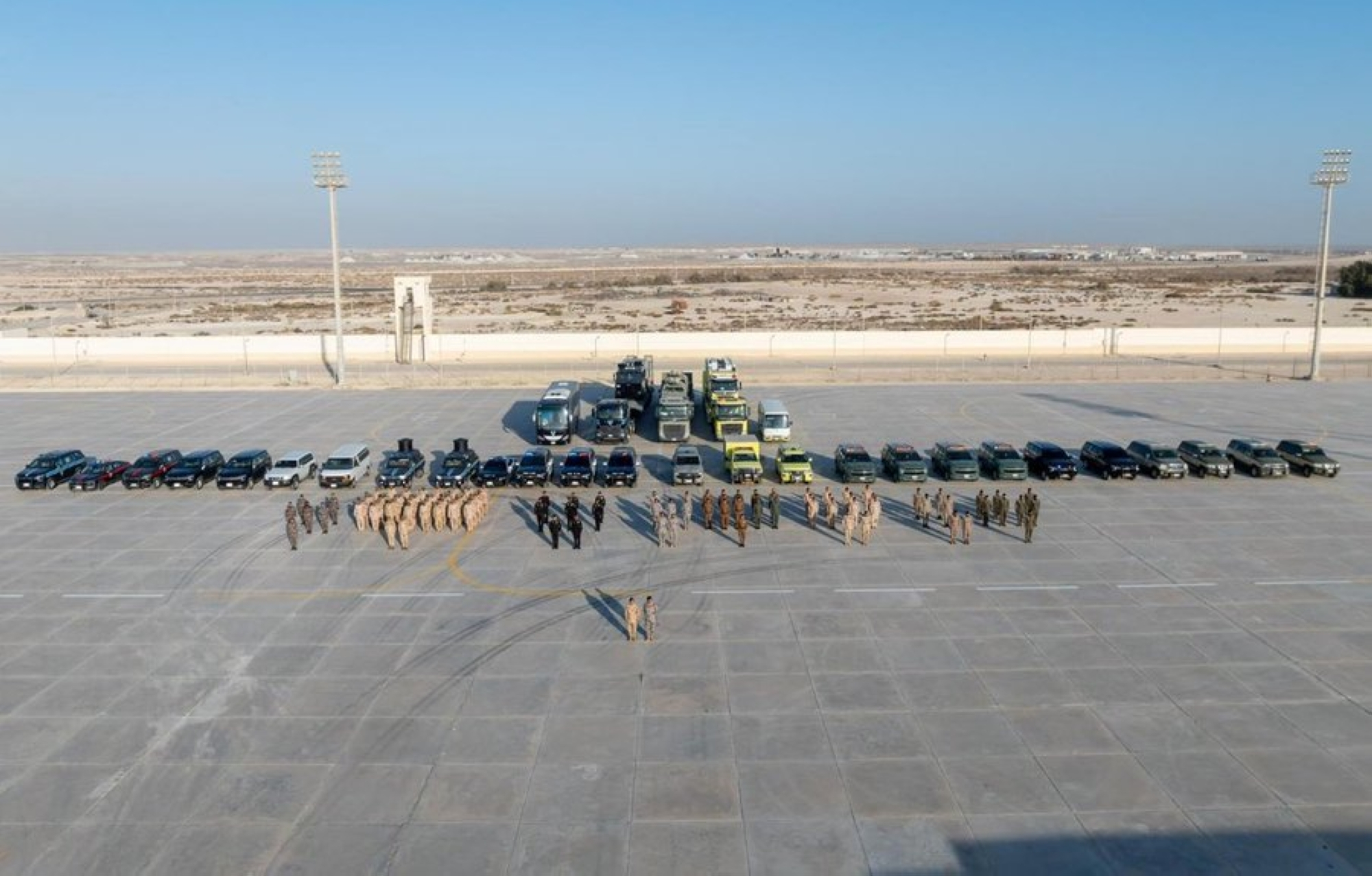
Colonel Dr. Ali Al-Qahtani, commander of the Saudi force participating in the “Arabian Gulf Security 4” exercise hosted by Qatar, affirmed that the exercise aims to counter potential threats and enhance regional security. Al-Qahtani explained that the Kingdom is participating with a specialized security force from the Ministry of Interior and the Presidency of State Security, reflecting the strategic importance Riyadh places on strengthening joint security efforts among the Gulf Cooperation Council (GCC) countries.
Background and context of the exercise
The “Arabian Gulf Security 4” exercise comes as a new link in a series of joint security exercises whose first version was launched in the Kingdom of Bahrain in 2016, followed by the second version in the United Arab Emirates in 2019, and then the third version in the Kingdom of Saudi Arabia in 2022. These periodic exercises are an embodiment of the security agreements between the GCC countries, and aim to unify concepts, coordinate efforts and raise the level of joint field work between the security agencies in the member states, thus ensuring a rapid and unified response to any security emergency.
Importance and strategic objectives
The exercise's objectives extend beyond routine training, focusing on developing security cooperation mechanisms, enhancing combat readiness, and exchanging expertise to address complex and emerging security threats. These threats include counterterrorism, transnational organized crime, cybersecurity, and securing vital infrastructure and maritime facilities. Through realistic scenarios, the exercise hones the participating forces' skills in command and control, operational management, and intelligence coordination, thereby strengthening their ability to operate as a cohesive and integrated force.
Regional and international impact
The timing of this exercise sends a clear message about the unity and solidarity of the Gulf Cooperation Council (GCC) states in the face of regional challenges. The high-level attendance at the opening ceremony, including Qatari Undersecretary of the Ministry of Interior Abdullah Al-Kaabi, Assistant Secretary-General for Security Affairs at the GCC Secretariat Brigadier General Hamad Ajlan Al-Amimi, and Chairman of the Saudi Joint Force Committee Major General Awad Al-Anzi, reflects the shared political will to support regional stability. This security cooperation not only protects the security of the GCC states but also extends to securing vital waterways and stabilizing global energy markets, making it of international importance.
The launch of the “Arabian Gulf Security 4” exercise is a significant strategic step to strengthen the collective security system of the Gulf states and affirms their readiness to deal with various potential scenarios and threats. The exercise represents a vital platform for exchanging expertise and developing capabilities, serving the security and stability of the region and its people.
Politics
The Security Council ends the mandate of the United Nations Mission in Hodeidah (UNMHA)
By a majority vote, the Security Council ended the mandate of the UN Mission in Yemen (UNMHA). Learn about the background of the decision and its impact on the Hodeidah Agreement and the future of the peace process.
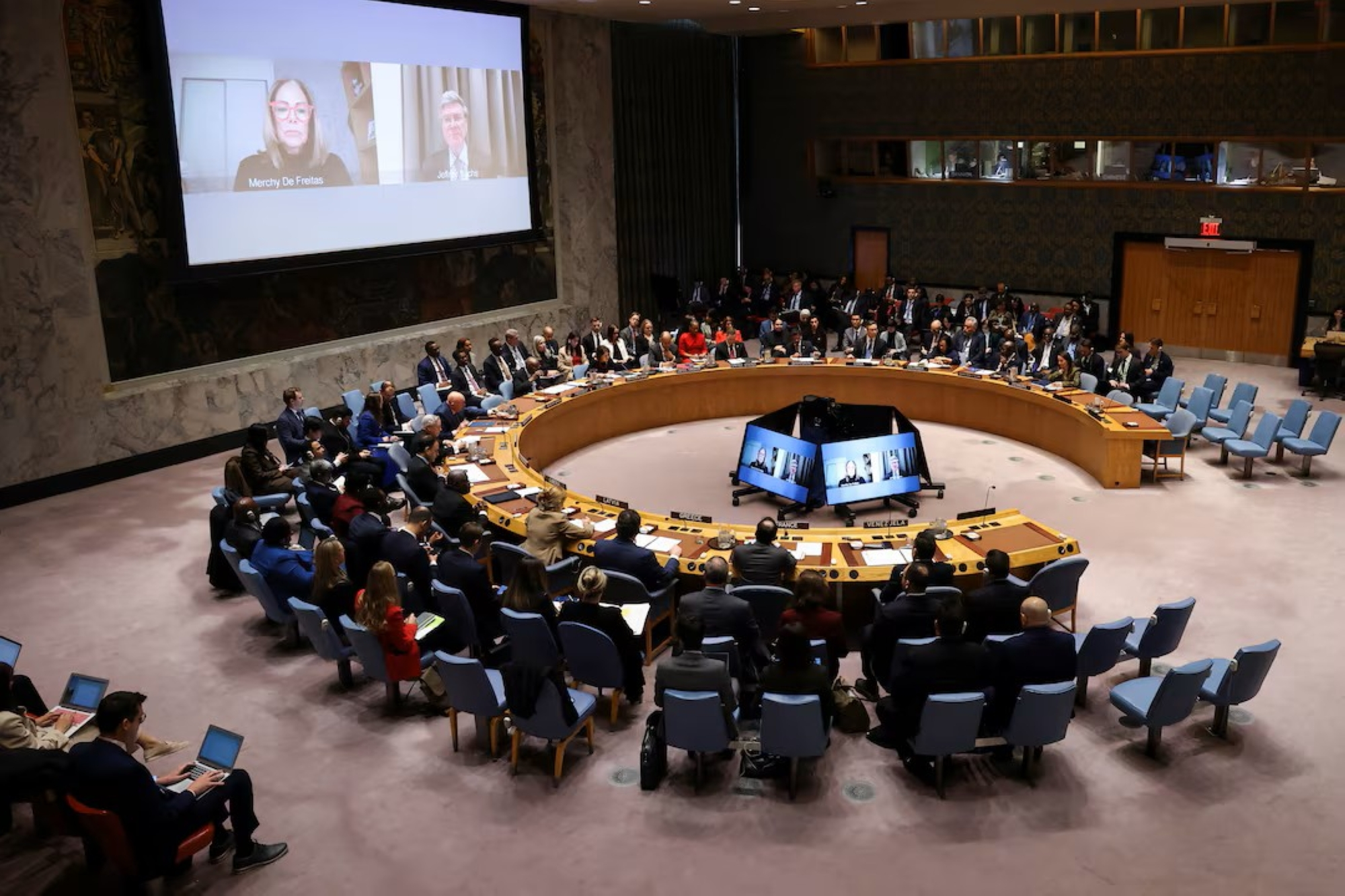
The UN Security Council announced its decision to end the mandate of the UN Mission to Support the Hodeidah Agreement (UNMHA) by the end of March, a move reflecting the significant challenges facing peace efforts in Yemen. The decision was adopted by a vote of 13 in favor out of 15 members, with Russia and China abstaining, indicating a division in international views on managing the Yemeni crisis.
Background to the establishment of the mission and the Stockholm Agreement
The United Nations Multidimensional Integrated Stabilization Mission in Yemen (UNMHA) was established in early 2019 as a key component of the Stockholm Agreement reached in December 2018 between the Yemeni government and the Houthi movement. The agreement's primary objective was to establish a ceasefire in the city of Hodeidah and its vital ports (Hodeidah, Salif, and Ras Isa), which serve as a crucial lifeline for humanitarian aid to millions of Yemenis. UNMHA was mandated to monitor the implementation of the agreement, including overseeing the ceasefire and the redeployment of forces from the ports and the city, and facilitating humanitarian operations.
Reasons for ending the mandate and its impact
The decision to end the mission, included in Resolution 2813 drafted by Britain, comes amid the stalled implementation of the Hodeidah Agreement. The US Deputy Ambassador to the Security Council, Tammy Bruce, directly stated that “the Houthis’ intransigence has rendered the mission ineffective,” arguing that its continuation was no longer worthwhile in the absence of progress. This decision coincides with escalating regional tensions, particularly Houthi attacks in the Red Sea, which have shifted the priorities of the international community and further complicated the already faltering peace efforts.
Transitional phase and future challenges
The resolution provides for a technical extension of the mission's mandate for an additional two months, until the end of March, to allow sufficient time for the orderly conclusion of its operations. During this period, the remaining tasks will be transferred to the Office of the Special Envoy of the Secretary-General for Yemen, with the complete liquidation of the mission to begin on April 1. The resolution also requests the Secretary-General of the United Nations, António Guterres, to present a clear and detailed plan for this transition process in consultation with the Yemeni parties.
The termination of UNMHA's mandate raises concerns about the future of the fragile ceasefire in Hodeidah and the potential for renewed military confrontations in this strategic region. It also raises questions about the effectiveness of international mechanisms in managing complex conflicts and places a greater burden on the diplomatic efforts led by the UN envoy to find a comprehensive and sustainable political solution to the crisis in Yemen.
Politics
The World Bank is providing Lebanon with $350 million to address the crisis
The World Bank has approved $350 million in new funding for Lebanon to support poor families and accelerate digital transformation, in an effort to mitigate the effects of the economic collapse.

The World Bank announced its approval of a new financing package for Lebanon totaling $350 million, a move aimed at mitigating the unprecedented economic crisis gripping the country. The funding is divided into two main tranches: $200 million earmarked for strengthening social safety nets and supporting the poorest families, and $150 million to accelerate the country's digital transformation project.
Context of the stifling economic crisis
This funding comes at a time when Lebanon is experiencing one of the most severe economic and financial crises in modern history, which began to unfold in late 2019. The World Bank itself has ranked this crisis among the three most severe global crises since the mid-19th century. The financial collapse has led to a devaluation of the Lebanese pound by more than 98%, wiping out citizens' savings and pushing more than 80% of the population below the poverty line. The situation was tragically exacerbated by the Beirut port explosion in August 2020, which devastated large parts of the capital and placed an enormous burden on the already strained infrastructure and healthcare sector.
Details of the support package and its objectives
The first tranche of funding, amounting to $200 million, aims to provide direct cash transfers to poor and vulnerable Lebanese families. This support is a lifeline for hundreds of thousands of families struggling to secure their basic needs for food, medicine, and education. The project focuses particularly on empowering women and youth by increasing their economic opportunities and improving their access to essential social services.
The second tranche, valued at $150 million, targets the digital transformation project. This project is of strategic importance given the inefficiencies of public administration and the low quality of government services. Accelerating digitalization is expected to improve the transparency of government transactions, reduce corruption, and facilitate access to public services for citizens and businesses, potentially creating a more favorable environment for economic opportunities and the growth of the technology sector in the country.
Importance and expected impact
At the local level, this funding represents vital, albeit temporary, support that helps prevent the complete collapse of the state and avert a wider humanitarian catastrophe. However, experts agree that it is not a fundamental solution to the crisis. A genuine and sustainable recovery for Lebanon hinges on implementing deep structural reforms, including restructuring the banking sector, implementing a financial recovery plan agreed upon with the International Monetary Fund, and combating the rampant corruption within state institutions.
Regionally and internationally, this move reflects the international community's continued concern about the repercussions of Lebanon's collapse on regional stability, particularly regarding sensitive security issues and the refugee crisis. This support is seen as part of a broader strategy aimed at providing direct humanitarian assistance to the Lebanese people while maintaining pressure on the political class to implement necessary reforms as a prerequisite for future financial support.
-

 Local News 3 days ago
Landslide in Riyadh: Details of the incident in Al-Sahafa neighborhood and containment efforts
-
 Local News 4 days ago
The death penalty was carried out against a citizen who stabbed another to death in Tabuk
-

 Culture and Art, 1 week ago
Ramez Galal in Ramadan 2026: Details of the bloody prank show
-

 Local News 5 days ago
First birth on the Riyadh train: A heartwarming story at Andalus station
-
 Local News 3 days ago
Riyadh collapse: Emergency plans to secure water after a main pipeline burst
-

 Culture and Art 3 days ago
Haifa Wehbe's absence in Riyadh: A photo crisis or a strained relationship with the media?
-

 Culture and Art 3 days ago
City Kitchen series: A drama of conflict and the middle class during Ramadan
-

 Culture and Art 3 days ago
The series "Kasra": Dawood Hussein in a moving social drama this Ramadan