Politics
The second edition of the "Building Bridges Between Schools of Thought" conference kicks off in Mecca today
Under the patronage of the Custodian of the Two Holy Mosques, King Salman bin Abdulaziz, the second edition of the International Conference kicks off today (Thursday):

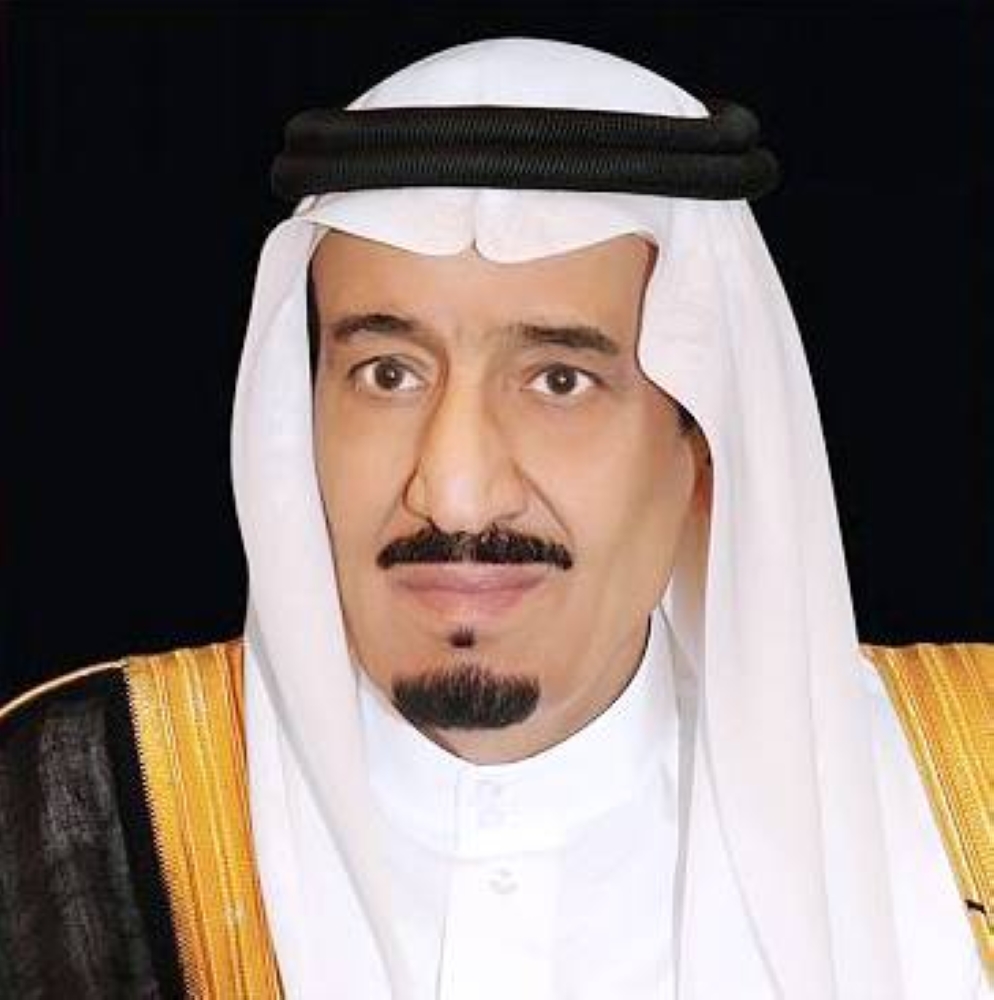
Under the patronage of the Custodian of the Two Holy Mosques, King Salman bin Abdulaziz, the second edition of the international conference, “Building Bridges Between Islamic Schools of Thought,” organized by the Muslim World League in the holy precincts of Makkah, will commence today (Thursday), with the attendance of senior muftis and scholars of the Islamic nation, from all schools of thought and doctrines from more than 90 countries.
This edition of the conference, entitled “Towards an Effective Islamic Alliance,” represents a further step in Islamic unity, towards an effectiveness that goes beyond the repetition and reiteration of dialogues, to the development of practical programs for the document on building bridges between Islamic schools of thought, and the coordination of positions to confront common challenges and dangers, establishing a systematic approach that crystallizes into initiatives and projects that promote the approach of moderation, and refute the discourse and practices of sectarianism.
While the first edition of the “Building Bridges Between Islamic Schools of Thought” conference and its comprehensive document embodied the wisdom and breadth of Islam, and laid the foundations for coordinating positions and efforts in the field of work between the forces of Islamic moderation with their different schools of thought and sects, for the good of the Islamic nation and its service, and to confront the forces of extremism and fanaticism, which have distorted the image of our true religion, Islamic work continues in this edition, on a common word, whose root is firm, and whose branch is in the sky, where those firmly grounded in knowledge gather, in the embrace of their comprehensive Qibla, to launch towards broader horizons towards their solidarity and cooperation, and to transcend the past of apprehensions to the arena of brotherhood and its high Islamic etiquette.
The Muslim World League, on behalf of the scholars of the nation who came from around the world to this holy land in Mecca to participate in the conference, expressed its deepest thanks, appreciation and gratitude to the Custodian of the Two Holy Mosques, King Salman bin Abdulaziz, and the Crown Prince, Prime Minister, Prince Mohammed bin Salman bin Abdulaziz, for what they have done and continue to do to serve Islam and Muslims, strengthen their solidarity, and elevate their status.
Related News




Politics
Khamenei's successor: The Assembly of Experts is taking action, and Washington prefers a friendly regime
Uncertainty surrounds Khamenei's successor after his assassination. The Assembly of Experts emphasizes the need for a swift selection, while Washington prefers a friendly regime without pursuing regime change. An analysis of the Iranian landscape.

The political landscape in Tehran remains shrouded in uncertainty and cautious anticipation following the announcement of the assassination of Iranian Supreme Leader Ali Khamenei in a series of airstrikes targeting his compound in the capital—an event marking a pivotal turning point in the history of the Islamic Republic. All eyes are now on the Assembly of Experts, the constitutional body tasked with selecting the country's supreme leader, amidst international and regional speculation about who will fill this significant leadership vacuum.
Council of Experts: The decision will not be long in coming
In the first official reaction to the succession process, Ali Moallemi, a member of the Assembly of Experts, stated that the selection of a successor to the Supreme Leader "will not take long." In press statements carried by the ISNA news agency, Moallemi emphasized that the Assembly is aware of the sensitivity of the current situation, noting that "members of the Assembly have sworn a constitutional and legal oath that personal desires or narrow factional and partisan affiliations will not interfere in the selection of the new Supreme Leader." This indicates the religious establishment's desire to demonstrate internal cohesion and quickly contain the situation.
Selection mechanism and historical background
To understand the context of this event, it's important to note that the Assembly of Experts consists of 88 jurists elected by direct vote. Their primary task, according to the Iranian constitution, is to appoint the Supreme Leader, oversee his work, and dismiss him if necessary. In this context, Iranian memory recalls the experience of 1989, following the death of the Islamic Republic's founder, Ruhollah Khomeini. The Assembly convened in an emergency session and selected Ali Khamenei as his successor in a swift transition that averted chaos. Today, the Assembly faces a similar challenge, but within a more complex geopolitical landscape.
The American position: Seeking a friendly regime
Internationally, American statements reflected a delicate balance between strategic interests and political realism. US Vice President Jay D. Vance explained that the US administration was closely monitoring the situation, noting that Washington "prefers a friendly regime" in Tehran. These statements suggest that the United States, despite deep disagreements, may not necessarily seek "regime change" in the radical sense that could lead to regional chaos, but rather aspires to the rise of a new leadership that might be more pragmatic or less confrontational with Western interests.
Potential regional and international repercussions
This event carries implications that extend far beyond Iran's borders. The Supreme Leader has the final say on foreign and military policy, including managing the nuclear program and supporting regional allies. Therefore, the identity of the next Supreme Leader will determine the shape of future relations with neighboring countries and major powers. Observers fear that any prolonged period of political vacuum could lead to internal power struggles that could negatively impact regional stability and global energy markets, which explains the Assembly of Experts' haste in reassuring both domestic and international audiences.
Politics
Saudi Arabia condemns the Iranian attack on the US embassy and vows to retaliate
The Kingdom strongly condemns the Iranian attack on the US Embassy in Riyadh, and affirms its right to respond and protect its territory, warning against a dangerous escalation that violates the Vienna Convention on Diplomatic Relations.

The Kingdom of Saudi Arabia today (Tuesday) expressed its strongest condemnation of the Iranian attack targeting the US Embassy in Riyadh. The Kingdom considers this hostile act a blatant violation of its sovereignty and a direct threat to security and stability in the region, affirming its categorical rejection of such criminal acts, which contravene all international values and principles.
Violation of international conventions and diplomatic immunity
The Kingdom affirmed in its statement that the repetition of this cowardly and unjustified attack blatantly violates all international norms and laws, most notably the 1949 Geneva Conventions and the 1961 Vienna Conventions on Diplomatic Relations. It is worth noting that the Vienna Convention explicitly stipulates the inviolability of diplomatic premises and obligates host states and all parties to protect diplomatic missions and their personnel, granting them full immunity even in cases of armed conflict. This makes this attack a grave violation of international law that warrants accountability.
A dangerous escalation despite de-escalation initiatives
The Kingdom stressed that this blatant Iranian behavior is occurring at a sensitive time, despite the Iranian authorities' full awareness of Saudi Arabia's balanced stance. The Kingdom has previously affirmed that it will not allow its airspace or territory to be used as a platform to target Iran. Analysts indicate that Tehran's attack, despite Saudi assurances, reflects a desire to push the region toward further escalation and chaos, and undermines any efforts aimed at strengthening regional security.
The right of reply and the protection of national sovereignty
In closing, the Kingdom reiterated its firm and legitimate right to take all necessary measures to protect its national security, territorial integrity, and the lives of its citizens and residents, as well as its vital interests. Riyadh clarified that all options remain on the table, including a military response to this aggression, noting that leniency towards such transgressions could embolden the aggressor to further recklessness, which the Kingdom will not permit under any circumstances.
Politics
Israel assassinates Reza Khazai, Hezbollah's military buildup chief
The Israeli army announces the assassination of Reza Khazaee, Hezbollah’s military buildup chief and a Quds Force commander, in a raid on Beirut that targeted Iranian supply lines.

The Israeli army officially announced today (Tuesday) the success of the assassination operation of Reza Khazaee, who is considered one of the most prominent pivotal figures in the military structure of Hezbollah, describing him as the official in charge of the “military build-up” file in the party, and the field representative of the Quds Force of the Iranian Revolutionary Guard in Lebanon.
In detailing the operation, the army statement explained that the Israeli Navy, in close coordination with Military Intelligence (Aman), carried out a focused airstrike yesterday (Monday) on an area in the Lebanese capital, Beirut. This strike resulted in the death of Khazaee, whom the statement revealed also held another sensitive position: Chief of Staff of the Iranian-backed "Lebanon Corps," making him a strategic target in Israel's target bank.
According to the intelligence cited in the statement, Khaza'i was considered the "right-hand man" of the commander of the Lebanese Corps and an indispensable central figure in Hezbollah's military buildup. His tasks focused primarily on logistical and strategic coordination between the party and Tehran, particularly regarding aligning the party's field military needs with the resources and technologies provided by Iran—a process known as "military buildup.".
Context of escalation and targeting of shadow leaders
This operation comes within the context of an intensive Israeli military and security campaign against Hezbollah's command structure and Iranian supply networks in the region. The term "military buildup" typically refers in Israeli military parlance to efforts to transfer and develop advanced weaponry, such as precision missiles, drones, and air defense systems—issues that Tel Aviv considers a red line that threatens the regional balance of power.
The targeting of a figure as influential as Reza Khazaee, who serves as a direct link to the Revolutionary Guard, reflects Israel's determination to strike at the "vital artery" that sustains Hezbollah's military capabilities. By eliminating key figures involved in liaison and military logistics, Israel seeks to cripple supply chains and disrupt military modernization plans that rely heavily on Iranian expertise and funding.
Regional dimensions of the operation
This assassination cannot be separated from the broader regional context, where a covert and overt war is being waged between Israel and the Iranian-led axis. Khazaee exemplifies the kind of commanders who operate behind the scenes to consolidate fronts and unify military efforts between Tehran and its proxies in the region. The Quds Force, which Khazaee represented, is the external arm of the Islamic Revolutionary Guard Corps (IRGC) responsible for operations outside Iran's borders, thus giving his assassination a dimension that extends beyond the Lebanese arena to the very heart of Tehran's strategic calculations.
Observers believe that intensifying the strikes in Beirut and targeting figures responsible for coordination, financing, and arming is aimed at putting military and political pressure on Hezbollah, in light of the ongoing confrontations on the northern border, and an attempt to reduce the party’s ability to replenish its strategic stockpile of weapons in the event of a full-scale confrontation.
-

 Local News 3 days ago
Jeddah Airport alerts for travelers due to airspace closure and flight disruptions
-
Local News 5 days ago
Saudi Arabia approves regulations for the continued presence of Gulf vehicles: duration and penalties
-
Local news one week ago
The Ministry of Interior begins procedures for a royal pardon for common law prisoners
-
Local news one week ago
The deadline for property registration in Hail and Riyadh is Thursday
-
Sports one week ago
Tickets for the Al-Ahli vs. Al-Hilal King's Cup match postponed: New date
-
Local news one week ago
Under the patronage of the Minister of Information, an agreement was signed between the Ministry of Information and Waves Marketing Company
-
Local news one week ago
Saleh Al-Maghamsi appointed Imam of the Prophet's Mosque: Details of the Royal Decree
-
Culture and Art 6 days ago
The Devil's Prisons series was halted: The full story of "The Emperor's" being moved to YouTube