Politics
Generosity without extravagance... Grace without hypocrisy
In the context of the Ministry of Islamic Affairs' efforts to promote Islamic values and raise awareness of the dangers of negative phenomena that have begun to spread


In the context of the Ministry of Islamic Affairs' efforts to promote Islamic values and raise awareness of the dangers of negative phenomena that have begun to spread in society, most notably the extravagance in preparing feasts and the excessive provision of food in varieties and quantities that do not correspond to the need, Minister Dr. Abdul Latif Al-Sheikh directed mosque preachers in various regions of the Kingdom to address the phenomenon of extravagance and wastefulness in feasts, and the related social practices and behaviors that are religiously and morally unacceptable, and to warn against extravagance and wastefulness in food, and to highlight the close relationship between gratitude for blessings and their continuation, and to point out that extravagance and wastefulness are among the reasons for the disappearance and loss of blessings. The most important message emphasized by the directive is to remind people of the profound harms of extravagance, whether on the religious level as it is a violation of the commands of God and His Messenger, or on the economic level in what it causes in terms of wasting money and wealth without benefit, or on the social level, as it leads some to fall into debt out of imitation and competition, and makes the needy and poor feel regret in the face of scenes of extravagance.
The directive included a warning against boasting in posting pictures of banquets on social media platforms, a phenomenon that has taken the act of hospitality from its honorable meaning into the realm of hypocrisy and reputation, in clear contradiction to the purposes of generosity and the rules of religion.
The Ministry of Islamic Affairs affirms, through this directive, its commitment to its advocacy and awareness-raising role in addressing societal phenomena in accordance with a moderate Sharia approach that reflects the tolerance of Islam and promotes a culture of responsibility and moderation, thereby contributing to the consolidation of authentic values that preserve blessings, protect public taste, and call for balance in behavior and spending.
Wash your hands with oud oil!
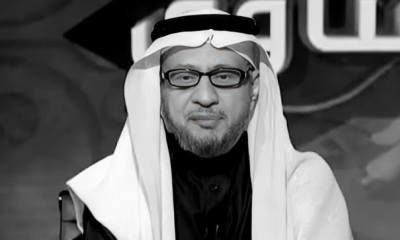
Social worker Samir Abdullah says: No sooner had society finished watching some strange practices and behaviors such as washing hands with oud oil, honey and ghee, than new behaviors appeared whose heroes were "show-offs" who were looking for camera lenses to gain praise. Among these are those who hold feasts by slaughtering dozens of sheep and camels for any occasion and put them in large dishes to gain attention and gain fame and reputation so that they are called generous, not caring that what they do is a kind of extravagance, wastefulness and excess.
Dr. Ghazi Ghazi Al-Mutairi, a professor at the Islamic University and formerly at Taibah University, believes that Islamic law does not prohibit the acquisition, growth, and accumulation of wealth; rather, it encourages it. However, it does prohibit the unlawful methods of acquiring and spending it. Among the unlawful methods of spending wealth are extravagance and wastefulness, whether on forbidden travel, lavish parties, or the purchase of unnecessary luxuries. Spending on parties where excess food ends up in the trash is an act of ingratitude, and Islamic law urges the preservation of blessings and the avoidance of waste and extravagance. He added that the displays of extravagance we witness are a desecration of these great blessings. Al-Mutairi called on society to reject and condemn these practices in compliance with the guidance of Islam, which encourages moderation in spending and the avoidance of waste. Media personality Ahmed Al-Dihani noted that this phenomenon has become less prevalent due to increased economic awareness.
How are the well-off doing? Al-Dihani added: Despite this, many flaws still mar the celebrations in our diverse societies. However, at the same time, we have begun to see a rise in awareness among many regarding the necessity of preserving blessings and avoiding extravagance, in addition to the religiously and customarily required practices of honoring guests. Therefore, this phenomenon seems to be receding, although many vestiges and renewed forms of what has become known as "showing off" persist, displaying blessings in a way that reflects foolishness and a loss of both reason and money. "I know elderly people in several regions who do not engage in these forms of displaying blessings in their celebrations, which are characterized by humility." Social worker Alia Al-Shamrani believes that this type of behavior stems from blind imitation among members of society, and it may be driven by a desire for fame and showing off in light of the social media revolution, which has facilitated what we are witnessing. She added that such extravagance may cause a social gap between people, especially among the well-off and those with financial means. In this case, society must move away from extravagance and imitation and return to simplicity and avoid ostentation and costs.
Related News






Politics
The European Union suspends trade measures against the US for six months
The European Commission has decided to extend the suspension of a package of retaliatory trade measures against the United States, in a move to promote dialogue and avoid a trade war that could affect the global economy.
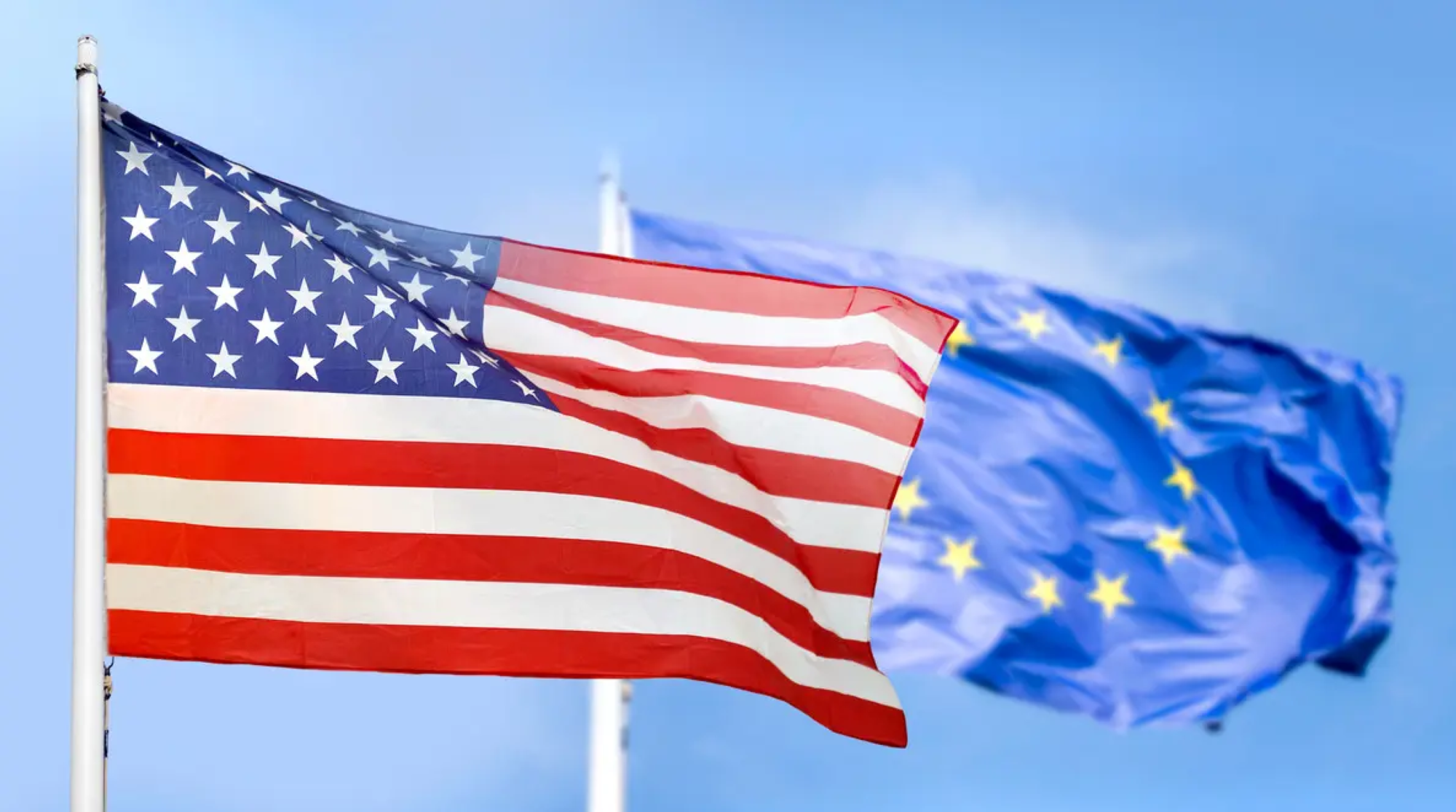
In a move aimed at easing transatlantic trade tensions, the European Commission intends to propose a six-month extension of the suspension of a package of retaliatory trade measures against the United States. This package, valued at €93 billion, was scheduled to take effect on February 7, but the new decision postpones its implementation and allows more time for diplomatic negotiations.
Background and historical context of the trade dispute
This tension stems from the trade policies adopted by the previous US administration under President Donald Trump, which included imposing tariffs on steel and aluminum imports from several countries, including traditional allies in the European Union, under Section 232 of the Trade Expansion Act of 1962, ostensibly to protect US national security. The European Union responded by preparing a list of countermeasures targeting symbolic US goods, such as motorcycles and agricultural products, with the aim of exerting political and economic pressure to force a reconsideration of the tariffs.
The importance of the suspension decision and its expected impact
The decision to extend the suspension is of paramount importance both regionally and internationally. At the European level, it spares European industries, particularly the automotive sector, from a costly trade war that could negatively impact economic growth and employment rates. At the American level, it provides a much-needed boost to US exporters to Europe and helps maintain market stability. Internationally, this move is seen as a positive signal toward a return to a rules-based global trading system, one based on dialogue rather than confrontation and unilateral tariffs, sending a reassuring message to a global economy already grappling with uncertainty.
Joint statement and the future of trade relations
This retaliatory package was first suspended last August after Brussels and Washington reached a joint statement aimed at defusing the crisis and working towards a negotiated solution. Olof Gill, the Commission's spokesperson, explained that with the US threats of new tariffs receding, it was now possible to focus on "the important work of implementing the joint statement." He added that the Commission would soon submit a formal proposal to extend the suspension of the measures, while emphasizing that "the EU reserves the right to lift this suspension in the future if necessary," thus keeping all options open should circumstances change.
Politics
Saudi Arabia strengthens its role in the Organization for the Prohibition of Chemical Weapons
Ambassador Shaher Al-Khunaini presented his credentials as Saudi Arabia’s representative to the Organization for the Prohibition of Chemical Weapons, affirming the Kingdom’s commitment to supporting disarmament and global security efforts.
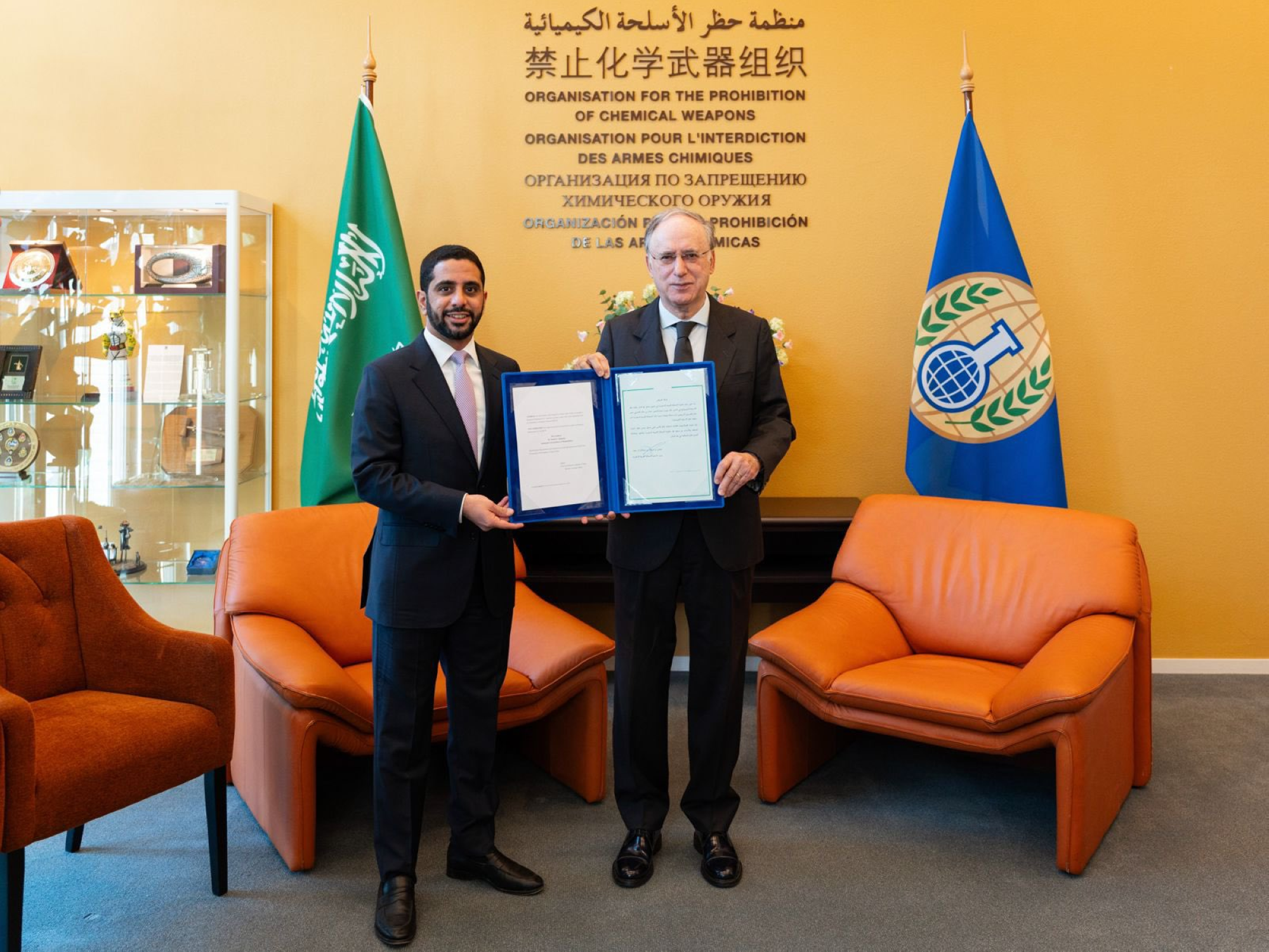
In a diplomatic move reflecting the Kingdom of Saudi Arabia's commitment to supporting international peace and security, the Ambassador of the Custodian of the Two Holy Mosques to the Kingdom of the Netherlands, Mr. Shaher bin Khalid Al-Khunaini, presented his credentials as the Kingdom's Permanent Representative to the Organisation for the Prohibition of Chemical Weapons (OPCW). The credentials presentation ceremony took place at the OPCW headquarters in The Hague, where he was received by the Director-General, Mr. Fernando Arias.
General context and role of the Organisation for the Prohibition of Chemical Weapons
The Organisation for the Prohibition of Chemical Weapons (OPCW), established in 1997, is the implementing body of the Chemical Weapons Convention, an international treaty aimed at eliminating an entire class of weapons of mass destruction. The OPCW verifies the destruction of declared stockpiles of chemical weapons and prevents their re-emergence anywhere in the world. For its tireless efforts in this area, the OPCW was awarded the Nobel Peace Prize in 2013, underscoring its pivotal role in the contemporary global security architecture.
The importance of the step and its expected impact
This appointment underscores the active role played by the Kingdom of Saudi Arabia in international organizations and its commitment to contributing to global efforts aimed at disarmament and non-proliferation. As a State Party to the Chemical Weapons Convention, the Kingdom consistently supports the Organization's activities and programs, believing in the importance of multilateral action to address global challenges. The presence of a permanent representative of the Kingdom enhances coordination and cooperation with the Organization and its member states, and contributes to conveying the Kingdom's vision and positions on issues related to chemical security.
Regional and international repercussions
Regionally, this step is of particular importance, as it reaffirms the Kingdom's ongoing call to make the Middle East a region free of all weapons of mass destruction, a cornerstone for achieving stability and sustainable security in the region. Internationally, this high-level diplomatic representation enhances Saudi Arabia's standing as a responsible and reliable international partner, actively participating in shaping international policies related to security and disarmament. It is worth noting that Ambassador Al-Khunaini presented his credentials to His Majesty King Willem-Alexander of the Kingdom of the Netherlands on Wednesday, as the Kingdom's ambassador, embodying the dual role of Saudi diplomacy in strengthening bilateral relations and supporting international collective action.
Politics
Al-Khunaini appointed as Saudi Arabia's representative to the Organization for the Prohibition of Chemical Weapons
Ambassador Shaher Al-Khunaini presented his credentials as the Permanent Representative of Saudi Arabia to the Organization for the Prohibition of Chemical Weapons, reinforcing the Kingdom’s commitment to international peace and security.
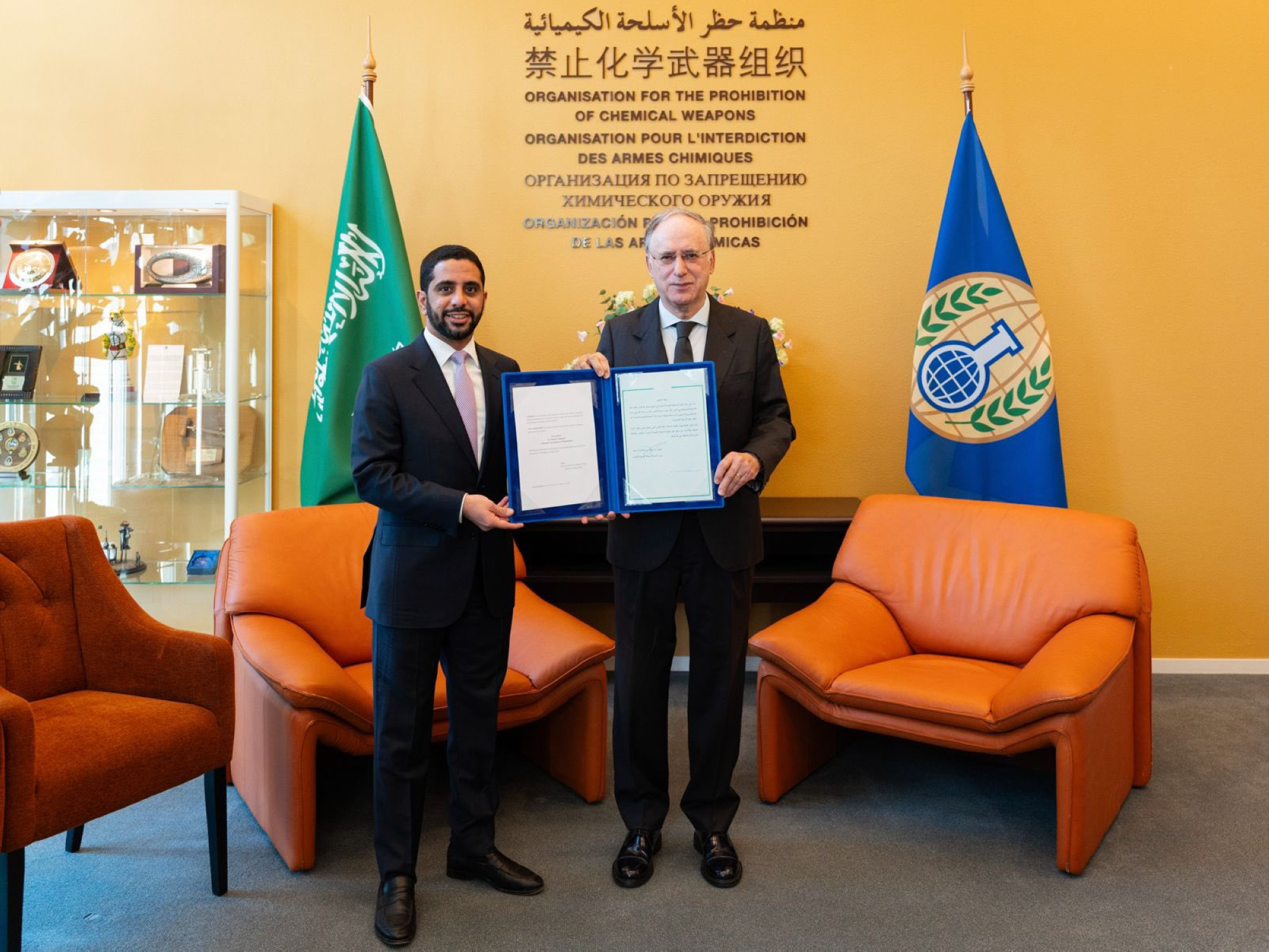
In a diplomatic move underscoring the Kingdom of Saudi Arabia's unwavering commitment to supporting international peace and security, the Ambassador of the Custodian of the Two Holy Mosques to the Kingdom of the Netherlands, Mr. Shaher bin Khalid Al-Khunaini, presented his credentials as the Kingdom's Permanent Representative to the Organisation for the Prohibition of Chemical Weapons (OPCW). The ceremony took place in The Hague, where he was received by the OPCW Director-General, Mr. Fernando Arias.
This step comes just two days after Ambassador Al-Khunaini presented his credentials to the King of the Kingdom of the Netherlands, His Majesty King Willem-Alexander, at Noordeinde Palace in the Dutch capital, thus establishing the beginning of his official diplomatic duties in the Netherlands and at the level of international organizations based there.
Historical background and role of the Organisation for the Prohibition of Chemical Weapons
The Organisation for the Prohibition of Chemical Weapons (OPCW) is an independent international body established in 1997 that serves as the implementing agency for the Chemical Weapons Convention (CWC). Its primary objective is to achieve a world free of chemical weapons by destroying existing stockpiles and preventing their re-emergence. The OPCW was awarded the Nobel Peace Prize in 2013 in recognition of its extensive efforts in this field. Saudi Arabia has been a signatory to and ratified the CWC since its accession in 1997 and is an active and influential member of the OPCW's efforts to prevent the proliferation of these deadly weapons.
The importance of the event and its expected impact
The appointment of Al-Khunaini and the presentation of his credentials carry significant weight on several levels. Domestically, this appointment reflects the Saudi leadership's confidence in the competence of its diplomats to represent the Kingdom in vital international forums, in line with the goals of Vision 2030, which focuses on strengthening effective international partnerships. Regionally, the presence of a permanent representative of the Kingdom at this organization reinforces its role as a force for stability in the Middle East, a region that has witnessed the tragic use of chemical weapons in the past, and underscores its unwavering position on the necessity of making the region free of all weapons of mass destruction.
Internationally, this high-level diplomatic representation contributes to strengthening cooperation between the Kingdom and the Organization, and supports global efforts to address the challenges of chemical weapons proliferation, particularly in light of current geopolitical tensions. Ambassador Al-Khunaini is expected, through his position, to convey the Kingdom's vision and actively participate in shaping policies and procedures that ensure the full and effective implementation of the Chemical Weapons Convention worldwide.
-

 Reports one week ago
Achievements of Saudi government sectors in 2025
-
Local News 3 weeks ago
FDA warns of contaminated Nestle infant formula | Recall details
-
Technology 3 weeks ago
Saudi Arabia launches the world's largest government data center, 'Hexagon'
-
Technology 4 weeks ago
Merging KSA Map and Baladi Plus: A step towards Saudi digital sovereignty
-
Technology 3 weeks ago
Hexagon: Saudi Arabia strengthens its data sovereignty with the world's largest government center
-
Technology 3 weeks ago
European banks and artificial intelligence: A plan to lay off 200,000 employees
-
Politics 4 weeks ago
The coalition destroys smuggled Emirati weapons in Mukalla in a qualitative strike
-
Local News 4 weeks ago
Saudi Arabia's 2026 Decisions: Major Transformations in Real Estate and Logistics