Politics
"Data hackers"... you can recognize them by their mistakes!
Cyber risks and phishing accounts lurk in every action you take online, searching for information and data that


Cyber risks and phishing accounts lie in wait for you in every action you take on the Internet, searching for information and data that facilitates access to your bank accounts, stealing them, and defrauding you.
The internet is teeming with phishers and victims-hunters. As soon as you enter any new site, you are bombarded with requests for permissions to access your private data, such as your location, contacts, photos, and more. This has led to numerous warnings against allowing such people to hack your account or responding to them.
Some of the permissions requested by the application may be valid and documented, but some are not. These are scams carried out by fraudsters, which necessitates caution when granting permissions to any application to ensure that personal data is not exploited.
The methods of scammers and trap accounts vary. Some request permission to access your contact list, others location data or photos, while others set up fake websites claiming to create surveys aimed at collecting data, and others claiming to be government or commercial pages, which requires more research and caution to avoid falling into their traps.
The embassy in Britain warns
The Saudi Cultural Attaché in the United Kingdom has urged Saudi citizens to exercise caution and not allow access to their personal data from unknown or untrusted sources. The attaché emphasized that, given the presence of phishing accounts on social media platforms distributing surveys aimed at collecting data from scholarship students, it has advised caution and warned against granting access to data from unknown sources. This warning comes after the detection of such phishing accounts on social media platforms distributing surveys targeting scholarship students.
Deceptive apps
Information security and cybercrime expert Mohammed Abdulwahab Al-Sari’i revealed the dangers of neglecting certain mobile applications, which could lead to the theft of a user's personal data. He urged users to control application and website permissions and limit the capabilities or information they can access. Al-Sari’i emphasized how to recognize scams, explaining that fraudsters use various methods to deceive their victims into downloading malicious applications to gain access to their data.
Grammatical errors... a sign
Information security expert Al-Sari'i says that unexpected messages should raise suspicion. Scammers often resort to sending convincing text messages or emails, or the app might ask you to change a device setting. He added that scammers may use feature-overload tactics on their online victims, exaggerating claims that they can improve your phone's performance or offer access to supposedly paid content. If something seems too good to be true, it's likely not. Spelling and grammatical errors can also reveal fraudulent pages, as these are not found in trusted accounts or apps. He urged users to visit the official website of the company or organization they wish to access and then search for the app in a reputable app store.
Al-Sari'i explained how to protect personal privacy online, emphasizing the importance of avoiding storing personal files (such as tax data) on a work computer or phone. A work device is not private property, and many people can easily access your personal files. You should also avoid saving personal passwords on a work device. Furthermore, be cautious when using a computer in a public place, as free Wi-Fi networks may be available, exposing you to cybercriminals and cybercriminals.
Beware of airport Wi-Fi
Al-Sari’i pointed out that app permissions that require access to the camera, microphone, location services, calendar, contacts, and social media accounts pose a strong threat to privacy. He added that when no program or application is needed, it should be deleted. The more programs or applications there are on the device, the greater the likelihood of it being hacked. Two-factor authentication should be used wherever possible, such as a code sent in a text message to your phone or your fingerprint.
Al-Sari’i did not neglect to warn against free wireless communication networks, technically known as (Wi-Fi), which are provided by some facilities and airports and are considered unsafe due to the ease with which they can be hacked by internet (hackers), as they can use them to spy on their victims, steal their data, photos, files, and bank account numbers.
Al-Sari’i revealed that fraudsters create a fake free network with a name similar to the wireless networks found in airport facilities, and once connected to it, they exploit the phone, tablet, or even laptop for their own benefit and work to collect all the information and data necessary to complete the hacking of the phone or computer, stressing the importance of verifying the credibility of the wireless network before connecting to it.
Don't say you're traveling!
Al-Sari’i stressed the need to check for monitoring programs on devices and to use an antivirus application to prevent malware and hacking of device systems by using a good antivirus application. It is also necessary to ensure that device systems are updated and protected with them. He warned against sharing on social media platforms the person’s movements to the public, and future plans for travel or moving to places, because this makes others know that you will be away from your home and thus easy to steal. This is what many people do when traveling by posting their daily routines to the public, and someone with bad intentions may pick them up and make it easier to steal from them.
Information security expert Mohammed Al-Sari’i stressed the importance of using strong passwords for electronic devices and personal accounts that are difficult to crack and include a mix of uppercase and lowercase letters, in addition to numbers and symbols. He also advised against using the same password on different accounts and recommended changing passwords regularly.




Politics
The assassination of Ali Khamenei: The repercussions of the Supreme Leader's death and the future of regional conflict
A comprehensive analysis of the repercussions of the news of the assassination of Iranian Supreme Leader Ali Khamenei. Is the region heading towards a full-scale military escalation or a radical shift in Tehran's policies and the future of the resistance axis?
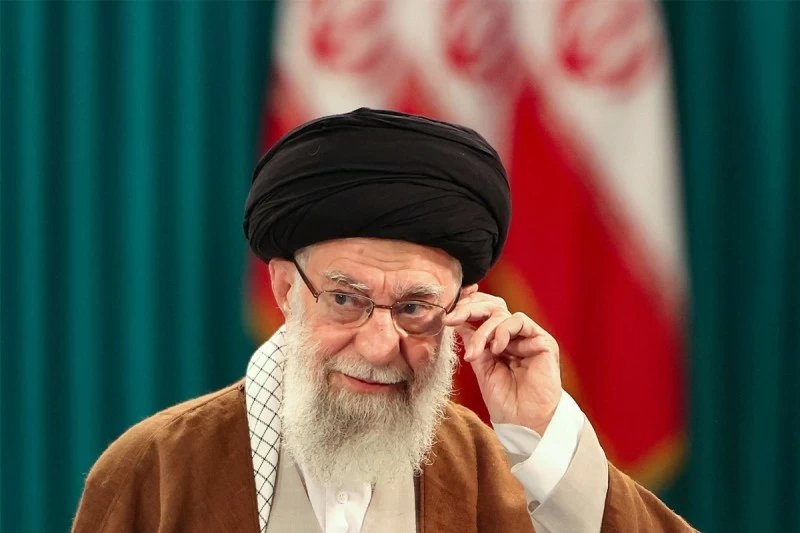
In a dramatic development that represents a geopolitical earthquake in the Middle East, the news circulating about the assassination of Iran's Supreme Leader, Ali Khamenei, in a joint US-Israeli airstrike has plunged the entire region into turmoil. This event is not merely the loss of a political figure, but rather the dismantling of the very top of the Islamic Republic's power structure, opening the door to unforeseen scenarios that could redraw the maps of influence and conflict.
The end of the era of the strongest man
With the passing of Ali Khamenei, Iran loses the man who held the reins of absolute power for more than three decades. Khamenei assumed the position of Supreme Leader in 1989, succeeding the founder of the Islamic Republic, Ruhollah Khomeini, during a critical transitional period following the Iran-Iraq War. Throughout his years in power, he consolidated his authority through complete control over the levers of the state, from the military establishment, represented by the Revolutionary Guard, to the judiciary and the media, becoming the ultimate authority, surpassing the presidency, the government, and parliament.
The nature of power and constitutional vacuum
The gravity of this event lies in the nature of the "Supreme Leader" position in the Iranian constitution, which grants the Supreme Leader broad religious and political powers. His sudden absence through foreign military action presents the Assembly of Experts with a historic and difficult test in choosing his successor, amidst speculation of internal power struggles between hardline conservatives and other factions, as well as the pivotal role the Revolutionary Guard will play in the transition process to ensure the regime's continuity.
Regional conflict scenarios
Regionally, Khamenei's assassination raises existential questions about the future of the "axis of resistance" he has nurtured for years. From Lebanon to Yemen, and from Syria to Iraq, militias and armed factions are ideologically and logistically linked to the Supreme Leader. Will his absence lead to the disintegration of this axis and a decline in Iranian influence? Or will the retaliatory response be violent and widespread, dragging the region into an all-out war?
The next phase will not be merely a change of names, but may witness a redefinition of Tehran’s military and political doctrine. This event will either pave the way for a major negotiating table that ends decades of hostility, or it will be the spark that ignites the powder keg in the entire Middle East.
Politics
Jordanian Foreign Ministry summons Iranian chargé d'affaires to protest violations
The Jordanian Ministry of Foreign Affairs summoned the Iranian chargé d'affaires and handed him a strongly worded protest note, stressing that it would take all measures to protect the Kingdom's sovereignty and security.
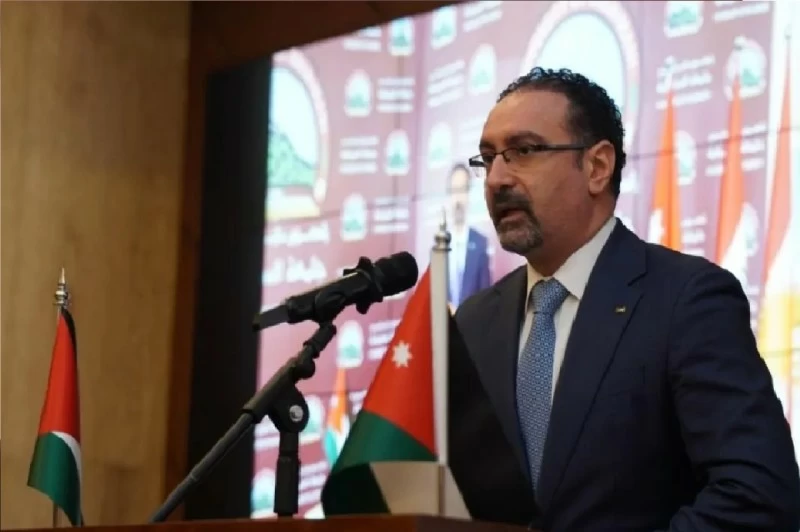
In a firm diplomatic move reflecting the Kingdom's unwavering stance on protecting its national security, the Jordanian Ministry of Foreign Affairs and Expatriates summoned the Chargé d'Affaires of the Embassy of the Islamic Republic of Iran in Amman yesterday (Sunday). During the summons, he was handed a strongly worded letter of protest addressed to his government, regarding the recent attacks targeting Jordanian territory and several other Arab states.
The Ministry, in its official statement, affirmed its absolute condemnation of these blatant violations, emphasizing that any infringement upon the sovereignty of Jordan or any Arab state is a red line that cannot be tolerated. The Ministry clarified that these attacks constitute a flagrant and clear breach of international law and the UN Charter, and represent a dangerous and unacceptable escalation that threatens the safety of innocent civilians and undermines the foundations of security and stability at both the regional and international levels.
In detailing the diplomatic meeting, the Ministry's official spokesperson, Ambassador Fouad Majali, stated that the Ministry informed the Iranian chargé d'affaires of the necessity for an immediate and complete cessation of all attacks and actions targeting Jordan, whether directly or indirectly. Majali emphasized the need for Tehran to respect the Kingdom's sovereignty, territorial integrity, and airspace, and to fully adhere to the rules of international law and the principles of good neighborliness that should govern relations between the countries of the region.
This Jordanian diplomatic move comes amid a highly tense regional context, as the Hashemite Kingdom of Jordan strives to distance itself from regional conflicts and consistently affirms that it will not become a battleground for any party. Amman views with grave concern attempts to drag the region into open conflicts, emphasizing that protecting Jordanian airspace and territory is a top priority for the Jordanian Armed Forces and security services.
Ambassador Majali concluded his remarks by stating that the Ministry had informed the Chargé d'Affaires in a decisive and unequivocal manner that Jordan would not hesitate to take all available steps and measures, including diplomatic, legal and security measures, to ensure the protection of its sovereignty and the security of its citizens, and would not allow its stability to be jeopardized under any pretext whatsoever, calling on the international community to assume its responsibilities in stopping the escalation that threatens global peace.
Politics
The Gulf Cooperation Council Ministerial Council: We reserve the right to respond to Iran
The Gulf Cooperation Council Ministerial Council, in an extraordinary meeting, affirmed its legal right to respond to Iranian threats, stressing that all measures will be taken to preserve Gulf security and sovereignty.
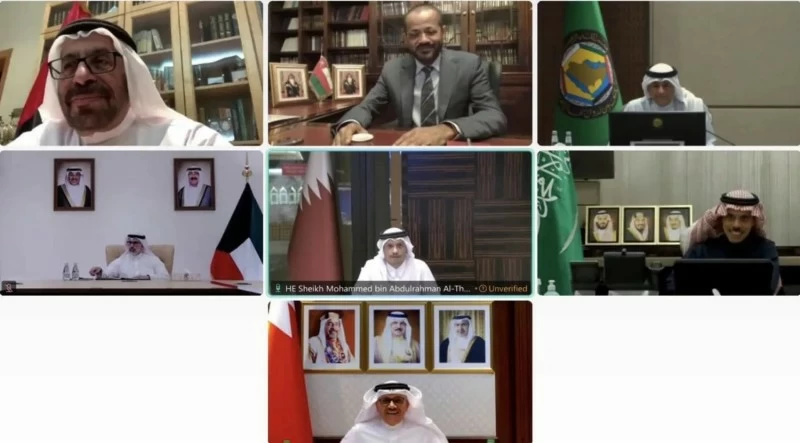
The Ministerial Council of the Cooperation Council for the Arab States of the Gulf affirmed, in a firm stance reflecting the unity of the Gulf ranks, that the member states of the Council retain their full legal right to respond to any attacks, and to take all necessary measures to ensure the preservation of their sovereignty, security and regional stability.
This came during the 50th extraordinary meeting of the Ministerial Council, held via video conference yesterday (Sunday), chaired by Dr. Abdul Latif Al-Zayani, Bahraini Foreign Minister and current chair of the Council. The meeting witnessed high-level participation, including Saudi Foreign Minister Prince Faisal bin Farhan, UAE Minister of State for Foreign Affairs Khalifa Shaheen Al Marar, Omani Foreign Minister Badr Al Busaidi, Qatari Prime Minister and Foreign Minister Sheikh Mohammed bin Abdulrahman bin Jassim Al Thani, Kuwaiti Foreign Minister Sheikh Jarrah Al-Jaber Al-Ahmad Al-Sabah, and the Secretary-General of the Gulf Cooperation Council.
Regional context and security challenges
This extraordinary meeting comes at a highly sensitive time for the Middle East, where geopolitical tensions are escalating, necessitating joint Gulf coordination at the highest levels. The Gulf Cooperation Council (GCC) states have consistently emphasized in their previous statements the importance of adhering to the principles of good neighborliness and international law, rejecting foreign interference in the internal affairs of states, and condemning any threats to maritime navigation and global energy security. This statement serves as a strongly worded diplomatic message affirming that legal and political options are available and guaranteed to defend the national and collective interests of the GCC states.
The importance of joint Gulf coordination
This unified stance is of paramount strategic importance, not only domestically but also regionally and internationally. Regionally, this declaration reinforces the principle of "collective security" upon which the Gulf Cooperation Council (GCC) was founded, which considers any threat to a member state a threat to the entire organization. Internationally, the stability of the Gulf region is a cornerstone of the global economy, given its pivotal role in energy markets. Therefore, the Council's assertion of its right to respond and maintain stability reassures the international community of a wise and decisive leadership capable of managing crises with prudence and competence, while adhering to international law as the fundamental framework for conflict resolution.
-

 Local News 4 days ago
Saudi Arabia approves regulations for the continued presence of Gulf vehicles: duration and penalties
-
Local News 7 days ago
The Ministry of Interior begins procedures for a royal pardon for common law prisoners
-
Local news two days ago
Jeddah Airport alerts for travelers due to airspace closure and flight disruptions
-
Politics, one week ago
Trump plans to create a $2 billion alternative to the World Health Organization
-
Local News 6 days ago
The deadline for property registration in Hail and Riyadh is Thursday
-
Sports one week ago
Tickets for the Al-Ahli vs. Al-Hilal King's Cup match postponed: New date
-
Local News 6 days ago
Under the patronage of the Minister of Information, an agreement was signed between the Ministry of Information and Waves Marketing Company
-
Culture and Art 4 days ago
The Devil's Prisons series was halted: The full story of "The Emperor's" being moved to YouTube