Politics
Sixteen people were killed in an Israeli massacre in Gaza
A new massacre was committed by Israel, during which 16 Palestinians were killed and others were injured, from Sunday evening until dawn on Monday

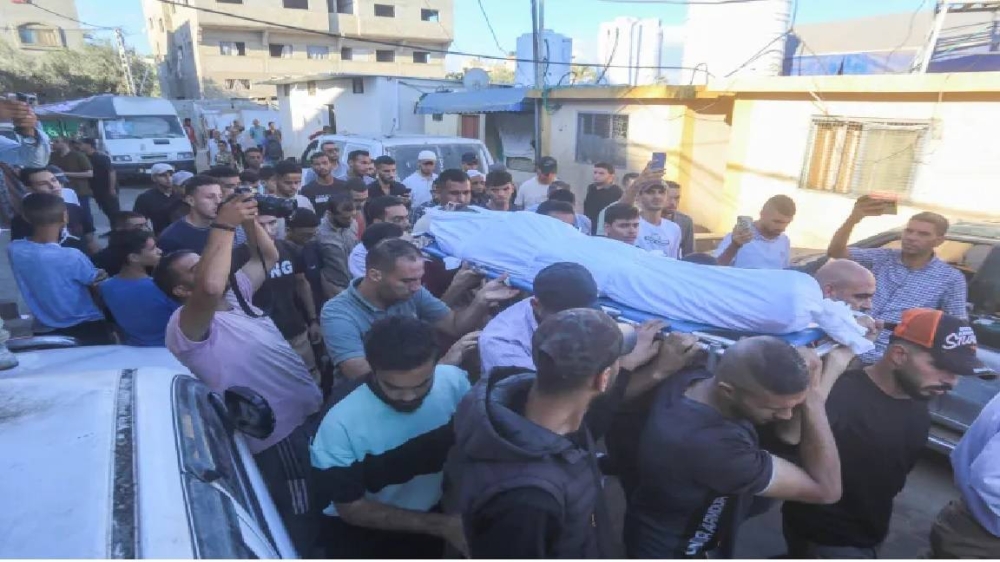
A new massacre was committed by Israel, during which 16 Palestinians were killed and others were injured, from Sunday evening until dawn on Monday, as a result of separate raids on Gaza, while the death toll of journalists in the beleaguered sector rose to 174 since the start of the war on October 7.
Medical sources at Al-Aqsa Martyrs Hospital reported that a mother, her husband, and her two children were killed, and a number of others were injured, as a result of Israeli warplanes bombing the home of the Al-Adini family in the Al-Baraka area of Deir al-Balah city.
Three Palestinians were killed and others wounded when an Israeli drone struck a civilian vehicle northwest of Khan Younis, according to Palestinian medics. A Palestinian was also killed and others wounded in an Israeli airstrike targeting the al-Mawasi area, which shelters displaced people, west of Rafah, according to medical sources.
In the northern Gaza Strip, a Palestinian was killed and others were injured when an Israeli warplane bombed the Abu Jaafar school in the Al-Salatin neighborhood of Beit Lahia.
A local source said that citizens were able to recover 3 dead and wounded as a result of targeting a group of citizens in the vicinity of the Gaza Municipality Park in the city center last night.
The Israeli army intensified its heavy artillery bombardment of the Tel al-Hawa, Sabra, and Zeitoun neighborhoods south of Gaza City, while its vehicles fired heavy machine guns around the University College and Street 8 to the south. Army vehicles also fired artillery shells north of the Bureij refugee camp in the central Gaza Strip, coinciding with heavy gunfire.
Israeli artillery dropped illumination bombs east of the Maghazi camp, coinciding with heavy gunfire from military vehicles west of the Nuseirat camp.
Loud explosions were heard in the northern part of the central governorate, caused by the Israeli occupation army demolishing residential buildings and evacuated residential blocks.
In the southern Gaza Strip, Israeli warships fired shells towards the shores of Khan Yunis, while they opened fire towards Ezbet al-Bahr, west of Rafah.
The death toll of journalists in the sector has risen to 174 as a result of the war, following the killing of journalist Wafaa Al-Adini.
The Government Media Office condemned the Israeli occupation’s targeting, killing, and assassination of Palestinian journalists, and held it fully responsible for committing this crime.
The international community, international organizations, and those involved in journalistic work worldwide were urged to deter the occupation and prosecute it in international courts for its ongoing crimes.






Politics
Washington warns its citizens: Leave the Middle East immediately
The US State Department is urging its citizens to leave 15 Middle Eastern countries immediately due to security tensions and ongoing attacks. See which countries are included in the warning.

In a significant development reflecting escalating geopolitical tensions in the region, the US State Department issued an urgent and strongly worded warning yesterday (Monday), urging American citizens in more than 14 Middle Eastern countries to leave "immediately." The warning, published on the "X" platform, emphasized the need to utilize currently available commercial transportation options before it is too late, citing "serious security risks" that could threaten the safety of American citizens.
Warning details and immediate action
Assistant Secretary of State for Consular Affairs Maura Namdar emphasized the seriousness of the situation, stating that the State Department strongly urges Americans not to wait and to leave the affected countries immediately via commercial flights that are still operating. Namdar stressed the importance of acting quickly in anticipation of any sudden developments on the ground that could lead to airspace closures or travel disruptions, which could later make government evacuations difficult or impossible.
Context of escalating regional tensions
This strong warning comes amid a highly complex security situation, as the report noted the continuation of US-Israeli strikes against targets linked to Iran, and the accompanying escalating security tensions that are casting a shadow over the stability of the entire region. This action reflects growing US concern about the potential for the conflict to expand to multiple fronts, exposing Western interests and foreign nationals to the risks of retaliation or being caught in the crossfire.
List of countries and regions included
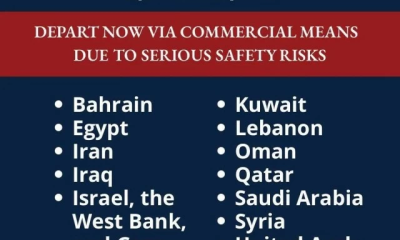
The warning included a broad list of countries and regions considered hotspots or near flashpoints, including Bahrain, Egypt, Iran, Iraq, Israel, and the West Bank and Gaza Strip. The inclusion of relatively stable countries on the list indicates that the US security assessment views the region as a single, interconnected entity directly affected by any potential military escalation.
Background and consular procedures
Historically, the U.S. State Department issues such Level 4 travel warnings (do not travel or leave immediately) when the ability to provide emergency consular assistance is extremely limited. U.S. citizens who choose to remain despite the warning are advised to exercise extreme caution, monitor local news, and enroll in the Smart Traveler Enrollment Program (STEP) to receive security updates and facilitate their location in case of an emergency. This measure underscores that Washington anticipates a potentially prolonged period of instability, necessitating the utmost vigilance.
Politics
UAE intercepts Iranian ballistic missiles: Ministry of Defense statement
The UAE Ministry of Defense announces that it intercepted a barrage of Iranian ballistic missiles and confirms the readiness of its air defenses to protect the country and the safety of citizens and residents.

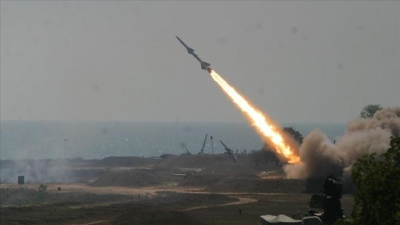
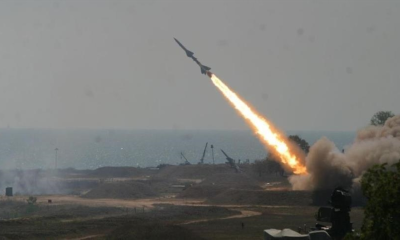
The UAE Ministry of Defense announced in an urgent statement that its air defenses are currently dealing with a barrage of ballistic missiles coming from Iranian territory with high efficiency, noting that the monitoring and tracking systems were able to identify the hostile targets and deal with them as soon as they entered the country's airspace.
The Ministry confirmed in its official statement the complete readiness of the UAE Armed Forces to deal with all security threats, stressing that protecting the country’s territory and the safety of citizens and residents is its top priority, and that it will not hesitate to take all necessary measures to deter any attack that affects the security and stability of the country.
Advanced air defense system
This successful interception reflects the efficiency of the advanced defense system possessed by the United Arab Emirates. Over the past years, the country has invested in building a robust missile shield based on the latest global technologies, including the American THAAD and Patriot systems, which are specifically designed to intercept ballistic missiles at various altitudes, making Emirati airspace among the most secure in the region.
Regional context and geopolitical tensions
This incident falls within a broader context of geopolitical tensions in the Middle East and the Arabian Gulf. Missile programs in the region have long been a source of concern for the international community and neighboring countries, as the use of ballistic missiles is seen as a tool for regional instability and a threat to international shipping lanes and global energy security.
International influences and positions
This attack is expected to draw widespread condemnation from the international community and UN organizations, given its violation of international law and the threat it poses to civilians. Such incidents typically underscore the importance of security and military cooperation between the Gulf Cooperation Council (GCC) states and their international allies to ensure regional stability.
Domestically, the relevant authorities in the UAE continue to reassure the public, stressing that life is proceeding normally and that the country has the full capabilities to protect its national achievements and advanced infrastructure against any potential risks.
Politics
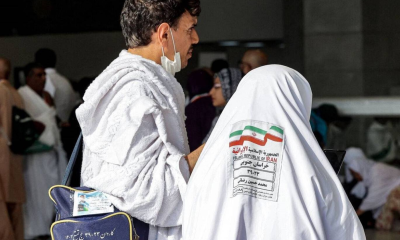
Evacuation of Iranian pilgrims from Saudi Arabia via Iraq: Details
Learn about the details of the evacuation of 9,000 Iranian pilgrims from Saudi Arabia through the Arar border crossing to Iraq, through tripartite diplomatic coordination between Riyadh, Baghdad and Tehran to ensure the safety of the citizens.

The Iranian ambassador to Saudi Arabia, Ali Reza Enayati, announced that Iranian authorities have begun implementing an urgent plan to evacuate their citizens currently performing Umrah in the holy sites. This move coincides with rapidly escalating security developments, as indicated by sources regarding potential attacks targeting locations in the Gulf region, prompting swift diplomatic action to ensure the safety of Iranian citizens.
Details of the evacuation plan and land route
Ambassador Enayati explained in a press statement to Independent Arabia that the transfer of pilgrims would begin that night, with the pilgrims divided into 10 groups to ensure a smooth flow of movement. The logistical plan relies on land transport using buses, with pilgrims departing from Mecca and Medina heading north towards the border city of Arar.
The buses are scheduled to depart Saudi Arabia via the Arar border crossing into Iraq, and then continue their journey overland to Iran. This route is considered a strategic option under the current circumstances, reflecting the high level of coordination between the countries involved to secure safe passage for civilians.
Trilateral diplomatic coordination and official figures
The Iranian ambassador revealed that the number of Iranian citizens currently in Mecca and Medina is estimated at around 9,000 pilgrims. He confirmed that intensive communication has taken place with officials at the Saudi Ministry of Hajj and Umrah to arrange their departure procedures, praising the tangible cooperation from the Saudi authorities in facilitating this humanitarian mission.
Enayati noted that the success of this plan depends largely on close cooperation between the governments of the three countries: Saudi Arabia, Iraq, and Iran. He explained that the Iranian consulates in Jeddah and Iraq are operating as interconnected command centers to monitor the pilgrims' transfer moment by moment until their safe return home.
General context and importance of regional coordination
This operation is of particular importance given the large number of evacuees and the long distances the convoys will travel by land. The Saudi-Iraqi-Iranian cooperation on this matter demonstrates the Kingdom of Saudi Arabia's unwavering commitment to the safety and security of pilgrims of all nationalities, and to providing all necessary facilities for their safe departure, especially during times of crisis or regional tensions.
Iraq's role as a vital transit hub and bridge between neighboring countries is also highlighted, with the Arar border crossing facilitating movement between the Kingdom and Iraq, a function that has been effectively implemented in this emergency plan. These measures underscore the importance of open diplomatic channels and joint consular efforts in managing the affairs and protecting citizens abroad.
-

 Local News 3 days ago
Jeddah Airport alerts for travelers due to airspace closure and flight disruptions
-
Local News 5 days ago
Saudi Arabia approves regulations for the continued presence of Gulf vehicles: duration and penalties
-
Local news one week ago
The Ministry of Interior begins procedures for a royal pardon for common law prisoners
-
Local News 7 days ago
The deadline for property registration in Hail and Riyadh is Thursday
-
Sports one week ago
Tickets for the Al-Ahli vs. Al-Hilal King's Cup match postponed: New date
-
Local News 7 days ago
Under the patronage of the Minister of Information, an agreement was signed between the Ministry of Information and Waves Marketing Company
-
Culture and Art 5 days ago
The Devil's Prisons series was halted: The full story of "The Emperor's" being moved to YouTube
-
Local news one week ago
Saleh Al-Maghamsi appointed Imam of the Prophet's Mosque: Details of the Royal Decree