Politics
Sarat Abidah celebrates and sings the praises of National Day
The Governor of Sarat Abidah, Musfir Al Mahdi, witnessed the celebration of the 94th National Day of the Kingdom, which was held in Marhabin Park in the center of the governorate

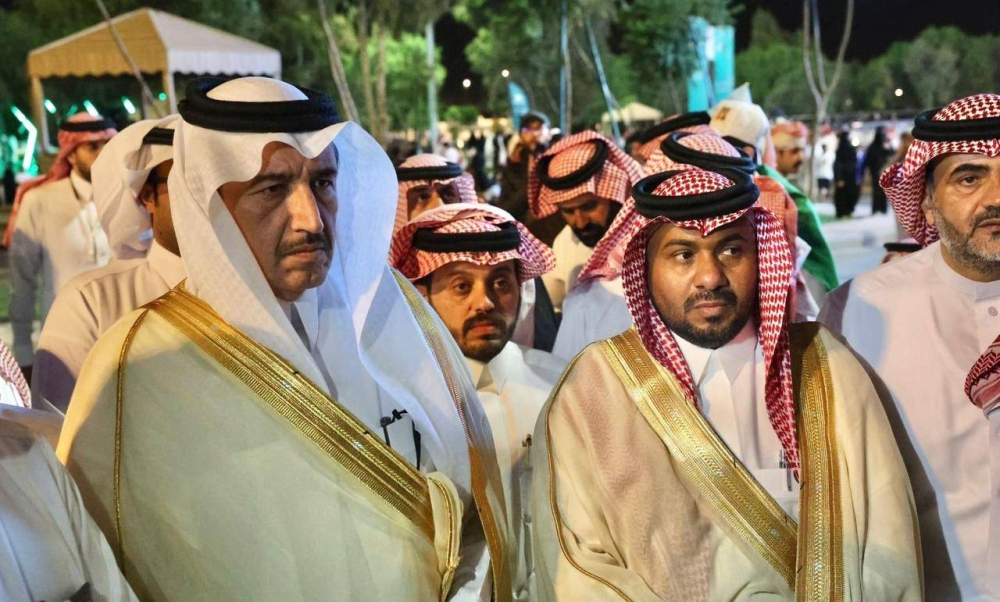
The Governor of Sarat Abidah, Musfir Al Mahdi, attended the Kingdom's 94th National Day celebrations, held in Marhabin Park in the heart of the governorate. The event, which drew a large crowd of citizens and residents, featured a variety of activities. Marhabin Park was adorned in green and white, and the celebrations included a parade, various performances, and a display of different artistic formations.
The Governor of Sarat Abidah affirmed that this precious occasion comes to all citizens, and our dear homeland enjoys security, safety, prosperity and stability. On this occasion, we renew our loyalty to our wise leadership, which has given our country its utmost attention and keenness to ensure that this country is a pioneer and advanced in all fields. He praised the slogan of the 94th Saudi National Day, “We dream and we achieve,” which carries within it the current developmental renaissance and the future vision, from the era of the founder, King Abdulaziz bin Abdulrahman – may God have mercy on him – until the era of the Custodian of the Two Holy Mosques.
He said: On this glorious day, we embrace the past, present, and future, determined to continue the journey of progress and development and to achieve the goals and aspirations set by our wise leadership. The joy of this occasion is a right for its citizens, residents, and lovers from all over the world, as our dear Kingdom is a distinguished global destination among the ranks of developed countries. We ask God to perpetuate His blessings upon us and to bring this anniversary back to us in good health and well-being.
The ceremony included an operetta entitled “We Dream and Achieve 2”, with lyrics by the poet Mohammed bin Naghmoush, and performed by the singers Abdullah and Khaled Al Hamed, and Ghareeb and Abdullah Al Mukhles. During it, artistic tableaux were presented that embodied the meanings of the ambition that Saudi Arabia is experiencing, in accordance with the objectives of the ambitious National Vision 2030.




Politics
The assassination of Ali Khamenei: The repercussions of the Supreme Leader's death and the future of regional conflict
A comprehensive analysis of the repercussions of the news of the assassination of Iranian Supreme Leader Ali Khamenei. Is the region heading towards a full-scale military escalation or a radical shift in Tehran's policies and the future of the resistance axis?
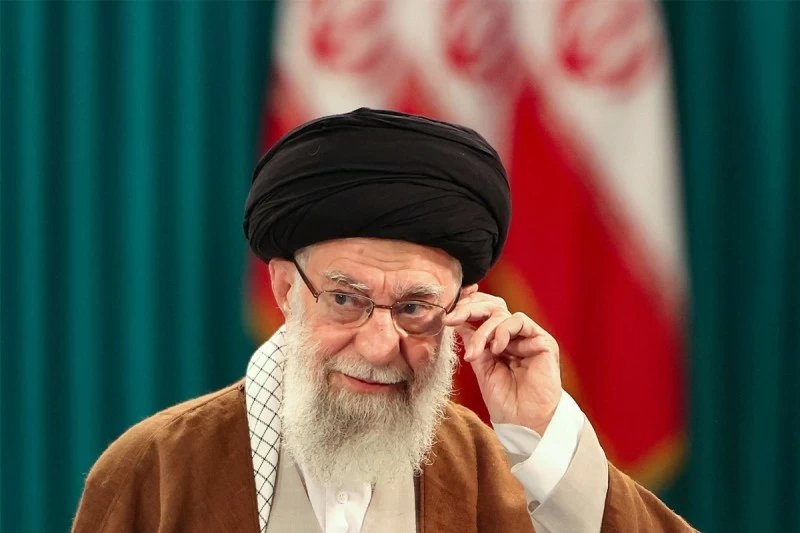
In a dramatic development that represents a geopolitical earthquake in the Middle East, the news circulating about the assassination of Iran's Supreme Leader, Ali Khamenei, in a joint US-Israeli airstrike has plunged the entire region into turmoil. This event is not merely the loss of a political figure, but rather the dismantling of the very top of the Islamic Republic's power structure, opening the door to unforeseen scenarios that could redraw the maps of influence and conflict.
The end of the era of the strongest man
With the passing of Ali Khamenei, Iran loses the man who held the reins of absolute power for more than three decades. Khamenei assumed the position of Supreme Leader in 1989, succeeding the founder of the Islamic Republic, Ruhollah Khomeini, during a critical transitional period following the Iran-Iraq War. Throughout his years in power, he consolidated his authority through complete control over the levers of the state, from the military establishment, represented by the Revolutionary Guard, to the judiciary and the media, becoming the ultimate authority, surpassing the presidency, the government, and parliament.
The nature of power and constitutional vacuum
The gravity of this event lies in the nature of the "Supreme Leader" position in the Iranian constitution, which grants the Supreme Leader broad religious and political powers. His sudden absence through foreign military action presents the Assembly of Experts with a historic and difficult test in choosing his successor, amidst speculation of internal power struggles between hardline conservatives and other factions, as well as the pivotal role the Revolutionary Guard will play in the transition process to ensure the regime's continuity.
Regional conflict scenarios
Regionally, Khamenei's assassination raises existential questions about the future of the "axis of resistance" he has nurtured for years. From Lebanon to Yemen, and from Syria to Iraq, militias and armed factions are ideologically and logistically linked to the Supreme Leader. Will his absence lead to the disintegration of this axis and a decline in Iranian influence? Or will the retaliatory response be violent and widespread, dragging the region into an all-out war?
The next phase will not be merely a change of names, but may witness a redefinition of Tehran’s military and political doctrine. This event will either pave the way for a major negotiating table that ends decades of hostility, or it will be the spark that ignites the powder keg in the entire Middle East.
Politics
The Arab League strongly condemns Iranian attacks on Arab countries
The Arab League issued a strongly worded statement condemning the Iranian attacks, stressing that the security of Arab states is indivisible, and warning of dangers that threaten the stability of the region.

The General Secretariat of the League of Arab States expressed its categorical condemnation and strong denunciation of the repeated targeting of the sovereignty and territorial integrity of Arab states, which was recently manifested in the Iranian attacks that constitute a flagrant violation of international laws and conventions, and a clear transgression of the principles of good neighborliness that should govern relations between the countries of the region.
In an official statement, the member states of the Arab League affirmed that these hostile practices pose grave risks, not only threatening the security of the targeted state but also extending their negative repercussions to threaten Arab national security and the stability of the entire Middle East region. The statement emphasized that remaining silent about such transgressions could encourage further tension and escalation at a time when the region desperately needs de-escalation and constructive cooperation, not conflict.
In a related context, the Arab League reaffirmed its firm strategic principle that "the security of Arab states is indivisible," noting that any infringement upon the sovereignty of any Arab state is considered a direct attack on the Arab system as a whole. The League declared its categorical and absolute rejection of any justifications or pretexts that Tehran might offer to legitimize these attacks, asserting that respect for national sovereignty and non-interference in internal affairs are the cornerstones of sound international relations.
These alarming developments come amidst highly complex regional and international circumstances, with the region grappling with multiple crises that demand concerted diplomatic efforts. Observers and political analysts believe that Iran's continued interference in Arab affairs, whether through direct military action or other means, undermines the prospects for lasting peace and threatens global trade routes and vital energy supplies, thus necessitating a firm and unified international stance.
It is worth noting that the concept of Arab national security is based on a unified strategic vision that rejects foreign interference and considers the stability of Arab states a fundamental pillar of international peace and security. The geostrategic location of Arab states, with their vital waterways and natural resources, makes any military tension within them a source of global concern that transcends regional boundaries. Therefore, the current Arab condemnation is not merely a fleeting political stance, but rather a warning to the international community about the necessity of confronting policies aimed at destabilizing and forcibly altering the balance of power in the region.
The university concluded its statement by calling on the international community and the United Nations Security Council to assume their legal and moral responsibilities in maintaining international peace and security, and to exert effective pressure to stop these violations that hinder development and prosperity efforts in the Arab world, stressing the legitimate right of Arab states to defend their territories and peoples by all means guaranteed by international law.
Politics
Jordanian Foreign Ministry summons Iranian chargé d'affaires to protest violations
The Jordanian Ministry of Foreign Affairs summoned the Iranian chargé d'affaires and handed him a strongly worded protest note, stressing that it would take all measures to protect the Kingdom's sovereignty and security.
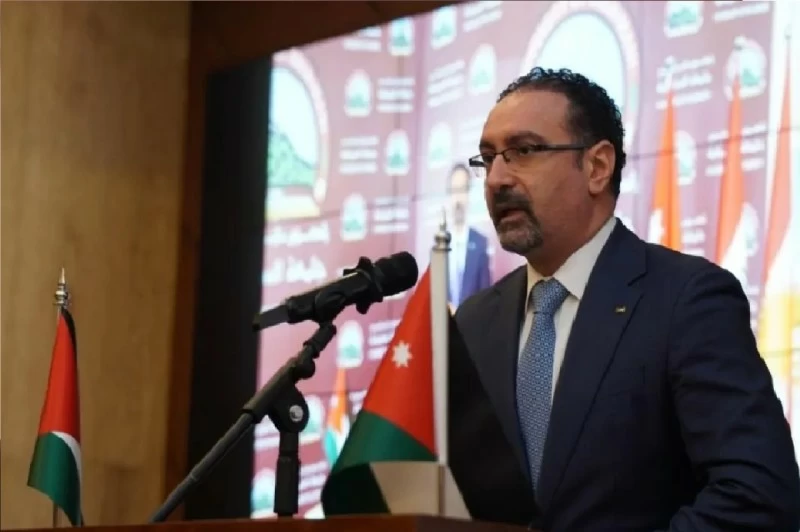
In a firm diplomatic move reflecting the Kingdom's unwavering stance on protecting its national security, the Jordanian Ministry of Foreign Affairs and Expatriates summoned the Chargé d'Affaires of the Embassy of the Islamic Republic of Iran in Amman yesterday (Sunday). During the summons, he was handed a strongly worded letter of protest addressed to his government, regarding the recent attacks targeting Jordanian territory and several other Arab states.
The Ministry, in its official statement, affirmed its absolute condemnation of these blatant violations, emphasizing that any infringement upon the sovereignty of Jordan or any Arab state is a red line that cannot be tolerated. The Ministry clarified that these attacks constitute a flagrant and clear breach of international law and the UN Charter, and represent a dangerous and unacceptable escalation that threatens the safety of innocent civilians and undermines the foundations of security and stability at both the regional and international levels.
In detailing the diplomatic meeting, the Ministry's official spokesperson, Ambassador Fouad Majali, stated that the Ministry informed the Iranian chargé d'affaires of the necessity for an immediate and complete cessation of all attacks and actions targeting Jordan, whether directly or indirectly. Majali emphasized the need for Tehran to respect the Kingdom's sovereignty, territorial integrity, and airspace, and to fully adhere to the rules of international law and the principles of good neighborliness that should govern relations between the countries of the region.
This Jordanian diplomatic move comes amid a highly tense regional context, as the Hashemite Kingdom of Jordan strives to distance itself from regional conflicts and consistently affirms that it will not become a battleground for any party. Amman views with grave concern attempts to drag the region into open conflicts, emphasizing that protecting Jordanian airspace and territory is a top priority for the Jordanian Armed Forces and security services.
Ambassador Majali concluded his remarks by stating that the Ministry had informed the Chargé d'Affaires in a decisive and unequivocal manner that Jordan would not hesitate to take all available steps and measures, including diplomatic, legal and security measures, to ensure the protection of its sovereignty and the security of its citizens, and would not allow its stability to be jeopardized under any pretext whatsoever, calling on the international community to assume its responsibilities in stopping the escalation that threatens global peace.
-

 Local News 4 days ago
Saudi Arabia approves regulations for the continued presence of Gulf vehicles: duration and penalties
-
Local News 7 days ago
The Ministry of Interior begins procedures for a royal pardon for common law prisoners
-
Local news two days ago
Jeddah Airport alerts for travelers due to airspace closure and flight disruptions
-
Politics, one week ago
Trump plans to create a $2 billion alternative to the World Health Organization
-
Local News 6 days ago
The deadline for property registration in Hail and Riyadh is Thursday
-
Sports one week ago
Tickets for the Al-Ahli vs. Al-Hilal King's Cup match postponed: New date
-
Local News 6 days ago
Under the patronage of the Minister of Information, an agreement was signed between the Ministry of Information and Waves Marketing Company
-
Culture and Art 4 days ago
The Devil's Prisons series was halted: The full story of "The Emperor's" being moved to YouTube