Politics
The head of the Food and Drug Authority emphasizes the importance of product availability and safety
The CEO of the Saudi Food and Drug Authority, Dr. Hisham bin Saad Al-Jadhey, held a meeting with a number of CEOs

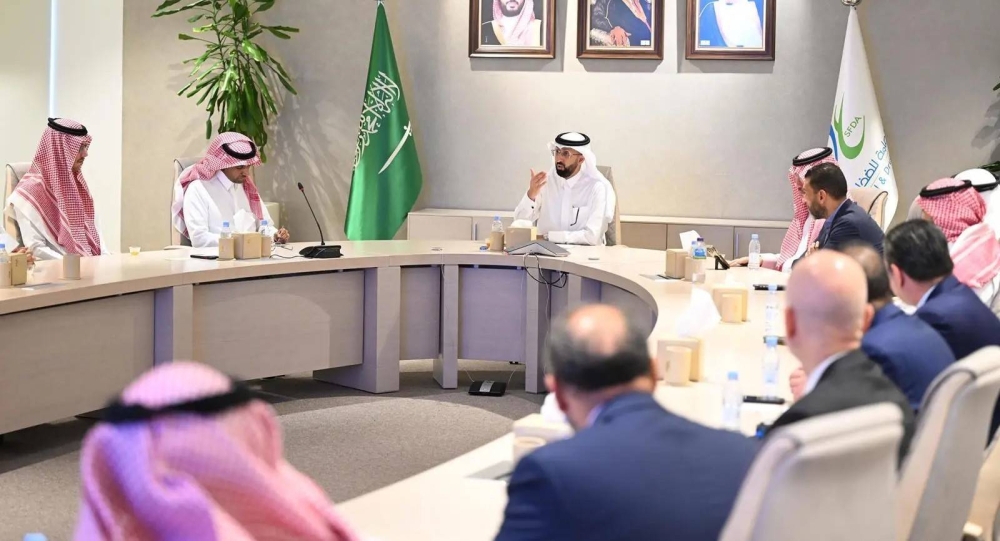
The CEO of the Saudi Food and Drug Authority, Dr. Hisham bin Saad Al-Jadhey, held a meeting with a number of CEOs of local and international pharmaceutical companies at the Authority’s headquarters in Riyadh today.
During the meeting, ways to enhance cooperation and joint work were discussed, and to work towards keeping pace with the objectives of the Kingdom’s Vision 2030, through the development of national industries, and in fulfillment of the Authority’s fourth strategic plan, which included product safety and aimed to enhance product availability.
He pointed out the importance of these meetings in helping to overcome challenges and supporting companies to ensure they meet the requirements that contribute to guaranteeing the availability, safety and effectiveness of medicines.
The head of the Food and Drug Authority affirmed that the Authority’s doors are always open to all investors, to hear their opinions, inquiries and observations and to provide all means of support, in order to preserve the health of society, by ensuring the safety of medicines available in the Saudi market.
Representatives of the companies praised the high level of transparency of the Authority, the provision of a common ground that brings together companies with the body concerned with oversight and legislation in the Kingdom, and the great and qualitative development that the sector has witnessed during the past period.
Through its fourth strategy, the Authority is keen to empower investors in the pharmaceutical sector, so that the Kingdom becomes one of the world’s leading countries in this sector.
It is worth noting that the head of the Food and Drug Administration holds regular meetings with food, pharmaceutical, and medical device companies to promote communication and transparency in these sectors.




Politics
UAE Defense Ministry: Details of intercepting 346 aerial targets and casualties in Dubai
The UAE Ministry of Defense issued a statement regarding the interception of 137 missiles and 209 Iranian drones, and details of 4 injuries at Dubai Airport, along with a review of the readiness of the country's air defense systems.
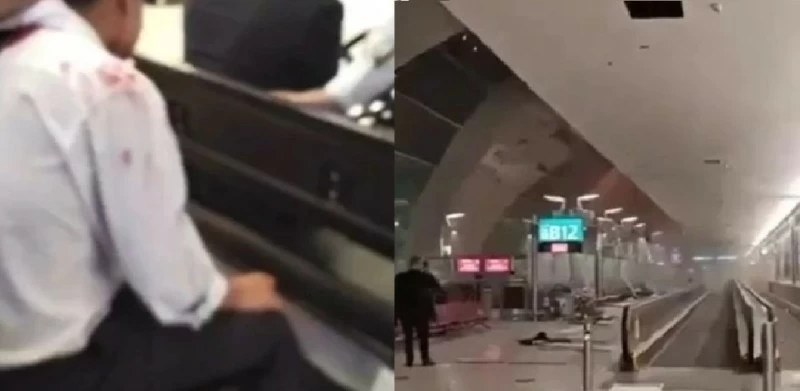
The UAE Ministry of Defense issued an official statement today (Sunday) announcing the success of its air and air defense forces in countering a large-scale air attack, as they were able to deal with and destroy 137 ballistic missiles and 209 drones launched from Iranian territory towards the country, in a precise military operation that reflects the high readiness of the armed forces.
In its detailed military statement, the Ministry explained that its monitoring and interception systems effectively dealt with the threats from the very first moments of the attack. Official statistics indicated the detection of 137 ballistic missile launches, of which 132 were successfully destroyed in the air by defenses, while 5 missiles fell into the sea without posing a direct threat. Regarding drones, 209 were detected, 195 of which were intercepted and shot down, while 14 drones crashed within the country's territory and waters, causing some collateral damage, including four injuries in the vicinity of Dubai International Airport, where the injured were immediately treated by specialized medical teams.
This operational success underscores the robustness of the UAE's air defense strategy, which has invested heavily over the past decades in building a multi-layered defense umbrella. The country relies on world-class systems such as THAAD and Patriot, specifically designed to intercept ballistic missiles at various altitudes, making Emirati airspace among the most secure in the region against complex aerial threats.
From a geopolitical perspective, this event carries significant implications for regional security and stability, demonstrating the Gulf states' ability to effectively protect their airspace and vital infrastructure. The swift interception of such a large number of projectiles sends a reassuring message to the international community and to global trade and aviation, particularly given the UAE's role as a global logistics and economic hub connecting East and West, and the fact that any threat to its airspace impacts global economic security.
The ministry concluded its statement by affirming that the UAE Armed Forces will remain the nation’s impregnable shield, and that they are on high alert to deal with any future threats, stressing that the security and safety of citizens, residents and the country’s lands is a red line that cannot be crossed, and that the defensive response was decisive and immediate to minimize losses and protect national gains.
Politics
Qatar summons Iranian ambassador, Kuwait confronts march: details of the escalation
Qatar's Foreign Ministry summoned Iranian Ambassador Ali Salehabadi to protest the targeting of its territory, while Kuwait confronted a march. Details of the strongly worded statement and the repercussions of the event.
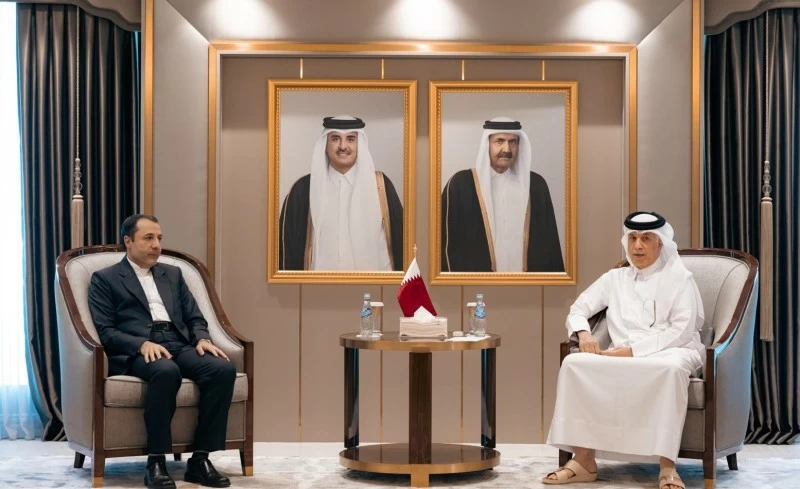
In a significant development in the Gulf region, the Qatari Ministry of Foreign Affairs summoned the Iranian ambassador to Doha, Ali Saleh Abadi, on Saturday and handed him a strongly worded official protest note. This diplomatic move comes in the wake of recent Iranian missile and drone attacks, which coincided with Kuwait's announcement that it had intercepted a drone that violated its airspace, indicating escalating security tensions in the region.
Details of the Qatari protest and the official position
In its official statement, the Qatari Ministry of Foreign Affairs expressed its deep displeasure and categorical rejection of the targeting of its territory, describing this act as a blatant violation of its national sovereignty and a direct threat to its national security, as well as a flagrant breach of international law and the United Nations Charter, which stipulates respect for the sovereignty of states and non-interference in their internal affairs or endangering their safety.
During the meeting, Qatari Minister of State for Foreign Affairs, Mohammed bin Abdulaziz bin Saleh Al-Khulaifi, emphasized to Iranian Ambassador Ali Saleh Abadi that the repeated targeting of Qatari territory constitutes a reckless and irresponsible act. Al-Khulaifi explained that such practices are completely incompatible with the principles of good neighborliness that Doha has always sought to uphold, warning that the continuation of such actions will inevitably lead to serious repercussions that will negatively impact the future of bilateral relations between the two countries.
Kuwait confronts the Gulf security concern
In parallel with Qatar's stance, Kuwait's role in protecting Gulf airspace was prominent, as Kuwaiti air defenses successfully intercepted a drone, a move that underscores the security readiness of the Gulf Cooperation Council (GCC) states in confronting aerial threats. This incident reflects the close security ties among the Gulf states, where the security of any member state is viewed as an integral part of the security of the Gulf system as a whole.
Regional context and the importance of stability
These developments come at a time of intense political and diplomatic activity in the region aimed at de-escalation and stability. The Gulf region holds paramount strategic importance internationally, not only as a major global energy hub but also due to its vital geographic location in international trade. Therefore, any security threat to the Gulf states resonates widely and attracts the attention of the international community, which closely monitors the stability of this crucial region.
Qatari diplomacy and the future of relations
Qatari diplomacy has long been known for its tireless efforts to bridge divides and support regional stability. The Qatari statement implicitly indicated that Doha has worked diligently to foster dialogue, but the recent attacks pose significant challenges to these efforts. The summoning of the Iranian ambassador is interpreted as a firm message that Doha, despite its diplomatic openness, draws clear red lines when it comes to any infringement upon its sovereignty or the security of its citizens and residents.
Politics
Emergency European meeting and Security Council discuss Iranian escalation
Kaya Kallas announces an emergency meeting of EU foreign ministers to discuss Iranian escalation and mutual strikes, coinciding with Security Council discussions to contain the threat of war.
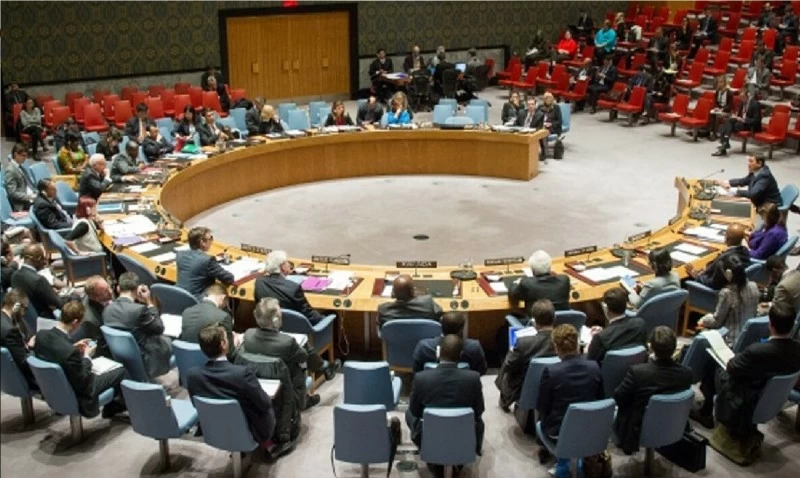
The EU's foreign policy chief, Kaja Kallas, announced that the bloc's foreign ministers will hold an emergency meeting today (Sunday) to discuss the rapidly evolving situation related to the Iranian issue, following a series of recent US-Israeli strikes and Iranian retaliatory attacks in the region.
“The indiscriminate attacks launched by the Iranian regime against its neighbors pose a real risk of dragging the entire region into a wider and disastrous war,” Callas wrote on her official X platform account, explaining that the ministers would meet via video conference to ensure rapid coordination and keep pace with the rapidly evolving events on the ground.
The European official indicated that it is extremely important that the scope of the war does not expand further, while stressing the need for the Iranian regime to make decisive decisions to de-escalate rather than escalate.
International moves and fears of sliding into the abyss
In a related context, European Council President Antonio Costa described the exchange of strikes as a "serious escalation" in the military situation in the Middle East, expressing his deep concern about the deteriorating security situation.
These European diplomatic moves coincide with the start of the UN Security Council's discussions on the developments in the war, as the international community strives to contain the situation before it reaches a point of no return. This intensified diplomatic activity is a direct response to global fears that the conflict could escalate from limited skirmishes or proxy wars into a direct and full-scale military confrontation between major regional and international powers.
Background of the conflict and its regional repercussions
These meetings are of exceptional importance given the complex historical and geopolitical context of the Middle East. The current escalation not only threatens regional security but also casts a shadow over international peace and security. European countries, in particular, fear the direct repercussions of any large-scale war, which could include new waves of refugees, a threat to global energy security, and disruption to supply chains passing through the region's vital straits.
Observers believe that the emergency European meeting and the Security Council session aim to unify international positions to pressure all parties to exercise restraint. The major powers recognize that the continued exchange of missile strikes and airstrikes could lead to catastrophic miscalculations, making preventive diplomacy at this stage an urgent necessity, not merely a political option, especially given the fragile situation in neighboring countries that could be directly affected by any large-scale armed conflict.
-

 Local News 3 days ago
Saudi Arabia approves regulations for the continued presence of Gulf vehicles: duration and penalties
-
Local News 6 days ago
The Ministry of Interior begins procedures for a royal pardon for common law prisoners
-
Local news one week ago
19 requirements to reduce dust from projects in Riyadh and fines for violators
-
Politics, one week ago
Trump plans to create a $2 billion alternative to the World Health Organization
-
Culture and Art, 1 week ago
Amr Diab appears with his four sons and a highly anticipated concert in Türkiye
-
 Local news one week ago
Three billion riyals deposited as Ramadan aid for social security beneficiaries
-
Local news 12 hours ago
Jeddah Airport alerts for travelers due to airspace closure and flight disruptions
-
Local News 5 days ago
The deadline for property registration in Hail and Riyadh is Thursday