
Politics
Leave it, for it is foul
Tribalism is a relic of ignorance; if it spreads in a place, it causes its fragmentation. And if the enemies of any country want to harm it, they..

Tribalism is a pre-Islamic practice. If it spreads in a place, it causes its fragmentation. If the enemies of any country want to harm it, they make stirring up tribalism a way to reach their goal.
The Prophet (peace and blessings be upon him) forbade tribalism, saying, “Leave it, for it is foul.” This means he was saying no to prejudice based on appearance, color, or tribe. He also said, “No Arab is superior to a non-Arab, nor a white person to a black person, nor anyone to another, except through piety.” The purpose of tribes is not to promote prejudice, as God Almighty says, “And We have made you into nations and tribes so that you may know one another. Indeed, the most noble of you in the sight of God is the most righteous of you.”.
The Saudi leadership has put the homeland and the citizen first, so it has become one people and one nation behind a wise leadership that has spared no expense to strengthen national unity and instill it in the youth and the entire society under the umbrella of religion, values and laws to ward off dangers and foil conspiracies against the homeland, and to preserve the gains of the great homeland in a sound methodology that guarantees its stability. This is what the Custodian of the Two Holy Mosques, King Salman bin Abdulaziz, has affirmed more than once, that the sons of the homeland are equal in rights and duties and there is no difference between one citizen and another. This is what the pillars of the state are based on, and adherence to the Book of God and the Sunnah of His Messenger, which called for preserving and protecting human rights.
Hateful posts
Attempts to undermine national unity through the use of influential means on social media platforms and through irresponsible actions by some are shattered against the rock of national cohesion. In light of security vigilance that has succeeded in thwarting all attempts and actions that would incite tribalism and harm national unity and social peace, and in bringing the perpetrators to justice and applying the maximum penalties against them, the security authorities at the Ministry of Interior announced the arrest of seven citizens and their referral to the Public Prosecution for committing crimes that threaten national unity, peace and community security by publishing posts that incite hateful tribalism, hatred and animosity in society.
The announcement of the arrest of these individuals came as they committed crimes that threaten national unity, peace, and community security by publishing posts that incite hateful tribal prejudice and animosity. It was stated that anyone who tries to undermine national unity by inciting hateful tribal prejudices will face a deterrent punishment.
Those arrested are anomalies that do not represent Saudi society, nor do they reflect its awareness and understanding of the seriousness of such irresponsible practices. All the people of the Kingdom, throughout the history of the founding of the blessed state, are proud of their cohesion and rallying around their national unity, their rejection of all causes of division and discord, and their agreement to combat aberrant practices that represent only their perpetrators.
The law is watching these people
State agencies will firmly confront any attempts to undermine national unity and incite hateful tribalism and prejudices, as this constitutes a blatant affront to the principles of unity, coalition, and consensus upon which this state was founded. It sows discord among members of society and spreads hatred and animosity. This is considered an attack on public order and a crime punishable by law, which necessitates raising awareness of the seriousness of these dangerous practices and their negative repercussions on security and social peace.
The relevant authorities are working seriously and firmly to monitor all posts and statements that threaten the security and safety of society and endanger national unity, and anyone who is involved in inciting tribalism by any means will be held accountable and subject to legal action.
Space series content
In another incident, an official source in the Public Prosecution confirmed that, based on what was documented by the Public Prosecution's monitoring center regarding the circulation of informational content via social media, related to a series on one of the satellite channels, which includes content that broadcasts tribal fanaticism, spreads the spirit of hatred and animosity among members of society, undermines national cohesion and the unity of the social fabric, and insults others with obscene language that is outside the context of public morals, the Public Prosecution issued an order to arrest the owner of the content based on Articles (15 and 17) of the Criminal Procedure Law, and to quickly refer him to the Public Prosecution.
The Criminal Investigation and Research Department of the Riyadh Police also arrested 10 citizens for documenting and publishing content that resulted in inciting tribal tensions among a number of people.
Public Security published on its official account on the (X) platform the details of their arrest, as it was initially announced that six people had been arrested, and it was announced that four other people who had a role in the incident had been arrested and the legal procedures had been taken against them, and they had been referred to the competent authority.
Security authorities in the Riyadh, Hail and Northern Borders regions arrested a number of drivers for placing stickers with content that incites tribalism. They were detained, legal procedures were taken against them, and they were referred to the Public Prosecution.
The Ministry of Interior stands firmly against sectarianism
The Ministry of Interior warned against anything that could disrupt public order, emphasizing that security forces will stand firmly against anyone attempting to undermine national unity by inciting hateful tribalism, and that they will face severe consequences. The Ministry affirmed that national unity in Saudi Arabia is a red line that cannot be crossed or influenced in any way, and that it is the state's duty to prevent anything that leads to discord, sedition, and division, in accordance with Article 12 of the Basic Law of Governance.
Ignorance does not absolve one of responsibility
Lawyer and legal consultant Abdulaziz Al-Qulaisi affirmed that the legal system severely punishes those who incite bigotry and tribalism, adding: “What some people do on social media platforms under the pretext of ignorance and lack of knowledge does not exempt them from punishment and criminal responsibility, as it is considered a major crime warranting arrest.” He added: “The procedures include arresting the perpetrator and referring them to the competent court.”.
He stressed that some crimes are compound crimes, combining intolerance, incitement of hatred, harm to national unity and public order, and the production of anything that would harm public order. Article 12 of the Basic Law of Governance stipulates that strengthening national unity is a duty, and the state prevents everything that leads to discord, sedition, and division. It also emphasized strengthening national unity and preventing everything that leads to discord, sedition, and division.
Lawyer Al-Qalisi explained that the cybercrime law stipulates that whoever produces, prepares, or sends anything that would harm public order, religious values, public morals, or the sanctity of private life via the information network or a computer device shall be punished with imprisonment and a fine. The imprisonment period in this penalty shall not exceed five years, and the fine shall not exceed three million riyals. He indicated that the penalty may be one of these two penalties or both together.
He stressed that Article Five of the Audiovisual Media Law stipulates that no exposure should be made to anything that would incite discord, division, and hatred among citizens, incite violence, or threaten social peace, and its punishment is as stated in Article 17 of the same law, without prejudice to any more severe penalty stipulated by another law. Anyone who violates the provisions of the law or the regulations shall be punished with one or more of the penalties, with a fine not exceeding 10 million riyals, suspension from practicing the profession for a period not exceeding six months, cancellation of the license, and the fine imposed or prescribed shall be doubled in the event of a repetition of the violation, its continuation, or failure to correct it within the period specified by the Authority.
Strengthening national unity is a duty
The Public Prosecution has declared that producing, preparing, sending, or storing content that incites sectarianism or tribalism and could harm public order through social media or the internet constitutes a cybercrime. In a statement, the Public Prosecution said, "The perpetrator of this crime is punishable by imprisonment for up to five years and a fine of up to three million riyals." It added, "Anyone who produces, prepares, sends, or stores content that could harm public order, religious values, public morals, or the sanctity of private life via the internet or any computer device is punishable by imprisonment for a term not exceeding five years and a fine not exceeding three million riyals, or by either of these penalties.".
The Public Prosecution affirmed that strengthening national unity is a duty, and the state prohibits everything that leads to discord, sedition, and division. Moreover, publishing what spreads hatred and animosity and incites abhorrent tribal fanaticism through social media is considered an attack on public order and is one of the major crimes that warrant arrest, and its penalty reaches five years imprisonment and a fine of three million riyals, according to Article Six of the Cybercrime Law.
For his part, retired Major General Salem Al-Tarifi affirmed that Islam came to end tribalism, stating, "The most significant ways to undermine and fragment national unity are through tribalism, sectarianism, the creation of social stratification, and mutual recrimination." He further explained that the Kingdom enjoys a cohesive and resilient national fabric upon which all enemy conspiracies are shattered.




Politics
Washington returns oil tanker to Venezuela: Will sanctions policy change?
The United States has decided to return the giant oil tanker 'Sophia' to Venezuela, in a move that raises questions about the future of the maximum pressure and sanctions policy on Caracas.
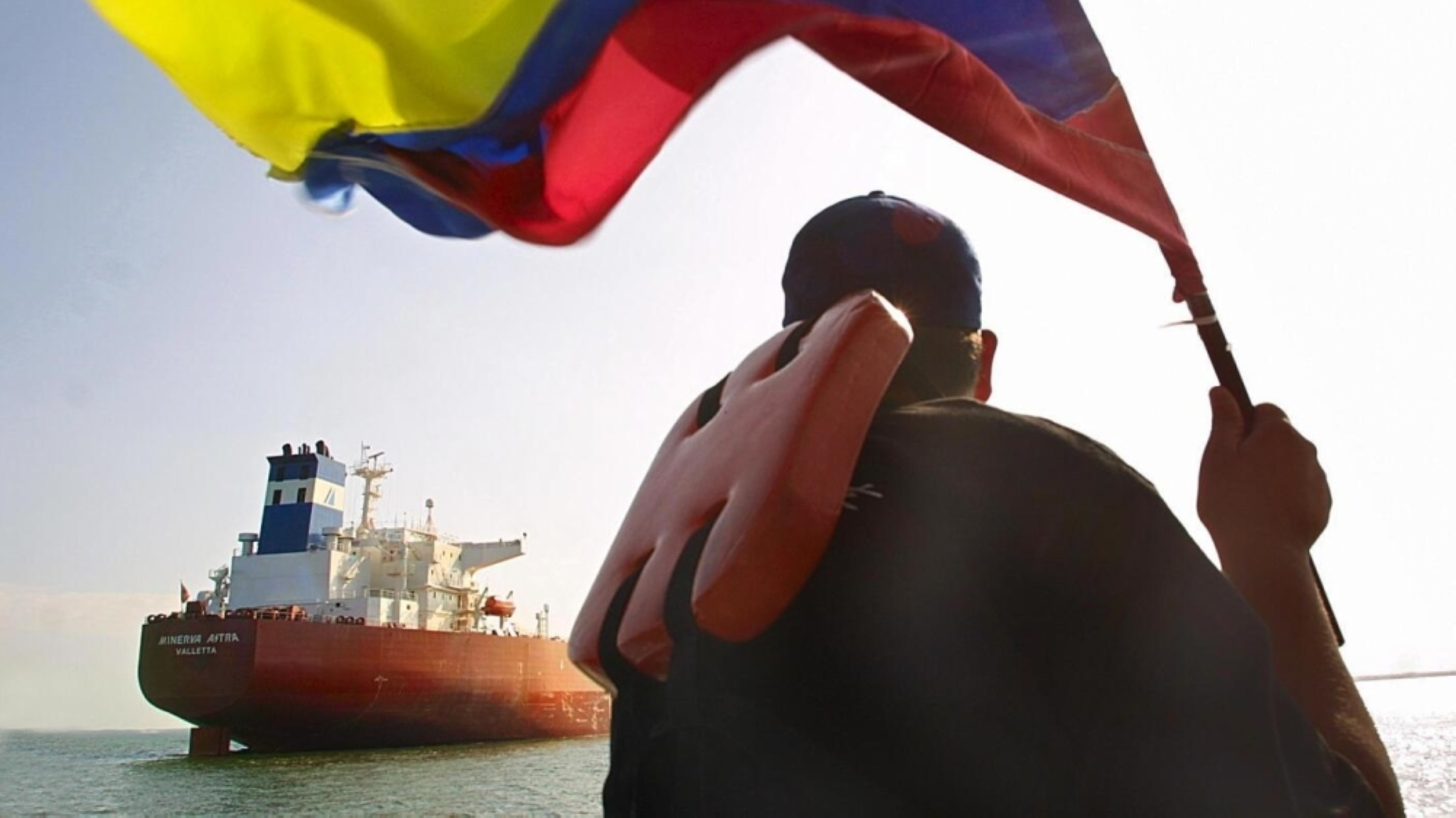
In a significant development amid ongoing tensions between Washington and Caracas, two US officials revealed the United States' intention to return a giant oil tanker it seized earlier this month to Venezuelan authorities. According to Reuters, the officials confirmed that the tanker in question is the "Sophia," a Panamanian-flagged supertanker, raising questions about the dynamics of US pressure tactics.
Background of sanctions and maximum pressure policy
This move comes against the backdrop of the “maximum pressure” campaign imposed on Venezuela by the previous US administration under Donald Trump, a campaign that lasted for years with the aim of overthrowing the government of President Nicolás Maduro. This campaign included imposing harsh economic sanctions primarily targeting the oil sector, the lifeblood of the Venezuelan economy. Through these measures, Washington sought to cut off Maduro’s government’s sources of revenue and bolster the political opposition.
Targeting oil tankers: A US strategy
The seizure of oil tankers linked to Venezuela has been a key part of this strategy. Since late last year, the United States has intensified its efforts to confiscate Venezuelan oil shipments on the high seas, successfully seizing at least seven tankers. These operations aim to prevent Venezuela from exporting its crude oil or importing refined products, further isolating it economically. Former US President Donald Trump has previously hinted at broader plans to control Venezuelan oil resources, proposing a $100 billion investment plan to rebuild the country's crumbling oil sector after regime change.
The importance of re-carrying the tanker and its potential impact
The decision to return the tanker Sofia is an unexpected development that could point to several possibilities. It may stem from legal challenges faced by US authorities in proving the tanker's violation of sanctions, or it may reflect a tactical shift in Washington's policy. Domestically, in Venezuela, the return of a single tanker does little to alter the grim picture of the country's collapsing oil sector, but it could represent a symbolic victory for the Maduro government. Internationally, this move could be interpreted as a small gesture that might open channels for future dialogue, or simply as a reflection of the legal and practical complexities of enforcing a broad maritime sanctions regime. The situation remains complex, as Washington continues its overall policy toward Venezuela, while such exceptional cases add a new layer of uncertainty to the future of relations between the two countries.
Politics
Saudi Arabia denies rumors of refusing to receive Sheikh Tahnoon bin Zayed
Information Minister Salman Al-Dossari confirms that what is being said about the Kingdom refusing to receive Sheikh Tahnoon bin Zayed is untrue, stressing the depth of the brotherly relations between the two countries.
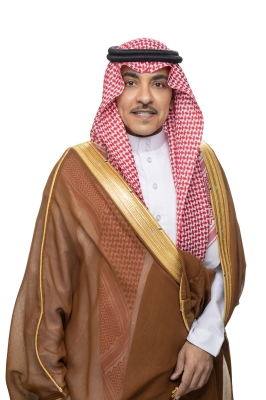
Saudi Minister of Information, Mr. Salman bin Yousef Al-Dossari, categorically confirmed that the news circulating on some media platforms and social media about the Kingdom of Saudi Arabia refusing to receive His Highness Sheikh Tahnoon bin Zayed Al Nahyan, National Security Advisor of the United Arab Emirates, is completely false and has no relation to reality.
In a statement aimed at dispelling rumors, Minister Al-Dossari clarified that Sheikh Tahnoon's relationship with the Kingdom transcends official protocols, emphasizing that "Sheikh Tahnoon bin Zayed comes to the Kingdom whenever he wishes without prior notice; it is his home and its leadership is his family." This statement reflects the depth of the personal and fraternal ties that bind the leadership of the two brotherly countries and puts an end to any attempt to cast doubt on the strength of this relationship.
Historical context of established relations
These rumors come at a time when Saudi-Emirati relations are at their strongest and most robust, with the strategic partnership between Riyadh and Abu Dhabi representing a cornerstone of stability in the Gulf region and the Middle East. This historic relationship is based on a long legacy of joint cooperation and coordination at the highest levels across various political, economic, and security fields, within the framework of the Gulf Cooperation Council and through advanced bilateral mechanisms such as the Saudi-Emirati Coordination Council, which aims to integrate visions and interests.
The importance of the event and its regional impact
His Highness Sheikh Tahnoun bin Zayed Al Nahyan is a pivotal figure in the UAE, holding the sensitive strategic position of National Security Advisor and playing a prominent role in shaping his country's foreign and economic policies. Given his position and the nature of the portfolios he oversees, his visits to the Kingdom and his meetings with Saudi officials carry particular significance. These visits are part of ongoing consultations and close coordination to address shared regional challenges and strengthen mutual interests. The aim of spreading such false information is to undermine trust and disrupt the robust alliance between the two countries, an alliance that has proven its effectiveness in dealing with numerous regional crises. Therefore, the swift and official Saudi denial underscores that this strategic relationship is immune to attempts to sow discord, and that communication channels between the two leaderships remain open, transparent, and characterized by absolute trust. This stance demonstrates the awareness of both countries regarding the importance of protecting their partnership from misleading media campaigns that target the security and stability of the entire region.
Politics
Putin and Sharaa in Moscow: The future of Russian-Syrian relations
Russian President Vladimir Putin and Syrian interim Prime Minister Ahmed al-Sharaa discussed the future of bilateral relations, the fate of Russian forces, and reconstruction in Moscow.
A strategic meeting in the Kremlin shapes the future
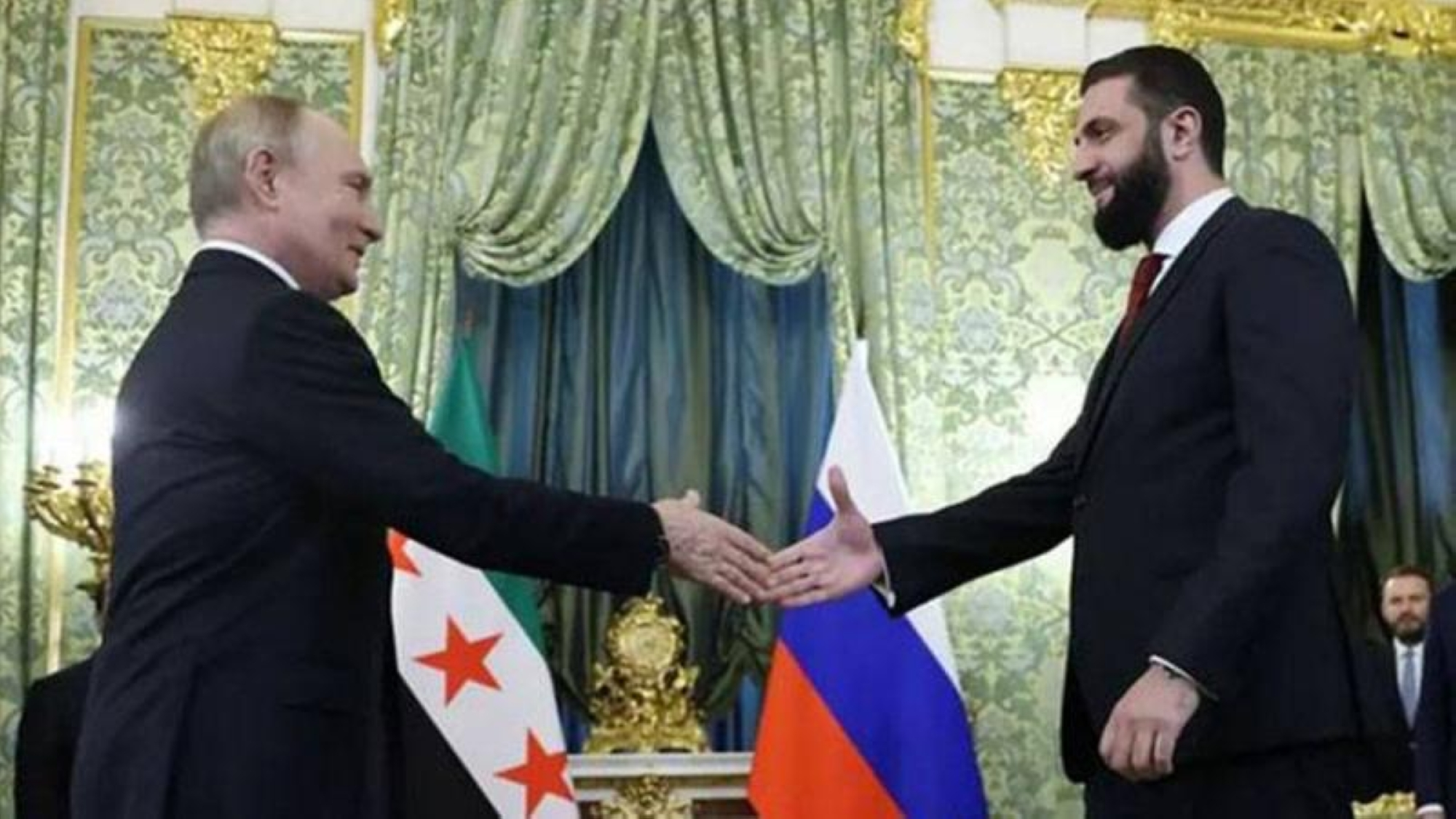
In a highly significant diplomatic move, Russian President Vladimir Putin received Syrian interim Prime Minister Ahmed al-Sharaa at the Kremlin on Wednesday. This meeting, the first of its kind since the recent radical political changes in Damascus, focused on the prospects for bilateral relations, the future of the Russian military presence in Syria, and the complex situation in the Middle East.
Historical background: From supporting the previous regime to engaging in dialogue with the new reality
This meeting is taking place against the backdrop of a historic shift in Syria, marked by the collapse of Bashar al-Assad's regime, whose most prominent international backer was Moscow. Since its military intervention in 2015, Russia has played a decisive role in tipping the balance of the conflict in favor of the former regime, establishing strategic military bases in Hmeimim and Tartus. Today, Putin's dialogue with al-Sharaa represents a pragmatic shift in Russian policy, an acknowledgment of the new reality on the ground, and an effort by Moscow to preserve its strategic interests and influence in Syria and the region.
The importance of the meeting and its potential effects
The meeting is of paramount importance to both sides. For the new Syrian government, this visit is a vital step toward gaining international legitimacy and securing the support of a major world power during the reconstruction and stabilization phase. For Russia, the goal is to ensure the continuity of its security and economic interests, safeguard the future of its military bases, and solidify its role as an indispensable mediator in any future political settlement in Syria.
Topics of discussion: From the economy to the military presence
During the meeting, President Putin praised al-Sharaa's efforts to develop relations, emphasizing the success in raising the level of economic cooperation between the two countries. Putin expressed a clear desire for Russian companies, particularly in the construction sector, to play a pivotal role in the reconstruction of Syria, which represents an economic opportunity for Moscow to recoup the costs of its military intervention. For his part, al-Sharaa commended Russia's role in achieving stability, expressing his hope that the Middle East region would witness a new phase of development and prosperity, and noting the numerous commonalities between Damascus and Moscow upon which further cooperation could be built.
The future of the Russian military presence was expected to feature prominently in the discussions, as the new Syrian government seeks to redefine its relationship with foreign forces on its territory, while Russia aims to secure an agreement that guarantees its long-term strategic presence.
-

 Local News 4 days ago
Landslide in Riyadh: Details of the incident in Al-Sahafa neighborhood and containment efforts
-
 Local News 5 days ago
The death penalty was carried out against a citizen who stabbed another to death in Tabuk
-
 Culture and Art, 1 week ago
Ramez Galal in Ramadan 2026: Details of the bloody prank show
-

 Local News 6 days ago
First birth on the Riyadh train: A heartwarming story at Andalus station
-
 Local News 4 days ago
Riyadh collapse: Emergency plans to secure water after a main pipeline burst
-

 Culture and Art 4 days ago
Haifa Wehbe's absence in Riyadh: A photo crisis or a strained relationship with the media?
-

 Culture and Art 4 days ago
City Kitchen series: A drama of conflict and the middle class during Ramadan
-

 Culture and Art 4 days ago
The series "Kasra": Dawood Hussein in a moving social drama this Ramadan