Politics
How will Lebanon respond to the American proposal?
Between Hezbollah's escalating rhetoric and the American stance of adhering to a clear deadline before moving to more stringent measures, a dynamic is unfolding

Between Hezbollah’s verbal escalation and the American position, which insists on a clear deadline before moving to more stringent steps, the most sensitive issue in Lebanon, “the fate of the party’s weapons,” and its position in the anticipated international understandings, is unfolding, amid anticipation of the visit of US envoy Thomas Barrack to Beirut in the coming hours to receive the official Lebanese response to his paper.
The remarks made by Hezbollah Secretary General Naim Qassem a few hours ago left no doubt that the party refuses to surrender its weapons. In fact, it considers even raising the idea a form of "political naiveté" that ignores the party's position and role. According to multiple sources, Hezbollah has informed those concerned that there is no need for a new agreement; rather, the international community and the countries sponsoring the ceasefire agreement should compel Israel to implement the existing agreement from 2006.
But what is striking is that, despite the party's clear escalation in rhetoric, the possibility remains that it will once again hand over the "negotiating task" to Speaker of Parliament Nabih Berri, just as it did in the maritime border demarcation file and then in the ceasefire negotiations, leaving the details and wording to Berri while retaining the right to veto or make tactical retreats when necessary. This is likely to be repeated today regarding its weapons, albeit unofficially.
Meanwhile, the official Lebanese response to the American proposal is being hastily finalized amidst a race between external pressures and complex internal calculations. The response is expected to be delivered to the American envoy upon his arrival in the Lebanese capital (Monday).
As for Barak, he paved the way for his anticipated visit with a political message published on the “X” platform today (Saturday), in which he said: “The right moment has arrived for Lebanon to overcome the sectarianism that has governed the past… The time has come to fulfill the true promise of Lebanon: one nation, one people, and one army.” This message did not go unnoticed and was interpreted as part of indirect American pressure to confine weapons to the state and the army as a fundamental condition for any future international support.
In contrast, Israel did not hide its displeasure with the American paper, as the Maariv newspaper revealed its details today, stating that it includes a security proposal based on the withdrawal of the Israeli army from the five points it entered into Lebanese territory, in exchange for the Lebanese army’s commitment to dismantle Hezbollah positions north of the Litani River.
According to the newspaper, the implementation will be gradual and in parallel stages, with the operation to end within six months, so that no Israeli soldier remains on Lebanese territory, and Hezbollah’s military presence is eliminated in the area between the Litani River and Beirut.
The document itself reflects an American vision of a gradual settlement culminating in disarmament, even if the term isn't explicitly used. But what's causing concern domestically is whether the Lebanese response will be clear and decisive, or whether it will be ambiguous enough to allow each side to maintain its position, thus trapping Lebanon in the same cycle that led to its collapse: political paralysis, stalled reconstruction, and an international economic blockade.
The question remains: Does Lebanon have a unified national formula for dealing with Hezbollah's weapons? Or will the expected response on Monday be a formula that is "tasteless, colorless, and odorless," and may open the door to further confusion and mounting losses?.
Only the coming days will reveal the extent to which this paper can reach... and whether the moment of the big decision has truly arrived?!









Politics
Oman: Duqm port targeted by drones for the second time in days
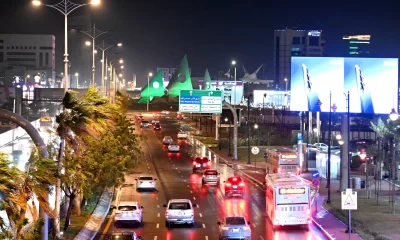
The Sultanate of Oman announced that the port of Duqm was attacked by drones targeting fuel tanks, in the second such incident in three days. Authorities confirmed that the situation was under control and that there were no casualties.

The Sultanate of Oman announced on Tuesday morning that the Special Economic Zone in Duqm had been subjected to a new security incident, which was the targeting of fuel tanks in the commercial port of Duqm by a number of drones. This is the second incident of its kind to occur in the vital area in less than 72 hours.
The official Oman News Agency quoted a responsible security source confirming that the airstrike damaged one of the port's fuel tanks. Authorities explained that emergency teams and relevant agencies were able to fully contain the damage caused by the attack, confirming that no casualties were reported. This reflects the port's readiness to handle emergencies.
Details of the previous incident and escalating tensions
This attack comes just days after a similar incident last Sunday, when Omani authorities announced that the port of Duqm had been targeted by two drones. The first attack resulted in injuries to an expatriate worker when one of the drones struck a mobile workers' accommodation, while the debris from the other drone fell near fuel tanks without causing significant material damage or further casualties.
The Sultanate of Oman has expressed its strong condemnation of this repeated targeting of civilian and economic infrastructure, stressing that it is taking all necessary security and precautionary measures to deal with this event and ensure the safety of the facilities and workers in them.
The strategic importance of the port of Duqm
This event is of particular importance given the strategic location of the Port of Duqm. Situated on the southeastern coast of the Sultanate of Oman, the port directly overlooks the Arabian Sea and the Indian Ocean. The Duqm Special Economic Zone is one of the largest economic projects in the Middle East and North Africa, designed to be a global logistics and industrial hub.
The importance of Duqm lies in its location outside the Strait of Hormuz, making it a vital artery for oil and gas exports and container trade, far removed from the tensions that might arise in the strait. The port includes a major oil refinery and petrochemical storage facilities, making it a cornerstone of the Sultanate of Oman's economic diversification strategy (Vision 2040).
Impacts of the event on energy security and navigation
The repeated targeting of vital facilities in a politically and security-wise stable region like the Sultanate of Oman raises questions about the growing security challenges facing energy and maritime shipping lanes in the region. Economic and political circles are viewing these events with great seriousness, given the role that Omani ports play in global supply chains.
Despite these events, initial indicators confirm the continuation of operations at the port and the ability of the Omani authorities to contain the situation, in light of regional and international support for the stability of the Sultanate and the security of its waterways.
Politics
Trump vows to retaliate against the attack on the US embassy in Riyadh
Trump confirms imminent response to drone attack on US embassy in Riyadh. Saudi defense ministry reveals details, raising expectations of escalating tensions in the region.
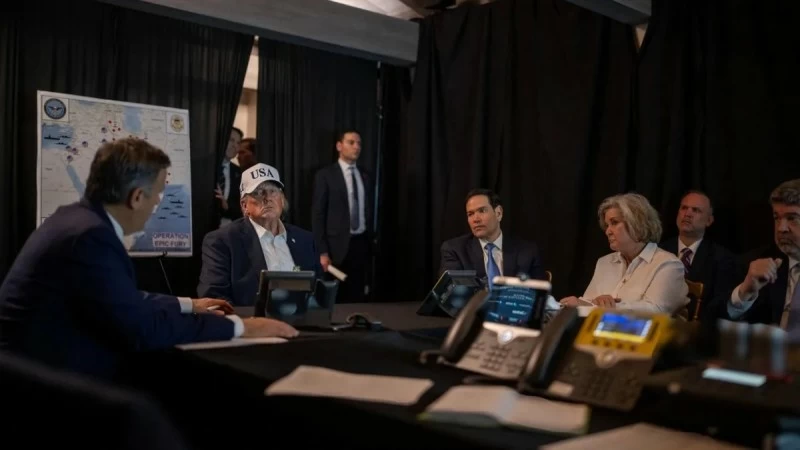
In a new escalation of events in the Middle East, US President Donald Trump affirmed that the military and political response to the attack targeting the US embassy in the Saudi capital, Riyadh, would be "soon and decisive." The US president indicated that the administration is currently studying the available options and that details of the anticipated US action would be announced shortly, reflecting Washington's seriousness in dealing with threats against its diplomatic missions.
Details of the attack and the Saudi position
Trump’s fiery remarks came during an exclusive interview with News Nation, which was relayed by the network’s correspondent via the X platform, where the president stressed that the United States would not tolerate this blatant attack, especially as it comes amid escalating regional tensions and the deaths of American soldiers in indirect confrontations during the ongoing conflict with Iran and its proxies in the region.
For its part, the Saudi Ministry of Defense quickly clarified the circumstances of the incident, issuing an official statement in the early hours of Tuesday morning via the "X" platform. The ministry explained that the initial assessment of the incident indicates that the embassy was subjected to a hostile attack by two drones, confirming that the attack resulted in a small fire within the embassy perimeter, which was brought under control without any major damage.
Context of regional and international tension
This incident comes at a time of heightened geopolitical tension in the region, where targeting diplomatic missions is a serious violation of international norms and laws, specifically the Vienna Convention on Diplomatic Relations, which mandates special protection for embassies. Observers believe this attack not only targets the diplomatic building itself but also represents a direct challenge to American influence in the region and to the deep strategic partnership between Washington and Riyadh.
Historically, US-Saudi relations have been a cornerstone of security in the Middle East, and the United States typically responds firmly to any threats to its interests or those of its strategic allies in the Gulf. Military experts note that the use of drones in such attacks has become a common tactic for armed groups in the region to destabilize it, prompting Washington to bolster its defense systems and vow to deter the perpetrators.
Expected repercussions
This incident is expected to cast a shadow over the political and security landscape in the region, as the anticipated US response could lead to changes in the current rules of engagement. Furthermore, targeting a major and pivotal capital like Riyadh carries serious implications that may necessitate high-level security and military coordination between the United States and Saudi Arabia to ensure regional security and the safety of vital waterways and global energy supplies, which could be affected by any large-scale military escalation.
Politics
The Yemeni government's priorities: Services in Aden and justice for the southern cause
The Yemeni Prime Minister outlines the government's priorities: currency stability, improving Aden's electricity, and paying salaries, while emphasizing the justice of the southern cause and partnership with the press.

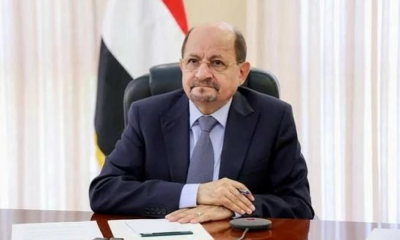
In a move aimed at enhancing transparency and clarifying the government's course of action during the current critical phase, Yemeni Prime Minister Dr. Shaya'a al-Zindani explained that his government's priorities are primarily focused on addressing the escalating service and economic challenges, foremost among them stabilizing the national currency, improving electricity and water services, and ensuring the regular payment of salaries. This statement comes at a time when the country is experiencing immense economic pressure resulting from the ongoing war and the halt in oil exports, which has severely impacted the living conditions of citizens.
Aden: The true test of the state
The Prime Minister emphasized the special place that the interim capital, Aden, holds in the government's program, considering it a symbol of the state and a true test of its ability to succeed and endure. He noted that the government is deeply committed to transforming Aden into a model of security, public service provision, and institutional discipline. He affirmed that the success of this experiment in Aden would send a powerful message of hope to the other liberated governorates, confirming the success of the state project and its capacity for recovery. At the same time, he warned that any chaos or security lapses in Aden would not only affect the city but would also tarnish the image of the nation and the national project as a whole in the eyes of the international community and donors.
Economic and political dimensions
The Yemeni government faces complex challenges, with the electricity sector in Aden and neighboring governorates being among the most intricate due to dilapidated infrastructure and fuel shortages, requiring urgent strategic solutions. Currency stability is also directly linked to citizens' purchasing power, which has eroded significantly in recent years. Through these priorities, the government aims to create a stable environment that will encourage capital inflows and revitalize the economy.
The justice of the southern cause and partnership with the media
On the political front, during a meeting with journalists and media figures in the interim capital, Aden, the Yemeni Prime Minister reiterated that the Southern issue is a just cause , noting that it constitutes a fundamental pillar of any future political settlement and that addressing it in a manner acceptable to the people of the South is a genuine path to stability. In closing, al-Zindani pledged to build strong bridges of partnership with the press and media, emphasizing that restoring trust between citizens and the government begins with honesty and transparency, and that the media is a key partner in uncovering the truth and monitoring government performance.
-

 Local News 3 days ago
Jeddah Airport alerts for travelers due to airspace closure and flight disruptions
-
Local News 5 days ago
Saudi Arabia approves regulations for the continued presence of Gulf vehicles: duration and penalties
-
Local news one week ago
The Ministry of Interior begins procedures for a royal pardon for common law prisoners
-
Local news one week ago
The deadline for property registration in Hail and Riyadh is Thursday
-
Sports one week ago
Tickets for the Al-Ahli vs. Al-Hilal King's Cup match postponed: New date
-
Local news one week ago
Under the patronage of the Minister of Information, an agreement was signed between the Ministry of Information and Waves Marketing Company
-
Culture and Art 6 days ago
The Devil's Prisons series was halted: The full story of "The Emperor's" being moved to YouTube
-
Local news one week ago
Saleh Al-Maghamsi appointed Imam of the Prophet's Mosque: Details of the Royal Decree