
Politics
Pakistan downs Indian drone and considers suing New Delhi
Pakistani authorities shot down an Indian drone in the disputed Kashmir region, as they prepare to sue New Delhi after


Pakistani authorities shot down an Indian drone in the disputed Kashmir region, as they prepare to sue New Delhi after it suspended a water-sharing treaty on the Indus River following an armed attack that left several dead and wounded last week.
Pakistani state radio reported on Tuesday that an Indian quadcopter drone was shot down along the Line of Control (the de facto border in Kashmir), thwarting a violation of its airspace. It added that Indian forces had attempted to conduct reconnaissance operations using a quadcopter drone in the Bhimber border region.
The Indian army announced that Pakistani forces had again fired small arms near the Line of Control in Kashmir, and that its forces responded "in a restrained and effective manner," without reporting any casualties. Pakistan did not confirm the incident, although residents on its side reported hearing gunfire.
For his part, Pakistani Minister of Law and Justice Aqeel Malik revealed that his country is preparing to take international legal action regarding India's suspension of the Indus River Waters Treaty. He stated that Pakistan is considering three legal avenues, including appealing to the World Bank, which mediated the treaty. He added that Islamabad is also considering taking the case to the Permanent Court of Arbitration or the International Court of Justice in The Hague, arguing that India has violated the 1960 Vienna Convention on the Law of Treaties.
He added that consultations on the legal strategy are nearing completion, noting that the final decision on legal avenues will be made soon, and may include taking cases to more than one international body.
Meanwhile, India closed more than half of the tourist sites in its part of Kashmir starting Tuesday to tighten security measures following an attack on tourists last week. A government document stated that the Jammu and Kashmir authorities decided to close 48 out of 87 tourist destinations in the region and increase security presence in the remaining tourist areas.
Pakistani Defense Minister Khawaja Asif warned on Monday that an Indian military incursion was imminent amid escalating tensions between the two nuclear-armed countries.
Western media quoted Asif as confirming that his country had reinforced its forces in anticipation of an imminent Indian incursion, noting that strategic decisions had been made in this context.
He noted that Indian rhetoric had become more escalatory and that the Pakistani military had warned the government of a possible imminent Indian incursion, without providing further details about its assessment of its proximity. He affirmed that Pakistan was on high alert but would not use its nuclear arsenal unless "there is a direct threat to our existence.".
The Pakistani minister announced that Islamabad had contacted friendly countries such as the Gulf states and China, and had briefed Britain, the United States, and others on the situation. He added that some friendly Gulf states had intervened to mediate between the two sides, without naming any of them. Asif stated that the United States had so far "stayed clear" of involvement in the matter.
Following the Kashmir attack that killed 26 people and injured others, India accused two of the attackers of being Pakistani, while Islamabad denied any connection to the incident and demanded an impartial investigation, accusing New Delhi of waging a disinformation campaign against it.
Indian Prime Minister Narendra Modi vowed to hunt down and punish the attackers. India suspended the Indus Waters Treaty, which governs water sharing, and ordered Pakistani diplomats to leave the country within a week. It also halted the issuance of visas to Pakistani citizens and canceled all previously issued visas.
For its part, Pakistan denied the accusations, restricted a number of Indian diplomatic staff in Islamabad, declared that any interference with rivers outside the Indus Waters Treaty was an “act of war,” suspended trade with India, and closed its airspace to it.
Related News







Politics
Al-Khuraiji receives the head of British intelligence in Riyadh
Deputy Foreign Minister Waleed Al-Khuraiji receives the head of the British Joint Intelligence Committee, Madeleine Alessandri, in Riyadh to discuss bilateral relations and regional developments.
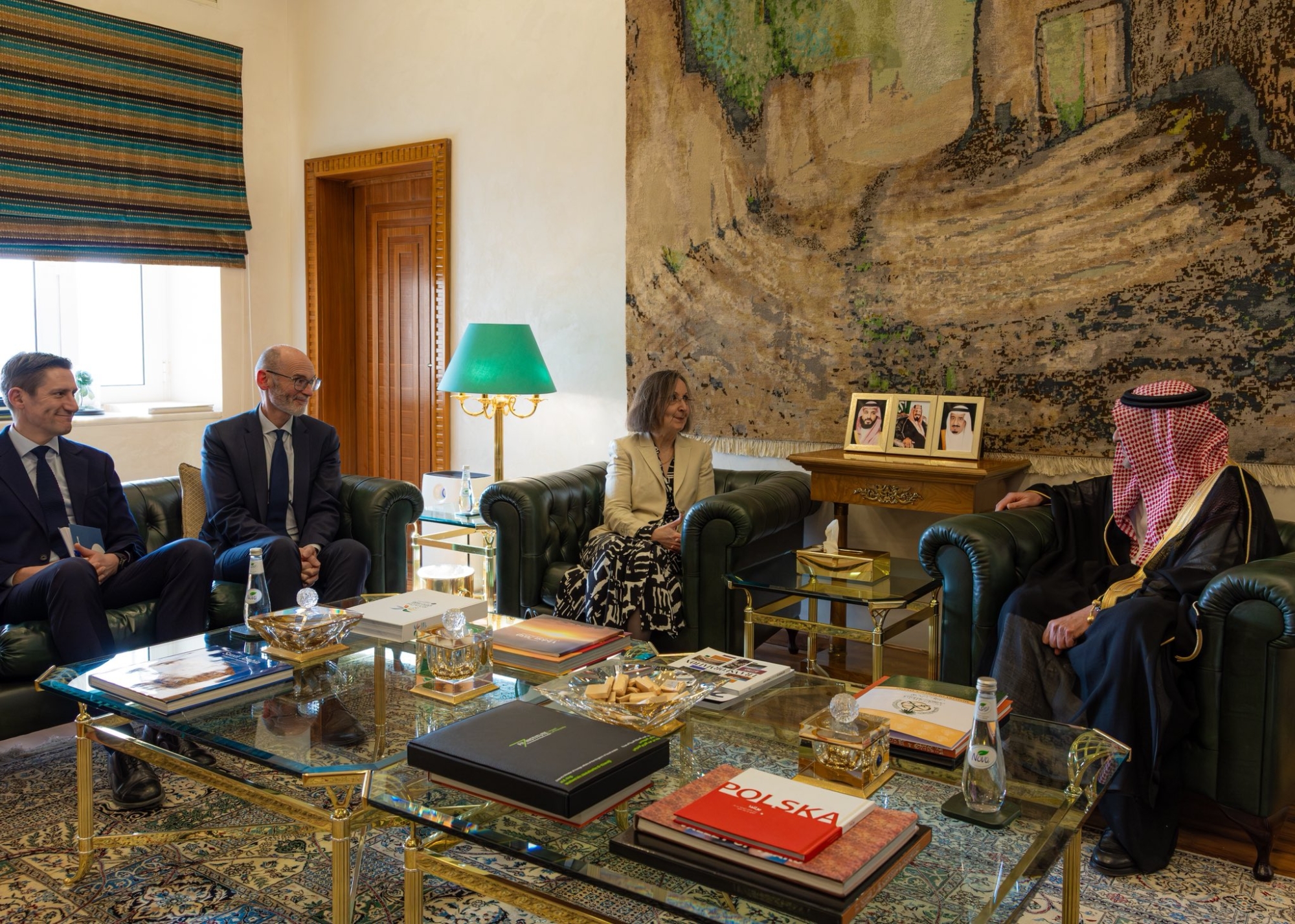
His Excellency the Deputy Minister of Foreign Affairs, Engineer Waleed bin Abdulkarim Al-Khuraiji, received today at the Ministry’s headquarters in Riyadh, the Chair of the Joint Intelligence Committee in the United Kingdom, Ms. Madeleine Alessandri, as part of strengthening diplomatic and security communication channels between the two kingdoms.
During the official reception, the two sides reviewed the strong and historic bilateral relations between the Kingdom of Saudi Arabia and the United Kingdom and discussed ways to enhance them in various fields to serve the interests of both friendly nations. They also discussed at length the most prominent developments and current events on the regional and international scenes, exchanged views on issues of common interest, and addressed diplomatic and security efforts aimed at achieving international peace and stability.
The meeting was attended by the United Kingdom’s Ambassador to the Kingdom, Mr. Stephen Charles Hitchin, reflecting the high importance that both sides attach to this meeting.
The depth of Saudi-British relations
This visit comes within the framework of the deep strategic partnership between Riyadh and London, which spans decades of fruitful cooperation. The United Kingdom is a key partner of Saudi Arabia on numerous vital issues, particularly in the areas of defense, security, and counterterrorism, in addition to growing economic partnerships under the Kingdom's Vision 2030. Such high-level meetings underscore the continued joint coordination to address the security challenges facing the region and the world.
The importance of intelligence and security coordination
The meeting between the Deputy Foreign Minister and the Chair of the UK's Joint Intelligence Committee (JIC) is particularly significant at this time, given the pivotal role of accurate intelligence in shaping political and strategic decisions. The JIC is a central body responsible for providing intelligence assessments to the Prime Minister and the National Security Council, making discussions with its chair particularly important for exchanging views on regional security threats.
The Kingdom's role in regional stability
This meeting reflects the leading role played by the Kingdom of Saudi Arabia as a cornerstone of stability in the Middle East. Through its proactive diplomacy, the Kingdom consistently seeks to build bridges of cooperation with influential international powers such as the United Kingdom, to ensure the security of waterways, combat extremism, and find political solutions to the region's escalating crises, thereby sparing people the ravages of conflict and fostering opportunities for development and prosperity.
Politics
The truth about the killing of Saif al-Islam Gaddafi and the clashes at the Hamada oil field
Details of the conflicting reports about the killing of Saif al-Islam Gaddafi in clashes near the Hamada field, and the denial of fighting by Brigade 444, along with a review of its history and the impact of the news on Libya.
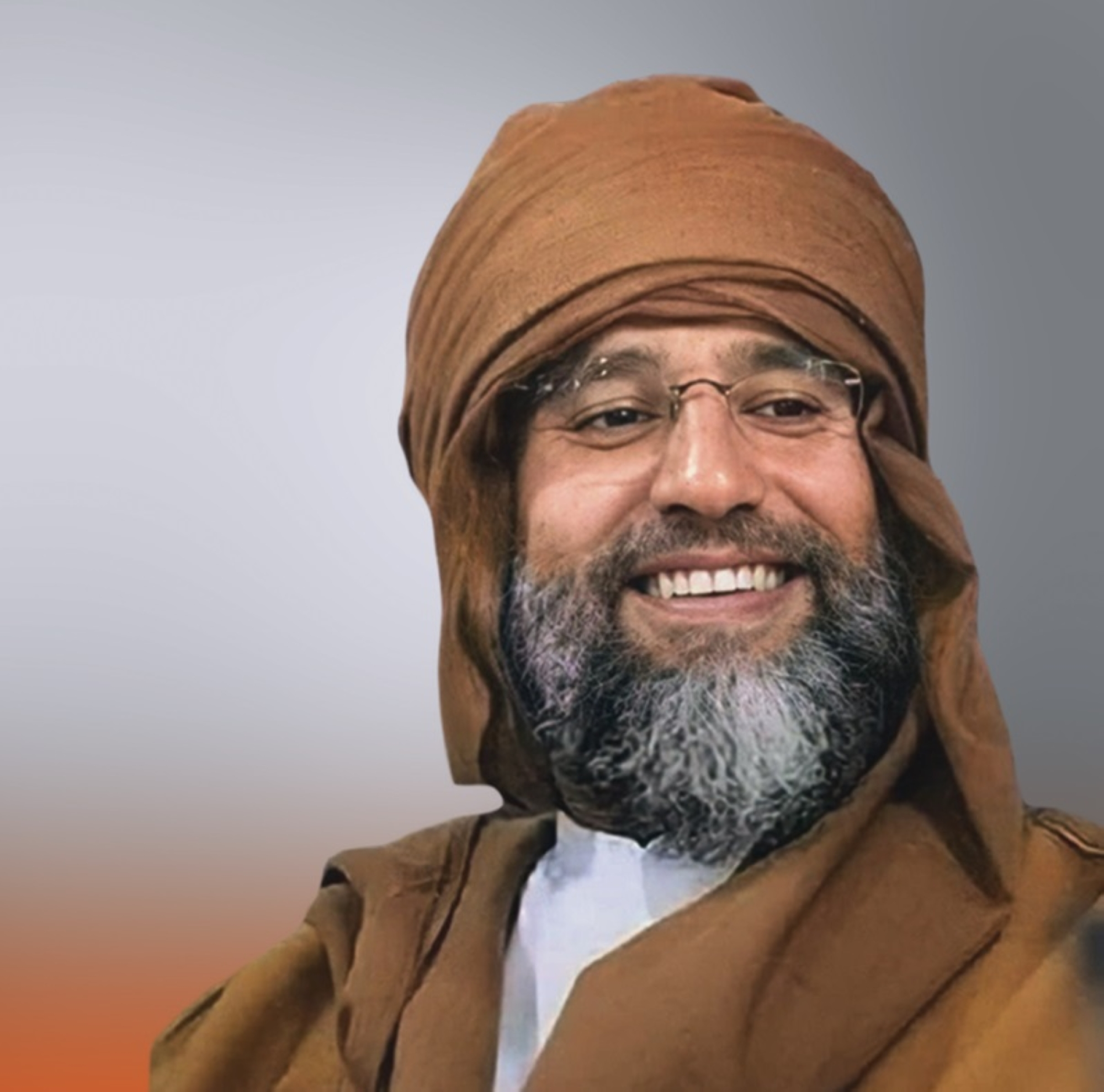
A state of uncertainty and anticipation prevailed in Libya in recent hours following widespread reports of the death of Saif al-Islam Gaddafi, son of the late Libyan leader Muammar Gaddafi. Saif al-Islam's political team announced his death, stating that it occurred during fierce armed clashes near the Hamada oil field. This sparked a wave of controversy and questions about the fate of one of the most prominent and controversial figures in the current Libyan political landscape.
Details of the incident and the denial by Brigade 444
Local media in western Libya confirmed the news, reporting that Saif al-Islam was killed during clashes with forces affiliated with the 444th Brigade. Amid these rapidly unfolding events, the 444th Brigade issued an official statement categorically denying any involvement in the alleged clashes or the reports circulating about the death of Gaddafi's son, further clouding the situation. Other reports suggested he may have been assassinated under mysterious circumstances south of Zintan, the stronghold that sheltered him for many years after the fall of his father's regime.
Saif al-Islam: From Reform Project to Persecution
To understand the dimensions of this event, it is necessary to go back a little. Saif al-Islam Gaddafi was born on June 5, 1972, and played a pivotal role in Libyan politics before the events of 2011. Despite not holding an official position, he was seen as the reformist face of the regime, as he led the “Libya of Tomorrow” project and oversaw sensitive files, including settling the issue of weapons of mass destruction and negotiations with the West, as well as his role in releasing Islamist detainees.
The complex legal and political path
Following the fall of his father's regime, Saif al-Islam was captured by the Zintan brigades in November 2011 and remained imprisoned there for years. He faced death sentences from a court in Tripoli and is still wanted by the International Criminal Court on charges of crimes against humanity. However, he reappeared publicly in recent years, taking advantage of a general amnesty law, and submitted his candidacy for the presidential elections scheduled for December 2021, thus reshuffling the political landscape in the country.
Potential repercussions of the event on the Libyan scene
If the reports of Saif al-Islam Gaddafi's death are definitively confirmed, it will represent a political earthquake in Libya. Saif al-Islam enjoys the support of a significant segment of the former regime's loyalists (the Green Movement) and some tribes, and was considered a key player in the national reconciliation process. His absence from the scene could lead to a political vacuum within this movement, potentially opening the door to a new wave of violence or reprisals, thus complicating international and UN efforts to unify Libyan institutions and hold comprehensive elections to end the long transitional period.
Politics
Saudi Arabia condemns the attack on Diori Hamani Airport in Niger and expresses solidarity with the victims
The Kingdom expresses its strong condemnation of the terrorist attack on Diori Hamani Airport in Niger, affirming its position rejecting violence and its full solidarity with the government and people of Niger in their tragedy.

In an official statement, the Kingdom of Saudi Arabia expressed its strong condemnation and denunciation of the treacherous terrorist attack that targeted Diori Hamani International Airport in Niamey, the capital of the Republic of Niger. This criminal act resulted in a number of casualties, including deaths and injuries, in an incident that has shocked local and regional communities.
The Kingdom, through its Ministry of Foreign Affairs, reaffirmed its firm and unwavering stance against all forms of violence, extremism, and terrorism, regardless of their manifestations or motives. It emphasized its categorical rejection of targeting innocent civilians and vital infrastructure, expressing its full solidarity with the sisterly Republic of Niger, its government and people, in this tragic event.
Context of security challenges in the Sahel region
This attack comes at a time when the Sahel region of Africa is facing escalating security challenges, with countries in the region, including Niger, facing persistent threats from armed groups seeking to destabilize the region. Targeting airports and vital infrastructure is a dangerous tactic aimed at isolating countries, crippling their economies, and disrupting transportation, necessitating a concerted international effort to counter these growing threats to regional peace and security.
The strategic importance of Diori Hamani Airport
Diori Hamani International Airport is Niger's main air gateway and a vital transport hub in West Africa. Its role extends beyond passenger traffic; it is a lifeline for logistical and humanitarian operations in the region. Therefore, targeting such a facility carries serious implications that go beyond the immediate material and human losses, impacting the overall sense of security and stability in the capital, Niamey.
Saudi Arabia's position in support of international stability
This condemnation falls within the framework of Saudi Arabia's foreign policy, which consistently calls for enhanced international cooperation to combat terrorism and eliminate its root causes. Riyadh has long been at the forefront of supporting its sisterly and friendly nations in Africa in addressing security and development challenges, emphasizing that security is indivisible and that the stability of the Sahel region positively impacts international peace and security.
The Kingdom concluded its statement by offering sincere condolences and heartfelt sympathy to the families of the victims and to the government and people of Niger, asking God Almighty to have mercy on the deceased, to grant the injured a speedy recovery, and to protect Niger and its people from all harm.
-

 Local news one week ago
Landslide in Riyadh: Details of the incident in Al-Sahafa neighborhood and containment efforts
-

 Culture and Art, 1 week ago
Haifa Wehbe's absence in Riyadh: A photo crisis or a strained relationship with the media?
-

 Local news one week ago
Riyadh collapse: Emergency plans to secure water after a main pipeline burst
-

 Culture and Art, 1 week ago
City Kitchen series: A drama of conflict and the middle class during Ramadan
-

 Culture and Art, 1 week ago
The series "Kasra": Dawood Hussein in a moving social drama this Ramadan
-

 Local news one week ago
Applying for the 1447 Opportunities Program for Teachers via the Fares System
-

 Local News 6 days ago
Ramadan 2026 discounts in Saudi Arabia: Offers valid for 54 days
-
 Culture and Art 5 days ago
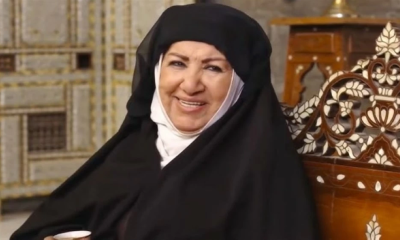
The death of artist Huda Shaarawi “Umm Zaki” and her funeral in Damascus