Politics
By order of the King, Khalid bin Bandar is appointed advisor at the Ministry of Foreign Affairs, and Al-Harbi is appointed head of the military apparatus
Custodian of the Two Holy Mosques King Salman bin Abdulaziz issued two royal decrees yesterday appointing Prince Khalid bin Bandar bin Sultan bin

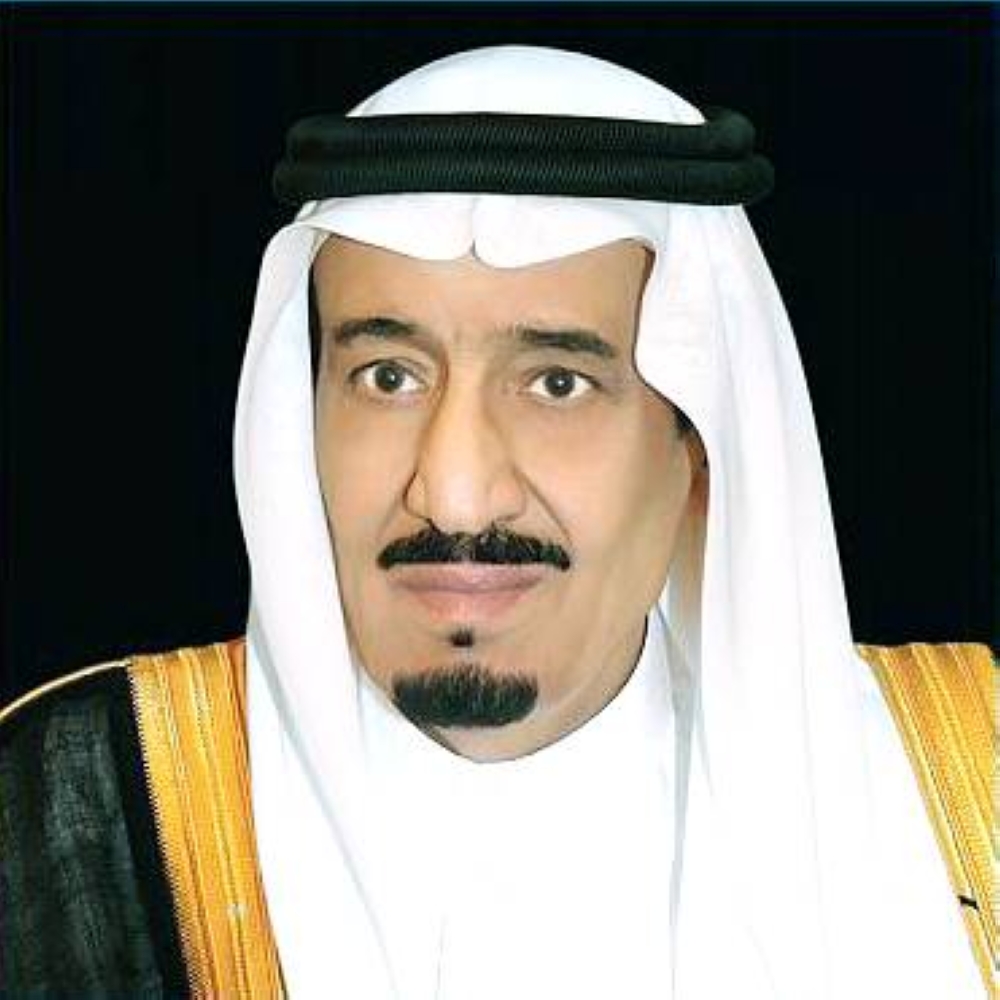
Custodian of the Two Holy Mosques King Salman bin Abdulaziz issued two royal decrees yesterday, appointing Prince Khalid bin Bandar bin Sultan bin Abdulaziz as an advisor in the Ministry of Foreign Affairs with the rank of Excellent, and the other royal decree promoting Major General Saleh Abdulrahman Samir Al-Harbi to the rank of Lieutenant General and appointing him as head of the military apparatus.
The text of the first order reads: “After reviewing the Basic Law of Governance, issued by Royal Order No. (A/90) dated 8/27/1412 AH, and the Law of Ministers, Deputy Ministers and Employees of the Excellent Rank, issued by Royal Decree No. (M/10) dated 3/18/1391 AH, and Royal Order No. (A/14) dated 3/3/1414 AH.
We have ordered the appointment of Prince Khalid bin Bandar bin Sultan bin Abdulaziz as an advisor in the Ministry of Foreign Affairs with the rank of Excellent. This order shall be communicated to the relevant authorities for its adoption and implementation.
The text of the second royal order reads: “After reviewing the Officers Service System, issued by Royal Decree No. (M/43) dated 8/28/1393 AH, and Royal Order No. (A/43) dated 2/1/1441 AH, and based on what was presented to us by the Minister of the National Guard, we have ordered the promotion of Major General Saleh Abdulrahman Samir Al-Harbi to the rank of Lieutenant General, and his appointment as head of the military apparatus, and the Minister of the National Guard shall implement this order of ours.”.
Related News




Politics
Day three of the war: US-Israeli bombing and Iranian retaliation reaching the Gulf
On the third day of the war, US and Israeli airstrikes destroyed missile launchers in Iran, while Tehran responded by bombing Jerusalem and Tel Aviv and expanding the attacks to include Qatar, Kuwait and the UAE.
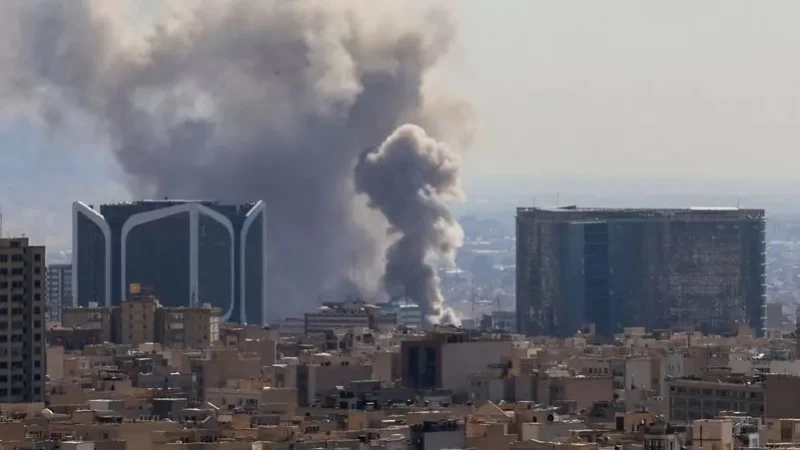
The open military confrontation in the Middle East entered its third day, as the US-Israeli alliance continued its intensive air operations against strategic targets deep inside Iran. In a significant development, the Israeli army released aerial photos and documentation on Monday confirming the success of its recent strikes, indicating that the air force continues to carry out precise raids aimed at neutralizing Tehran's missile capabilities. The army also announced the destruction of ballistic missile launch sites in various parts of Iran.
The bombing has intensified and civilians are being targeted
On the ground inside Iran, media reports and the Fars News Agency reported that Sanandaj, the capital of Kurdistan province in western Iran, was subjected to a heavy missile attack described as "hostile." The attack caused widespread damage to infrastructure, with several residential buildings near the city's police station being hit. At least two civilians were killed and others wounded, indicating a rise in casualties as military operations continue.
Tehran is expanding the circle of fire towards the Gulf and Israel
In a swift and retaliatory response, Iran broadened its targeting to encompass multiple fronts, exceeding the bounds of traditional rules of engagement. Tehran launched new and intensified waves of ballistic missiles and explosive-laden drones, targeting not only the Israeli heartland of Jerusalem and Tel Aviv, but also capitals and cities in the Gulf states. Sources confirmed that sites in Qatar, Kuwait, the UAE, and Bahrain were attacked this morning, raising the specter of a full-blown regional war.
Strategic importance and repercussions of the conflict
This dangerous escalation carries profound geopolitical implications. Targeting the Gulf states puts global energy security at risk, given their strategic importance in the global oil and gas market. The shift from a shadow war and indirect skirmishes to an outright military confrontation, including the bombing of capital cities, is redrawing the security map of the region and threatening vital shipping lanes in the Strait of Hormuz and the Arabian Gulf.
Background of the conflict and the military balance
These developments come amid years of escalating tensions between Iran on one side, and Israel and the United States on the other, over Iran's nuclear program and regional influence. Iran's strategy relies heavily on its massive missile arsenal and drone capabilities to counter the qualitative air superiority enjoyed by Israel and the United States. Military experts indicate that targeting Iranian missile sites is a top priority for the US-Israeli alliance to reduce Tehran's capacity to launch large-scale retaliatory attacks, which explains the intensity of the airstrikes in the first three days.
Politics
Trump sets the potential war with Iran in weeks
Donald Trump reveals military estimates of the duration of a war with Iran, citing the Venezuela scenario and the continuation of the maximum pressure policy. Read the details of his statements and their implications.
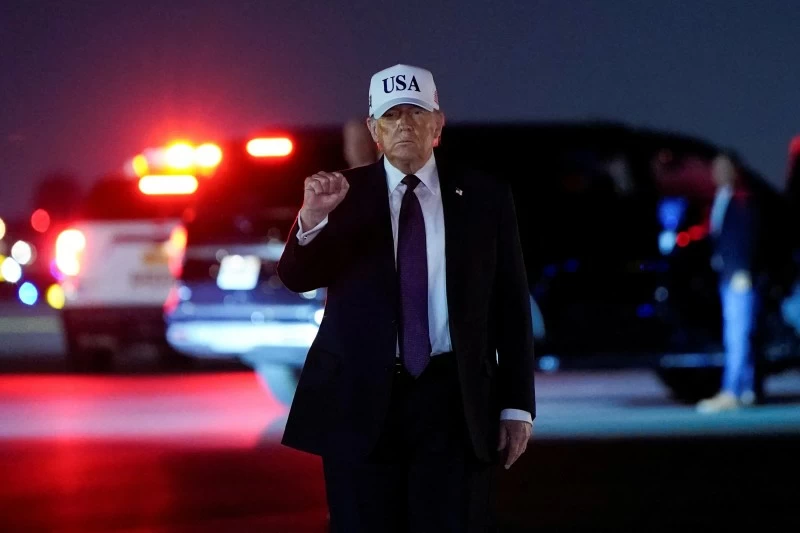
US President Donald Trump asserted that any potential military confrontation with Iran might not be as protracted as some anticipate, suggesting that operations would likely last "the next four weeks." In his remarks, Trump indicated that the military plans initially were based on the assumption of an intensive operation lasting approximately one month, reflecting Washington's assessment of the potential conflict.
Military assessments and complex scenarios
Trump, outlining his country's strategic vision, said that the military assessments he had received anticipated the operation would take "four weeks or so." Despite this escalating tone, the US president was careful to keep the door ajar for diplomacy, adding that he remained open to further talks with the Iranian side to de-escalate tensions, without specifying a possible date or timeline for any near-term meetings between the two parties.
In discussing potential tactics, Trump described the ongoing and planned operation as one of the “most complex offensive operations militarily,” pointing to the logistical and strategic challenges posed by the geography and defensive capabilities in the region.
Context of tension: Maximum pressure strategy
These statements come in the context of a period of extreme tension in US-Iranian relations, which have escalated significantly since the United States unilaterally withdrew from the nuclear agreement (Joint Comprehensive Plan of Action) in May 2018. Since then, the Trump administration has adopted a policy of “maximum pressure,” which has included imposing crippling economic sanctions aimed at reducing Iranian oil exports to zero and isolating Tehran from the global financial system.
Observers believe that Trump’s talk about the “Venezuela scenario” and what the United States did there carries clear indications of Washington’s desire to use various pressure tools, combining military threats and economic blockades, with the aim of forcing adversaries to change their political behavior without necessarily being drawn into large-scale and long-term ground wars, which is consistent with Trump’s declared doctrine of rejecting “endless wars.”.
Regional and international repercussions
These statements are of paramount importance given Iran's sensitive geopolitical location, overlooking the Strait of Hormuz through which a large portion of the world's oil supply passes. Any military action, even if limited to a few weeks as Trump suggested, could have serious repercussions for the stability of global energy markets and the security of navigation in the Arabian Gulf.
Analyses indicate that Washington, through these dual messages – threatening a swift war and calling for dialogue – is trying to push Tehran to return to the negotiating table with new conditions, including not only the nuclear file, but also the ballistic missile program and Iran’s regional influence in the Middle East.
Politics
Hezbollah bombs Haifa in revenge for Khamenei: Details of the attack on Mishmar al-Karmel
Hezbollah announces it bombed the Mishmar al-Karmel site south of Haifa with missiles and drones in retaliation for the killing of Khamenei. Details of the dangerous military escalation on the northern front and developments in the war.
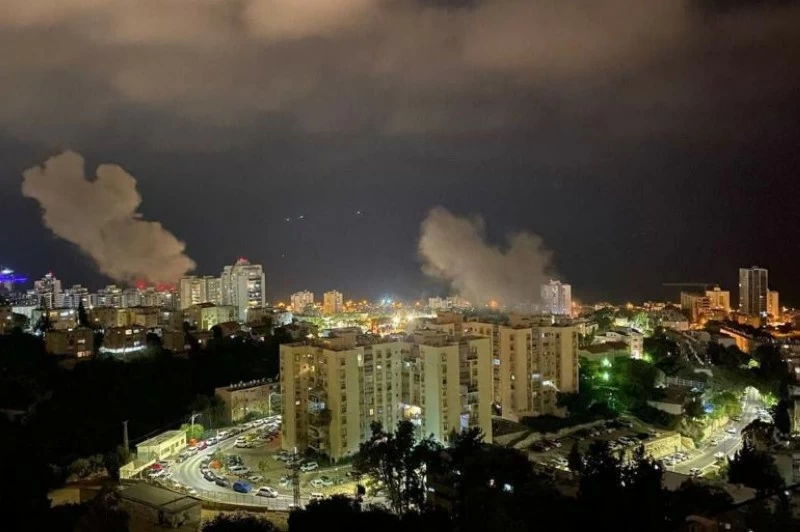
In a significant military development that threatens an unprecedented escalation on the northern front, the Lebanese Hezbollah group claimed responsibility early Monday morning for a complex military operation targeting the Israeli heartland. In an official statement, the group confirmed targeting the Israeli army's Mishmar al-Karmel missile defense site, located south of Haifa, using advanced missiles and a swarm of attack drones.
Details of the operation and its timing
The party explained in its statement that the operation was carried out with high precision at midnight between Sunday and Monday (March 2, 2026). The statement declared that this attack was "revenge" for the killing of Iranian Supreme Leader Ali Khamenei, and "in defense of Lebanon and its people," thus giving a broader regional dimension to this attack, which transcends traditional rules of engagement.
Implications of targeting Haifa and the strategic dimension
Targeting the southern Haifa area, specifically the Mishmar al-Karmel site, represents a qualitative shift in Hezbollah's target bank. Haifa is a vital artery and an industrial and strategic center for the occupation, and targeting its defensive installations indicates Hezbollah's attempt to overwhelm Israeli air defense systems, paving the way for potential missile waves. Historically, the "Haifa and beyond" equation established by the resistance has served as a significant deterrent, and its activation today confirms that the conflict has entered a decisive phase.
The regional context and the killing of Khamenei
The direct link between the operation and the assassination of Iranian Supreme Leader Ali Khamenei presents the region with a range of open-ended scenarios. Hezbollah is thus declaring that its response to the assassination of the axis leaders is not confined to Iranian territory, but extends to all fronts of support. This development underscores the unity and interconnectedness of the various arenas, as this attack is seen as part of a broader response that may encompass other fronts in the region.
"warning response" messages and the ongoing war
The party's statement indicated that the continued assassinations and attacks give the resistance "the right to respond at the appropriate time and place." The statement also noted that Israel "cannot continue its fifteen-month-long aggression without facing a response." This timeframe (15 months) reflects a protracted war of attrition, in which each side attempts to impose new rules of engagement through force. Analysts confirm that the missiles reaching southern Haifa signify the failure of attempts to neutralize Hezbollah's missile capabilities, despite the ongoing airstrikes on the southern suburbs of Beirut and southern Lebanon, thus presenting settlers in the north and center of the country with a complex security situation.
-

 Local News 4 days ago
Saudi Arabia approves regulations for the continued presence of Gulf vehicles: duration and penalties
-
Local news one week ago
The Ministry of Interior begins procedures for a royal pardon for common law prisoners
-
Local news two days ago
Jeddah Airport alerts for travelers due to airspace closure and flight disruptions
-
Politics, one week ago
Trump plans to create a $2 billion alternative to the World Health Organization
-
Local News 6 days ago
The deadline for property registration in Hail and Riyadh is Thursday
-
Sports one week ago
Tickets for the Al-Ahli vs. Al-Hilal King's Cup match postponed: New date
-
Local News 6 days ago
Under the patronage of the Minister of Information, an agreement was signed between the Ministry of Information and Waves Marketing Company
-
Culture and Art 5 days ago
The Devil's Prisons series was halted: The full story of "The Emperor's" being moved to YouTube