Politics
Approval of the temporary work visa regulations for Hajj and Umrah services
Crown Prince Mohammed bin Salman bin Abdulaziz, Prime Minister, chaired the Cabinet meeting held today in Riyadh

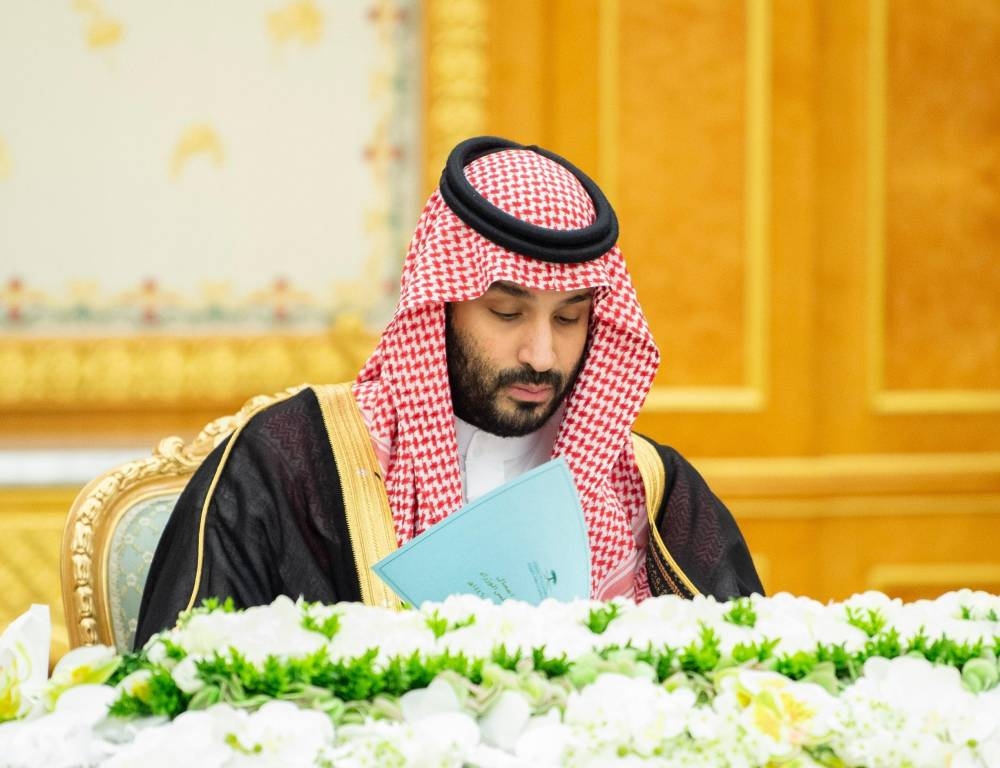
Crown Prince and Prime Minister Prince Mohammed bin Salman bin Abdulaziz chaired the Cabinet meeting held today in Riyadh.
At the beginning of the session, the Crown Prince briefed the Cabinet on the contents of the message he received from the King of the Hashemite Kingdom of Jordan, which relates to relations between the two brotherly countries.
The Council then discussed the overall developments in the region and the world, and the outcomes of the regional and international meetings held on this matter, praising in this context the results of the Kingdom’s delegation’s participation in the 79th session of the United Nations General Assembly, which embodied the Kingdom’s firm principles and unwavering positions on Arab issues, the establishment of international peace and security, and its approach supporting multilateral action in confronting global challenges.
On the domestic front, the Cabinet approved amending the Precious Metals and Gemstones System, as stated in the resolution, and also approved the regulatory bylaw for temporary work visas and temporary work for Hajj and Umrah services.
Adherence to the establishment of an independent Palestinian state
The Cabinet welcomed the launch by the Kingdom, along with its partners in the Joint Arab-Islamic Ministerial Committee, the Kingdom of Norway, and the European Union, of the “International Alliance for the Implementation of the Two-State Solution,” reaffirming its commitment to the establishment of an independent Palestinian state based on the 1967 borders with East Jerusalem as its capital, and demanding an immediate end to the ongoing war and all violations of international law, and holding accountable all those who obstruct peace efforts.
Financial support for Palestinians and medical aid for Lebanon
Minister of Information Salman Al-Dossari explained in his statement to the Saudi Press Agency following the session that the Council affirmed that the Kingdom’s announcement of providing monthly financial support to the brothers in Palestine, and providing medical and relief assistance to the brotherly Lebanese people, comes within the framework of contributing to addressing the humanitarian situation in the Gaza Strip and its surroundings, and confronting the repercussions of the ongoing events in the Lebanese Republic.
The Cabinet stressed the importance, as called for by the Kingdom, of accelerating the reform process of the UN Security Council to enhance its credibility and responsiveness, in light of the escalating pace of conflicts and crises in the world, the multiplication of challenges and threats, and the growing crisis of confidence in the international system and its ability to fulfill the hopes of peoples for a future of peace and development.
Combating transnational corruption crimes
The Council expressed the Kingdom’s aspiration for active international participation in the 16th session of the Conference of the Parties to the United Nations Convention to Combat Desertification, which will be held in Riyadh next December, to be a qualitative leap in the course of the Convention and an important global umbrella for joint cooperation to confront the main environmental challenges.
The Cabinet considered the Kingdom’s unanimous victory in the elections for the presidency of the Global Anti-Corruption Law Enforcement Authorities Operations Network (GLOBE-E) as a reflection of the international community’s appreciation for its efforts in combating transnational corruption crimes and its continued support for achieving international goals in this field.
Boosting spending and implementing strategic projects
On the domestic front, the members of the Council welcomed the announcement by the Crown Prince and Prime Minister of the launch of the “Riyadh Non-Profit Foundation,” which embodies the state’s efforts to support and develop institutional and social work, and to consolidate community contribution to the development of non-profit sector programs.
He explained that the Cabinet addressed the contents of the preliminary statement of the state’s general budget for the fiscal year 2025, which emphasized the continuation of strengthening spending directed towards basic services provided to citizens and residents, and the implementation of strategic projects, with a focus on supporting economic growth and achieving sustainable development.
On the occasion of “World Teachers’ Day”, which falls on next Saturday, the Council expressed its appreciation for the role of male and female teachers in the development of the educational system, their efforts in building skills and capabilities, promoting national values, and contributing effectively to preparing generations that compete with the world and precede it in progress and innovation.
decisions:
The Cabinet reviewed the topics on its agenda, including topics that the Shura Council had participated in studying. It also reviewed the conclusions reached by the Council of Political and Security Affairs, the Council of Economic Affairs and Development, the General Committee of the Cabinet, and the Council of Experts regarding these topics. The Cabinet concluded the following:
- Authorizing the Minister of Foreign Affairs - or his representative - to discuss with the Romanian side the draft general agreement for cooperation between the Government of Saudi Arabia and the Government of Romania, and to sign it.
- Authorizing the Minister of Environment, Water and Agriculture - or his representative - to discuss with the Maldivian side the draft memorandum of understanding between the Ministry of Environment, Water and Agriculture in Saudi Arabia, and the Ministry of Fisheries and Ocean Resources in the Republic of Maldives, in the field of fisheries, and to sign it.
- Authorizing the Minister of Investment - or his representative - to sign the draft agreement for the promotion and protection of mutual investments between the Government of the Kingdom of Saudi Arabia and the Government of the Arab Republic of Egypt.
- Authorizing the Minister of Finance, Chairman of the Board of Directors of the Zakat, Tax and Customs Authority - or his representative - to sign the draft agreement between the Government of Saudi Arabia and the Government of the Republic of Kosovo on cooperation and mutual assistance in customs matters.
- Authorizing the Minister of Industry and Mineral Resources, Chairman of the Board of Directors of the Saudi Geological Survey - or his representative - to discuss with the Kuwaiti side the draft memorandum of understanding between the Saudi Geological Survey in the Kingdom of Saudi Arabia and the Kuwaiti Earth Sciences Society in the State of Kuwait, for technical and scientific geological cooperation, and to sign it.
- Amending the system of precious metals and gemstones, as stated in the decision.
- Approval of the regulatory framework for temporary work visas and temporary work for Hajj and Umrah services.
- Approval of the final account of the Tourism Development Fund for a previous fiscal year.
Transfers and promotions:
Approval of transfers and promotions to the (fifteenth) and (fourteenth) ranks as follows:
- Muhammad bin Abdullah bin Ibrahim Al-Abdulkarim was transferred from the Ministry of Municipalities and Housing and promoted to the position of (Deputy Secretary) at the (fifteenth) rank in the Municipality of Madinah Region.
- The promotion of Engineer Muhammad bin Ibrahim bin Hussein Al-Sharif Al-Qahtani to the position of (Civil Engineering Consultant) at the (fourteenth) rank in the Ministry of the National Guard.
- Mohammed bin Mubarak bin Fahad Abu Rab’ah Al-Sahli was promoted to the position of (General Manager) at the (fourteenth) rank in the Municipality of Madinah Region.
The Cabinet also reviewed a number of general topics on its agenda, including annual reports from the Saudi Authority for Industrial Cities and Technology Zones, the Public Health Authority, the Board of Grievances, the Support and Liquidation Center, the National Center for Palms and Dates, and the Financial Academy. The Cabinet took the necessary action regarding these topics.




Politics
Israeli ground invasion of southern Lebanon and assassination of Hezbollah leaders
Dangerous developments in Lebanon: Israeli forces begin a ground invasion of the south, and violent raids on the southern suburbs of Beirut target Hezbollah leaders amid fears of an all-out war.

In a significant military development that threatens to widen the scope of the conflict in the Middle East, Israeli radio officially announced that Israeli ground forces had begun entering southern Lebanon, coinciding with an unprecedented intensification of airstrikes. This ground operation comes amid escalating tensions between Iran and its allies on one side, and Israel and the United States on the other, placing the entire region on the brink of disaster.
Precise airstrikes and assassinations of leaders in the suburbs
In parallel with the ground offensive, Israeli warplanes launched a concentrated airstrike today (Tuesday) targeting a meeting of senior Hezbollah commanders in Beirut's southern suburbs. Field reports indicate that the strike killed those present, in a blow aimed at crippling the party's leadership capabilities and sowing discord within its ranks amidst escalating fighting.
Hell reaches the southern villages
For the second day in a row, the bombardment of villages and towns in southern Lebanon continued unabated. As part of the escalation that began Sunday night/Monday morning, a fierce wave of airstrikes and artillery shelling targeted several populated towns. According to field reports, the attacks were particularly intense on the Ain al-Samahiyeh area, located between the towns of Zawtar and Nabatieh al-Fawqa, while other missiles struck the town of Siddiqin, causing widespread damage to infrastructure and property.
The context of the conflict and its regional dimensions
This ground invasion cannot be separated from the broader context of the ongoing war, as the fierce Israeli response followed Hezbollah's launch of a barrage of drones and missiles targeting the heart of northern Israel. This tit-for-tat escalation reflects a shift in the rules of engagement, moving the confrontation from cross-border shelling to ground operations and targeted assassinations deep inside Lebanon.
International repercussions and concerns
This ground incursion has sparked widespread international and regional concern that the situation could escalate into a full-blown war, potentially extending beyond Lebanon and Israel. Recent history in this region, particularly the 2006 war, demonstrates that ground operations often complicate the military and political landscape, increasing human and material losses, thus necessitating urgent diplomatic intervention to contain the crisis before it's too late.
Politics
Greece sends military reinforcements to Cyprus after Iranian drone attack
Greece deploys the Kimon frigate and F-16 fighter jets to Cyprus in response to an Iranian drone attack on the British base at Akrotiri. Details of the military escalation in the Eastern Mediterranean.

In a significant development indicating escalating tensions in the Eastern Mediterranean, the Greek Ministry of Defense announced an immediate military deployment, including a naval and air strike force, to the Republic of Cyprus. This decisive action comes in response to an aerial attack carried out by a drone, reportedly of Iranian manufacture, targeting the Royal Air Force base at Akrotiri on the island last night.
In detailing the military deployment, Greek Defense Minister Nikos Dendias affirmed that Athens would not stand idly by in the face of threats to regional security, announcing the dispatch of two advanced warships, spearheaded by the French-built Belharra-class frigate "Kimon." This frigate is distinguished by its advanced technological equipment and modern radar and defense systems designed to counter aerial threats, including anti-drone systems. In parallel with the naval support, orders were issued for four F-16 fighter jets to deploy and reinforce the air defense umbrella of the Republic of Cyprus against any unwarranted violations or external threats.
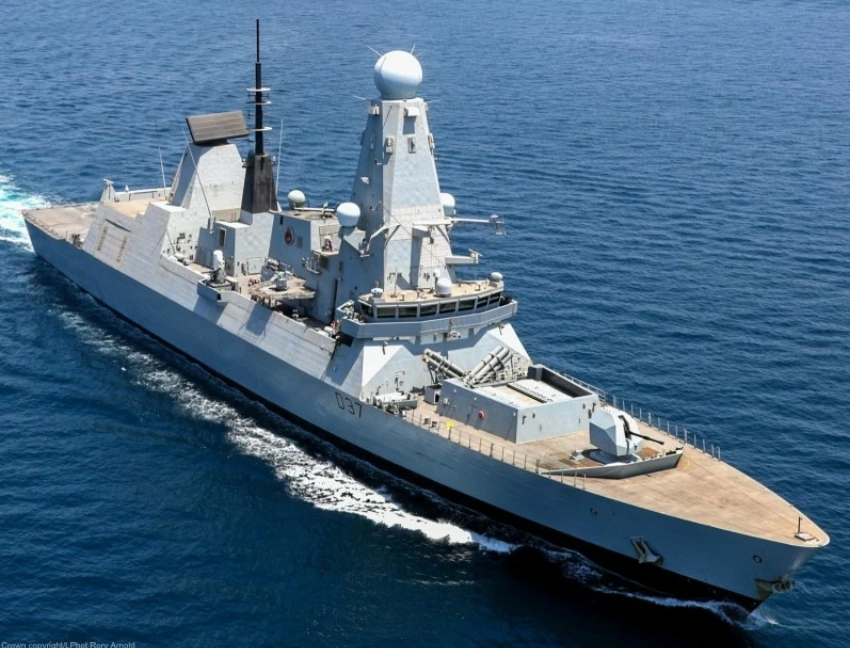
Minister Dendias described this rapid deployment as "an expression of full and absolute solidarity" with Nicosia, stressing in his statements that the attack not only targeted the British base, but also represented "a dangerous escalation" that threatens the security and stability of the entire island and the vital Eastern Mediterranean region.
The strategic importance of the Akrotiri base
To understand the dimensions of this event, it is worth noting that the Akrotiri base is not just an ordinary military facility; it is one of two sovereign British bases in Cyprus (along with Dhekelia) that the United Kingdom retained under the 1960 Treaty of Independence. This base plays a pivotal role as a logistical and operational hub for Western forces in the Middle East, making its targeting by a drone a political and military message that transcends the geographical boundaries of the island, reaching Western influence in the region.
Repercussions of the escalation in the Eastern Mediterranean
This Greek move carries profound geopolitical implications, reaffirming the unspoken doctrine of joint defense between Greece and Cyprus. Amid the turmoil in the Middle East, Cyprus is seen as a forward bulwark for the European Union. Observers believe that the deployment of the Belkara-class frigates, among the most modern vessels in the Greek arsenal, sends a strong deterrent message to any regional actors attempting to exploit the security vacuum or test the patience of European alliances. This escalation could impose new rules of engagement in the region, necessitating increased international attention to ensure that the situation does not spiral into wider confrontations.
Politics
Iranian attacks on Qatar and Bahrain: Hamad Airport targeted, and the Gulf response
The Qatari Foreign Ministry announced the thwarting of Iranian attacks targeting Hamad International Airport and the downing of hostile aircraft, while Bahrain sounded its air raid sirens. Details of the Iranian escalation against the Gulf states.

In a dangerous escalation threatening the security and stability of the Arabian Gulf region, Iran has continued its blatant violations of international laws and norms through a series of flagrant attacks targeting vital civilian infrastructure in the Gulf Cooperation Council (GCC) countries. The Qatari Ministry of Foreign Affairs revealed today (Tuesday) details of a series of malicious attacks targeting Hamad International Airport, one of the world's most important air transport hubs, confirming that Qatari defenses successfully thwarted these hostile plots.
Details of the attacks on Qatari territory
The official spokesperson for the Qatari Ministry of Foreign Affairs, Dr. Majid Al-Ansari, stated that the Iranian attacks were not limited to military targets, but had taken a dangerous turn by encompassing the entire Qatari territory and targeting civilian facilities crowded with civilians and travelers. In his statement, Al-Ansari explained that Qatari authorities dealt firmly and efficiently with the Iranian aircraft that violated the country's airspace on Monday, issuing direct warnings before shooting them down to ensure the safety and security of Qatari airspace.
The spokesperson emphasized the readiness of Qatar's defense system to deal with any emergency, noting that Doha's stockpile of interceptor missiles remains undiminished and is capable of repelling any potential aggression. He concluded by firmly affirming that the State of Qatar reserves its full right to respond to these blatant attacks at the appropriate time and place, in a manner that guarantees the protection of its sovereignty and the security of its citizens and residents.
Security alert in the Kingdom of Bahrain
In conjunction with the rapidly unfolding events in Doha, the Kingdom of Bahrain experienced a state of high alert, with the Bahraini Ministry of Interior announcing the sounding of sirens throughout the country. The Ministry urged citizens and residents, through its official channels, to exercise caution and immediately seek shelter in safe locations, a clear indication of the seriousness of the threats affecting the region and the widening scope of the escalation.
Regional context and the importance of stability in the Gulf
These rapid developments come at a time of escalating geopolitical tensions in the Middle East, casting a shadow over the regional security landscape. The Arabian Gulf region holds paramount strategic importance for the entire world, not only as a major source of global energy but also as a vital artery for international trade, maritime navigation, and air traffic. The Gulf states have long been a pillar of stability in the region and have consistently strived to spare their people the ravages of conflict.
Violation of international conventions and threats to civilians
Targeting civilian facilities and vital infrastructure such as airports is a clear and blatant violation of international humanitarian law, UN charters, and the Geneva Conventions, which criminalize endangering civilians during conflicts or political tensions. Observers and political analysts believe that this unjustified Iranian escalation against neighboring countries could drag the region into disastrous scenarios, necessitating a firm and unified international stance to deter such practices that undermine regional and international peace and security and threaten the safety of civilian air navigation.
-

 Local News 3 days ago
Jeddah Airport alerts for travelers due to airspace closure and flight disruptions
-
Local News 5 days ago
Saudi Arabia approves regulations for the continued presence of Gulf vehicles: duration and penalties
-
Local news one week ago
The Ministry of Interior begins procedures for a royal pardon for common law prisoners
-
Local news one week ago
The deadline for property registration in Hail and Riyadh is Thursday
-
Sports one week ago
Tickets for the Al-Ahli vs. Al-Hilal King's Cup match postponed: New date
-
Local news one week ago
Under the patronage of the Minister of Information, an agreement was signed between the Ministry of Information and Waves Marketing Company
-
Local news one week ago
Saleh Al-Maghamsi appointed Imam of the Prophet's Mosque: Details of the Royal Decree
-
Culture and Art 6 days ago
The Devil's Prisons series was halted: The full story of "The Emperor's" being moved to YouTube