Politics
The first nursing conference recommends strengthening the healthcare model and encouraging innovation
King Abdullah Medical Complex, a member of the Jeddah Health Cluster II, concluded the first nursing conference, "Transforming Healthcare in the Kingdom."

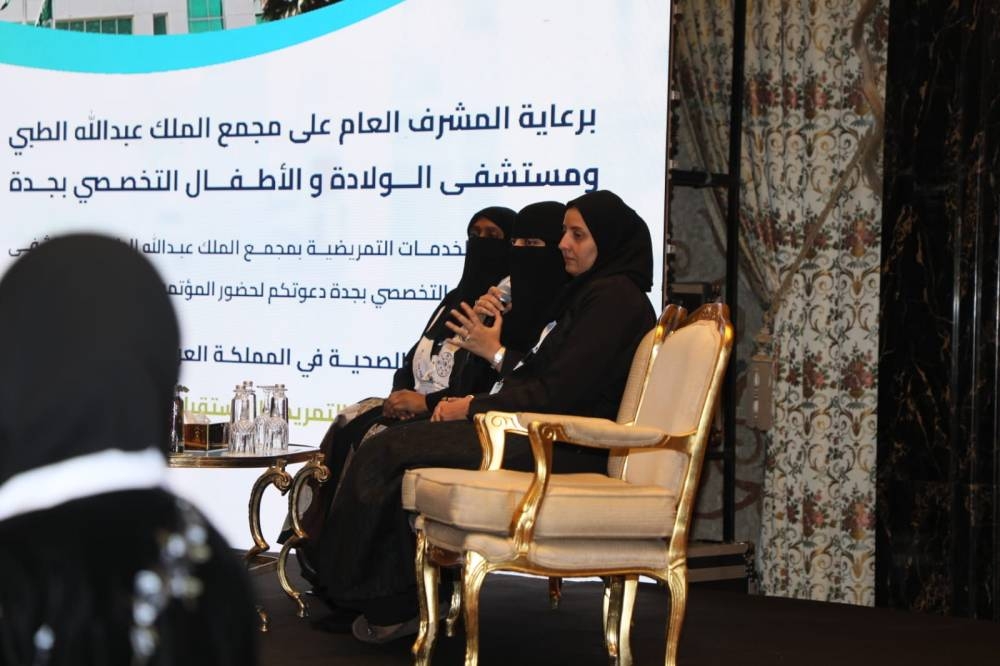
King Abdullah Medical Complex, a member of the Second Jeddah Health Cluster, concluded its first nursing conference, "Transforming Healthcare in the Kingdom of Saudi Arabia," held in Jeddah, on Thursday after two days of fruitful lectures and workshops attended by more than 250 participants.
The conference lectures and workshops addressed the latest tools and techniques for measuring, analyzing, and effectively applying good care metrics. The final recommendations focused on embracing change and innovation to enhance nursing practice, promote nursing education, add important future-oriented specializations, and provide advanced programs that enhance the quality of health services and nursing care for their role in improving patient outcomes. They also included establishing an effective nursing training program and exploring the practical applications of games and their impact on student learning outcomes.
The conference included 12 lectures and 6 scientific workshops, and more than 250 healthcare professionals participated in it, in order to come up with the most prominent recommendations that contribute to a transformation in healthcare, the future vision for Saudi nursing, nursing leadership, and digital transformation in the field of nursing. Dr. Fawzia Al-Mawlid, Executive Vice President of Nursing Services at the Second Jeddah Health Cluster, confirmed that this conference comes within the goals of Vision 2030 in establishing an integrated health system, and that nursing is the beating heart and plays a partner role in policy-making and a key force in digital transformation.
Related News
Al-Mawlid emphasized that with the rapid transformation in healthcare, the role of nursing must be activated and expanded across various fields, the healthcare model strengthened, innovation encouraged, advanced training programs provided, and the Kingdom's goals for improving healthcare achieved. For her part, Professor Ruwaida Nahouli, Assistant General Supervisor of Nursing Services at King Abdullah Medical Complex and Chair of the Conference, stated that one of their top priorities is promoting health, elevating the nursing profession, and keeping pace with developments in the field to achieve the Kingdom's Vision 2030. Nahouli explained that the conference provided an opportunity to learn about the latest developments and exchange experiences in all nursing specialties. She added that, with their national expertise, they are proud of their achievements and the progress made in the nursing profession, including the application of international standards and quality criteria, and the addition of important specialties that address future needs.




Politics
Lebanon bans Hezbollah's military activity and requires it to surrender its weapons
The Lebanese cabinet has issued a decision banning Hezbollah’s military and security activities and obliging it to hand over its weapons to the state, following a military escalation and Israeli bombing of Beirut.

In a significant and unprecedented development in the Lebanese political and security landscape, the Lebanese Cabinet, during its session held at Baabda Palace today (Monday), announced decisive measures aimed at extending state authority over all its territory. The Cabinet affirmed the Lebanese state's "absolute and unequivocal" rejection of any military or security operations launched from Lebanese territory outside the framework of official, legitimate institutions, emphasizing that the decision of war and peace is the exclusive right of the Lebanese state and its constitutional institutions.
Prohibition of military activity and restriction of weapons
The government decision included a strict ban on all Hezbollah security and military activities, deeming any such action illegal. The decision also obligated the party to surrender its military arsenal and weapons to the Lebanese state, confining its activities to the political sphere only, within the established constitutional and legal frameworks. This step comes as part of the government's efforts to enshrine the monopoly of arms by the Lebanese army and security forces, and to strengthen full national sovereignty.
Background to the military escalation
This urgent government action came after a serious deterioration in the security situation, as Hezbollah launched a large-scale attack on Israel this morning, declaring it to be in retaliation for the killing of Iranian Supreme Leader Ali Khamenei. This attack prompted a fierce Israeli response in the form of intensive airstrikes on Beirut, further exacerbating the rift between the Hezbollah leadership and the Lebanese government, which is making strenuous diplomatic efforts to avert a devastating regional war in Lebanon.
Political context and strategic dimensions
The issue of Hezbollah's weapons is one of the most complex and sensitive in modern Lebanese history, with the "defense strategy" having long been a point of contention among various political forces. This decision aims to redraw the internal balance of power, based on the principles of the constitution and the Taif Agreement, which stipulate the extension of state sovereignty over all its territory. Observers believe this step may be a last-ditch effort by the state to spare Lebanon the perils of becoming embroiled in regional power struggles, especially given the escalating tensions in the Middle East.
Humanitarian and field repercussions
On the ground and humanitarian front, the Lebanese Ministry of Health reported that Israeli airstrikes targeting Hezbollah strongholds in Beirut's southern suburbs and areas in southern Lebanon have killed 31 people so far. The strikes caused widespread panic among the population, with thousands fleeing on foot and by car, leading to traffic gridlock and severe congestion on roads leading to safer areas immediately after the bombing began.
The future of the Lebanese scene
This decision is expected to open the door to a heated internal political debate, given the traditional deep divisions surrounding the party's regional role and its weapons. Local and international observers are closely watching the reactions of various political forces and how the party will respond to this government decision, which strikes at the heart of its organizational structure, amid fears of repercussions that could destabilize the fragile internal situation.
Politics
New York Times: Israel destroyed half of Iran's ballistic missiles
The New York Times revealed that Israel destroyed 200 Iranian ballistic missile launchers and disrupted explosives manufacturing facilities, representing a major blow to half of Tehran’s missile arsenal.

A recent report by The New York Times revealed detailed information about the extent of the damage inflicted on Iran's military arsenal, confirming that the Israeli army destroyed approximately 200 Iranian ballistic missile launchers and disabled dozens more. The report indicates that this number represents nearly half of Tehran's total launchers since the 12-day war.
A strategic blow to manufacturing facilities
The newspaper explained that the Israeli airstrikes were not limited to launch sites alone, but also targeted, in the current attack and a previous one carried out last summer under the name "Operation Rising Lion," Iran's central explosives manufacturing facility. This facility is considered the main artery supplying Iran with the materials needed for missile warheads, in addition to supporting other strategic weapons programs, including solid rocket fuel, drones, and cruise missiles.
The context of the conflict and the development of intelligence capabilities
These developments come amid a qualitative shift in the confrontation between Israel and Iran, where the conflict has moved from a "shadow war" involving cyberattacks and targeting proxies to direct confrontations and precision airstrikes targeting military infrastructure. Prior to Israel's 12-day air campaign against Iran last summer, Israeli intelligence had reached accurate assessments indicating that Iran was actively seeking to increase its ballistic missile production to bolster its deterrent capabilities.
The strategic importance of Iranian ballistic missiles
Ballistic missiles are the backbone of Iranian military doctrine, given Tehran's lack of a modern air force comparable to Western or Israeli capabilities. Therefore, destroying half of Iran's launch sites would significantly reduce its ability to launch ripple attacks or respond immediately to external threats, at least temporarily altering the balance of power in the region.
The repercussions of the strike on the regional balance
Military observers believe that targeting solid fuel mixers and manufacturing facilities is more dangerous than targeting the platforms themselves, as replacing the precision manufacturing equipment requires considerable time and complex technologies that may be difficult to import under international sanctions. This Israeli intelligence and military success sends a strong message about the vulnerability of Iran's infrastructure and may prompt Tehran to reassess its strategic calculations regarding its weapons program and regional influence in the coming period.
Politics
Iranian drone attack halts Qatari gas: Ras Laffan and Mesaieed targeted
Gas production in Qatar has been halted following an Iranian drone attack targeting energy facilities in Ras Laffan and Mesaieed. The Ministry of Defense confirms there were no casualties and damage assessment is underway.

The Qatari Ministry of Defense announced today (Monday) that vital facilities in Qatar were subjected to a hostile aerial attack using two drones launched from the Islamic Republic of Iran. The attack targeted two strategic sites in the energy and industrial sectors. The first drone struck a water tank belonging to a factory of the Mesaieed Power Company, while the second targeted an energy facility in Ras Laffan Industrial City belonging to Qatar Energy.
In a significant development, Qatar Energy confirmed in a subsequent official statement the complete cessation of liquefied natural gas (LNG) and associated product production. This precautionary and operational decision followed the military attack on operational facilities in the industrial cities of Ras Laffan and Mesaieed, and was taken to ensure the safety of the facilities and to accurately assess the technical situation.
Details of the damages and the official position
The Qatari Ministry of Defense clarified that the attack, thankfully, did not result in any casualties. The Ministry indicated that the relevant authorities immediately began assessing the material damage and losses resulting from the attack, and confirmed that it will release detailed official statements as soon as the field assessment is complete.
The Qatari authorities called on all citizens, residents and visitors to remain calm and reassured, stressing the need to fully comply with the instructions issued by the competent security authorities, and not to be swayed by rumors or circulate undocumented information, and to rely exclusively on data issued by official state sources.
The strategic importance of the cities of Ras Laffan and Mesaieed
This incident is of paramount importance given the strategic significance of the targeted sites. Ras Laffan Industrial City is the heart of Qatar's and the world's gas industry, housing the main facilities for processing and liquefying natural gas extracted from the North Field, the world's largest non-associated gas field. This city is the primary hub for Qatari gas exports to global markets, making any disruption there an event with international repercussions.
For its part, Mesaieed Industrial City is a key hub for the country's petrochemical and downstream industries, housing massive energy and heavy industrial complexes. Targeting a water reservoir at a power plant there suggests an attempt to disrupt the infrastructure supporting operational activities.
Potential repercussions for global energy markets
A halt in Qatari gas production is expected to cast a shadow over global energy markets, given Qatar's position as one of the world's largest exporters of liquefied natural gas (LNG). Many countries in Asia and Europe rely heavily on Qatari supplies to meet their energy needs, and any prolonged disruption could affect supply chains and cause volatility in global prices, highlighting the vulnerability of energy security in the Arabian Gulf region to geopolitical tensions.
-

 Local News 4 days ago
Saudi Arabia approves regulations for the continued presence of Gulf vehicles: duration and penalties
-
Local news two days ago
Jeddah Airport alerts for travelers due to airspace closure and flight disruptions
-
Local news one week ago
The Ministry of Interior begins procedures for a royal pardon for common law prisoners
-
Local News 6 days ago
The deadline for property registration in Hail and Riyadh is Thursday
-
Sports one week ago
Tickets for the Al-Ahli vs. Al-Hilal King's Cup match postponed: New date
-
Local News 7 days ago
Under the patronage of the Minister of Information, an agreement was signed between the Ministry of Information and Waves Marketing Company
-
Culture and Art 5 days ago
The Devil's Prisons series was halted: The full story of "The Emperor's" being moved to YouTube
-
Local news one week ago
Saleh Al-Maghamsi appointed Imam of the Prophet's Mosque: Details of the Royal Decree