
Politics
Ghannouchi is finished... and the street awaits his trial
Tunisian Muslim Brotherhood leader Rached Ghannouchi fled his home on Saturday, fearing demonstrations organized by the defense team of Chokri Belaid

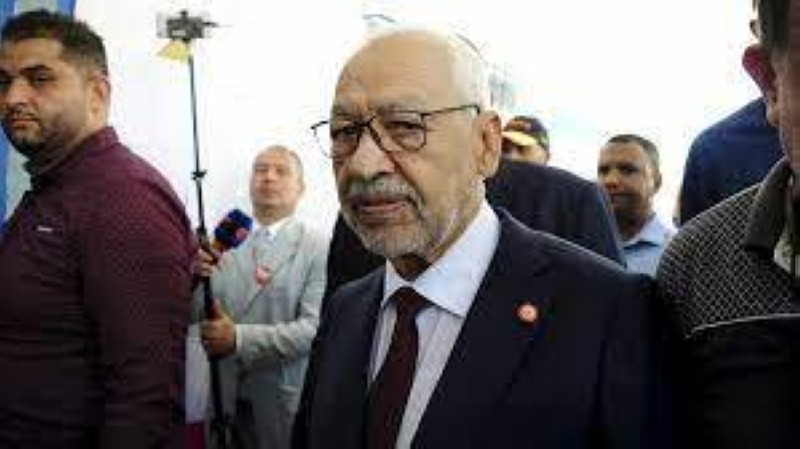
Tunisian Ennahda leader Rached Ghannouchi fled his home on Saturday, fearing protests organized by the defense team of Chokri Belaid and Mohamed Brahmi. Ghannouchi went to his party headquarters in the Manoublizier district of the capital to seek refuge from the anger of the protesters who had gathered outside his home to demand he be held accountable for his crimes, his involvement in political assassinations, and his espionage against Tunisian security forces.
Ghannouchi posted photos on his official page from inside his party headquarters, showing him meeting with Brotherhood leaders and party members, in a failed attempt to deny his intentions of fleeing. Activist and political analyst Sahbi Seddik stated that Ghannouchi's escape from his home demonstrates his fear of the truth being revealed, despite his residence being secured by security forces and the army.
He added that Ghannouchi's isolation is increasing, yet he remains shameless despite his proven crimes. He asserted that the Ennahda leader is finished, his political power has been undone, and now they await the final verdict from the judiciary.
In his speech in front of Ghannouchi’s house, defense team member Redha Raddaoui revealed that they will be filing a new complaint in the coming days regarding his involvement in the assassination of Chokri Belaid.


Politics
New US sanctions on Iranian oil after Oman talks
Washington imposes new sanctions targeting 14 Iranian oil tankers. The decision follows indirect talks in Oman as part of the Trump administration's maximum pressure campaign.
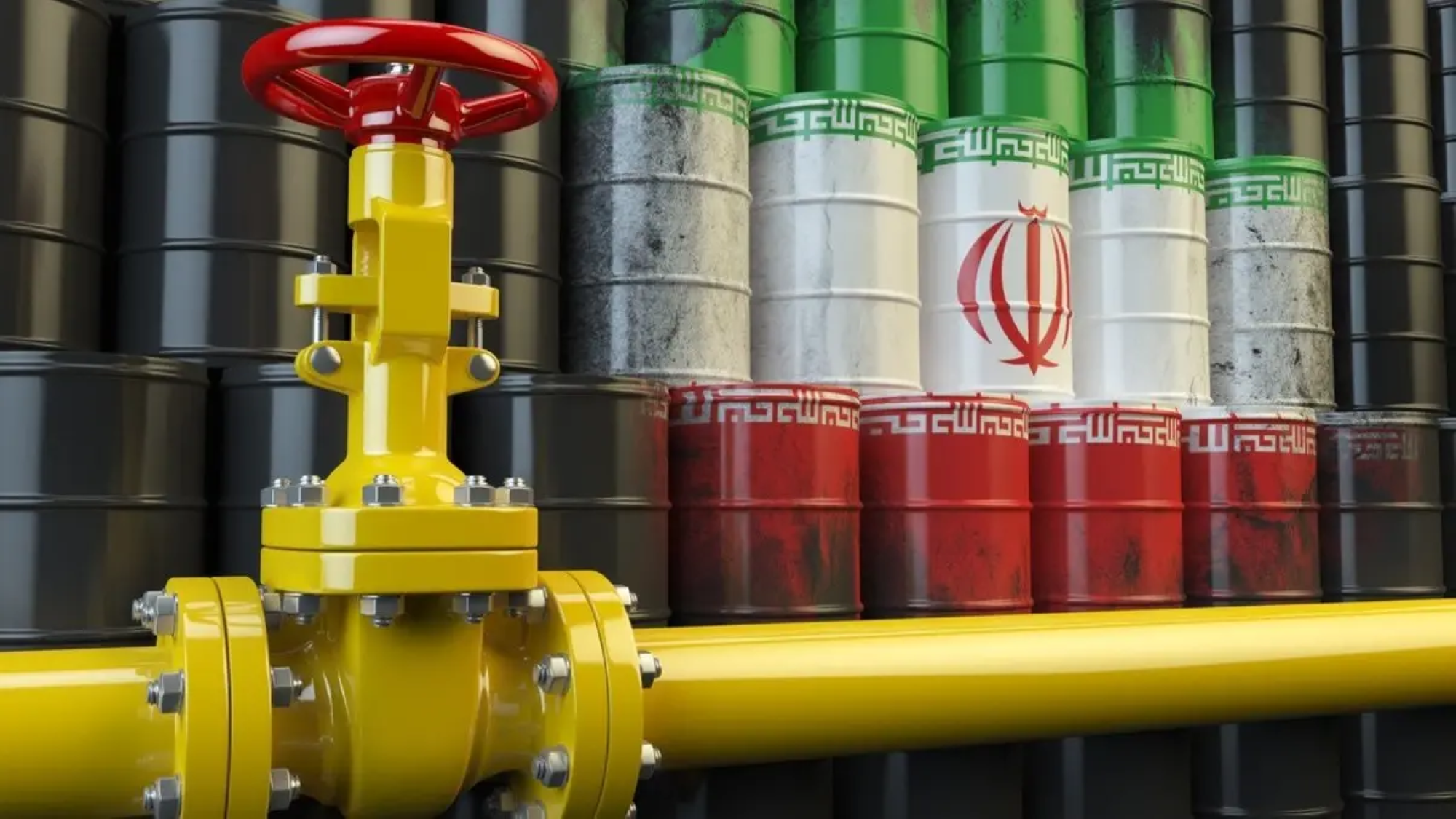
The United States announced today (Friday) a new package of economic sanctions aimed at tightening the noose on Iranian oil exports, including targeting 14 ships involved in transporting oil, in a notable development that comes just moments after the conclusion of a round of indirect talks between the two sides in the Sultanate of Oman.
In detailing the decision, State Department spokesman Tommy Pigott confirmed that President Donald Trump is firmly committed to reducing the Iranian regime's exports of oil and petrochemicals, which Washington classifies as "illicit." The spokesman explained that these measures are an integral part of the current administration's "maximum pressure" campaign to compel Tehran to change its political and military behavior in the region.
Precise political timing and firm messages
The timing of the announcement of these sanctions carries profound political implications, particularly as it came immediately after the conclusion of a round of talks in Muscat. Observers suggest that the decision's immediate release following the talks may reflect Washington's dissatisfaction with the outcome of the indirect dialogue, or that it represents a negotiating tactic aimed at strengthening the US position at the negotiating table. While Oman has historically played the role of a trusted mediator between the West and Iran, this escalation of sanctions sends a clear message that diplomacy does not guarantee the easing of economic restrictions unless a comprehensive agreement is reached.
Maximum pressure strategy and its repercussions
The US strategy known as "maximum pressure" relies on depriving the Iranian regime of its primary source of revenue, specifically oil revenues, which are the lifeblood of the Iranian economy. By targeting the oil tanker fleet (14 ships in this campaign), Washington seeks to cut off the alternative routes Tehran uses to sell its oil on the black market or through international intermediaries.
Economic and geopolitical dimensions
These sanctions are expected to have a tangible impact on Iran's ability to finance its domestic projects and its regional influence. The tightening of restrictions on maritime shipping drives up insurance and shipping costs, making other countries and companies hesitant to deal with Iranian shipments for fear of secondary sanctions. Internationally, energy markets are closely monitoring these developments, as any escalation in the Gulf could affect the stability of energy supplies, even though the stated US objective is to replace Iranian oil with supplies from other sources to maintain market balance.
Politics
Saudi Arabia condemns the Islamabad mosque bombing and expresses solidarity with Pakistan
Saudi Arabia expressed its strong condemnation of the terrorist bombing that targeted a mosque in Islamabad, stressing its rejection of targeting places of worship and its solidarity with Pakistan against violence and terrorism.
The Ministry of Foreign Affairs of the Kingdom of Saudi Arabia expressed the Kingdom’s strong condemnation and denunciation of the treacherous terrorist bombing that targeted a mosque in the Pakistani capital, Islamabad, which resulted in a number of deaths and injuries in a tragic scene that contradicts all religious and human values.
In its official statement, the Ministry stressed the Kingdom’s firm and categorical stance against targeting places of worship, terrorizing innocent people, and shedding the blood of innocent victims, affirming that such criminal acts have no relation to religion and seek to undermine security and stability.
Saudi Arabia's unwavering solidarity with Pakistan
The Ministry of Foreign Affairs indicated that the Kingdom of Saudi Arabia, both its leadership and people, stands with the brotherly Islamic Republic of Pakistan in facing these difficult circumstances, affirming its full support for Islamabad against all forms of violence, extremism, and terrorism, regardless of their motives or justifications. This stance stems from the deep-rooted historical and strategic relations that bind the two brotherly countries, as the Kingdom has consistently been at the forefront of countries supporting Pakistan in confronting security and economic challenges.
International condemnation of targeting places of worship
Targeting mosques and places of worship is a dangerous escalation in terrorist operations, something the Kingdom has consistently warned against and combated through international forums. In this statement, the Kingdom affirms that the sanctity of mosques and the lives of worshippers are a red line, and that terrorism, which has no religion, is desperately attempting to undermine the social fabric and sow discord. However, the awareness of the people and the solidarity of nations will thwart these dark schemes.
Prayers for healing and comfort
In closing, the Kingdom offered its deepest condolences to the families of the victims and to the government and people of Pakistan, praying to God Almighty to grant His mercy to the deceased and a speedy recovery to the injured. This tragic incident underscores the urgent need for the international community to unite in eradicating the sources of terrorism and combating extremist ideology that threatens international peace and security.
Politics
Arab-Slovenian talks in Ljubljana to support Gaza and the two-state solution
The foreign ministers of Saudi Arabia, Egypt, Jordan, Qatar and Bahrain are meeting in Slovenia to discuss ending the Gaza war, developments in the West Bank, and ways to revive the peace process based on the two-state solution.
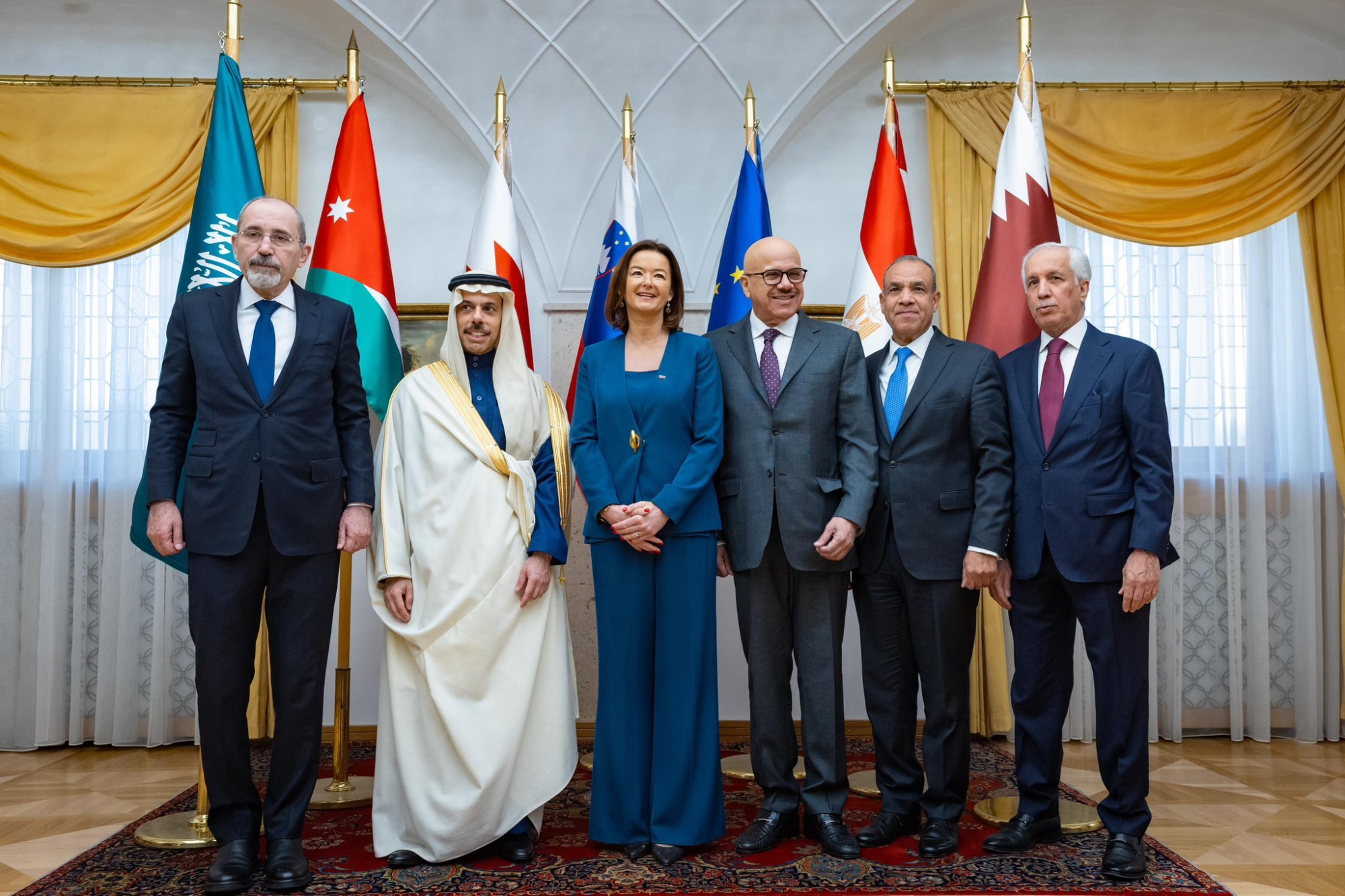
As part of intensified Arab diplomatic efforts aimed at garnering international support for the Palestinian cause and halting the escalation in the Middle East, the Slovenian capital, Ljubljana, hosted an extensive and strategic meeting. The Arab delegation was headed by Saudi Foreign Minister Prince Faisal bin Farhan bin Abdullah, and included Jordanian Deputy Prime Minister and Minister of Foreign Affairs and Expatriates Ayman Safadi, Egyptian Foreign Minister Dr. Badr Al-Abdulati, Bahraini Foreign Minister Abdullatif Al-Zayani, and Qatari Minister of State for Foreign Affairs Sultan Al-Muraikhi. The meeting was held with the Deputy Prime Minister and Minister of Foreign and European Affairs of the Republic of Slovenia, Tanja Vučoč.
Context of the visit and its strategic importance
These talks come at a highly sensitive time for the Middle East, as influential Arab states seek to strengthen partnerships with European countries that have demonstrated progressive stances on Palestinian rights. The Arab delegation's visit to Slovenia is particularly significant given Ljubljana's growing role within the European Union and in international forums, especially following its recent positions in support of international justice.
During the talks, the ministers focused on ways to enhance regional and international security and stability, placing the Palestinian issue at the top of the agenda. They stressed the need to adhere to the ceasefire agreement in the Gaza Strip and implement its provisions fully and without delay, as a first and urgent step to end the humanitarian suffering.
Gaza and the West Bank: Priorities for Arab Action
The participants discussed at length the catastrophic situation in the Gaza Strip, emphasizing the urgent need for sufficient and sustained humanitarian aid to save lives. In a related context, the talks addressed international efforts to advance the peace plan launched by US President Donald Trump, stressing the importance of moving forward toward a clear and time-bound political horizon.
The ministers reaffirmed the Arab principles of establishing an independent and sovereign Palestinian state on the borders of June 4, 1967, with East Jerusalem as its capital, based on the two-state solution and relevant international legitimacy resolutions.
Developments in the occupied West Bank were also on the agenda, with ministers warning of the dangers of continued illegal Israeli unilateral actions, including settlement expansion and ongoing violations against Islamic and Christian holy sites in occupied Jerusalem. The participants stressed that these practices are exacerbating the situation and undermining all efforts to de-escalate tensions and the prospects for peace in the region.
Appreciating the Slovenian position and international issues
In a gesture of appreciation for the Slovenian role, the Arab ministers commended Slovenia’s courageous and principled stances in supporting the legitimate rights of the Palestinian people, and its historic step in recognizing the State of Palestine on the basis of the two-state solution, which reflects a commitment to the values of justice and international law.
On a broader international level, the meeting addressed global developments and ways to de-escalate tensions through dialogue and negotiation. In this context, efforts to resolve the Russian-Ukrainian crisis were discussed, reflecting the Arab Group and Slovenia's commitment to contributing to international peace and security beyond the Middle East.
-

 Local news one week ago
Ramadan 2026 discounts in Saudi Arabia: Offers valid for 54 days
-
Culture and Art, 1 week ago
The death of artist Huda Shaarawi “Umm Zaki” and her funeral in Damascus
-
Technology one week ago
ICAN 2026 Conference Conclusion: Initiatives to Enhance Saudi Arabia's Leadership in Artificial Intelligence
-
Local news two days ago
Launch of the city's shuttle bus service in Ramadan 1447 AH: Routes and stations
-
Culture and Art, 1 week ago
Huda Shaarawi: Farewell to “Umm Zaki,” the icon of Syrian drama
-
Culture and Art, 1 week ago
The murder of Huda Shaarawi, "Umm Zaki": Details of the crime and its impact
-
Local News 4 days ago
Rabigh inaugurates the world's largest water innovation oasis and enters the Guinness World Records
-
Culture and Art 3 days ago
The series "Rouh OFF" was permanently canceled by a decision of the Actors' Syndicate


