
Politics
Arabs stand with Syria and support the aspirations of its people
The foreign ministers, members of the Arab Ministerial Contact Committee on Syria, concluded their meeting in Aqaba, Jordan yesterday (Saturday)

At the conclusion of their meeting in Aqaba, Jordan, on Saturday, the Arab foreign ministers of the Ministerial Contact Group on Syria issued recommendations that can be considered a roadmap for Syria to overcome the dangers threatening its unity and territorial integrity following the fall of Bashar al-Assad's regime last week. In their final statement, they called for "the formation of a comprehensive transitional governing body through Syrian consensus, and the initiation of work to establish a UN mission to assist Syria in supporting the transitional process." The ministers condemned Israel's incursion into the buffer zone with Syria and the adjacent Mount Hermon area. They also called for the implementation of the steps outlined in the resolution for the transition from the current phase to a new political system that fulfills the aspirations of the Syrian people in all their diversity, through free and fair elections supervised by the United Nations, based on a new constitution approved by the Syrians, and within a specific timeframe. The Arab ministers affirmed that the Golan Heights is occupied Syrian Arab territory whose occupation must end, and they called on the Security Council to take the necessary measures to halt these violations. The statement said, “This critical stage necessitates a comprehensive national dialogue and the unity of the Syrian people in all their diversity, including their political and social forces, to build the free, safe, stable, and unified Syria that the Syrian people deserve after years of suffering and sacrifice.” It also called for an immediate cessation of all military operations, respect for the rights of all segments of the Syrian people without discrimination based on ethnicity, sect, or religion, and the guarantee of justice and equality for all Syrian citizens.




Politics
The United Nations accuses the Rapid Support Forces of war crimes in El Fasher
A UN report accuses the Rapid Support Forces of committing war crimes in El Fasher, documenting the killing of more than 6,000 people and serious violations including sexual violence and starvation of civilians.
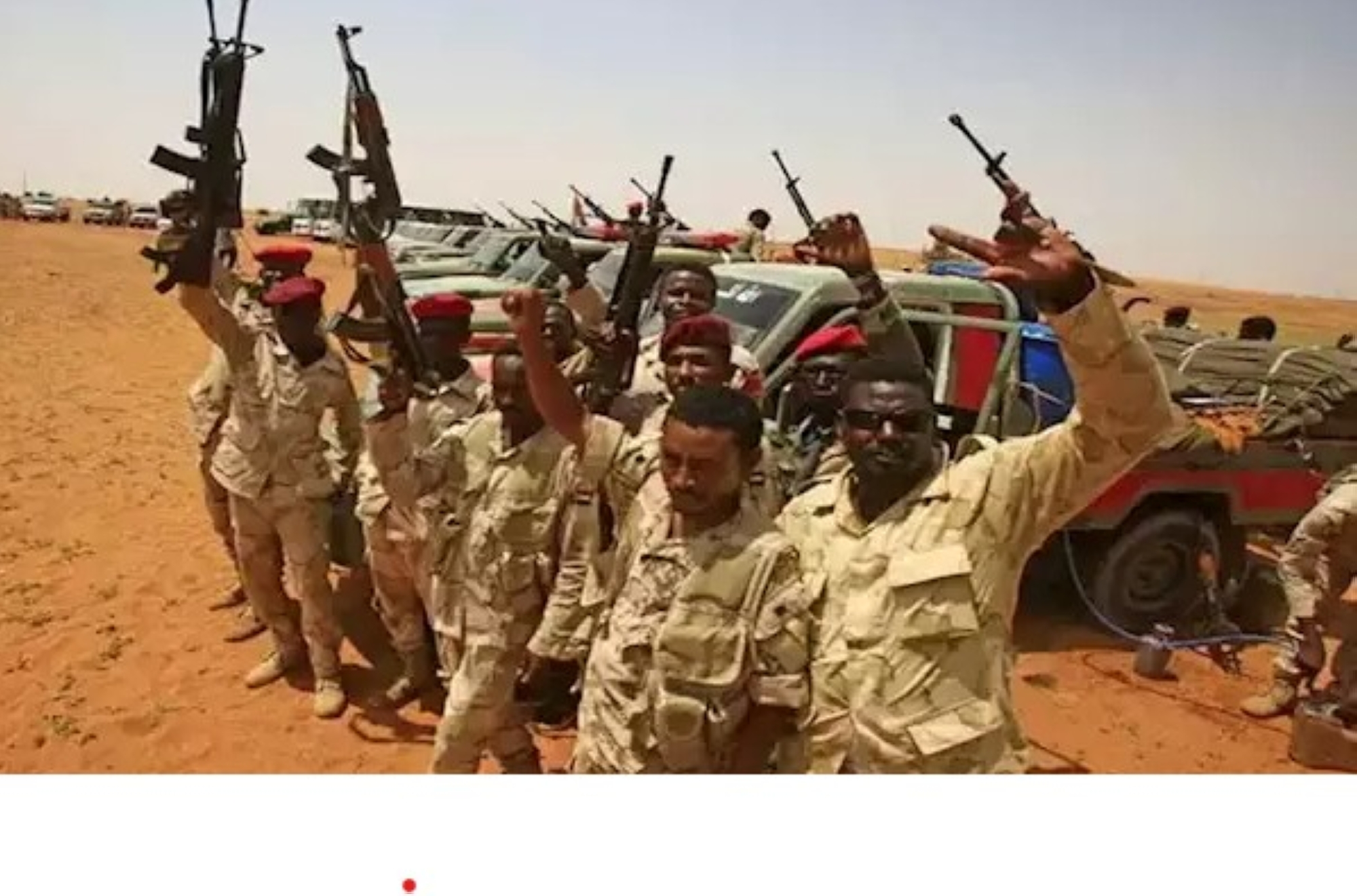
In a dangerous development casting a dark shadow over the Sudanese landscape, the UN High Commissioner for Human Rights has directly and explicitly accused the Rapid Support Forces (RSF) of committing war crimes and potential crimes against humanity in El Fasher, the capital of North Darfur State. This UN report documents atrocities committed since the RSF seized control of the city, revealing a shocking toll of victims and violations.
Details of documented massacres and violations
According to a report released today (Friday), the UN Human Rights Office documented the deaths of at least 6,000 people in an initial toll that is likely to rise. The data indicates that 4,400 people were killed inside the city itself, while more than 1,600 died while trying to flee the fighting. The Office confirmed that the first three days of the offensive alone saw thousands of casualties, warning that the true number of dead and missing is far higher.
The violations were not limited to indiscriminate killings, but also included horrific reports of the use of starvation as a method of warfare, and deliberate attacks against civilians and civilian objects, including hospitals and medical and humanitarian personnel. The report also documented systematic sexual violence, including rape and torture, widespread looting, and the forced recruitment and use of children in hostilities.
Al-Fashir: Strategic Importance and Historical Context
To understand the scale of the disaster, one must consider the strategic importance of El Fasher. The city is the administrative and commercial center of North Darfur State and has long been the last stronghold of the Sudanese Armed Forces in the troubled Darfur region. Its fall or capture would represent a pivotal turning point in the conflict that has raged in Sudan since mid-April 2023, granting the controlling party significant influence over the entire western region.
This escalation brings to mind the bloody conflict in Darfur that began in 2003, raising international fears of a repeat of ethnic cleansing and genocide. El Fasher's strategic location makes it a vital transportation hub for the flow of humanitarian aid, and therefore military operations there are strangling a lifeline for millions of civilians trapped in the region.
International calls for criminal accountability
Commenting on these violations, the UN High Commissioner for Human Rights, Volker Türk, called for immediate and impartial investigations to determine criminal responsibility, stressing that accountability must extend to leaders and those responsible for issuing orders, not just the perpetrators.
The High Commissioner's findings align with previous conclusions reached by the Office of the Prosecutor of the International Criminal Court, which affirmed the existence of reasonable grounds to believe that war crimes and crimes against humanity were committed during the takeover of El Fasher. This report places the international community before its responsibilities to take urgent action to halt the violations and ensure that perpetrators are not allowed to escape punishment, given the worsening humanitarian crisis, described as one of the worst displacement and hunger crises in the world today.
Politics
Washington sends a second aircraft carrier to the Middle East and warns Iran
The United States is bolstering its forces by sending a second aircraft carrier to the Middle East. Trump warns Iran of the consequences of a failed nuclear deal amid disagreements over its ballistic missile program.
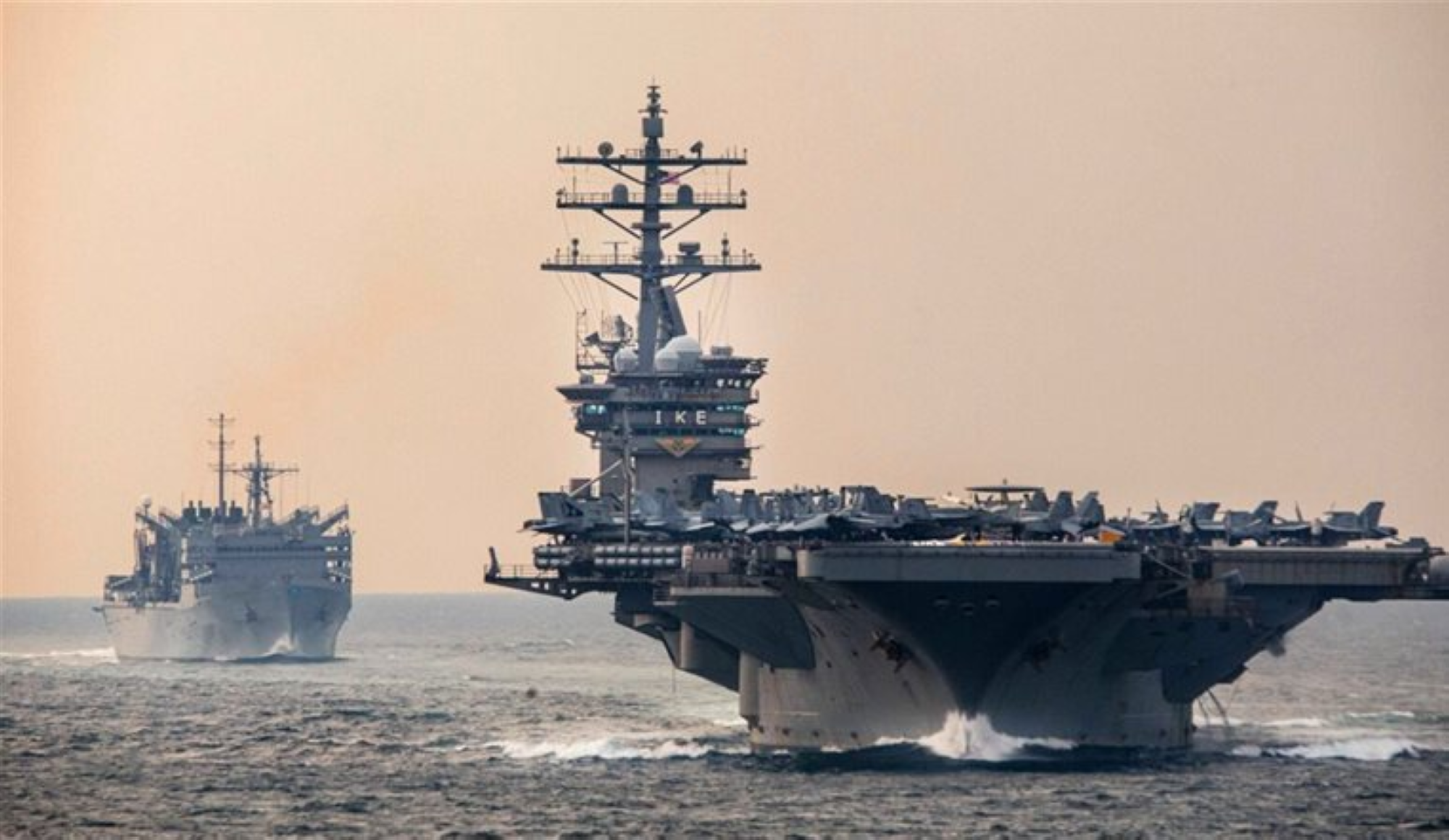
In an escalation reflecting growing geopolitical tensions, the United States intends to bolster its military presence in the Middle East by deploying a second aircraft carrier. This strategic move coincides with US President Donald Trump's renewed and stern warnings to Tehran, threatening severe consequences if a comprehensive and decisive agreement on its nuclear program is not reached.
Massive military reinforcements in territorial waters
US media outlets have reported that the Pentagon has ordered the aircraft carrier USS Gerald R. Ford, along with a strike group, to move from its current position in the Caribbean Sea and proceed directly to the Middle East. This move reinforces the fleet led by the aircraft carrier USS Abraham Lincoln, which has been deployed to the region in recent weeks. Military experts suggest that the presence of two aircraft carriers in the same area sends a strong and unusual message of deterrence, intended to project US power and ensure the security of vital waterways amid current tensions.
Diplomacy under the pressure of military threats
On the political front, President Trump asserted on Thursday night that Iran would face "very painful consequences" if the ongoing negotiations failed. Despite the threatening tone, Trump expressed hope for tangible results within the next month. He had directly linked the avoidance of military action to Tehran's agreement to a new nuclear deal, thus presenting the Iranian leadership with a difficult choice: either submit to American demands or face a potential military escalation.
Behind the scenes of the Muscat talks and points of contention
Oman hosted a round of talks last week between Iranian and American officials. While no date has been set for the next round, there are signs of cautious optimism from the American side. The main point of contention revolves around the scope of the agreement. Tehran insists on limiting the talks to the nuclear issue, denying any military ambitions for its program. In contrast, American officials and their Western allies insist that any agreement must be expanded to include Iran's ballistic missile program, which they consider a threat to regional security.
Internal context and impact of the protests
These external developments come at a time when Iran is facing internal challenges, as the US president pointed to the protests that erupted in late December. These protests began with economic and living conditions resulting from pressure and sanctions, but quickly transformed into a political movement raising slogans against the authorities, who responded with a widespread crackdown. Observers believe that US pressure aims to exploit this internal situation to push Tehran toward making significant concessions at the negotiating table.
Politics
Faisal bin Farhan meets his Kuwaiti counterpart at the Munich 2026 conference
Details of the meeting between Saudi Foreign Minister Prince Faisal bin Farhan and his Kuwaiti counterpart Sheikh Jarrah Al-Sabah at the Munich Security Conference 2026 to discuss bilateral relations and regional issues.
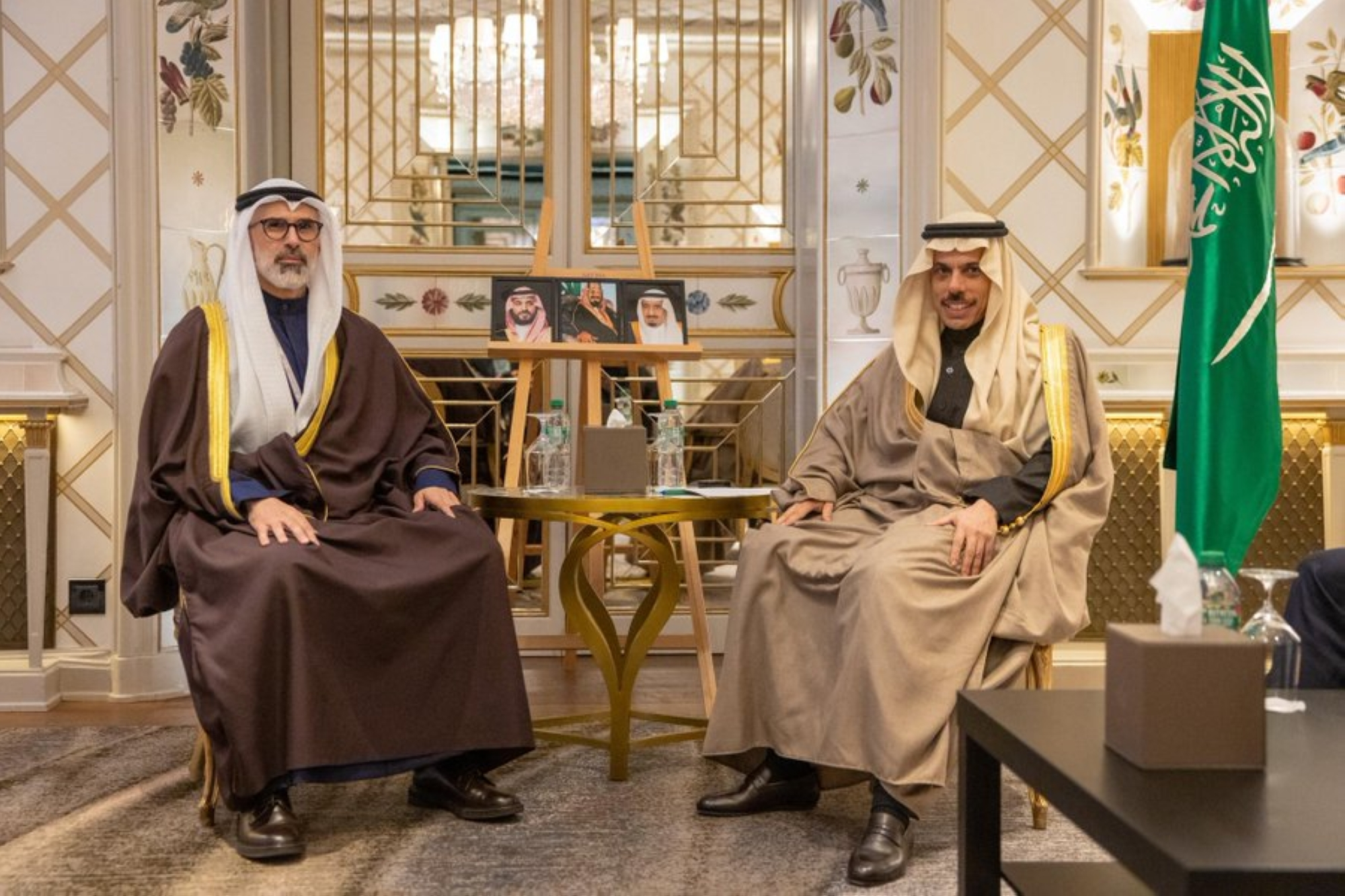
As part of the intensive diplomatic efforts led by the Kingdom of Saudi Arabia to promote joint Arab action, His Highness Prince Faisal bin Farhan bin Abdullah, Minister of Foreign Affairs, met with His Excellency Sheikh Jarrah Jaber Al-Ahmad Al-Sabah, Deputy Minister of Foreign Affairs of the sisterly State of Kuwait (according to the job title in the context of normal diplomatic representation), on the sidelines of the Munich Security Conference 2026.
During the meeting, which was characterized by cordiality and fraternity, the two sides reviewed the deep-rooted bilateral relations between their brotherly countries and discussed ways to support and strengthen them in various fields to serve the interests of both peoples and the aspirations of their leaderships. Both sides emphasized the importance of continued coordination and ongoing consultation on issues of common interest, particularly in light of the rapidly evolving challenges on the international stage.
The two ministers discussed at length the latest regional and international developments, exchanging views on pressing issues in the Middle East and the efforts being made to establish security and stability. This meeting underscores the pivotal role played by the Kingdom of Saudi Arabia and the State of Kuwait within the Gulf Cooperation Council, and their tireless efforts to unify political visions and positions regarding the crises plaguing the region.
This meeting is of particular importance given its timing on the sidelines of the Munich Security Conference, the world's foremost platform for discussing international security policies. The conference presents a strategic opportunity for decision-makers to exchange views on global security challenges, making Saudi-Kuwaiti coordination at this forum a crucial step to ensure the voice of the Gulf and Arab region is conveyed clearly and effectively to the international community.
Historically, Saudi-Kuwaiti relations are characterized by a unique distinction that transcends traditional notions of international relations, being based on ties of kinship, shared history, and a common destiny. Successive historical events have demonstrated the strength of this alliance, with the two countries consistently acting as a united front in confronting regional challenges, while continuously striving for economic, political, and security integration.
The meeting was attended by His Excellency Mohammed Al-Yahya, Advisor to the Minister of Foreign Affairs, reflecting the great attention given to the details of the issues under discussion. Both sides concluded the meeting by emphasizing the need to continue joint diplomatic efforts to support political solutions to existing crises and to strengthen international peace and security.
-

 Local news one week ago
Launch of the city's shuttle bus service in Ramadan 1447 AH: Routes and stations
-
Culture and Art, 1 week ago
Yasser Galal and Radwa El Sherbiny: Details of a new artistic project that brings them together
-
Local news one week ago
The Ministry of Education revokes the licenses of 74 private schools due to safety and quality violations
-
Local news one week ago
Mohammed Al-Rasasmeh appointed as official spokesperson for the Ministry of Municipalities and Housing
-
Culture and Art, 1 week ago
Poster for the series "Two Others": Asser Yassin and Dina El Sherbiny in Ramadan
-
Politics, one week ago
German Chancellor Friedrich Merz departs Riyadh after an official visit
-
Local news one week ago
Saudi Arabia weather today: Thunderstorms and dust in 5 regions
-
Culture and Art, 1 week ago
Suad Abdullah cries over Hayat Al-Fahad's situation: I visited her and she didn't even notice me


