
Politics
The world holds its breath... War drums are beating between India and Pakistan!
Tensions began to rise on both sides of the border between India and Pakistan, following an escalation of military tensions after an attack targeting tourists


Tensions have begun to rise on both sides of the border between India and Pakistan, following an escalation of military tensions after an attack targeting tourists in the Indian part of Kashmir last week that killed at least 26 people and injured 17 others.
Pakistan's defense minister said on Monday that a military incursion by neighboring India was imminent following a deadly attack by militants on tourists in Kashmir last week, as tensions escalate between the two nuclear-armed nations.
Defense Minister Khawaja Muhammad Asif added: “We have reinforced our forces because the situation is imminent. Under these circumstances, strategic decisions must be made, and they have already been made.”.
Asif explained that India's rhetoric was escalating and that the Pakistani military had briefed the government on the possibility of an Indian attack. He did not elaborate further on why he believed an invasion was imminent.
For its part, the Indian Ministry of Defense announced on Monday that it had signed an agreement with France to purchase 26 Rafale fighter jets for its air force, for 630 billion rupees ($7.4 billion).
The ministry said in a statement that India will buy 22 single-seat and four two-seat fighters from the French aerospace company Dassault Aviation, in a deal that will strengthen defense ties between India and its second-largest arms supplier.
The ministry said: “The delivery of these aircraft will be completed by 2030, and their crews will undergo training in France and India,” adding that the agreement is expected to provide thousands of jobs and revenue for a large number of companies.
According to Global Firepower, a website that ranks military forces worldwide, India ranks fourth among the world's strongest armies, compared to Pakistan's twelfth place
India clearly has a significant advantage in terms of active military personnel, with approximately 1.5 million, compared to Pakistan's 650,000.
India has recently increased its military spending steadily, reaching $75 billion in the 2024 fiscal year, compared to Pakistan's $7.6 billion for the same year. New Delhi also boasts a larger air force with 2,229 combat aircraft, compared to Islamabad's 1,399.
India possesses approximately 180 nuclear bombs, while Pakistan maintains 170 nuclear bombs, according to statistics from the Association of Atomic Scientists. They are classified among the nine nuclear countries in the world, despite not officially acknowledging the possession of this strategic weapon.
Related News
India possesses 4,201 tanks, approximately 149,000 military vehicles, in addition to 100 self-propelled artillery pieces, 3,975 towed artillery pieces, and 264 rocket launchers.
India has one of the world's largest tank fleets, with nearly 3,700 main battle tanks, including the domestically produced Arjun tank and Russian T-90 and T-72 tanks, according to The National Interest.
The American magazine confirmed that India's investment in a huge tank arsenal stems from its need for protection amid regional tensions with its neighbors China and Pakistan.
In contrast, Pakistan possesses 2,627 tanks, more than 17,000 military vehicles, 662 self-propelled guns, 2,629 towed guns, and 600 rocket launchers.
India and Pakistan exchanged escalating measures, including trade, transport, and the suspension of consular services, amid fears of a war breaking out between the two nuclear powers, following the killing of 26 Indians in an armed attack in Kashmir, for which New Delhi held Islamabad responsible.
Among these measures, India announced a downgrading of diplomatic relations with Pakistan, the suspension of the 1960 Indus Waters Sharing Treaty, and the closure of the main border crossing between the two countries.
Indian media reported that New Delhi summoned the top diplomat at the Pakistani embassy in the capital to inform him that all military advisors at the Pakistani mission were persona non grata and gave them one week to leave. The Indian Ministry of External Affairs also announced the immediate suspension of visa services for Pakistanis and advised Indians in Pakistan to leave as soon as possible.
For its part, Pakistan announced the immediate closure of the Wagah border crossing and the suspension of all border crossings from India via this route, in addition to canceling the visa exemption for Indian citizens under the South Asian Association for Regional Cooperation (SAARC) visa waiver program, which allows visa-free travel between member states.
Pakistan also announced its intention to reduce the number of staff at the Indian High Commission in Islamabad to 30 diplomats and employees, effective April 30, in addition to immediately closing Pakistani airspace to all airlines owned or operated by India, and suspending all trade with them.
The Pakistani Prime Minister's office stressed that any Indian attempt to stop or divert the flow of the Indus River would be considered a cause for war, and expressed its rejection of what it described as India's unilateral decision to suspend the Indus Waters Treaty, stressing that the agreement is important for regional stability.



Politics
Saudi Defense Minister discusses regional developments with the Emir of Qatar
Following directives from the leadership, Defense Minister Prince Khalid bin Salman met with the Emir of Qatar in Doha. The two sides discussed bilateral relations and regional developments to enhance security and stability.
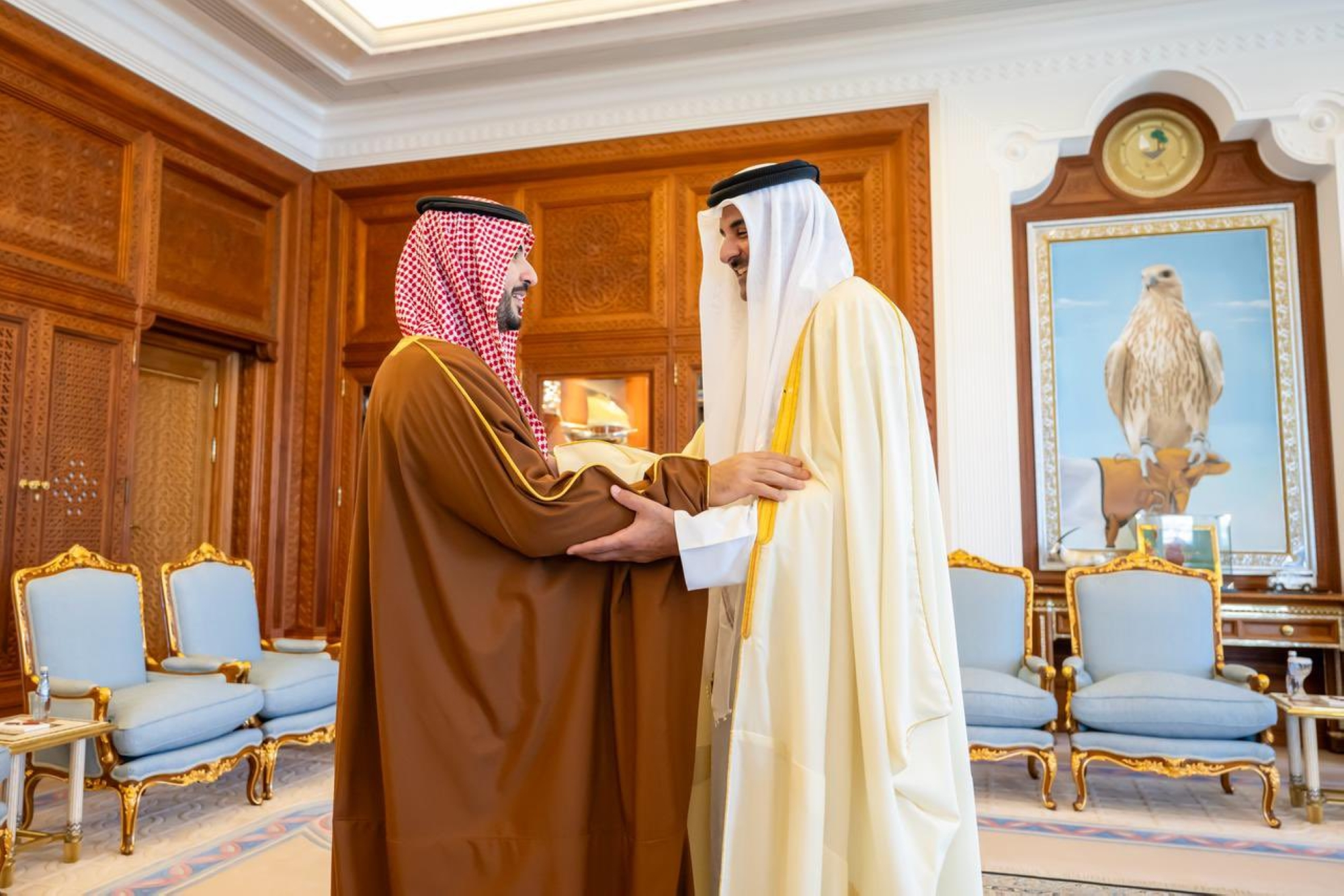
With the generous guidance of the Custodian of the Two Holy Mosques, King Salman bin Abdulaziz Al Saud, and His Royal Highness Prince Mohammed bin Salman bin Abdulaziz, Crown Prince and Prime Minister - may God protect them - His Royal Highness Prince Khalid bin Salman bin Abdulaziz, Minister of Defense, arrived today (Wednesday) in the Qatari capital, Doha, where he met with His Highness Sheikh Tamim bin Hamad Al Thani, Emir of the State of Qatar.
Conveying greetings from the Saudi leadership
The Minister of Defense began the meeting by conveying the greetings of the Custodian of the Two Holy Mosques, King Salman bin Abdulaziz, and His Royal Highness Crown Prince Mohammed bin Salman, to their brother, His Highness the Emir of the State of Qatar, and their wishes for continued progress and prosperity for the brotherly State of Qatar, its government, and its people. For his part, Sheikh Tamim bin Hamad Al Thani asked Prince Khalid bin Salman to convey his greetings and appreciation to the Saudi leadership, emphasizing the deep ties that bind the two countries.
Review of fraternal relations and defense cooperation
During the meeting, the strong fraternal relations between the Kingdom of Saudi Arabia and the State of Qatar were reviewed, relations which are based on a long history of neighborliness and shared destiny. The two sides discussed ways to enhance bilateral cooperation in various fields, particularly in defense and military affairs, in a manner that serves the interests of both brotherly countries and strengthens the joint Gulf security system.
Discussion of regional and international developments
The meeting addressed at length current regional and international developments, with both sides discussing efforts to address several pressing issues in the region. This meeting comes at a sensitive time, as the Middle East region faces rapidly escalating geopolitical challenges, necessitating enhanced coordination and ongoing consultation among the Gulf Cooperation Council (GCC) states to ensure security and stability.
The importance of Saudi-Qatari coordination
The visit of Saudi Defense Minister Prince Khalid bin Salman to Doha is of particular importance, reflecting the advanced level of Saudi-Qatari coordination achieved recently. These meetings are an extension of the outcomes of the Saudi-Qatari Coordination Council, which aims to institutionalize and expand cooperation to encompass all political, security, and economic spheres. Observers emphasize that the convergence of visions between Riyadh and Doha is a fundamental pillar for regional stability, especially given the pressing need to unify Gulf and Arab positions on critical issues and matters of common interest.
Politics
US-Iran nuclear talks in Oman: Details of Friday's round
US-Iranian nuclear talks kicked off in Oman on Friday after the Trump administration agreed to move them from Türkiye, amid reports of Arab countries participating in the anticipated negotiations.
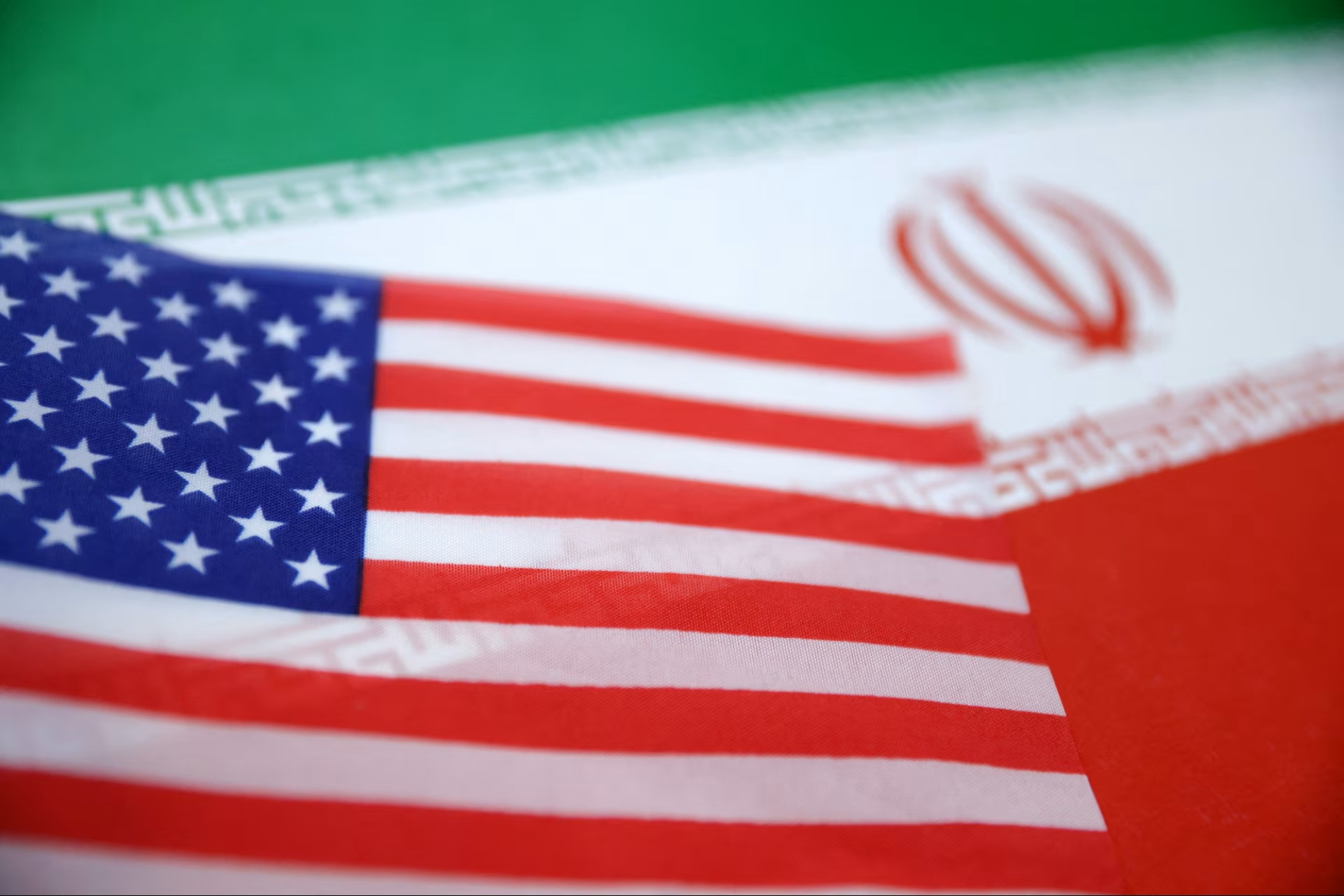
American media reports have revealed significant developments in the Iranian nuclear file. The Axios website, citing a well-informed Arab source, reported that a new round of nuclear talks between the United States and Iran will be held in the Omani capital, Muscat, next Friday. This move comes after the Trump administration agreed to Tehran's request to change the venue from Turkey to Oman, reflecting a shift in the logistical and political arrangements surrounding this complex issue.
Details of the transfer and potential Arab participation
The source indicated that the shift to Muscat was not merely a procedural step, but rather stemmed from an Iranian desire and American approval, highlighting the mutual trust in Omani mediation. In a related context, discussions are still ongoing behind the scenes regarding the possibility of expanding participation to include Arab and Islamic countries in this round, a demand long advocated by countries in the region to ensure their security concerns are taken into account, although the names of the countries considered for participation have not yet been officially disclosed.
The Sultanate of Oman: A history of mediation and positive neutrality
The choice of Oman to host these talks comes as no surprise to observers, as Muscat has a long and distinguished history of playing the role of "honest broker" in the Middle East. The Sultanate served as the back channel that hosted the secret talks between Washington and Tehran, paving the way for the landmark 2015 nuclear agreement (the Joint Comprehensive Plan of Action). Omani foreign policy is characterized by positive neutrality and the ability to maintain balanced relations with all conflicting parties, making it the most acceptable venue for bridging differences in complex crises.
Strategic importance and timing of the talks
This round of talks is of paramount importance given the sensitive timing in the Middle East. With regional tensions escalating, the international community views the Iranian nuclear issue as a key to regional stability. The return to the negotiating table, specifically in Muscat, indicates a desire among the parties to de-escalate tensions and avoid military escalation. Furthermore, the discussion of involving Arab states reflects a growing understanding that any lasting agreement must have broad regional acceptance to ensure the security of navigation in the Gulf and the Strait of Hormuz, and to comprehensively address the issues of nuclear proliferation and ballistic missiles.
All eyes will remain on Muscat on Friday, to see what this round of talks will bring, and whether Omani diplomacy will once again succeed in breaking through the wall of the ongoing crisis between Washington and Tehran, especially in light of an American administration whose decisions are characterized by surprise and decisiveness.
Politics
Details of the joint statement regarding Erdogan's visit to Saudi Arabia and his meeting with the Crown Prince
We are publishing the text of the joint statement issued following the Turkish President's visit to Saudi Arabia. The statement focused on strengthening economic and defense cooperation, and reaching an agreement on the issues of Gaza, Syria, and Yemen within the framework of Vision 2030.
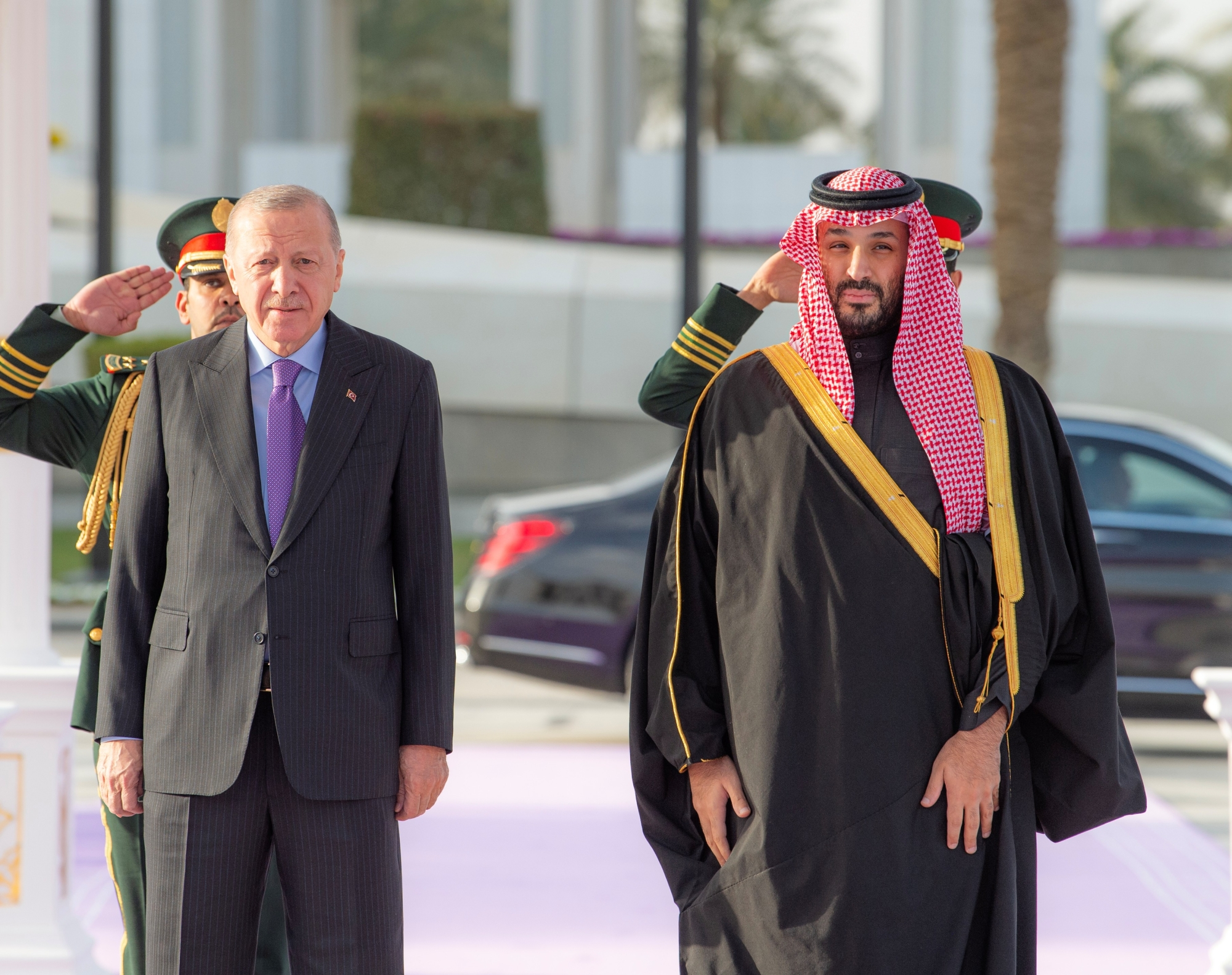
In a move reflecting the depth of the historical and strategic relations between the two countries, a joint statement was issued at the conclusion of the official visit of His Excellency Turkish President Recep Tayyip Erdoğan to the Kingdom of Saudi Arabia, where he held extensive talks with His Royal Highness Prince Mohammed bin Salman bin Abdulaziz, Crown Prince and Prime Minister, at Al-Yamamah Palace in Riyadh.
A new era of strategic cooperation
This visit, which took place in February 2026, comes as a continuation of the path of developing relations that witnessed a qualitative leap since the visit of His Royal Highness the Crown Prince to Turkey in June 2022, and the visit of President Erdogan to the Kingdom in July 2023. The two sides affirmed that these mutual visits established a solid foundation for joint cooperation, which contributed to expanding the scope of the partnership to include various vital fields, in a way that serves the interests of the two brotherly peoples and enhances stability in the region.
Integration of economic and investment visions
The economic file formed a cornerstone of the discussions, with the joint statement emphasizing the importance of aligning Saudi Arabia’s Vision 2030 with Turkey’s Vision 2030. Both sides commended the outcomes of the Saudi-Turkish Investment Forum held in Riyadh, which saw broad participation from the private sector, stressing the need to increase non-oil trade and expedite negotiations for a free trade agreement between the Gulf Cooperation Council (GCC) countries and Turkey. They also agreed to enhance cooperation in the infrastructure, contracting, tourism, and defense industries sectors.
Energy and Climate Partnership
In the energy sector, both sides agreed to enhance cooperation in the fields of electricity and renewable energy, including studies on electricity interconnection and the development of clean hydrogen technologies. Regarding climate action, the Kingdom welcomed Turkey's hosting of the Conference of the Parties (COP31), scheduled to be held in Antalya in November 2026, and affirmed their commitment to implementing the principles of a circular carbon economy to address environmental challenges.
Political consensus on regional issues
Regional and international issues occupied a large part of the statement, as both sides showed complete agreement in their visions regarding crucial issues:
- On the Palestinian issue, both sides stressed the need for an immediate ceasefire in Gaza, an end to the occupation, and support for the establishment of an independent Palestinian state. They also welcomed current international efforts and the endeavors of the Peace Council, emphasizing the pivotal role of UNRWA.
- The Syrian issue: Both sides expressed their support for the Syrian government’s efforts to maintain the security, stability and unity of Syrian territory, and rejected foreign interference or Israeli attacks on its sovereignty.
- Yemen, Sudan and Somalia: The statement affirmed support for legitimacy in Yemen, and the unity and sovereignty of Sudan and Somalia, rejecting any attempts to divide these countries or create parallel entities that threaten their stability.
The statement concluded by affirming the shared determination to continue coordination in the defense and security fields, and in combating terrorism, in order to ensure regional and international peace and security, with an exchange of invitations for future visits that will strengthen the bonds of brotherhood between the two leaderships and peoples.
-

 Culture and Art, 1 week ago
Haifa Wehbe's absence in Riyadh: A photo crisis or a strained relationship with the media?
-

 Culture and Art, 1 week ago
City Kitchen series: A drama of conflict and the middle class during Ramadan
-

 Culture and Art, 1 week ago
The series "Kasra": Dawood Hussein in a moving social drama this Ramadan
-

 Local news one week ago
Applying for the 1447 Opportunities Program for Teachers via the Fares System
-

 Local news one week ago
Ramadan 2026 discounts in Saudi Arabia: Offers valid for 54 days
-
 Culture and Art 6 days ago
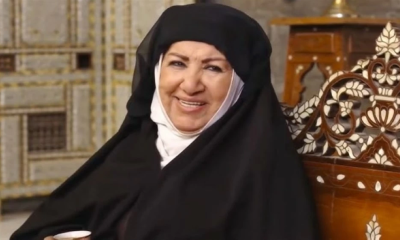
The death of artist Huda Shaarawi “Umm Zaki” and her funeral in Damascus
-

 Technology 6 days ago
ICAN 2026 Conference Conclusion: Initiatives to Enhance Saudi Arabia's Leadership in Artificial Intelligence
-

 Local news one week ago
Saudi Arabia halts perennial fodder cultivation to conserve groundwater