
Politics
The Ministry of Interior adds a requirement to pass a drug test to obtain a firearms license
The Ministry of Interior announced the addition of a requirement to pass a drug test as a condition for obtaining a license to carry individual firearms

The Ministry of Interior announced the addition of a requirement to pass a medical examination for toxins to the conditions for obtaining a license to carry and possess individual firearms and hunting weapons.
This came by a decision of the Minister of Interior, based on the powers granted to him by law, to add a paragraph to Article (9/11) of the Executive Regulations of the Weapons and Ammunition System, which pertains to the conditions for obtaining a license to carry and possess individual firearms and hunting weapons, stipulating “passing the medical examination for toxins.”.


Politics
Crown Prince receives Hillary Clinton: Meeting strengthens Saudi-American dialogue
Crown Prince Mohammed bin Salman received former US Secretary of State Hillary Clinton in Riyadh, in a friendly meeting that reflects the depth of Saudi-American relations and the importance of continued dialogue.
His Royal Highness Crown Prince Mohammed bin Salman bin Abdulaziz, Prime Minister, received former US Secretary of State Hillary Clinton at his office in Al-Yamamah Palace in Riyadh. The meeting included friendly exchanges, reflecting the ongoing communication between the Saudi leadership and prominent political figures on the international stage.
This meeting comes within the context of the historical and strategic relationship between the Kingdom of Saudi Arabia and the United States of America, a relationship that spans decades and has included close cooperation in the fields of energy, security, and counterterrorism. Hillary Clinton, who served as Secretary of State in the administration of President Barack Obama, is a pivotal figure in American diplomacy and has a long history of dealing with Middle Eastern issues, including her numerous visits to the Kingdom during her tenure, where she discussed pressing regional and international matters with Saudi leaders at the time.
Although Clinton does not currently hold an official position in the US government, she remains an influential figure in the Democratic Party and maintains a broad network of international contacts. The significance of this meeting lies in its role as an informal diplomatic channel, allowing for an exchange of views outside the constraints of strict formal protocols. It also underscores the Kingdom's commitment to building bridges with diverse political factions in the United States, an approach that fosters understanding of shared interests and contributes to shaping the future of bilateral relations.
On both regional and international levels, the meeting carries significant implications. It highlights the pivotal role the Kingdom plays as a stabilizing force in the Middle East and its commitment to consulting with international experts and policymakers on current challenges. The meeting also reflects the Kingdom's openness under Vision 2030, which encompasses not only economic and social transformation but also strengthening the Kingdom's diplomatic presence and expanding its dialogue with the world. Such meetings contribute to providing a firsthand look at the developments and reforms led by the Kingdom and offer an opportunity to discuss global issues from a Saudi perspective.
Politics
Arabian Gulf Security Exercise 4: Enhancing security cooperation to counter threats
The “Arabian Gulf Security 4” exercise was launched in Qatar with specialized Saudi participation, with the aim of raising readiness and enhancing joint action among the Gulf Cooperation Council countries to confront security threats.
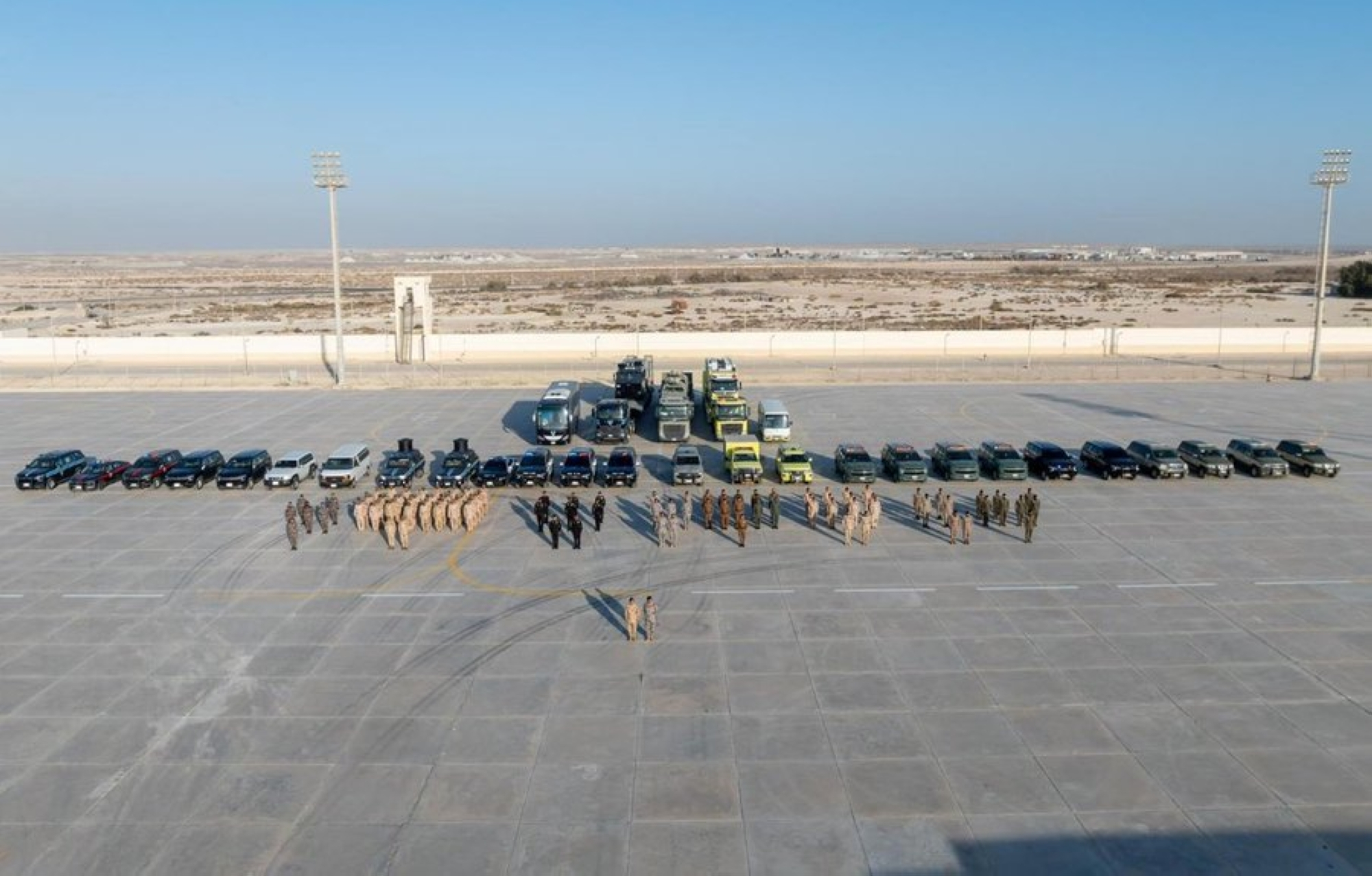
Colonel Dr. Ali Al-Qahtani, commander of the Saudi force participating in the “Arabian Gulf Security 4” exercise hosted by Qatar, affirmed that the exercise aims to counter potential threats and enhance regional security. Al-Qahtani explained that the Kingdom is participating with a specialized security force from the Ministry of Interior and the Presidency of State Security, reflecting the strategic importance Riyadh places on strengthening joint security efforts among the Gulf Cooperation Council (GCC) countries.
Background and context of the exercise
The “Arabian Gulf Security 4” exercise comes as a new link in a series of joint security exercises whose first version was launched in the Kingdom of Bahrain in 2016, followed by the second version in the United Arab Emirates in 2019, and then the third version in the Kingdom of Saudi Arabia in 2022. These periodic exercises are an embodiment of the security agreements between the GCC countries, and aim to unify concepts, coordinate efforts and raise the level of joint field work between the security agencies in the member states, thus ensuring a rapid and unified response to any security emergency.
Importance and strategic objectives
The exercise's objectives extend beyond routine training, focusing on developing security cooperation mechanisms, enhancing combat readiness, and exchanging expertise to address complex and emerging security threats. These threats include counterterrorism, transnational organized crime, cybersecurity, and securing vital infrastructure and maritime facilities. Through realistic scenarios, the exercise hones the participating forces' skills in command and control, operational management, and intelligence coordination, thereby strengthening their ability to operate as a cohesive and integrated force.
Regional and international impact
The timing of this exercise sends a clear message about the unity and solidarity of the Gulf Cooperation Council (GCC) states in the face of regional challenges. The high-level attendance at the opening ceremony, including Qatari Undersecretary of the Ministry of Interior Abdullah Al-Kaabi, Assistant Secretary-General for Security Affairs at the GCC Secretariat Brigadier General Hamad Ajlan Al-Amimi, and Chairman of the Saudi Joint Force Committee Major General Awad Al-Anzi, reflects the shared political will to support regional stability. This security cooperation not only protects the security of the GCC states but also extends to securing vital waterways and stabilizing global energy markets, making it of international importance.
The launch of the “Arabian Gulf Security 4” exercise is a significant strategic step to strengthen the collective security system of the Gulf states and affirms their readiness to deal with various potential scenarios and threats. The exercise represents a vital platform for exchanging expertise and developing capabilities, serving the security and stability of the region and its people.
Politics
The Security Council ends the mandate of the United Nations Mission in Hodeidah (UNMHA)
By a majority vote, the Security Council ended the mandate of the UN Mission in Yemen (UNMHA). Learn about the background of the decision and its impact on the Hodeidah Agreement and the future of the peace process.
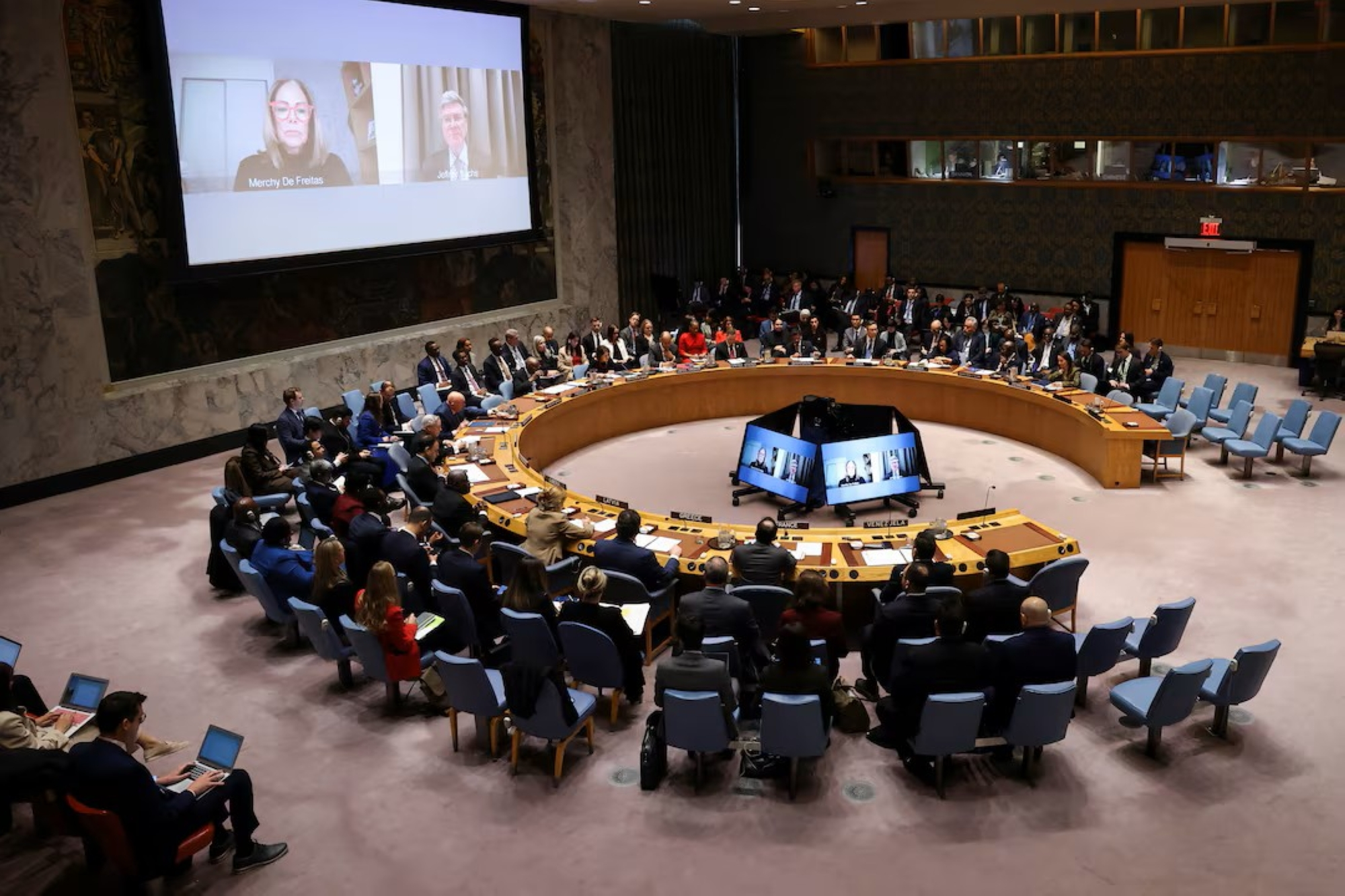
The UN Security Council announced its decision to end the mandate of the UN Mission to Support the Hodeidah Agreement (UNMHA) by the end of March, a move reflecting the significant challenges facing peace efforts in Yemen. The decision was adopted by a vote of 13 in favor out of 15 members, with Russia and China abstaining, indicating a division in international views on managing the Yemeni crisis.
Background to the establishment of the mission and the Stockholm Agreement
The United Nations Multidimensional Integrated Stabilization Mission in Yemen (UNMHA) was established in early 2019 as a key component of the Stockholm Agreement reached in December 2018 between the Yemeni government and the Houthi movement. The agreement's primary objective was to establish a ceasefire in the city of Hodeidah and its vital ports (Hodeidah, Salif, and Ras Isa), which serve as a crucial lifeline for humanitarian aid to millions of Yemenis. UNMHA was mandated to monitor the implementation of the agreement, including overseeing the ceasefire and the redeployment of forces from the ports and the city, and facilitating humanitarian operations.
Reasons for ending the mandate and its impact
The decision to end the mission, included in Resolution 2813 drafted by Britain, comes amid the stalled implementation of the Hodeidah Agreement. The US Deputy Ambassador to the Security Council, Tammy Bruce, directly stated that “the Houthis’ intransigence has rendered the mission ineffective,” arguing that its continuation was no longer worthwhile in the absence of progress. This decision coincides with escalating regional tensions, particularly Houthi attacks in the Red Sea, which have shifted the priorities of the international community and further complicated the already faltering peace efforts.
Transitional phase and future challenges
The resolution provides for a technical extension of the mission's mandate for an additional two months, until the end of March, to allow sufficient time for the orderly conclusion of its operations. During this period, the remaining tasks will be transferred to the Office of the Special Envoy of the Secretary-General for Yemen, with the complete liquidation of the mission to begin on April 1. The resolution also requests the Secretary-General of the United Nations, António Guterres, to present a clear and detailed plan for this transition process in consultation with the Yemeni parties.
The termination of UNMHA's mandate raises concerns about the future of the fragile ceasefire in Hodeidah and the potential for renewed military confrontations in this strategic region. It also raises questions about the effectiveness of international mechanisms in managing complex conflicts and places a greater burden on the diplomatic efforts led by the UN envoy to find a comprehensive and sustainable political solution to the crisis in Yemen.
-

 Local News 3 days ago
Landslide in Riyadh: Details of the incident in Al-Sahafa neighborhood and containment efforts
-
 Local News 4 days ago
The death penalty was carried out against a citizen who stabbed another to death in Tabuk
-

 Culture and Art, 1 week ago
Ramez Galal in Ramadan 2026: Details of the bloody prank show
-

 Local News 5 days ago
First birth on the Riyadh train: A heartwarming story at Andalus station
-
 Local News 3 days ago
Riyadh collapse: Emergency plans to secure water after a main pipeline burst
-

 Culture and Art 3 days ago
Haifa Wehbe's absence in Riyadh: A photo crisis or a strained relationship with the media?
-

 Culture and Art 3 days ago
City Kitchen series: A drama of conflict and the middle class during Ramadan
-

 Culture and Art 3 days ago
The series "Kasra": Dawood Hussein in a moving social drama this Ramadan