Politics
The US Treasury imposes sanctions on 7 Houthi leaders and a company
The US Treasury Department announced today (Wednesday) sanctions against seven senior Houthi leaders for their involvement in smuggling

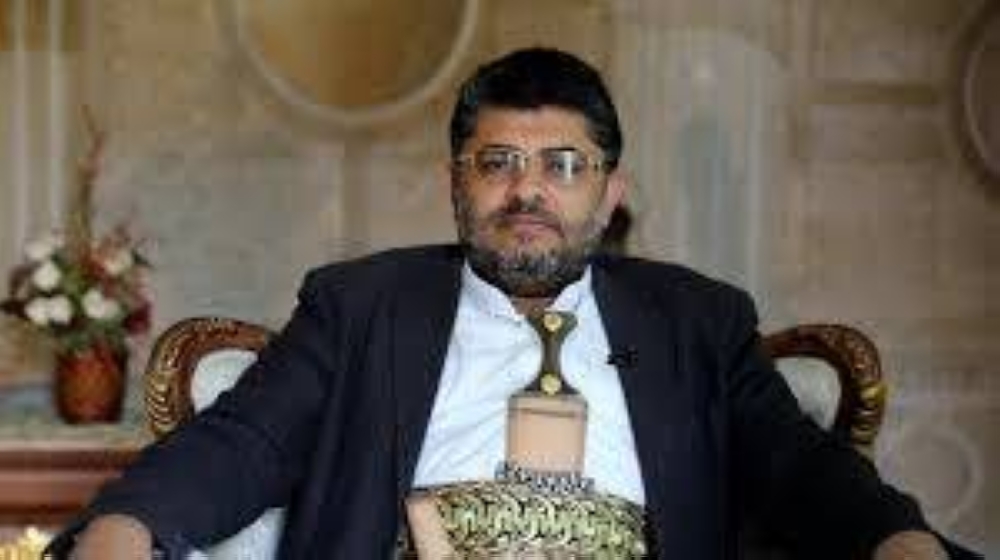
The US Treasury Department announced today (Wednesday) sanctions against seven senior Houthi leaders for smuggling military equipment and weapons systems into Yemen and negotiating with Russia to purchase weapons.
The statement, published on the ministry’s website, explained that the Office of Foreign Assets Control (OFAC) had added a Houthi-affiliated client and his company to the sanctions list, as they had recruited Yemeni civilians to fight on behalf of Russia in Ukraine and generated revenue to support Houthi armed operations.
Treasury Secretary Scott Bisent said: “By seeking weapons from an increasing number of international suppliers, the Houthi leaders have demonstrated their intention to continue their reckless and destabilizing activities in the Red Sea region.” He added: “The United States will use all available tools to disrupt the Houthis’ terrorist activities and reduce their ability to threaten U.S. personnel, our regional partners, and global maritime commerce.”.
The ministry accused Houthi negotiator Mohammed Abdul Salam Faliti of playing a key role in managing the Houthis' internal and external financing network and facilitating their efforts to secure weapons and other support from Russia. It stated that Faliti traveled to Moscow to meet with officials from the Russian Foreign Ministry and coordinated with Russian military personnel to arrange additional Houthi delegations' visits to Russia. The statement also accused Ishaq Abdul Malik Abdullah Al-Marwani, a senior Houthi leader and Faliti's assistant, of participating in high-level Houthi delegations to Russia to conduct discussions at the Foreign Ministry in Moscow and coordinating with other high-level Houthi agents to promote Houthi interests internationally.
In its statement, the ministry accused the head of the coup political council, Mahdi Muhammad Hussein al-Mashat, of working to increase cooperation between the Houthis and the Russian government, including with Russian President Vladimir Putin. Al-Mashat also issues official statements on behalf of the Houthis clarifying the group's military and diplomatic positions. The ministry also accused the head of the coup revolutionary committee, Muhammad Ali al-Houthi, whom it described as an important agent and a member of the Supreme Political Council, of organizing the ongoing maritime attack campaign launched by the Houthis against international shipping lanes and communicating with the Russians and Chinese to ensure that Houthi militants do not strike Russian or Chinese ships crossing the Red Sea.
The statement indicated that Mohammed al-Houthi affirmed the Houthis' commitment to ensuring the safe passage of Russian ships, and that he planned to travel to Russia with other Houthi militants and intelligence agents to discuss Russian aid to the Houthis.
The ministry said in its statement that the head of the Houthi Sana'a Chamber of Commerce and Industry, Ali Mohammed Mohsen Saleh Al-Hadi, is a major financier of Houthi arms purchases, using his position in the chamber and the shell company to finance and conceal purchases of military equipment on behalf of the Houthis. As part of this effort, he traveled to Russia to secure defense equipment for the Houthi militants and to invest in industries controlled by the Houthis.
The ministry reported that Houthi negotiator Abdul Malik Abdullah Mohammed al-Ajri traveled as a member of a Houthi political and military delegation to Moscow, representing the Houthis in meetings with high-level Russian officials, as well as to China, and issued official statements on behalf of the Houthis describing the group’s efforts to counter international economic pressure against banking institutions allied with the Houthis in Yemen.
The ministry statement indicated that Houthi leader Khaled Hussein Saleh Jaber traveled as part of Houthi delegations to Russia, participated in meetings with officials at the Russian Foreign Ministry, and maintains a close relationship with Houthi financial official Saeed Al-Jamal, coordinating illicit procurement and financing activities with Al-Jamal’s network.
The ministry stressed that the inclusion of Abdul Salam, Marwani, Al-Mashat, Mohammed Ali, Al-Hadi, Al-Ajri, and Jaber on the sanctions list came pursuant to Executive Order 13224, as amended, because they acted or purported to act for or on behalf of the Houthis, directly or indirectly.
Regarding the Houthis’ recruitment to fight with Russia, the ministry explained that Houthi leaders have devised numerous income-generating schemes to enable their offensive campaign, often at the expense of the most vulnerable groups in Yemen. One such effort involved individuals working on behalf of the Houthis running a lucrative human smuggling operation, recruiting Yemeni civilians to fight for Russia in Ukraine, often under false and misleading pretexts.
The Department stated that Abdul Wali Abdu Hassan al-Jabri, an armed Houthi activist and militia brigadier general, facilitated a major part of this effort by using his company (al-Jabri General Trading and Investment Company) to transport Yemeni civilians to Russian military units fighting in Ukraine in exchange for money, generating a new source of revenue on behalf of Houthi leaders. The Department noted that al-Jabri was designated under Executive Order 13224, as amended, for acting or purporting to act for or on behalf of the Houthis, directly or indirectly, and that al-Jabri Company was designated under the same Executive Order for being owned, controlled, or directed by al-Jabri and acting or purporting to act for or on behalf of al-Jabri, directly or indirectly.
The Treasury Department emphasized that all property and interests in property of the designated individuals described in the statement that are in the United States or in the possession or control of U.S. persons are blocked and must be reported to the Office of Foreign Assets Control (OFAC). Additionally, any entities directly or indirectly owned, individually or collectively, 50 percent or more by one or more of the designated individuals are blocked unless authorized by or exempt from a general or specific OFAC license. The Treasury Department warned against dealing with the sanctioned individuals.
Related News




Politics
Tehran bombardment and Iranian missiles: details of the second day of the war
Explosions rock Tehran; Israel announces the destruction of air defense systems and the mobilization of 20,000 reserve troops. Follow the details of the direct military escalation between Israel and Iran.
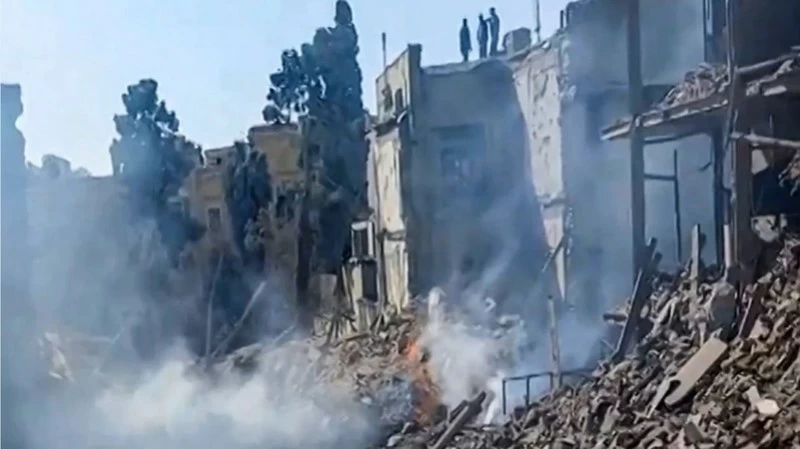
The second day of the open military confrontation witnessed a dramatic escalation in the conflict, with a series of powerful explosions rocking the Iranian capital, Tehran, on Sunday. Field reports indicated that the explosions were clearly heard in the northern parts of the city, and eyewitnesses shared images showing plumes of smoke rising from a major building, suggesting the precision of the strikes.
Air superiority strategy and striking defenses
In an official statement reflecting the scale of the operation, the Israeli military announced its success in eliminating the majority of air defense systems located in western and central Iran. The statement indicated that these strikes were not indiscriminate, but rather precisely targeted ballistic missile launch sites within Iranian territory, in an effort to neutralize Tehran's offensive capabilities.
The army explained that it launched a wide and intensive wave of air raids on strategic targets in the "heart of the Iranian capital," stressing that the Israeli Air Force had carried out continuous attacks during the past 24 hours with the aim of achieving complete "air superiority" and opening air corridors towards Tehran, which would facilitate the execution of subsequent operations with little resistance from ground anti-aircraft defenses.
Shift from shadow war to direct confrontation
This escalation marks a historic turning point in the Israeli-Iranian conflict, shifting the confrontation from a "shadow war" and proxy conflicts in the region to direct military clashes between the two countries. While previous strategies relied on targeting Iranian interests in Syria or through cyberattacks, bombing targets within the capital, Tehran, carries serious political and military implications that could reshape the security landscape of the entire Middle East.
Home Front and Reservist Call-Up
In parallel with the air strikes, Israel is facing intense Iranian missile barrages, putting the home front on high alert. In this context, the Israeli army's Home Front Command confirmed the urgent mobilization of approximately 20,000 reserve soldiers. This massive call-up aims to bolster the army's ranks, assist the civilian population in coping with the aftermath of the missile attacks, and ensure the continuity of essential services under the current wartime conditions.
Observers believe that calling up this large number of reservists reflects the Israeli leadership's fears of the war escalating and the possibility of the exchange of strikes continuing for a longer period, which necessitates maximum readiness on all fronts, whether offensive in the Iranian interior or defensive to protect Israeli cities.
Politics
Putin condemns Khamenei's killing: a violation of international law and a dangerous escalation
Putin offers condolences to the Iranian president on the killing of Supreme Leader Ali Khamenei in Israeli and American strikes, describing the assassination as a flagrant violation of international law and human morality.

Russian President Vladimir Putin strongly condemned the assassination of Iran's Supreme Leader, Ali Khamenei, and members of his family, describing the incident as a flagrant violation of all humanitarian and ethical standards and principles of international law. This firm stance was expressed in an official telegram of condolence sent by Putin to his Iranian counterpart, Masoud Pezeshkian, the text of which was published on the Kremlin's official website.
The telegram read: “Please accept my sincere condolences and deepest sympathy on the death of the Supreme Leader of the Islamic Republic of Iran, Ali Khamenei, and his family, in an act that constitutes a flagrant violation of all standards of human morality and international law.” This statement reflects the depth of the strategic alliance between Moscow and Tehran, and Russia’s rejection of political assassinations, which Moscow considers an undermining of national sovereignty.
Official announcement details
Iranian state television announced early Sunday morning the death of Supreme Leader Ali Khamenei, stating that he was killed in a joint Israeli-American strike. The Iranian news agency Tasnim confirmed the details, saying, "Supreme Leader Khamenei was killed at his residence. He was carrying out his duties in his office at the time of his death," indicating a major security breach and a direct attack on the highest levels of power in Iran.
Russian-Iranian relations and the international context
The Russian reaction is particularly significant given the significant rapprochement between Moscow and Tehran in recent years. The two countries have formed a united front on numerous regional and international issues, from cooperation on the Syrian crisis to coordination in countering Western sanctions. Analysts believe that Putin's description of the incident as a "flagrant violation of international law" is not merely a formality, but a political message to the West and Israel that Russia will not remain silent in the face of a shift in the rules of engagement in the Middle East.
The importance of the Supreme Guide position and the repercussions of a power vacuum
The position of Supreme Leader in Iran is the apex of power in the Islamic Republic, wielding extensive authority that includes command of the armed forces, control of the judiciary, and oversight of the regime's general policies. Therefore, the absence of a figure of Ali Khamenei's stature, who led the country for decades, presents Iran and the region with critical challenges regarding filling the political vacuum and the mechanisms for the transfer of power through the Assembly of Experts.
Risks of regional escalation
Directly blaming Israeli-American strikes threatens to shift the conflict in the Middle East from proxy wars to direct confrontation. The international community fears that this incident could trigger widespread retaliatory attacks, potentially igniting a full-blown regional war, especially given the presence of Iranian allies in the region who might join in. This makes Putin's call for adherence to international law an attempt at restraint at a historically critical juncture.
Politics
US refueling aircraft are heading to the Middle East in anticipation of an Iranian response
Flightradar24 data detected nine US KC-135R refueling aircraft heading to the Middle East and Europe, in a strategic move in anticipation of an Iranian response following recent developments.
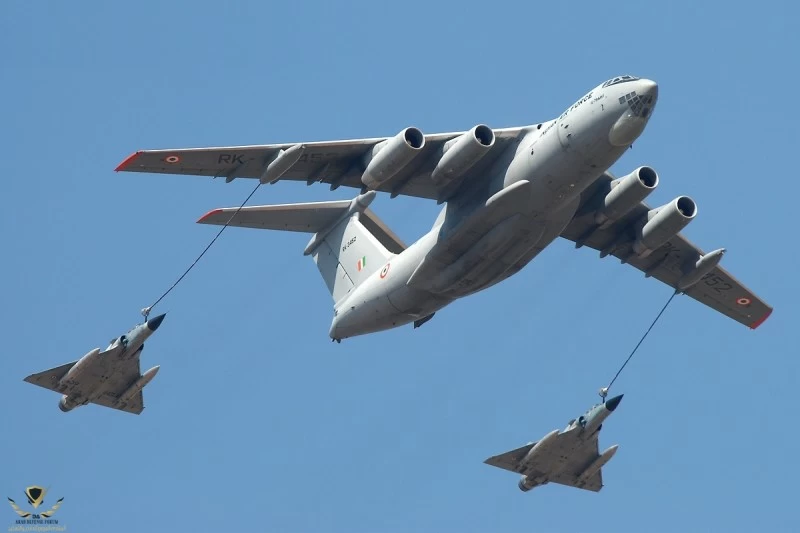
Recent flight data from FlightRadar24, a platform specializing in tracking global air traffic, revealed a notable US military movement involving nine Boeing KC-135R Stratotanker aerial refueling aircraft. These US Air Force planes departed from bases within the United States and headed towards Europe, in a coordinated move following the announcement of the death of Iranian Supreme Leader Ali Khamenei, raising the specter of a potential escalation in the region.
According to open source unit analysis and tracking data, six of these aircraft continued their course through European airspace heading directly towards the Middle East region, while three other aircraft settled into transit routes over Europe, indicating the formation of a logistical air bridge linking Western bases with the potential theater of operations in the Arab and Gulf region.
Implications of the military move and the importance of KC-135R aircraft
This type of intensive movement cannot be interpreted as mere routine or training air activity, as aerial refueling tankers form the backbone of any extended U.S. combat deployment abroad. The KC-135R Stratotanker is a vital component of the U.S. military's Global Reach strategy, giving the military command the ability to keep attack fighters, strategic bombers, and reconnaissance and surveillance aircraft airborne for far longer periods than their own capabilities allow.
This logistical support allows fighter jets to take off with maximum loads of ammunition and weapons instead of fuel, relying on aerial refueling to reach their targets, greatly expanding the operational range of US forces and giving them high flexibility in carrying out strikes or enforcing no-fly zones.
Regional context and escalating tensions
This air buildup comes at a highly sensitive time, as the Middle East region experiences heightened anticipation and caution regarding a potential Iranian retaliation. Historically, the United States has deployed refueling squadrons prior to major military operations or as a preemptive deterrent to reassure allies and send warning messages to adversaries.
The deployment of this large number of tankers simultaneously reflects Washington's intention to ensure a high level of combat readiness for its forces stationed at military bases throughout the Gulf states, the Mediterranean Sea, and the Arabian Sea. Military experts indicate that the presence of this number of "flying refueling stations" suggests that the Pentagon is taking into account the possibility of prolonged aerial engagements or the need to conduct round-the-clock combat air patrols (CAP) to protect airspace and vital interests from any missile or drone attacks that Tehran or its proxies might launch.
-

 Local News 3 days ago
Saudi Arabia approves regulations for the continued presence of Gulf vehicles: duration and penalties
-
Local News 6 days ago
The Ministry of Interior begins procedures for a royal pardon for common law prisoners
-
Local news one week ago
19 requirements to reduce dust from projects in Riyadh and fines for violators
-
Local news one day ago
Jeddah Airport alerts for travelers due to airspace closure and flight disruptions
-
Politics, one week ago
Trump plans to create a $2 billion alternative to the World Health Organization
-
Culture and Art, 1 week ago
Amr Diab appears with his four sons and a highly anticipated concert in Türkiye
-
 Local news one week ago
Three billion riyals deposited as Ramadan aid for social security beneficiaries
-
Local News 5 days ago
The deadline for property registration in Hail and Riyadh is Thursday